

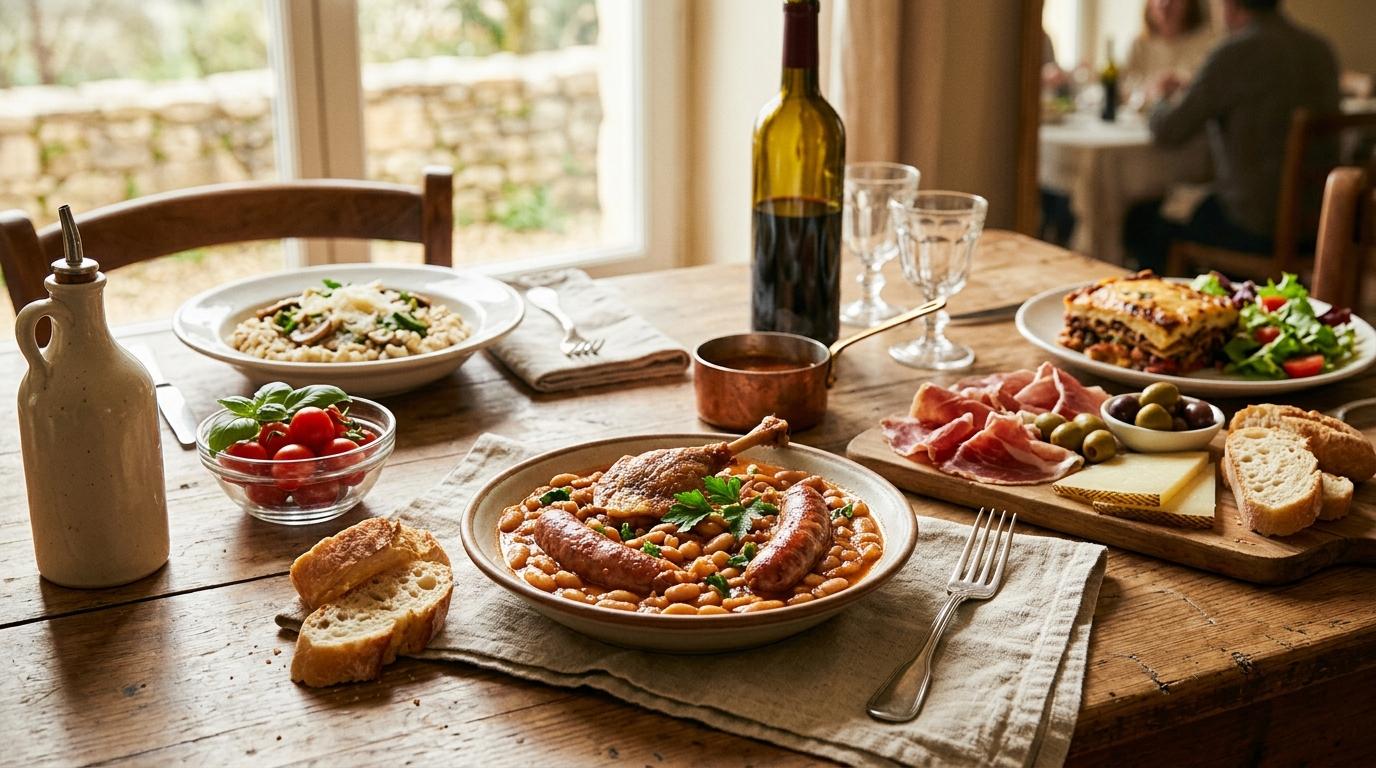
European cuisine isn't just pasta and pizza. Beyond the tourist-friendly dishes lies a continent of deeply rooted culinary traditions, each region telling its story through ingredients, techniques, and time-honored recipes that have fed families for generations.
The real magic of European cooking lies in understanding why each dish exists. Why do the French build their sauces from a foundation of five mother sauces? Why do Scandinavians cure fish in salt and dill? Why does every German grandmother have her own spätzle technique? These aren't random traditions—they're solutions to geography, climate, and available ingredients, refined over centuries.
We're going to explore European recipes through the lens of technique and tradition, diving into regional specialties that rarely make it onto American menus but deserve a place in your kitchen. From the fog-shrouded moors of Scotland to the sun-baked hills of Andalusia, Europe's culinary landscape offers home cooks a masterclass in flavor, technique, and cultural connection.
The Foundation: Understanding European Cooking Philosophy
European cooking operates on a simple principle: respect your ingredients and master your techniques. Unlike cuisines that rely heavily on spice blends or complex marinades, European food often showcases the natural flavors of quality ingredients through precise cooking methods.
This approach means that [CLUSTER: French Cooking Techniques and Mother Sauves] become your foundation rather than your fancy finishing touch. A properly made béchamel isn't showing off—it's the building block for everything from lasagna to soufflés. Understanding how to build these fundamental sauces gives you the keys to countless European dishes.
The European palate also embraces richness in ways that might surprise American home cooks. Butter, cream, aged cheeses, and well-marbled meats aren't guilty pleasures—they're cooking mediums. A proper German sauerbraten or French coq au vin achieves its depth of flavor through the patient layering of these rich ingredients, not despite them.
Northern Europe: Comfort Through Cold Seasons
Northern European cuisines developed around long, dark winters and the need to preserve food through harsh months. This necessity created some of the most soul-satisfying comfort foods on the continent.
[CLUSTER: Eastern European Comfort Food Recipes] represent this philosophy perfectly. Think beyond pierogi (though those are wonderful too) to dishes like Hungarian goulash, where paprika isn't just seasoning—it's the soul of the dish. The slow braising technique transforms tough cuts of beef into tender, paprika-perfumed perfection that warms you from the inside out.
Russian and Ukrainian cuisines offer similar comfort through dishes like borscht, where the earthiness of beets combines with rich beef stock and a dollop of sour cream. The key to great borscht isn't just the beet flavor—it's achieving that perfect balance of sweet, sour, and umami that makes each spoonful deeply satisfying.
[CLUSTER: Classic Beef Stroganoff Recipe: Rich, Creamy Comfort Food] exemplifies northern European cooking at its finest. The dish relies on the Maillard reaction—that beautiful browning of meat and onions—combined with the richness of sour cream and the depth of mushrooms. When done properly, the sauce coats each strand of pasta or spoonful of rice with velvety richness.
The technique matters more than the recipe here. Sear the beef in batches to avoid overcrowding (which creates steam instead of browning). Cook the mushrooms until their water evaporates and they start to caramelize. These aren't optional steps—they're what separates restaurant-quality stroganoff from cafeteria disappointment.
Germanic Traditions: Hearty and Precise
[CLUSTER: German and Austrian Hearty Dishes] showcase European precision applied to comfort food. German cooking isn't about subtlety—it's about building robust flavors through careful technique and quality ingredients.
Take sauerbraten, Germany's national pot roast. The meat marinates for days in a mixture of wine, vinegar, and spices, then braises slowly until fork-tender. The resulting gravy, thickened with crushed gingersnaps, creates a sweet-sour sauce that's uniquely German. It's not complicated cooking, but it requires patience and planning.
Austrian cuisine contributes techniques like proper schnitzel preparation—pounding the meat thin, creating a three-stage breading station, and frying at just the right temperature so the coating puffs without absorbing oil. The result should be golden, crispy, and grease-free.
German sausage-making traditions offer home cooks insight into balancing fat, meat, and seasoning. Even if you're not stuffing casings, understanding these ratios helps when making meatballs, meatloaf, or any ground meat dish.
Mediterranean Mastery: Sun and Simplicity
[CLUSTER: Mediterranean European Cooking Methods] center around maximizing flavor from simple ingredients. Olive oil isn't just cooking fat here—it's a flavor component, used at different stages of cooking for different effects.
Spanish and Portuguese cuisines demonstrate this beautifully. [CLUSTER: Spanish and Portuguese Iberian Specialties] like paella or Portuguese cataplana rely on building layers of flavor in a single pan. The sofrito (Spanish) or refogado (Portuguese)—that base of slowly cooked onions, garlic, and tomatoes—forms the foundation for countless dishes.
The technique of making proper paella involves understanding rice absorption, heat control, and timing. You're not stirring constantly like risotto—you're allowing the rice to cook undisturbed, developing the prized socarrat (crispy bottom) while the top stays creamy. It's a lesson in restraint and patience that applies to many European dishes.
[CLUSTER: Italian Regional Cooking Beyond Pasta] reveals techniques like proper risotto stirring (constant but gentle), achieving the perfect pizza dough hydration, and understanding when to use which type of Italian cheese. Northern Italian cuisine employs butter and cream, while southern Italian cooking relies on olive oil and tomatoes—not because of preference, but because of what grows well in each region.
Bread, Pastry, and the Art of Fermentation
[CLUSTER: Traditional European Bread and Pastry Making] represents some of the most technical European cooking. French baguettes require understanding gluten development, proper fermentation, and steam injection for that perfect crust. German pumpernickel involves slow, low-temperature baking that can take 24 hours.
Pastry techniques like lamination (for croissants and puff pastry) teach patience and temperature control. The butter must be the right consistency—pliable but not melted—and the dough must rest between folds. These aren't arbitrary rules; they're based on the science of gluten, fat, and temperature.
Sourdough maintenance, common across Europe, connects modern bakers to centuries of bread-making tradition. Each starter develops its own character based on local wild yeasts and bacteria, creating breads that truly taste of their place.
Cheese, Dairy, and Fermentation Mastery
[CLUSTER: European Cheese Making and Cooking Guide] opens up techniques beyond melting and grating. Understanding when to use aged Parmigiano-Reggiano versus young Pecorino, how to properly melt cheese without breaking the emulsion, and which cheeses work best for specific preparations.
French cheese cookery involves understanding how different cheeses behave under heat. Gruyère melts smoothly for fondue, while fresh chèvre adds tanginess to tarts without overwhelming other flavors. These aren't interchangeable ingredients—each has its proper application.
Cultured dairy techniques like making crème fraîche or European-style butter offer richer flavors than their American counterparts. The higher fat content and culture development create more complex tastes that enhance both sweet and savory applications.
Preservation Techniques: Nordic Wisdom
[CLUSTER: Scandinavian Preservation and Curing Techniques] showcase European ingenuity in extending food's life and enhancing its flavor. Gravlax—salmon cured in salt, sugar, and dill—demonstrates how simple ingredients can transform raw fish into something completely different yet still recognizably itself.
Swedish meatballs rely on specific ratios of beef, pork, and seasonings, plus the technique of browning them properly before finishing in cream sauce. The key is achieving the right texture through proper mixing (enough to bind, not so much to make them tough) and even browning.
Norwegian lefse-making teaches dough handling skills that apply to many European flatbreads and pastries. The dough must be rolled thin without tearing, cooked on a dry griddle until spotted but still pliable, then stored properly to maintain flexibility.
British Isles: Understated Excellence
[CLUSTER: British and Irish Traditional Cooking Methods] often get overlooked, but they offer valuable techniques. Proper bangers and mash requires understanding sausage cookery (low and slow to prevent splitting) and achieving the perfect mash texture (riced potatoes, warm dairy, proper seasoning).
Scottish shortbread teaches the crucial 3-2-1 ratio of flour to butter to sugar, plus the importance of not overworking the dough. Irish soda bread demonstrates quick bread techniques that don't rely on yeast, perfect for last-minute bread needs.
British puddings—both sweet and savory—showcase steam cooking techniques that produce incredibly tender results. Whether it's a Christmas pudding or steak and kidney pudding, the gentle, moist heat creates textures impossible to achieve through other cooking methods.
Seasonal and Holiday Traditions
[CLUSTER: European Holiday and Seasonal Cooking] connect food to calendar and culture. Italian Christmas Eve's Feast of Seven Fishes isn't arbitrary—it reflects Catholic tradition and coastal Italian ingredients. Understanding these connections helps you appreciate why certain dishes appear at specific times.
German Christmas markets showcase preservation techniques—stollen lasts for weeks because of its alcohol and sugar content, while lebkuchen's honey and spices create natural preservatives. These weren't just treats; they were ways to have special food during lean winter months.
Spring vegetables in French cuisine—asparagus, artichokes, fresh peas—get treated with reverence after long winters. Simple preparations highlight their fleeting perfection rather than masking it with heavy sauces.
Adapting European Techniques for American Kitchens
European recipes often assume certain ingredients and equipment that American home cooks might lack. European butter has higher fat content than American butter, affecting pastry results. European flour is often lower in protein than American all-purpose flour, changing bread and pastry textures.
Understanding these differences helps you adapt recipes successfully. Adding a tablespoon of cornstarch per cup of American all-purpose flour approximates European pastry flour. Using European-style butter (or American butter with some water removed) improves pastry results.
Equipment adaptations matter too. Not everyone has a pasta machine, but you can roll pasta by hand with proper technique. Pizza stones can substitute for wood-fired ovens if you understand heat management. Cast iron dutch ovens approximate European braising pots beautifully.
Building Your European Pantry
Authentic European cooking starts with the right ingredients. This doesn't mean expensive imports for everything, but understanding which ingredients are worth seeking out and which have good domestic substitutes.
Good olive oil matters for Mediterranean cooking—not necessarily the most expensive, but oil that tastes distinctly of olives. European vinegars offer more complexity than basic white or cider vinegar. Wine for cooking should be wine you'd drink; if you wouldn't sip it, don't cook with it.
Spice quality makes a dramatic difference in European cooking, where spices often play supporting rather than starring roles. Fresh nutmeg tastes completely different from pre-ground. Quality paprika transforms Hungarian dishes. These investments pay off in better-tasting food.
Mastering European Techniques at Home
Start with foundational techniques rather than complicated recipes. Learn to make a proper roux for French sauces. Practice knife skills for consistent vegetable cuts. Master basic bread dough handling. These skills transfer across dozens of recipes.
Temperature control separates good European cooking from great. Invest in a good thermometer for meat, candy, and oil temperatures. Learn to recognize visual cues—how properly caramelized onions look, the sound of correct sautéing, the feel of proper dough.
Timing matters enormously in European cooking. Many dishes require advance planning—marinades, slow braises, bread rises. This isn't inconvenience; it's how these dishes achieve their characteristic depths of flavor. Plan ahead, and you'll be rewarded with results impossible to achieve through shortcuts.
Regional Variations and Personal Adaptations
European recipes often have dozens of regional variations, each reflecting local ingredients and family preferences. Italian ragu varies dramatically between Bologna and Naples. German potato salad differs between northern and southern regions. Understanding these variations helps you adapt recipes to your tastes and available ingredients.
The key is understanding the core principles behind each dish, then adapting intelligently. If a recipe calls for a specific European cheese you can't find, substitute something with similar melting properties and flavor intensity rather than just using whatever's in your refrigerator.
European cooking rewards experimentation within traditional frameworks. Once you understand how a proper French omelet works, you can fill it with seasonal ingredients. Once you master basic pasta dough, you can shape it dozens of ways for different sauces and presentations.
Bringing European Flavors to Your Table
The beauty of European cooking lies not in complexity but in understanding—understanding ingredients, techniques, and the cultural stories behind each dish. When you make proper bouillabaisse, you're not just cooking fish stew; you're participating in centuries of Mediterranean fishing tradition.
This connection between food and culture transforms cooking from chore to celebration. European recipes offer more than just dinner; they offer a way to travel through taste, to connect with heritage, and to understand how geography and climate shape what we eat.
Start with techniques that interest you most. If you love rich, comforting food, explore eastern European braises and stews. If you prefer lighter flavors, dive into Mediterranean preparations. If baking appeals to you, European bread and pastry traditions offer lifetimes of learning.
The goal isn't to cook everything authentically—it's to understand European techniques well enough to apply them creatively in your own kitchen. These methods have fed Europe for centuries; they'll serve your family beautifully too.
European cuisine offers American home cooks a masterclass in technique, tradition, and taste. From the careful sauce work of France to the preservation methods of Scandinavia, these time-tested approaches to cooking create flavors that connect us to place, season, and culture. Master these fundamentals, and you'll never run out of delicious ways to feed the people you love.
Sources & further reading
- Nordic and Scandinavian Cuisines — The Culinary Pro
- What are the mother sauces in French cuisine? — Le Cordon Bleu
- Preserving Meat – Nordic Food Lab — Nordic Food Lab
- The Five French Mother Sauces: Hands-On Class — Sun Valley Culinary Institute