

Authentic Thai Curry Recipes: Master Red, Green & Yellow
Discover the secrets of authentic Thai curry recipes, from grinding your own paste to achieving the perfect coconut milk balance. These traditional techniques will transform your home cooking.
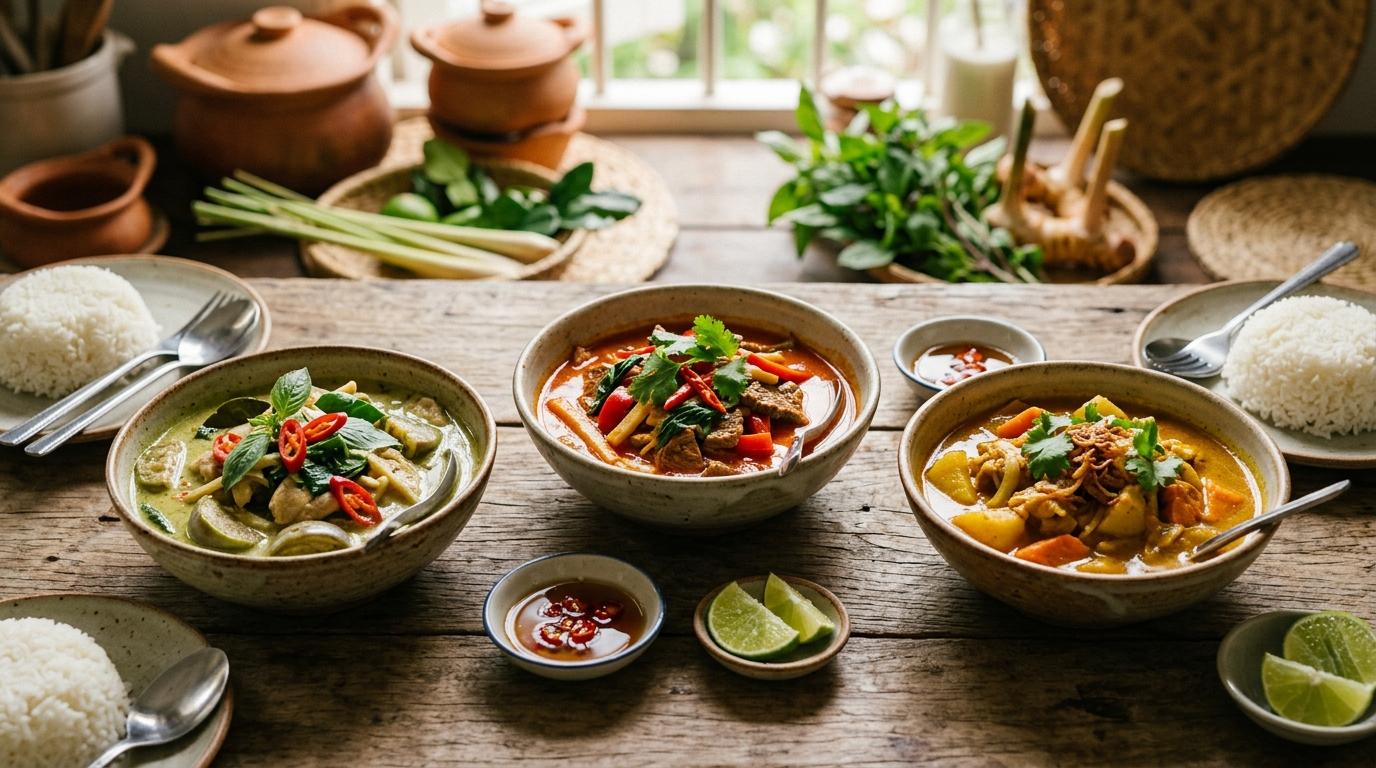
Thai curry is poetry in a bowl—layers of heat, sweetness, and aromatic complexity that build with each spoonful. While our collection of Thai recipes spans the spectrum from som tam to pad thai, curry represents the heart of Thai cooking philosophy: balance, depth, and the transformative power of fresh aromatics.
Real Thai curry isn't the thick, cream-heavy sauce you might expect. It's a fragrant broth where coconut milk marries with house-made curry paste, creating something that coats your spoon but never weighs down the palate. The secret lies in understanding the fundamental techniques that Thai cooks have refined over centuries.
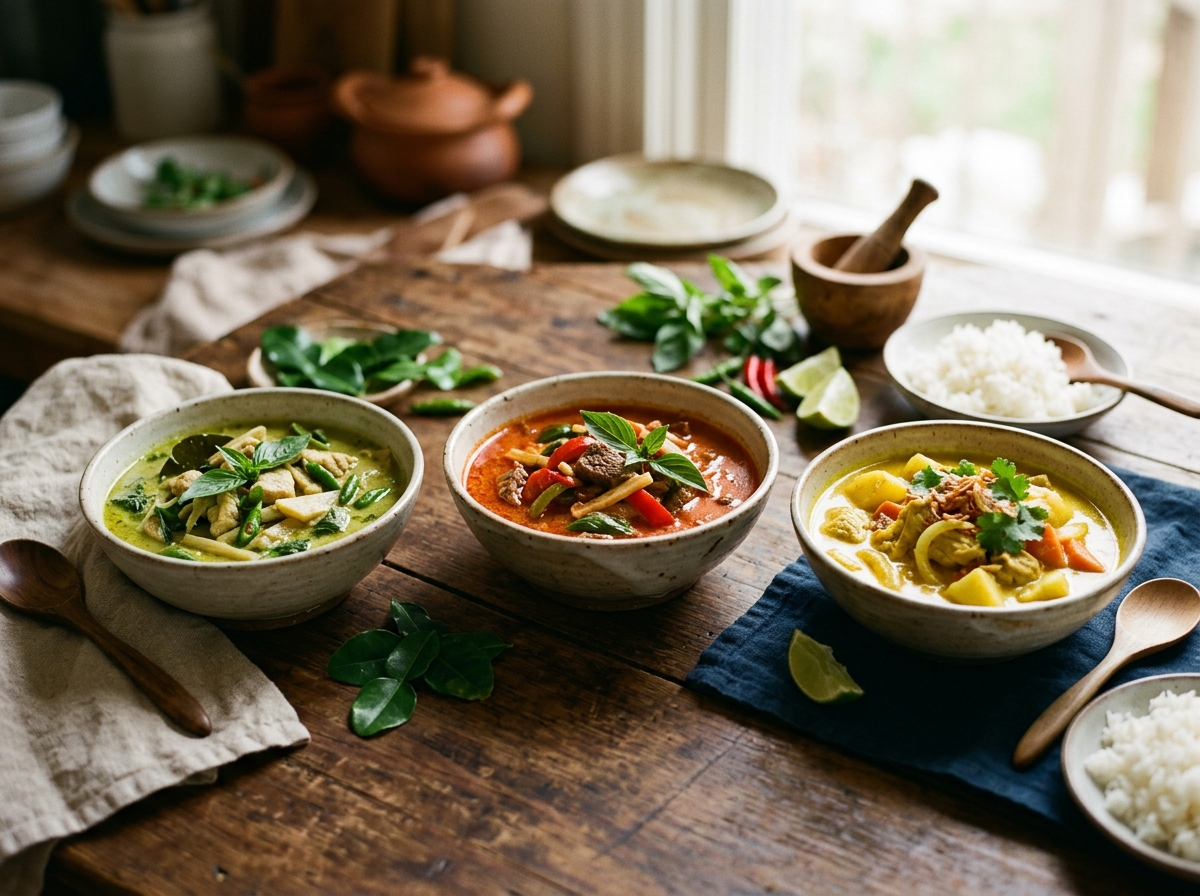
Let's dive into the three cornerstone curries—red (gaeng phed), green (gaeng keow wan), and yellow (gaeng garee)—and the methods that make them sing.
Understanding Thai Curry Fundamentals
Thai curry begins with kreuang gaeng—curry paste—which forms the flavor foundation of every great dish. Unlike Indian curries that often start with whole spices, Thai curry builds from wet aromatics: chilies, galangal, lemongrass, garlic, and shallots pounded into a concentrated paste.
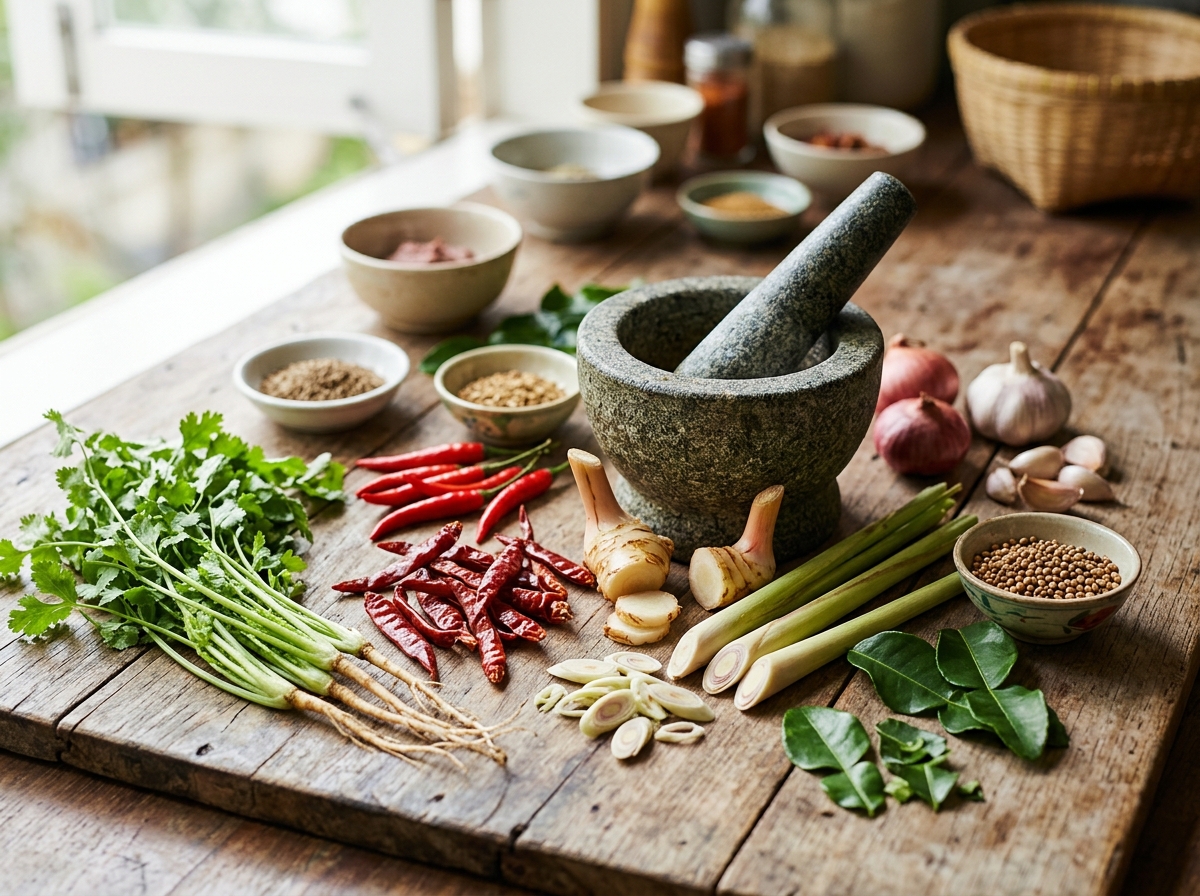
The traditional method uses a granite mortar and pestle (khrok sak), working ingredients from hardest to softest. You start with dried chilies and salt, gradually adding fresh aromatics until you achieve a smooth, fragrant paste. This process takes time—sometimes an hour or more—but it develops flavors that a food processor simply can't match.
The second crucial element is coconut milk technique. Thai cooks separate coconut milk into thick cream and thin milk, using each at different stages. The thick cream fries the paste, while thin milk creates the curry's liquid base. This layered approach prevents the harsh, raw paste flavor that plagues many Western interpretations.
Red Curry (Gaeng Phed): The Gateway Curry
Red curry offers the most approachable introduction to authentic Thai flavors. Its base comes from dried red chilies—typically prik chee fa or prik haeng—which provide heat without overwhelming bitterness.
For the paste, you'll need about 10-12 dried red chilies (seeds removed for less heat), 1 tablespoon coriander seeds, 1 teaspoon cumin seeds, 4-5 white peppercorns, 3 stalks lemongrass (tender parts only), 2-inch piece galangal, 6 makrut lime leaves, 8 garlic cloves, 4 shallots, and 1 tablespoon shrimp paste.
The technique matters enormously. Toast the coriander and cumin seeds until fragrant, then pound with salt and soaked chilies until smooth. Add aromatics one by one, working each ingredient completely before adding the next. The finished paste should be smooth enough to spread like butter.
To cook red curry, heat 2 tablespoons of thick coconut cream in a wok until it separates—you'll see oil pooling at the edges. Add 3-4 tablespoons of paste and fry until deeply fragrant, about 3-4 minutes. The paste should darken and release its essential oils.
Pour in the remaining coconut milk gradually, stirring to prevent curdling. Add your protein (chicken, beef, or firm tofu work beautifully), then vegetables that need longer cooking—Thai eggplant, bamboo shoots, or green beans. Finish with quick-cooking vegetables like basil leaves and adjust seasoning with fish sauce, palm sugar, and lime juice.
Green Curry (Gaeng Keow Wan): The Herbal Heat
Green curry represents Thai cuisine's most intense herbal expression. Fresh green chilies—prik kee noo suan—provide searing heat, while Thai basil, cilantro roots, and makrut lime leaves create layers of green aromatics.
The paste requires fresh green chilies (about 15-20 small ones), galangal, lemongrass, lime zest, cilantro roots, Thai basil stems, garlic, shallots, white peppercorns, coriander seeds, and shrimp paste. The grinding process takes patience—green chilies release oils that can irritate skin, so handle carefully.
Green curry cooking follows the same coconut cream frying technique, but timing becomes critical. The fresh herbs can turn bitter if overcooked, so add protein and sturdy vegetables first, saving delicate herbs for the final minutes.
Thai eggplant and bamboo shoots are traditional accompaniments, but green beans, zucchini, or Asian eggplant work well. The curry should taste bright and herbaceous, with heat that builds gradually rather than attacking immediately.
Yellow Curry (Gaeng Garee): The Gentle Giant
Yellow curry shows Persian and Indian influences on Thai cuisine, incorporating turmeric and curry powder alongside traditional Thai aromatics. It's the mildest of the three, making it perfect for those building their spice tolerance.
The paste combines dried red chilies (fewer than red curry), lemongrass, galangal, garlic, shallots, turmeric, curry powder, and shrimp paste. The turmeric provides the characteristic golden color while tempering the chili heat.
Yellow curry pairs beautifully with potatoes and onions—vegetables that soak up the aromatic coconut broth. Chicken is traditional, but the mild spicing works equally well with fish or vegetables. The finished curry should taste warm and comforting, with turmeric's earthiness balancing the coconut richness.
Key Ingredients and Where to Find Them
Authentic Thai curry demands specific ingredients that create irreplaceable flavors. Galangal provides citrusy heat that ginger can't match. Makrut lime leaves offer floral intensity beyond regular lime zest. Thai basil brings licorice notes that sweet basil lacks.
Thai markets offer the freshest ingredients, but many items are now available online. Palm sugar adds caramel depth that white sugar can't replicate. Fish sauce provides umami foundation—look for brands like Red Boat or Megachef for pure, high-quality options.
For chilies, dried prik chee fa work for red curry, while fresh prik kee noo provide green curry's signature heat. Thai eggplant—small, round, and slightly bitter—adds textural interest impossible to achieve with globe eggplant substitutes.
Coconut milk quality makes or breaks curry. Avoid light versions or those with stabilizers. Thai brands like Chaokoh or Mae Ploy separate naturally, giving you the thick cream needed for proper technique.
Advanced Techniques and Troubleshooting
Professional Thai cooks adjust curry consistency throughout cooking. If your curry looks too thick, thin with coconut milk or stock. Too thin? Simmer uncovered to concentrate flavors, or add a slurry of cornstarch and coconut milk.
Paste storage extends your curry-making efficiency. Fresh paste keeps refrigerated for one week or frozen for three months. Freeze in ice cube trays for portion control—one cube typically equals one serving of curry.
Balancing flavors requires tasting throughout cooking. Thai cuisine aims for harmony between sweet (palm sugar), salty (fish sauce), sour (lime juice), and spicy (chilies). Start conservatively with seasonings—you can always add more.
Common mistakes include using cold coconut milk (it won't separate properly), adding paste to hot oil instead of coconut cream (creates harsh flavors), and overcooking herbs (turns them bitter). Take your time with each step.
Serving and Pairing Suggestions
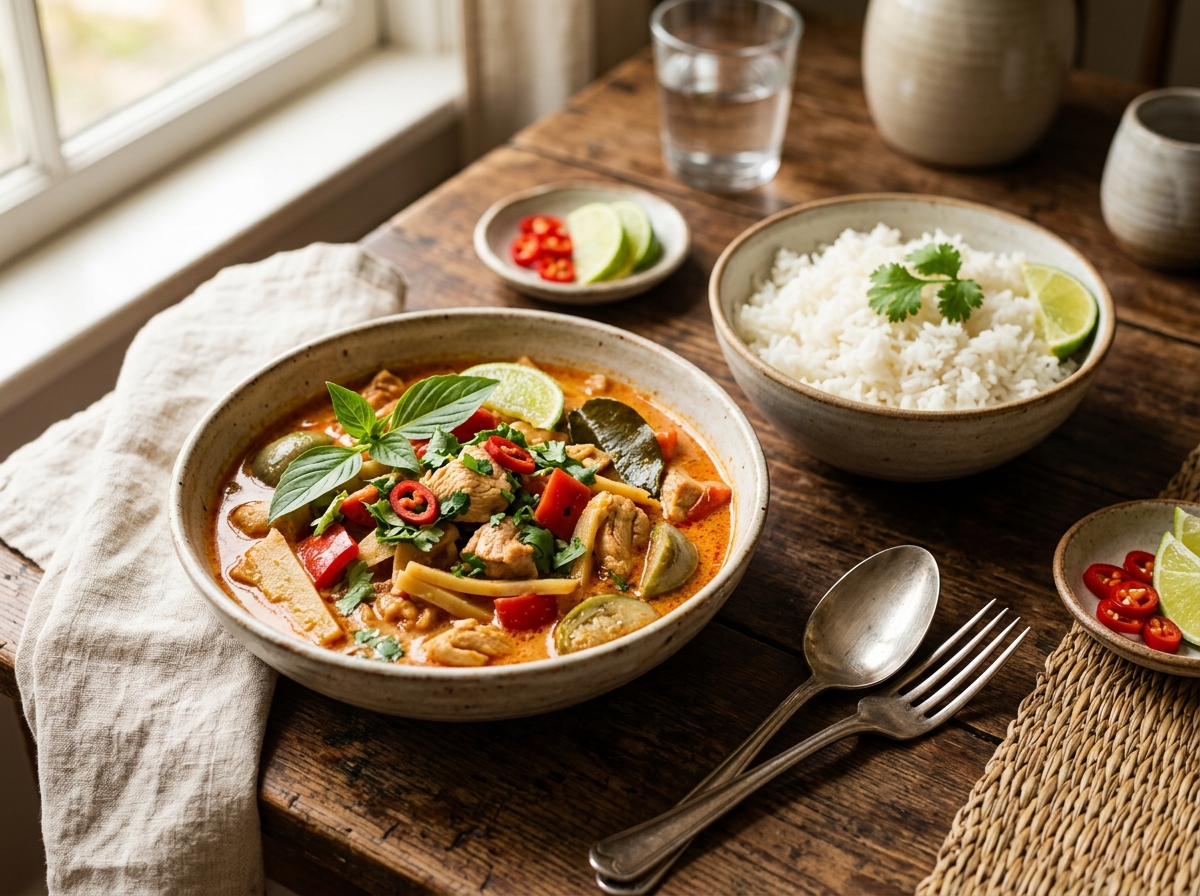
Thai curry traditionally accompanies jasmine rice, which provides neutral backdrop for complex flavors. The rice should be fluffy and separate, not sticky or mushy. Long-grain varieties work best.
Garnishes add textural contrast and fresh flavor notes. Thai basil leaves, sliced chilies, and lime wedges allow diners to customize heat and brightness. Crispy shallots or garlic provide welcome crunch.
Consider serving multiple curries family-style, alongside dishes like our Crying Tiger Steak Recipe for contrasting flavors and textures. Thai meals emphasize variety and balance across the entire spread.
Making Curry Your Own
While respecting traditional techniques, don't fear adaptation. Seasonal vegetables, local proteins, and personal heat preferences can guide your curry evolution. The fundamental principles—proper paste preparation, coconut milk technique, and balanced seasoning—remain constant.
Start with one curry type and master it completely before moving to others. Understanding how coconut cream behaves, how paste develops flavor, and how seasonings interact takes practice. Each successful batch builds intuition for the next.
Thai curry represents centuries of culinary refinement, but it's also wonderfully personal cooking. As you develop confidence with these techniques, you'll find yourself adjusting spice levels, experimenting with vegetables, and creating curries that reflect both tradition and your own taste preferences.
These authentic Thai curry recipes connect you to generations of cooks who understood that great food comes from patience, quality ingredients, and respect for time-tested techniques. Whether you're exploring our complete collection of Thai recipes or focusing specifically on curry mastery, remember that each bowl represents not just dinner, but a delicious bridge between cultures.
Sources & further reading
- The Ultimate Guide to Thai Curries — Inquiring Chef
- How to choose the perfect Thai curry to suit your tastebuds — Marion's Kitchen
- Explore the Different Types of Thai Curry — Exotic Food Thailand
- What's the Difference between Thai Red, Yellow & Green Curry? — Asian Inspirations
Related Topics
Enjoyed this article? Share it with fellow food lovers!
Import a recipe, start cooking
Paste any recipe URL and we'll turn it into a Cook Mode experience with step-by-step visuals, voice narration, and built-in timers.