

What Is Zeytinyağlı Taze Fasulye? Turkish Green Beans
Zeytinyağlı taze fasulye is a Turkish dish of green beans slowly cooked in olive oil with tomato until soft and silky. This is the story behind it, how it varies, and when and what to serve it with.
Featured Recipe
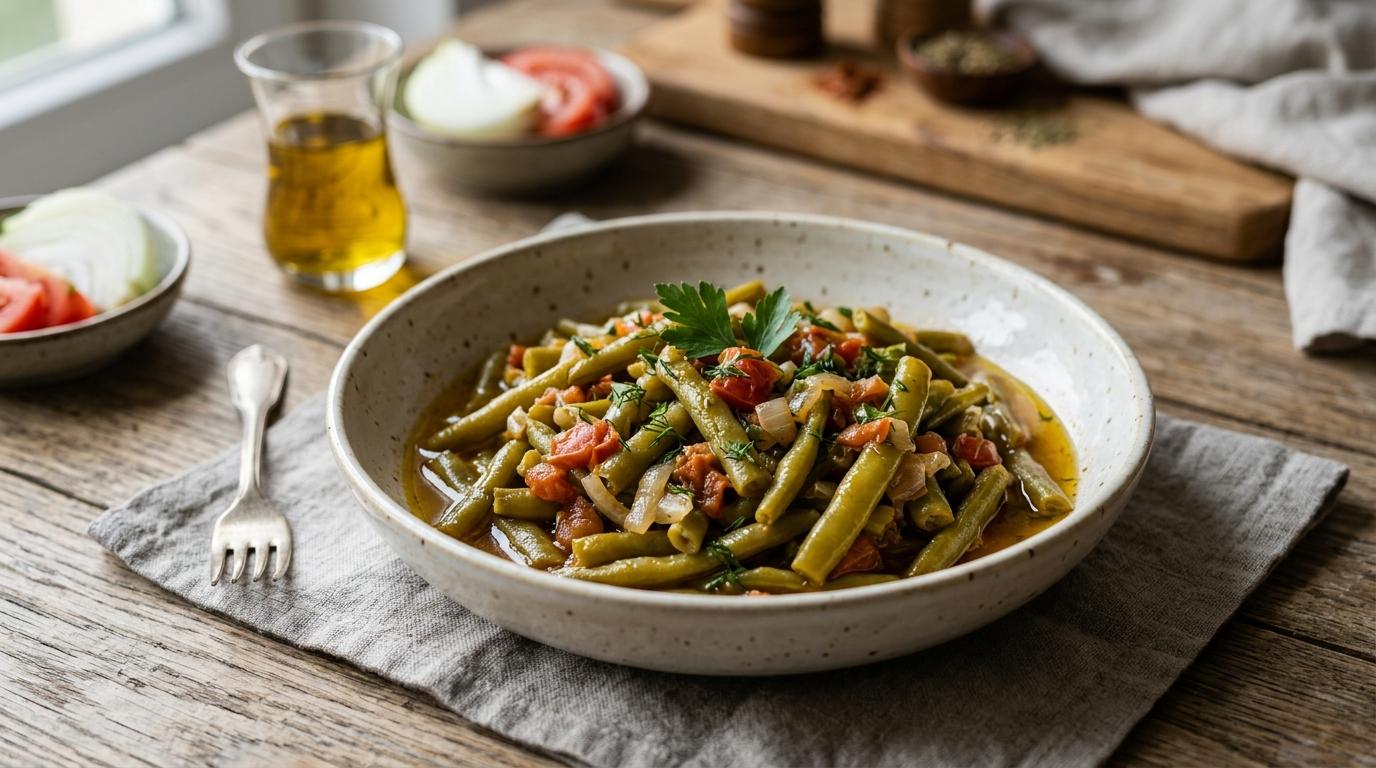
Zeytinyağlı Taze Fasulye Tarifi
Zeytinyağlı taze fasulye is a Turkish dish of green beans cooked slowly in olive oil with tomato and onion until they turn soft, sweet and almost silky. Nothing about it is crisp or squeaky. The beans give way at the touch of a fork, the oil carries the tomato and onion through every bite, and a squeeze of lemon at the end keeps it bright.
People love it because it asks so little and gives so much. It is plain, it is vegetarian, and it tastes better after it has rested, so it suits cooks who like to make something ahead. Eaten at room temperature with good bread, it is one of the most comforting things on a Turkish table.
Where it comes from
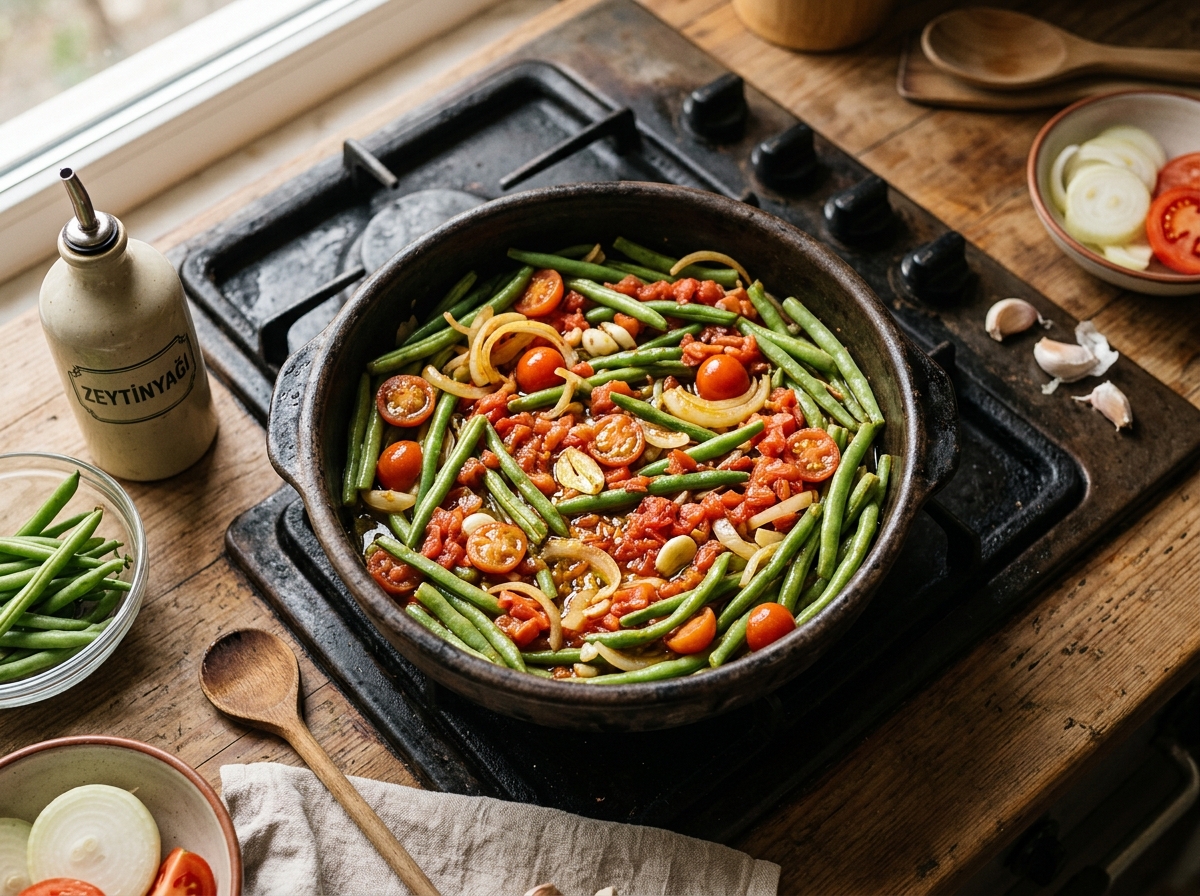
Zeytinyağlı simply means "with olive oil," and the dish belongs to a whole category of Turkish cooking called zeytinyağlılar: vegetables simmered in olive oil and traditionally eaten without meat. Green beans are among the most popular of them, according to the Turkish food publication Lezzet.
The dish is usually described as rooted in the Aegean and Marmara regions of western Turkey, where olive oil has long been a staple. One account traces the history of the zeytinyağlı tradition back to the Ottoman Empire, when olive oil was widely used along the western coast. Beyond that, there is no documented first cook, date or birthplace for this particular dish, so it is best understood as a regional home-cooking tradition rather than an invention with a known author.
One small irony: the green bean itself is traced back to the Americas, so this very Turkish dish is built on an ingredient that arrived from far away and was made entirely at home.
The same idea shows up across the eastern Mediterranean. Green beans stewed in tomato sauce and olive oil are found in the cuisines of the Balkans, Turkey and the Levant, often under the name fasoulia. The Greek fasolada is a close relative.
How it varies
The core of the dish stays steady: green beans, tomato and olive oil. Around that, cooks make small choices.
- The onion and garlic. Many families start with onion, and some add garlic. Others keep it to onion alone for a gentler flavor.
- The tomato. Fresh tomatoes are common in high summer, while paste or grated tomato gives deeper color out of season.
- The sweet note. A pinch of sugar is a familiar addition in many Turkish kitchens, to round out the tomato.
- Other beans and vegetables. The same method turns up in related dishes such as zeytinyağlı barbunya (cranberry beans) and zeytinyağlı türlü (mixed vegetables).
The traditional version is meat-free, which is the point of the category. Modern twists tend to add herbs, a little chili or a drizzle of pomegranate molasses, but the classic needs none of them.
When to make it
This is a summer dish at heart. In the Northern Hemisphere, green beans peak from July through September, just as tomatoes, peppers, zucchini and eggplant crowd the market. A warm August afternoon is the ideal time: cook it in the morning, let it cool, and serve it for lunch without turning the stove on again.
It works for a few settings in particular:
- A meze spread with a few other cold dishes, where it sits happily beside dips and cheese.
- A picnic or a packed lunch, since it travels well and does not need reheating.
- A relaxed Sunday supper, or a weeknight in late summer when you want something light.
It also suits cooler months when good fresh beans are harder to find, though it will never taste quite as it does in July.
What to serve with it
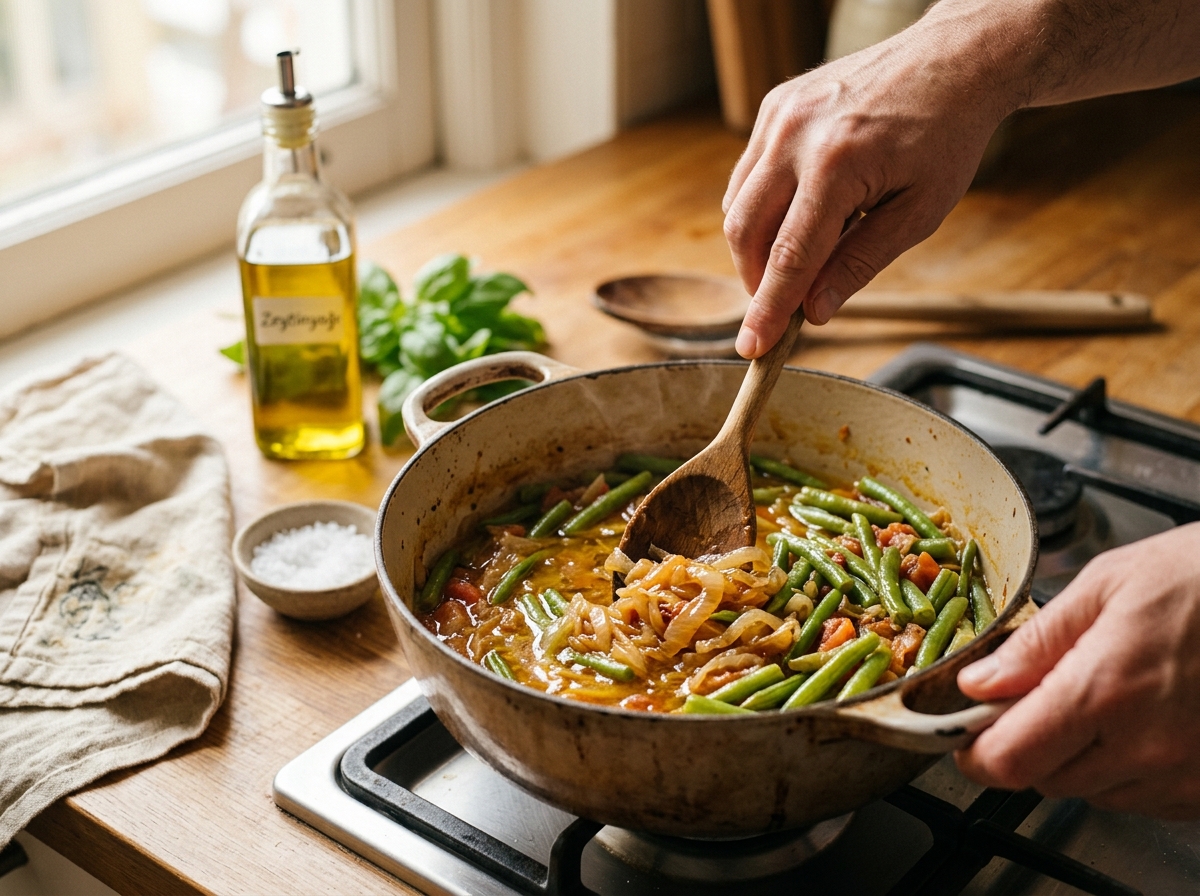
- Crusty bread. This is not optional. The olive oil and tomato juices at the bottom of the dish are the best part.
- Garlicky yogurt. Its cool tang plays against the sweetness of the cooked beans.
- White cheese. A salty, crumbly cheese similar to feta makes the dish feel like a full meze plate.
- Rice or bulgur pilaf. Together they turn the beans into a light main course.
- Ayran or a chilled dry white wine. Both are refreshing and let the olive oil and lemon come through.
Make it at home
The version we cook on Meez comes from Nefisyemektarifleri. When you are ready, get the recipe, or cook it step by step in Cook Mode if you want your hands free at the stove.
Questions about zeytinyağlı taze fasulye
What does zeytinyağlı taze fasulye mean?
Zeytinyağlı means "with olive oil," taze means "fresh," and fasulye means "bean." Together they name fresh green beans cooked in olive oil.
Is zeytinyağlı taze fasulye vegetarian?
Yes. It belongs to the zeytinyağlılar, a group of Turkish vegetable dishes traditionally cooked in olive oil and eaten without meat.
Where does zeytinyağlı taze fasulye come from?
It is generally linked to the Aegean and Marmara regions of Turkey, and the olive oil tradition behind it is often traced to the Ottoman era. No single origin story or date is documented.
How is it different from Greek fasolada?
The two are related, and both use beans, tomato and olive oil. The Turkish dish is built around fresh green beans and is usually served as a cool or room-temperature plate, while fasolada is generally thought of as the Greek bean dish of the same family.
Sources
- Fasoulia
- Zeytinyağlı Taze Fasulye - Beryl Shereshewsky
- Lezzetli Tarifler: Zeytinyağlı Taze Fasulye Tarifi
Last reviewed November 6, 2026. Written by the Meez editorial team with Meez Magic, from the sources above.
Original Recipe Source
This article is inspired by a recipe from Nefisyemektarifleri.
Visit the original source for their version of this recipe and more great content.
Related Topics
Enjoyed this article? Share it with fellow food lovers!
Ready to Cook This Recipe?
Experience our immersive Cook Mode with step-by-step visual guidance, voice narration, and built-in timers.