

Where Does Beef Stew Come From? A Gluten-Free Classic
Beef stew is old, European in its documented roots, and thoroughly at home on the American table. Here is where it comes from, how it varies, and what to serve alongside a gluten-free pot of it.
Featured Recipe
BEST Gluten-Free Beef Stew (Slow-Cooker)
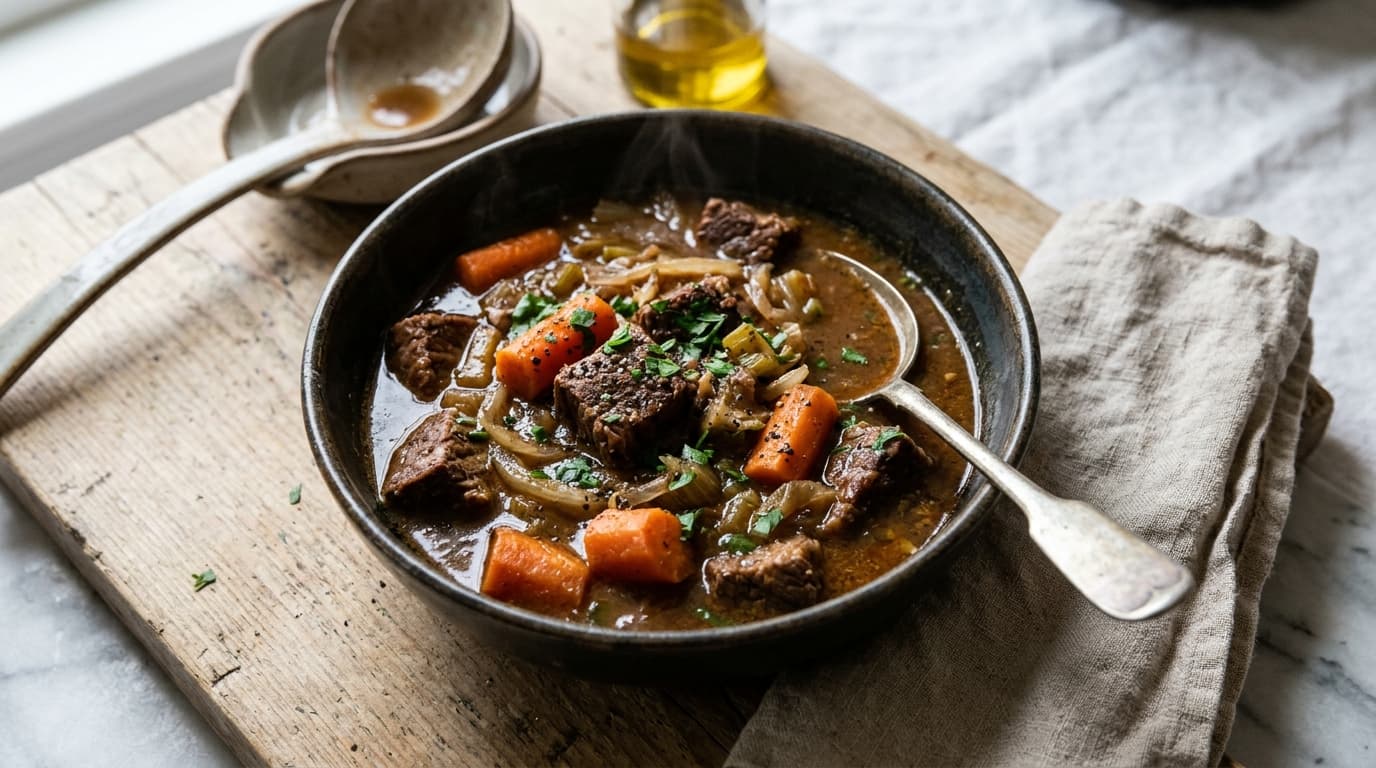
American beef stew is a deep, savory pot of beef cooked until it yields to a spoon, with soft carrots and potatoes in a glossy, brown gravy. The kitchen smells of onion and herbs for hours before anyone sits down, and the first bite is rich without being heavy.
People love it because it asks so little of the cook and gives so much back. Tougher, collagen-rich cuts turn tender, the vegetables take on the flavor of the sauce, and one pot feeds a table. This version is gluten-free, which means it can be served to everyone without a second dish.

Where beef stew comes from
Beef stew is not American in origin. Stewed meats are mentioned in the Bible, and the first published beef stew recipes are generally said to date to 14th-century France. From there, European cooks carried the method across the Atlantic, and settlers adapted it to the ingredients they could find.
Cooking food in liquid in a lidded container is a much wider tradition than any one country. Encyclopedia entries on stew note that First Nations in Canada and Native Americans in the United States made stews in birch bark containers or hollowed-out trees, before Europeans introduced metal containers. Stew is also often named for its main ingredient, which is how a pot of beef and vegetables simply became beef stew.
The American version most of us know is a fairly plain one: chuck roast, onion, carrot, potatoes and herbs, sometimes with tomato. It is less a single invention than a long habit of cooking whatever was available, slowly.
How beef stew varies
Even within the United States, stew goes in several directions. Pepper pot soup, associated with Philadelphia, is built on beef tripe, peppers, spices and root vegetables, and historians trace its roots from the West Indies up the Atlantic coast. Burgoo, a stew with roots given as North America and Great Britain, is traditionally a mix of meats, often smoked, and its name has an uncertain origin. Both are cousins of beef stew rather than versions of it.
At home, the differences are smaller. Some cooks add tomato paste or red wine, others lean on thyme and bay, and some add parsnips, turnips or peas. Traditionally, stews like this are thickened with a spoonful of wheat flour, which is where gluten usually enters the pot. The version we cook swaps in gluten-free flour for that job, so the gravy stays silky and the method stays the same. A modern twist you might see is a slow cooker or pressure cooker. The long, low simmer on the stovetop or in the oven is still the classic.
The version we cook on Meez comes from Meaningful Eats. It is gluten-free as written by its source, and it is still worth checking labels on packaged items such as broth and seasonings.
When to make it
Beef stew is a Sunday dinner by nature. It rewards a slow afternoon, and it tastes better when you are not rushing it. That also makes it a good weekend project: brown the beef, chop the vegetables, then let the pot do the rest while you get on with the day.
It is made for cozy comfort evenings, especially a cold, wet one in late October or a snowed-in night in January. Autumn and winter are its best seasons in the Northern Hemisphere, when carrots, potatoes, onions, parsnips, celery and hardy herbs like thyme and rosemary are at their best and cheapest.
It also suits feeding a crowd. A big pot holds up on a low heat, reheats well, and lets you serve a mixed table, including a guest who avoids gluten, from one dish.

What to serve with beef stew
- Creamy polenta. Naturally made from corn, it soaks up gravy the way noodles might. Check the label if you are cooking for someone avoiding gluten.
- Gluten-free bread, warmed. A good gluten-free loaf, toasted or warmed, gives you something to drag through the sauce.
- A sharp green salad. Bitter greens with a lemon or red wine vinaigrette cut through the richness of the beef.
- Roasted green beans or Brussels sprouts. Their browned edges and bit of char sit well beside the soft vegetables in the pot.
- A dry red wine or dry apple cider. A medium-bodied red or a crisp cider both match the savory sauce. As with anything packaged, check the label.
Make it at home
When you are ready to cook, get the recipe for the full ingredient list and method. If you like to keep your hands free, you can also cook it step by step in Cook Mode.
Questions about beef stew
Where does beef stew come from?
Most accounts place its documented roots in Europe, with the first published beef stew recipes dating to 14th-century France. European settlers brought the method to America and adapted it to local ingredients.
Is beef stew an American dish?
Not originally, though it is thoroughly American in practice. Indigenous peoples in North America were already making stews in vessels such as birch bark containers before Europeans arrived with metal pots, and the modern version blends those traditions with European ones.
How is beef stew different from burgoo or pepper pot?
Beef stew is built on one main meat, usually chuck, with familiar vegetables. Burgoo traditionally combines several meats and is often smoked, while Philadelphia pepper pot is associated with beef tripe, peppers and spices.
What should I serve with gluten-free beef stew?
Polenta, warmed gluten-free bread, a sharp green salad and roasted vegetables all work well. A dry red wine or dry cider rounds out the table, and it is worth checking labels on anything packaged.
Sources
Last reviewed November 11, 2026. Written by the Meez editorial team with Meez Magic, from the sources above.
Original Recipe Source
This article is inspired by a recipe from Meaningfuleats.
Visit the original source for their version of this recipe and more great content.
Related Topics
Enjoyed this article? Share it with fellow food lovers!
Ready to Cook This Recipe?
Experience our immersive Cook Mode with step-by-step visual guidance, voice narration, and built-in timers.