

Where Do Pancakes Come From? A Gluten-Free Stack Explained
Pancakes have no single inventor, but the tall, tender American stack has a long line of ancestors. Here is where it comes from, how it varies, and what to serve alongside a gluten-free batch.
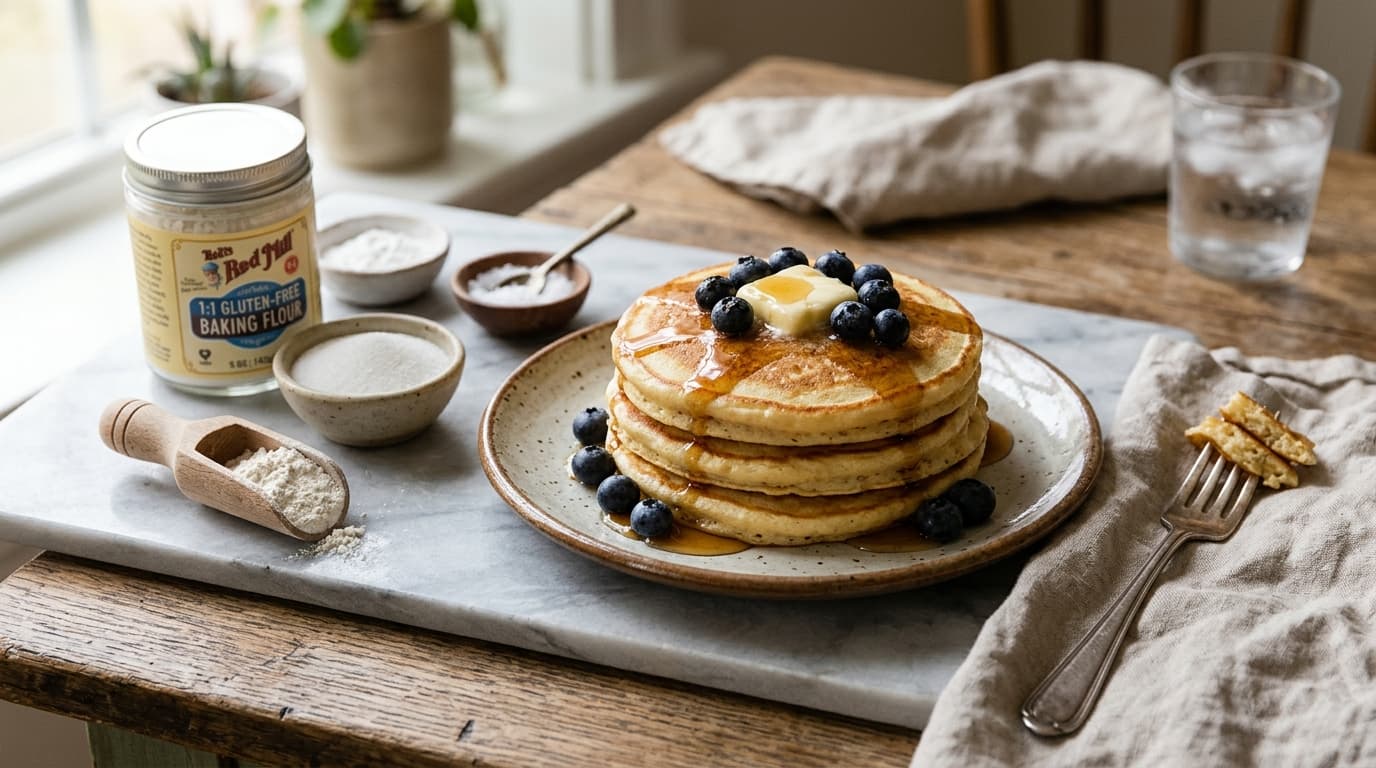
Featured Recipe
Fluffy Gluten-Free Pancakes
Fluffy gluten-free pancakes are the American breakfast classic in its tallest, softest form: golden on the outside, tender and airy within, with a faint sweetness that gets along with almost anything you pour or pile on top. They come off a hot, lightly greased skillet in a stack, and the first bite should be light rather than dense or gummy.
People love them because they are easy and generous. The batter comes together in a bowl, the pan does the rest, and a plate of pancakes makes an ordinary morning feel like a weekend. A gluten-free batch that actually rises, without the heavy texture many people expect, is a small victory worth repeating.

Where pancakes come from
There is no inventor to credit. Food historians note that proto-pancakes, simple cakes of grain and liquid cooked on a hot surface, have turned up throughout food history, so no single person or place can claim the first one.
The ancient record is rich, though. One account says Greeks and Romans ate pancakes made from wheat flour, olive oil, honey and curdled milk. The same source points to Ötzi, the man found in 1991 in the Ötztal Alps on the Austrian and Italian border, who had a pancake-like food of ground einkorn wheat in his stomach. That suggests pancakes were eaten in the Alpine region as far back as the Copper Age. Those early versions were wheat-based, which is part of what makes a gluten-free pancake a modern adaptation rather than a historical one.
American-style pancakes, the thick, soft rounds we know now, probably emerged in the 1700s, and Dutch settlers are often credited with bringing their version over. Later came the convenience of boxed mixes. General Mills says Bisquick was invented in 1930, while Wikipedia lists 1931, and pancakes became one of its best-known uses. Today pancakes are a staple of the American weekend breakfast, and gluten-free and whole wheat flours are an ordinary part of the picture.
How pancakes vary
The traditional American pancake is plain or lightly sweet, with butter and syrup as the finish. From there, families make it their own. Blueberries and chocolate chips are the most common additions, and jam is a popular alternative to syrup.
Gluten-free versions are the main modern twist. Wheat flour is replaced by a gluten-free blend, and the batter benefits from a short rest before cooking, which is why the source of our version stresses it. Other styles stray further: thin, crepe-like pancakes, buttermilk stacks and fruit-studded batters all share the same family tree. The version here sits squarely in the classic camp, light, fluffy and ready for whatever toppings you like.
When to make pancakes
Pancakes are the definition of a quick favorite. A weekend morning is the obvious time, but the batter is simple enough that they work for a weekday breakfast-for-dinner, too. They also fit the Something Sweet category neatly, landing somewhere between breakfast and dessert when you add a few extras.
Summer is when they shine brightest in the Northern Hemisphere, with blueberries, strawberries, raspberries and peaches at their best from June through August. In October and November, switch to sautéed apples and pears with a spoonful of cinnamon. A Sunday morning with a house full of guests, or a lazy August weekend with a bowl of just-picked blueberries, are both ideal.

What to serve with them
- Fresh berries. Blueberries, strawberries or raspberries add tartness that balances the sweet, soft pancakes.
- Pure maple syrup. The classic partner, warmed if you like, for its deep, woodsy sweetness.
- Scrambled or soft-boiled eggs. A little protein and savoriness turns a plate of pancakes into a full, vegetarian-friendly breakfast.
- Plain yogurt. A spoonful on top or on the side brings a cool tang that cuts through the richness.
- Coffee, tea or fresh orange juice. Bitter coffee or bright juice keeps the sweetness in check.
The version on Meez is gluten-free as written by its source, but it is always worth checking labels on every packaged ingredient, including your baking powder, syrup and toppings.
Make it at home
The version we cook on Meez comes from Gluten-Free Baking. Get the recipe for the full ingredients and method, or cook it step by step in Cook Mode if you want your hands free at the stove.
Questions about gluten-free pancakes
Who invented pancakes?
No one person did. Pancake-like foods appear throughout food history, from ancient Greek and Roman cooking to a pancake-like food found in the stomach of Ötzi, so the dish has no single inventor.
Where do American pancakes come from?
American-style pancakes probably took shape in the 1700s, and Dutch settlers are often credited with bringing their version. They have been a weekend breakfast staple ever since.
Are gluten-free pancakes different from regular pancakes?
The idea is the same, a simple batter cooked on a hot griddle or skillet, but traditional pancakes use wheat flour and these use a gluten-free flour instead. Letting the batter rest before cooking helps the texture.
What should I serve with gluten-free pancakes?
Fresh berries, maple syrup, eggs, plain yogurt and coffee or juice all work well. Check the labels on anything packaged so the whole plate stays gluten-free.
Sources
- Who Invented Pancakes—And Where Did They Come From?
- Gluten Free Pancakes - The Gluten Free Austrian
- Bisquick
Last reviewed November 11, 2026. Written by the Meez editorial team with Meez Magic, from the sources above.
Original Recipe Source
This article is inspired by a recipe from Glutenfreebaking.
Visit the original source for their version of this recipe and more great content.
Related Topics
Enjoyed this article? Share it with fellow food lovers!
Ready to Cook This Recipe?
Experience our immersive Cook Mode with step-by-step visual guidance, voice narration, and built-in timers.