

Where Do Chicken Tenders Come From? A Short History
Chicken tenders are a thoroughly American comfort food, and one New Hampshire restaurant says it invented them in 1974. Here is where they came from, how they vary, and what to put on the plate beside them.
Featured Recipe
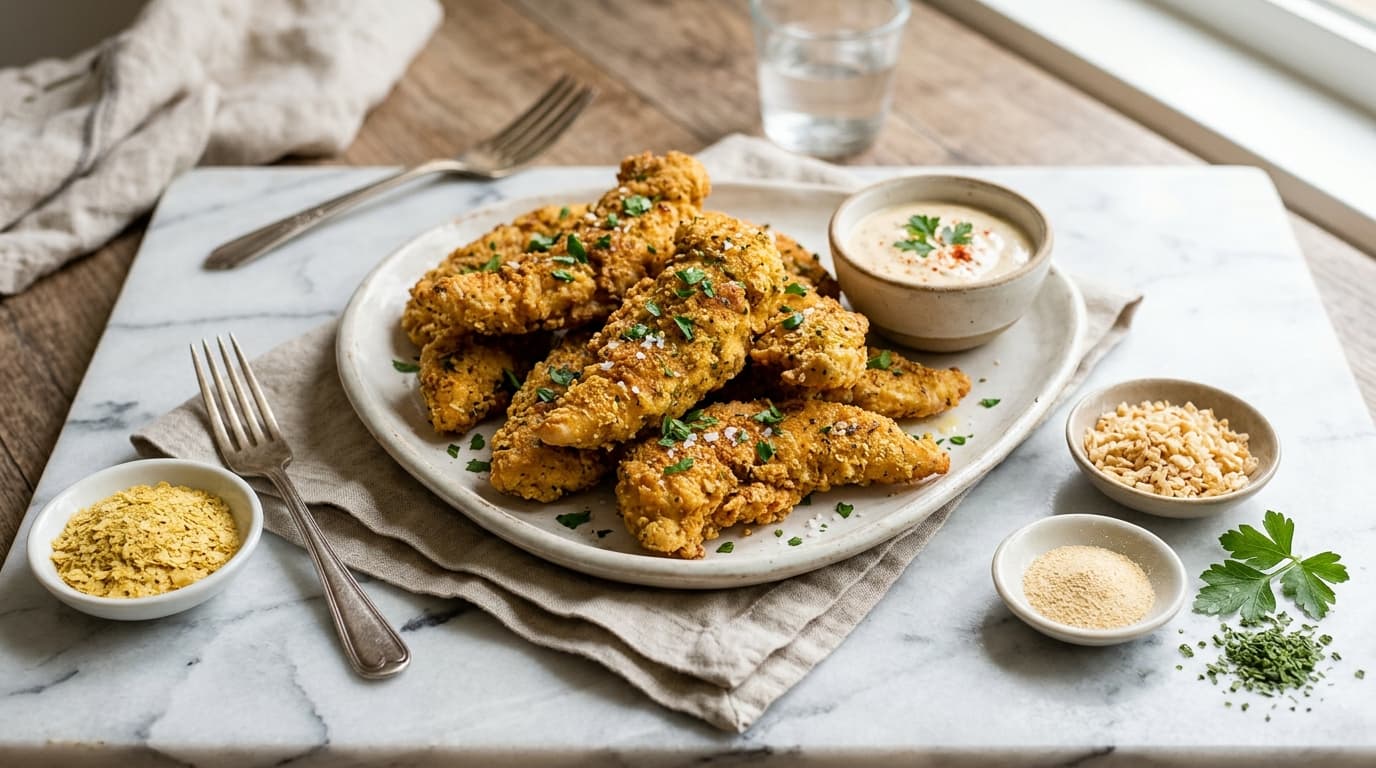
Easy Gluten Free Chicken Tenders Recipe
Chicken tenders are strips of chicken with a crackling, golden crust and tender meat that stays juicy underneath. They are an American staple, the dish that gets eaten with fingers and dunked in whatever sauce is nearest. This gluten-free version keeps everything that makes them good: the crunch, the salty crust and the easy, no-fuss dinner.
People love them because they are simple and dependable. Kids ask for them by name, adults quietly steal the last one off the plate, and nobody needs to be talked into a dish that is crisp, savory and built for dipping.

Where chicken tenders come from
A chicken tender is an actual cut of meat. The tenderloins lie on either side of the breast, and that is the strip the dish is named for. Fried chicken was already well established in America, but according to the Daily Meal, tenders and nuggets did not appear until the 1960s and 1970s. Food blogger Janice Brown found that the term “fried chicken finger” dates to 1966, so the idea was circulating before the tender had a famous birthplace.
That birthplace is usually given as Manchester, New Hampshire. The Puritan Backroom, a restaurant that opened there in 1974 and serves Greek-influenced New England food, says it invented chicken tenders that year. As the story goes, Charlie Pappas salvaged chicken pieces trimmed from larger cuts, then marinated and fried them. Wikipedia notes that those first tenders were marinated in pineapple juice, and that marinated “Manchester chicken tenders” can still be found at other restaurants in the area.
It is the restaurant’s own claim, and earlier uses of “chicken finger” exist, so it is best read as one well-documented origin story rather than the last word.
How chicken tenders vary
Names differ from place to place. Tenders, fingers, strips and tenderloins all describe much the same thing, though some menus use “strips” for pieces cut from the larger breast rather than the tenderloin itself. Nuggets are a different animal, made from various cuts and usually bite-sized.
The classic coating has long been seasoned flour or breadcrumbs, which is exactly why a gluten-free version needs its own approach. Home cooks and restaurants alike now use gluten-free crumbs or other crunchy coatings to get the same crust.
Beyond that, the variations are about method and sauce:
- Fried or baked. Deep-fried is the traditional route; oven-baked and air-fried tenders are the lighter modern take.
- Marinated. The New Hampshire original used a marinade, and a brief soak still makes the meat more tender and flavorful.
- Tossed in sauce. Buffalo-style tenders, or a glaze of honey and mustard, turn the dish into something closer to wings.
- Seasoned crusts. Paprika, garlic, onion powder or a little cheese in the coating are common family tweaks.
The version we cook on Meez comes from Gluten Free on a Shoestring. It is gluten-free as written by its source, and it is always worth checking the labels on the packaged products you use.
When to make chicken tenders
This is a weeknight dinner at heart. On a busy Tuesday it goes from fridge to table quickly, and it suits a house with picky eaters, since almost everyone agrees on a crisp piece of chicken. It also works for a casual game-day spread or a Friday movie night, set out on a big platter with several sauces.
Tenders suit any season, but they shine in late summer, when sweet corn, ripe tomatoes and cucumbers are at their best and the meal can be eaten outside on the porch. In October they pair just as well with roasted sweet potatoes, apples and the first cabbage of the season for slaw.

What to serve with chicken tenders
Keep the sides simple and check the labels on any sauces, dressings and packaged items to be sure they are gluten-free.
- Oven-roasted potato wedges or sweet potato fries. They bring the same salty, crisp comfort and soak up dipping sauce well.
- Coleslaw. A cool, tangy, crunchy slaw cuts through the richness of the fried crust.
- Corn on the cob. A natural partner in summer, sweet and buttery against the savory chicken.
- A green salad with a bright vinaigrette. It adds freshness and makes the plate feel balanced.
- Dipping sauces and drinks. Honey mustard, barbecue sauce or ranch all work, as do lemonade, iced tea or sparkling water with lime.
Make it at home
When you are ready to cook, get the recipe for the full ingredients and method. If you want company in the kitchen, cook it step by step in Cook Mode.
Questions about chicken tenders
Who invented chicken tenders?
The Puritan Backroom in Manchester, New Hampshire, says it invented them in 1974, when Charlie Pappas marinated and fried trimmed chicken pieces. The term “fried chicken finger” has been found as early as 1966, so the full story is a little more tangled.
What is the difference between chicken tenders and chicken nuggets?
A tender is a strip of chicken, traditionally the tenderloin cut that lies beside the breast. Nuggets can be made from different cuts and are usually smaller and more uniform in shape.
Are chicken tenders and chicken fingers the same thing?
Mostly, yes. The names are used interchangeably, though some menus use “strips” or “fingers” for pieces cut from the larger breast rather than the tenderloin.
What do you serve with chicken tenders?
Potato wedges, coleslaw, corn on the cob and a simple green salad all work well, along with a couple of dipping sauces. Check labels if you are keeping the whole meal gluten-free.
Sources
Last reviewed November 11, 2026. Written by the Meez editorial team with Meez Magic, from the sources above.
Original Recipe Source
This article is inspired by a recipe from Glutenfreeonashoestring.
Visit the original source for their version of this recipe and more great content.
Related Topics
Enjoyed this article? Share it with fellow food lovers!
Ready to Cook This Recipe?
Experience our immersive Cook Mode with step-by-step visual guidance, voice narration, and built-in timers.