

What Is Dijon Marinated Pork Tenderloin? Origins and Sides
Dijon marinated pork tenderloin is a lean, tender cut with a sharp, tangy crust from the grill. Here is where the idea comes from, how cooks vary it, and what to put on the plate beside it.
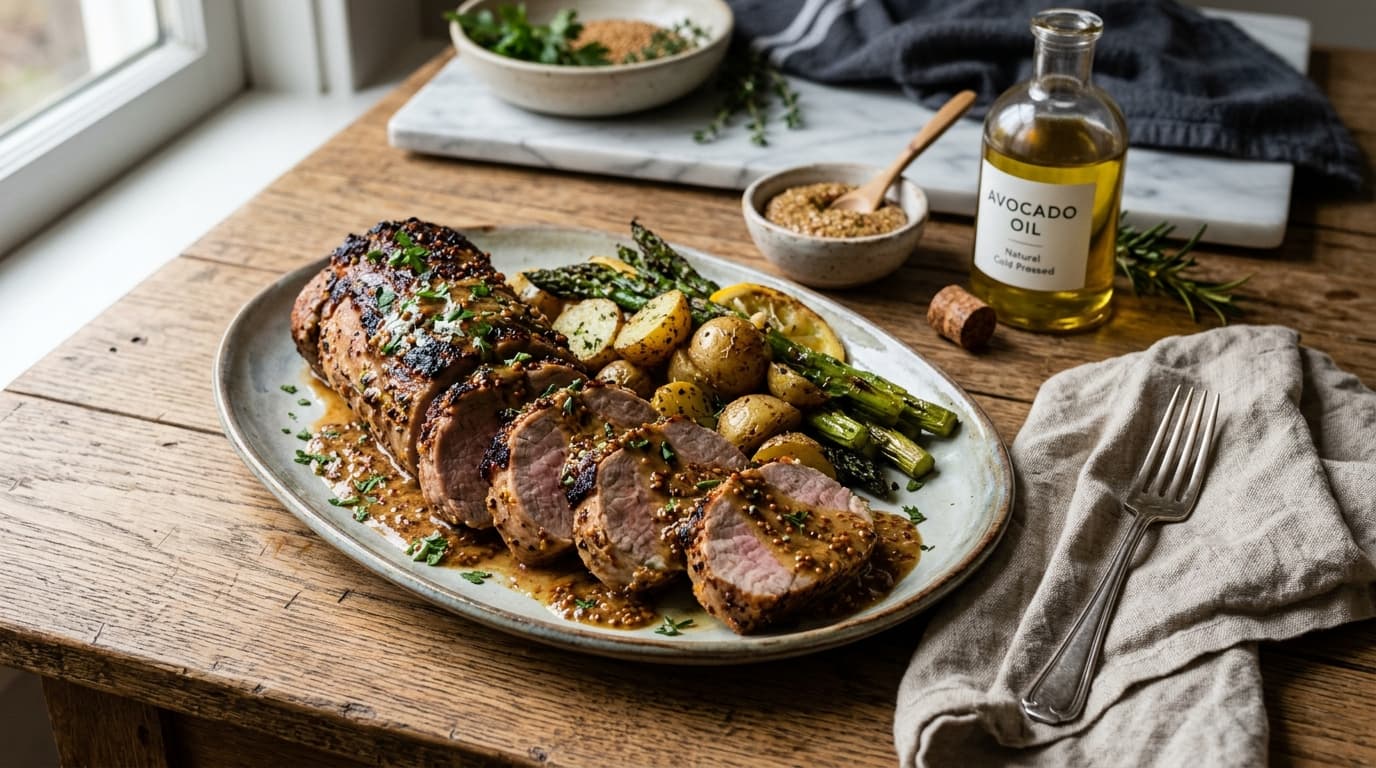
Featured Recipe
Dijon Marinated Pork Tenderloin
Dijon marinated pork tenderloin is an American grill classic built on one sharp, creamy ingredient. The mustard clings to the meat as it marinates, then browns into a savory, slightly tangy crust over the fire, while the inside stays pale pink, juicy and tender. Sliced into rounds, it looks generous and tastes bright rather than heavy.
People love it because it asks so little. Tenderloin is a lean, mild cut that takes on flavor quickly, so a simple mustard marinade does a lot of work. It suits a regular weeknight as easily as a cookout, and it pairs naturally with something as plain as a baked potato.

Where it comes from
There is no single documented origin for Dijon-marinated pork tenderloin, and it is best understood as a modern home-cooking idea rather than a dish with a famous birthplace. Mustard and pork are an old, natural pairing, and the name points to Dijon-style mustard, a French style of mustard. That is a flavor reference, not proof the dish itself is French.
One traceable thread in American cooking is a mustard-glazed pork tenderloin by cookbook author and food columnist Marian Burros, first published in The New York Times in 1989. Later cooks have adapted it, and it shows how long this combination has been circulating in American kitchens. Beyond that, most versions you find online are recipes shaped by individual cooks, not a documented lineage.
How it varies
Almost every variation starts with Dijon and changes what surrounds it. The Burros-style version, as adapted by others, uses grainy mustard with brown sugar, rosemary and sherry, then sears and roasts the meat and finishes it with a mustard sauce. A self-described “French style” take leans on olive oil, honey, parsley, lemon juice and garlic, and is pan-seared and roasted rather than grilled. Another popular approach is a honey garlic Dijon marinade that works equally well on the grill or in the oven.
The grilled version we cook is the most straightforward of these: a tangy marinade, direct heat and not much else. Traditional touches tend to be herbs like rosemary or parsley and a little sweetness from honey or brown sugar. Modern twists usually add a pan sauce, a glaze brushed on at the end, or a spicy mustard in place of the smooth kind.
One useful detail: tenderloin is not the same as pork loin. Tenderloin is a smaller, leaner cut, and it suits quick cooking over high heat. Loin is larger and better for slower roasting, so the two are not interchangeable in a recipe.
When to make it
This is a weeknight dinner that looks like more effort than it is. The marinade can be done ahead, so the cooking itself is short, which is why it works on a busy evening and also when friends are coming over for a casual cookout.
It shines from late spring through early autumn, when grills are already lit. In midsummer, sweet corn, ripe tomatoes, zucchini and green beans are all at their best in the Northern Hemisphere. On a cool evening in September or October, the same pork goes well with the last of the tomatoes, early squash and new apples. A backyard Saturday in July and a weeknight in October both suit it.

What to serve with it
- Baked potatoes. The source pairs the pork with them, and it works: the fluffy, mild potato soaks up the juices and balances the mustard’s tang.
- Grilled corn on the cob. Its sweetness is a good counterpoint to the sharp crust, and it can share the grill.
- Green beans with lemon. Crisp-tender beans add freshness and a little acidity without competing with the pork.
- A tomato and cucumber salad. In summer, a simple salad with olive oil and vinegar keeps the plate light.
- A dry Riesling or Sauvignon Blanc. Crisp white wines handle mustard well. For a non-alcoholic option, sparkling water with lemon does the same job.
The version on Meez is gluten-free as written by its source, Fearless Dining. Mustard and other packaged items can vary by brand, so it is worth checking labels on anything you use, including the sides.
Make it at home
The version we cook on Meez comes from Fearless Dining. When you are ready to cook, get the recipe for the full ingredients and method, or cook it step by step in Cook Mode so you can keep your hands free at the grill.
Questions about Dijon pork tenderloin
Is Dijon pork tenderloin a French dish?
Not strictly. Dijon mustard is a French style of mustard, and some versions are labeled “French style,” but the dish as we cook it is an American home-cooking staple with no documented French origin.
What is the difference between pork tenderloin and pork loin?
They are different cuts. Tenderloin is smaller, lean and tender, and suits quick, high-heat cooking, while loin is larger and better for slower roasting.
What goes well with Dijon marinated pork tenderloin?
Baked potatoes are the classic partner, and grilled corn, lemony green beans or a fresh tomato salad round out the plate. A crisp white wine or sparkling water with lemon works as a drink.
Does the pork taste strongly of mustard?
It tastes tangy rather than hot. Marinating and grilling mellows the mustard into a savory, slightly sharp crust that complements the mild meat.
Sources
- Pork Tenderloin Recipe with Mustard Sauce
- French Pork Tenderloin With Dijon Mustard Marinade
- Honey Garlic Dijon Pork Tenderloin Marinade - The Seasoned Mom
Last reviewed November 11, 2026. Written by the Meez editorial team with Meez Magic, from the sources above.
Original Recipe Source
This article is inspired by a recipe from Fearlessdining.
Visit the original source for their version of this recipe and more great content.
Related Topics
Enjoyed this article? Share it with fellow food lovers!
Ready to Cook This Recipe?
Experience our immersive Cook Mode with step-by-step visual guidance, voice narration, and built-in timers.