

Where does shakshuka come from? Its history explained
Shakshuka is eggs poached in a spiced tomato and pepper sauce, with roots in North Africa and many claims on its origin. Here is where it comes from, how it varies, and when and how to serve it.
Featured Recipe
Shakshuka Recipe
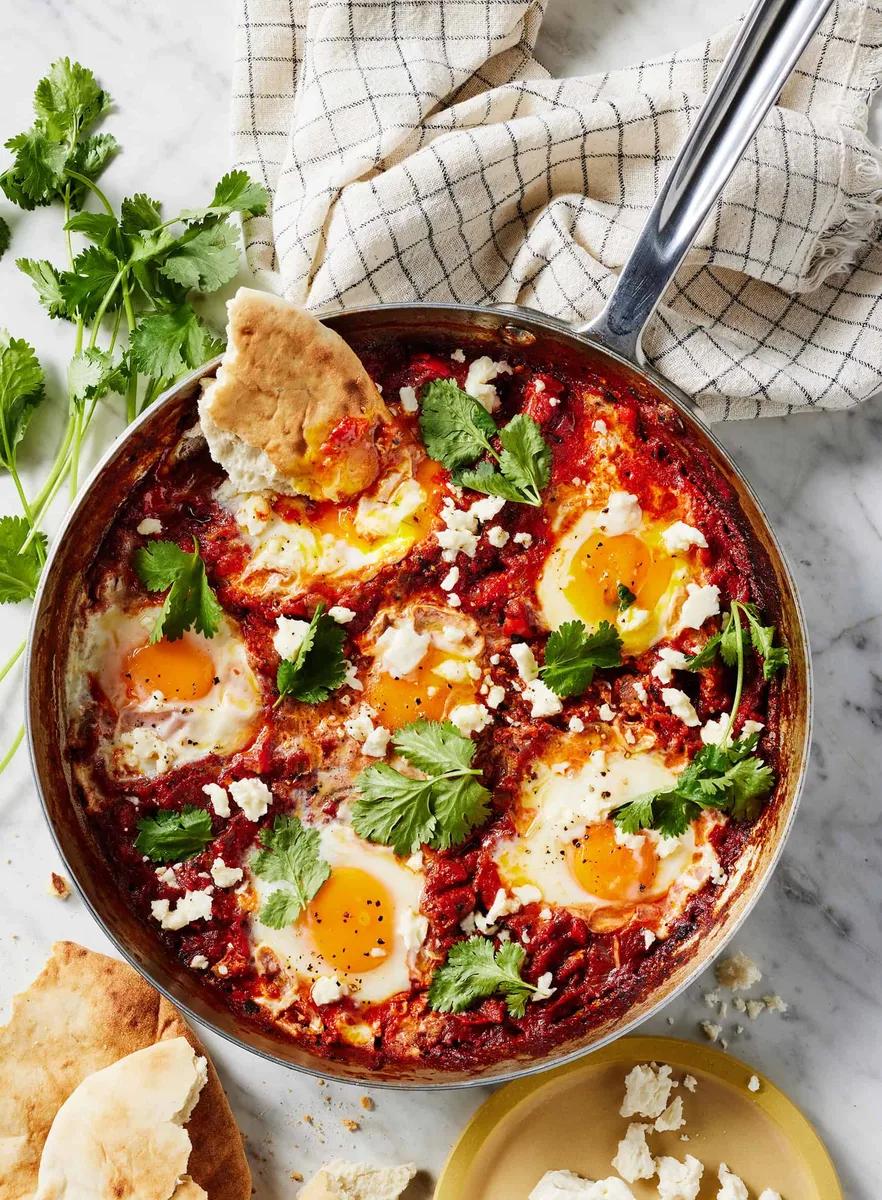
Shakshuka is a Middle Eastern and North African dish of eggs poached right in a sauce of tomatoes and peppers. The sauce is soft and a little jammy, with the warmth of cumin and paprika, and the egg whites set just enough to hold their shape while the yolks stay runny. You break one with a piece of bread and the yolk stirs into the red sauce.
People love it because it is one pan, it looks generous on the table, and it asks for very little. It is also flexible: it works as breakfast, lunch or dinner, and it is naturally vegetarian. Most of the work is letting the sauce cook down until it tastes deeper than its ingredients.
Where shakshuka comes from
Nobody can point to a single kitchen or a single year. Most accounts place the dish in North Africa, and it is commonly described as Maghrebi, from the Ottoman-era Maghreb. The name is usually translated as "mixture" in a Maghrebi dialect, and one source ties it to a Tunisian word. You will also see it spelled shakshouka or chakchouka.
Some writers look further back. Moment magazine notes that a vegetable and meat stew called saksuka was popular across the Arabic-speaking world under the Ottoman Empire, and that shakshuka as we know it today took shape in North Africa. The tomatoes and peppers came later. One account says they joined older vegetable stews in the early modern period, after Spanish traders brought American ingredients to the Middle East. Food historian Noam Sienna suggests shakshuka is better defined by technique than by ingredients.
Claims to the dish are crowded. Morocco, Libya, Tunisia, Yemen and Turkey are all named as possible homelands. Tunisian food historian Rafram Chaddad places it in what he calls the "Amazigh triangle", which covers part of eastern Algeria, southern Tunisia and north-western Libya.
Its story in Israel is better documented. One account says it arrived in the 1960s with Jewish immigrants from Libya and Tunisia. Food scholar Dalia Carmel notes it was cheap and simple for the military to serve in bulk in Israel's early days, which helped it spread. Yotam Ottolenghi's book Jerusalem later helped bring it to a wider audience, and brunch menus did the rest.
How shakshuka varies
The classic version is built on tomatoes, olive oil, peppers, onion and garlic, spiced with cumin, paprika and sometimes cayenne. That is also the version most home cooks start with, and it is the style we cook here, with a tomato and bell pepper base.
From there, cooks make it their own. Some add a spoonful of harissa for heat. Others stir in spinach or other greens, or finish the pan with crumbled feta and fresh herbs. Chickpeas turn it into something closer to a stew. Older versions of the idea included meat, and some cooks still make it that way.
The traditional approach is a plain, well-cooked sauce and eggs left runny, served in the pan it was cooked in. The modern twists are mostly about toppings and add-ins. Because the technique is the real definition, almost any thick vegetable sauce can host an egg.
When to make shakshuka
It suits a slow weekend brunch, when you want something that feels special but needs one skillet. It also suits a weeknight dinner in October, when you want a meal that comes together from pantry staples and a few eggs. It works for overnight guests, too: the sauce can be made ahead and the eggs added when people sit down.
Shakshuka shines from late summer into early fall, when tomatoes and bell peppers are at their best in the Northern Hemisphere. Late August through October is ideal, with fresh parsley and basil still around. In winter and early spring, canned tomatoes make a very good sauce, and the dish becomes a warming, inexpensive supper.
What to serve with shakshuka
- Crusty bread or warm pita. You need something to scoop up sauce and yolk, and this is the main side.
- Labneh or plain yogurt. The cool tang balances the spice and the acidity of the tomatoes.
- A cucumber and tomato salad. It adds crunch and freshness next to the soft, saucy pan.
- Olives and a little feta. Salty bites make the meal feel like a spread, especially for brunch.
- Strong coffee or mint tea. Both stand up to the cumin and paprika, and a crisp sparkling water works well too.
Make it at home
The version we cook on Meez comes from Love and Lemons. It features gently poached eggs in a tomato and bell pepper sauce. Get the recipe, or cook it step by step in Cook Mode so you can keep your hands on the pan.
Questions about shakshuka
Is shakshuka Israeli or North African?
Most accounts trace it to North Africa, and many point to the Libyan-Tunisian region. It reached Israel in the 1960s with Jewish immigrants from Libya and Tunisia, and it became a beloved staple there.
What does shakshuka mean?
The word means "mixture" in a Maghrebi dialect, and one source ties it to a Tunisian word. The name fits a dish built from a loose blend of vegetables and eggs.
Is shakshuka only for breakfast?
No. It is popular at brunch, but it works just as well for lunch or a simple dinner. The sauce is hearty enough to be a full meal with bread.
What should I serve with shakshuka?
Bread or pita is the essential side. Yogurt or labneh, a crisp cucumber salad and some olives round out the meal.
Sources
- Shakshouka
- Talk of the Table // Shakshuka
- A Thousand And One Shakshukas: How Did Shakshuka Take Over The Brunch Menus of the World?
- Shakshuka's origins, where does it come from?
- The Origin And Evolution Of Shakshuka, Israel's Favourite Breakfast
Last reviewed November 8, 2026. Written by the Meez editorial team with Meez Magic, from the sources above.
Original Recipe Source
This article is inspired by a recipe from Love and Lemons.
Visit the original source for their version of this recipe and more great content.
Related Topics
Enjoyed this article? Share it with fellow food lovers!
Ready to Cook This Recipe?
Experience our immersive Cook Mode with step-by-step visual guidance, voice narration, and built-in timers.