

What is creamy chicken stew? History, variations and sides
Creamy chicken stew is a one-pot American comfort classic: tender chicken and vegetables in a silky sauce, often crowned with fluffy dumplings. Here is where it likely comes from, how it varies, and when it is at its best.
Featured Recipe
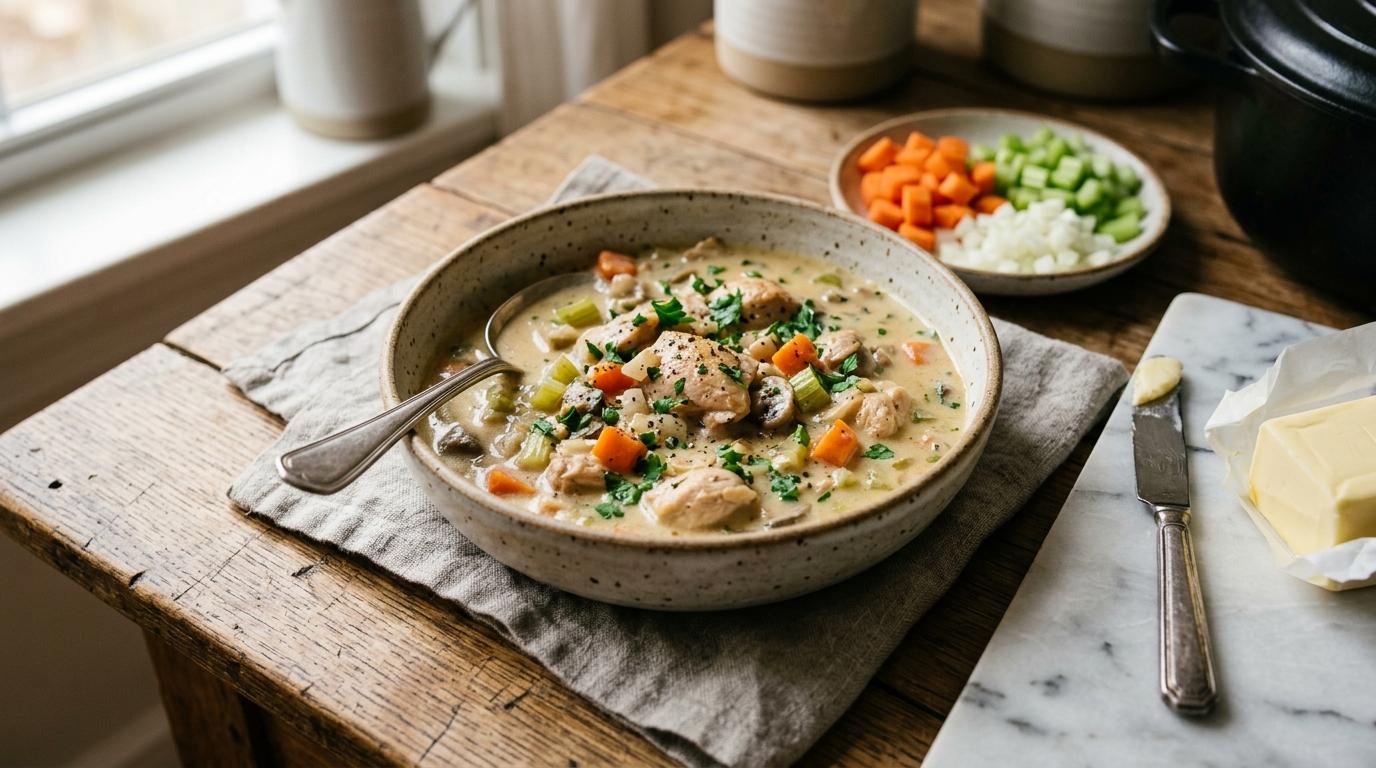
Creamy Chicken Stew Recipe
Creamy chicken stew is an American one-pot supper built on tender pieces of chicken, soft vegetables and a sauce that is rich without being heavy. It sits somewhere between a soup and a gravy: thick enough to cling to a spoon, loose enough to pool at the bottom of the bowl. When it is topped with dumplings, the steam cooks them into light, fluffy clouds that soak up the sauce underneath.
People love it because it asks so little and gives so much. One pot, humble ingredients, and a result that tastes like someone has been looking after you. It is the kind of food that quiets a table.
Where creamy chicken stew comes from
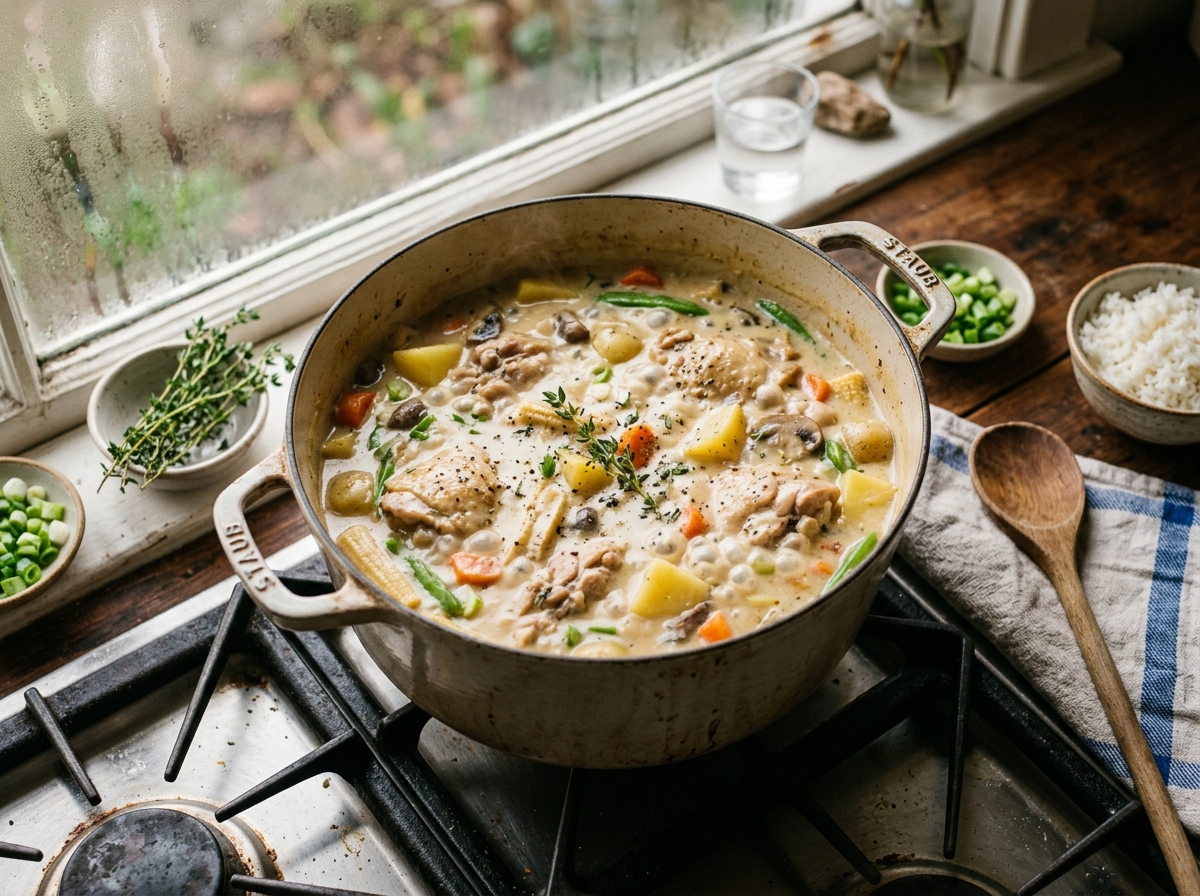
There is no documented birth date or inventor for this particular dish, and we will not invent one. What we can do is point to its close relatives in American cooking, which show the family it belongs to.
The nearest is chicken mull, also called chicken mulligan or chicken muddle. Wikipedia describes it as a traditional American stew made with chicken, broth, butter and often cream or milk, where the chicken is cooked, removed, deboned and returned to the pot. Its origins may lie in the coastal habit of Atlantic fishermen slow-cooking stews, which inland communities then adapted for chicken. That is a possibility rather than a settled fact, but the resemblance to a creamy chicken stew is hard to miss.
Another ancestor is the fricassee, a French-named dish of meat browned in butter and served in a sauce flavored with its own cooking stock. The word's exact etymology is unclear. By the 18th century, flour was replacing egg yolks as the thickener in English and American kitchens, and Martha Washington's chicken fricassee, stewed in gravy and finished with a cream sauce, is one well-known example. A flour-thickened, cream-enriched chicken dish is very much the logic behind the stew we make today.
How it varies
The core idea is flexible, so families tend to make it their own. The base is usually chicken with carrots, celery and onion, but potatoes, peas, corn or mushrooms often join in. Some cooks keep the sauce light and brothy, while others make it thick enough to count as a gravy.
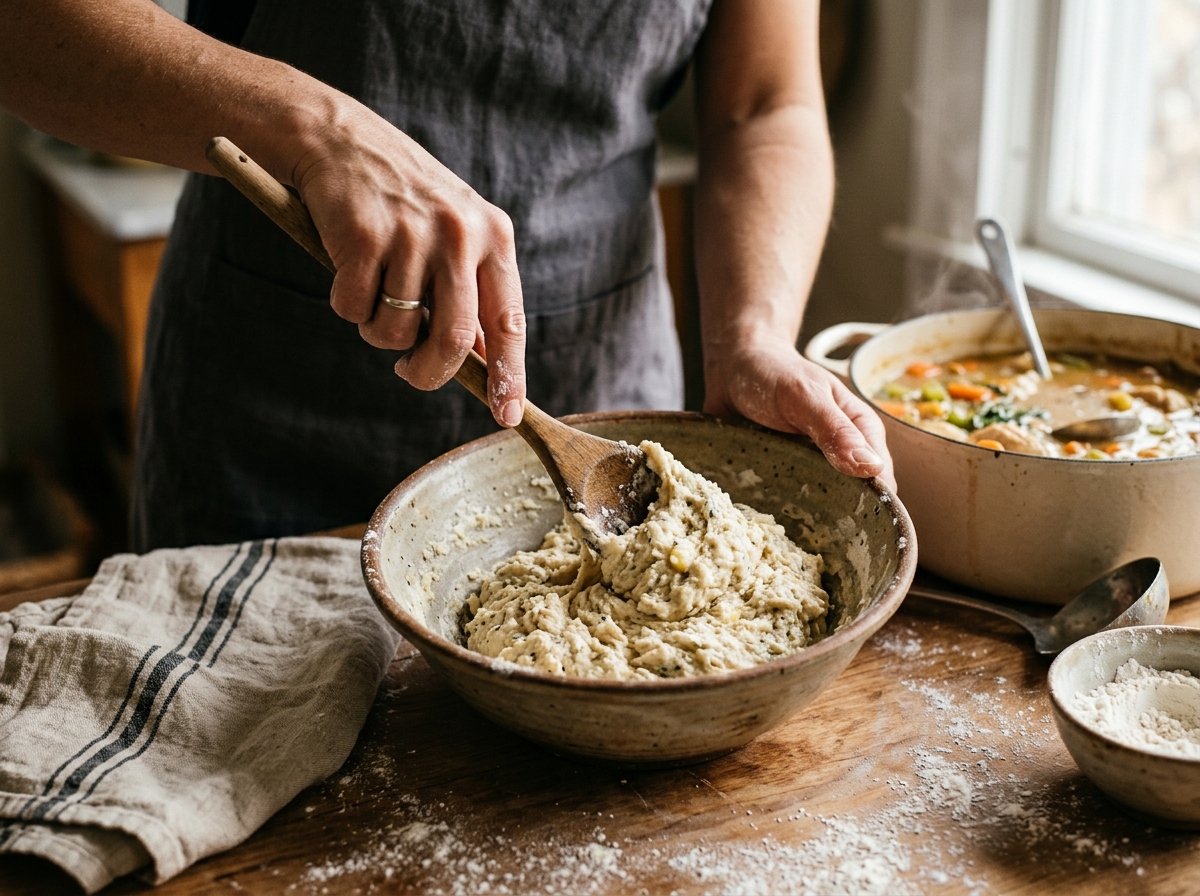
The biggest fork in the road is the topping. Dumplings are the classic comfort move, dropped onto the simmering stew and covered so they puff up. Others skip them and ladle the stew over split biscuits, or spoon it under a pastry lid, which edges it toward chicken pot pie. A modern twist might add fresh herbs, a squeeze of lemon, or a splash of white wine to cut the richness.
It is worth separating it from Brunswick stew, which is tomato-based, comes from the Southern United States, and was originally made with small game such as squirrel or rabbit. Its origin is disputed, and a 1941 Virginia Writers Project guide credits hunters in Brunswick County, Virginia. Both are American stews, but the creamy version is a different animal.
When to make it
This is a cold-weather dish, and it shines from October through March. In autumn, carrots, celery, onions, potatoes and thyme are at their best, and the first chilly evening is a perfect excuse. Into winter, parsnips, leeks and hardy greens can slip into the pot. Come early spring, a handful of peas or spring onions brightens it.
- Sunday dinner: it cooks in one pot and needs little fuss, so it suits a slow afternoon and a table with time to linger.
- Cozy comfort: after a rough day or a cold snap, this is the bowl you reach for.
- Feeding a crowd: it scales up easily, stays warm on the stove, and everyone gets a dumpling, which makes it a good choice for a family gathering or a game-day crowd that would rather sit down to something hot.
The version we cook on Meez comes from The Endless Meal®. It is a one-pot dinner with homemade dumplings that stay light and fluffy.
What to serve with it
The stew is rich and complete, so the best companions are fresh and a little sharp.
- A crisp green salad with a tart vinaigrette: the acidity cuts through the cream and resets your palate between spoonfuls.
- Green beans or broccoli: steamed or roasted until just tender, they add color and a clean, green bite.
- Apple slaw: crunchy, cold and slightly sweet, it is a good contrast to the soft textures in the bowl.
- A dry white wine or hard cider: an unoaked Chardonnay or a dry cider has enough acidity to handle the cream. For a non-alcoholic option, hot tea or sparkling water with lemon works well.
- Baked apples to finish: a warm, lightly spiced dessert keeps the cozy mood going without piling on more richness.
Make it at home
Ready to cook? Get the recipe for the full ingredient list and method, or cook it step by step in Cook Mode so your screen stays on while your hands are busy.
Questions about creamy chicken stew
Where does creamy chicken stew come from?
There is no documented origin for the dumpling-topped version. It is most closely related to American chicken mull and to the older fricassee tradition of chicken in a cream-enriched sauce.
What is the difference between chicken stew and chicken mull?
They are close cousins. Chicken mull is a traditional American stew of chicken, broth, butter and often cream or milk, with the chicken deboned and returned to the pot. Creamy chicken stew usually adds more vegetables and, in many homes, dumplings.
How is it different from Brunswick stew?
Brunswick stew is tomato-based and comes from the Southern United States, where it was originally made with small game. Creamy chicken stew has a milk or cream sauce and a much milder, softer flavor.
What should I serve with chicken stew and dumplings?
Choose something fresh and crisp, like a tart green salad, apple slaw or simply cooked green vegetables. A dry white wine or cider also balances the richness.
Sources
Last reviewed November 14, 2026. Written by the Meez editorial team with Meez Magic, from the sources above.
Original Recipe Source
This article is inspired by a recipe from Theendlessmeal.
Visit the original source for their version of this recipe and more great content.
Related Topics
Enjoyed this article? Share it with fellow food lovers!
Ready to Cook This Recipe?
Experience our immersive Cook Mode with step-by-step visual guidance, voice narration, and built-in timers.