

Where Does Chimichurri Come From? Origins and Meaning
Chimichurri is a bright, garlicky Argentine herb sauce with a murky past and a name no one can fully explain. Here is where it likely comes from, how it varies, and what to spoon it over.
Featured Recipe
Chimichurri Sauce
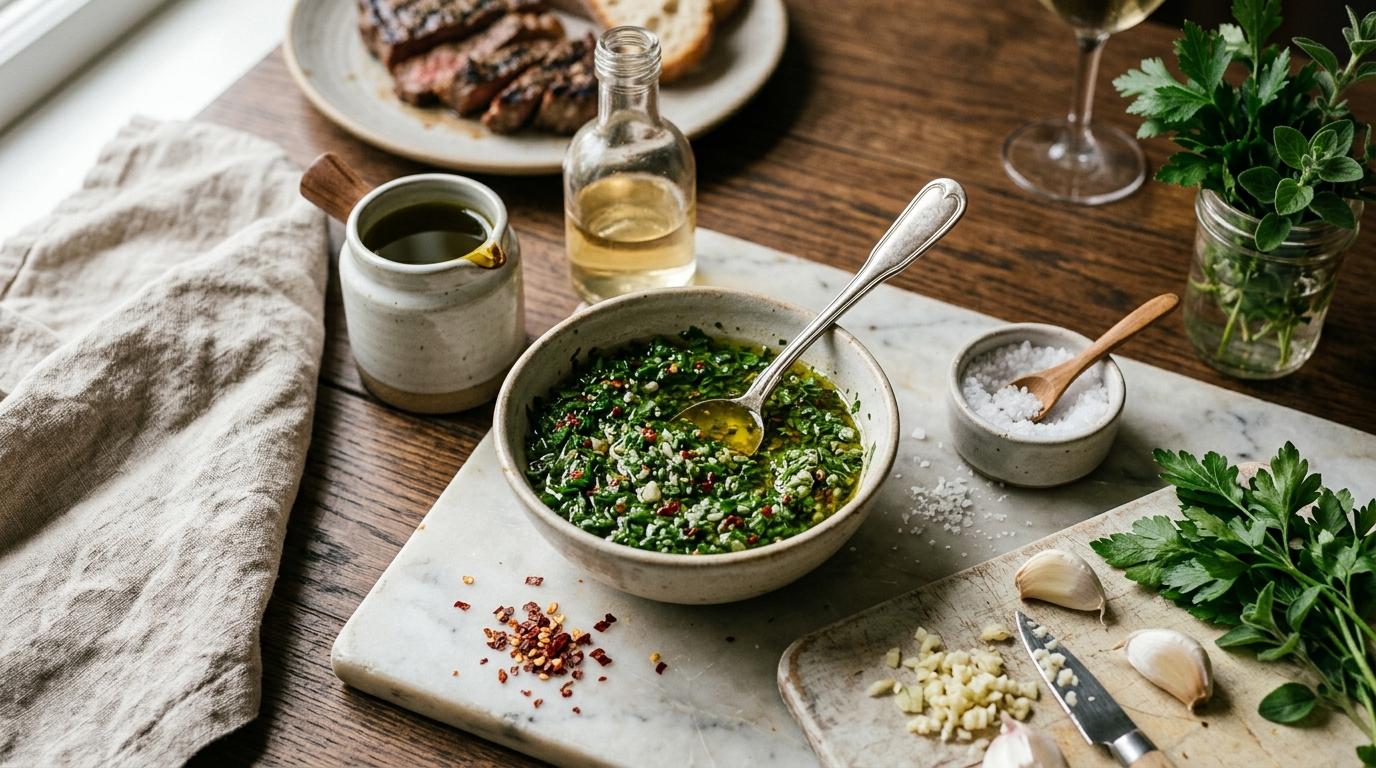
Chimichurri is a Latin American sauce, Argentine in origin, made from finely chopped fresh herbs, garlic, olive oil and vinegar. It is loose and spoonable, green and glossy, and it hits all at once: sharp from the vinegar, grassy from the parsley, with a garlic bite that lingers. Nothing is cooked, so everything tastes alive.
People love it because it makes plain food taste finished. A spoonful wakes up anything rich, charred or mild, and it keeps well enough to become a refrigerator staple. It also happens to be vegetarian, which makes it far more versatile than its steakhouse reputation suggests.
Where chimichurri comes from
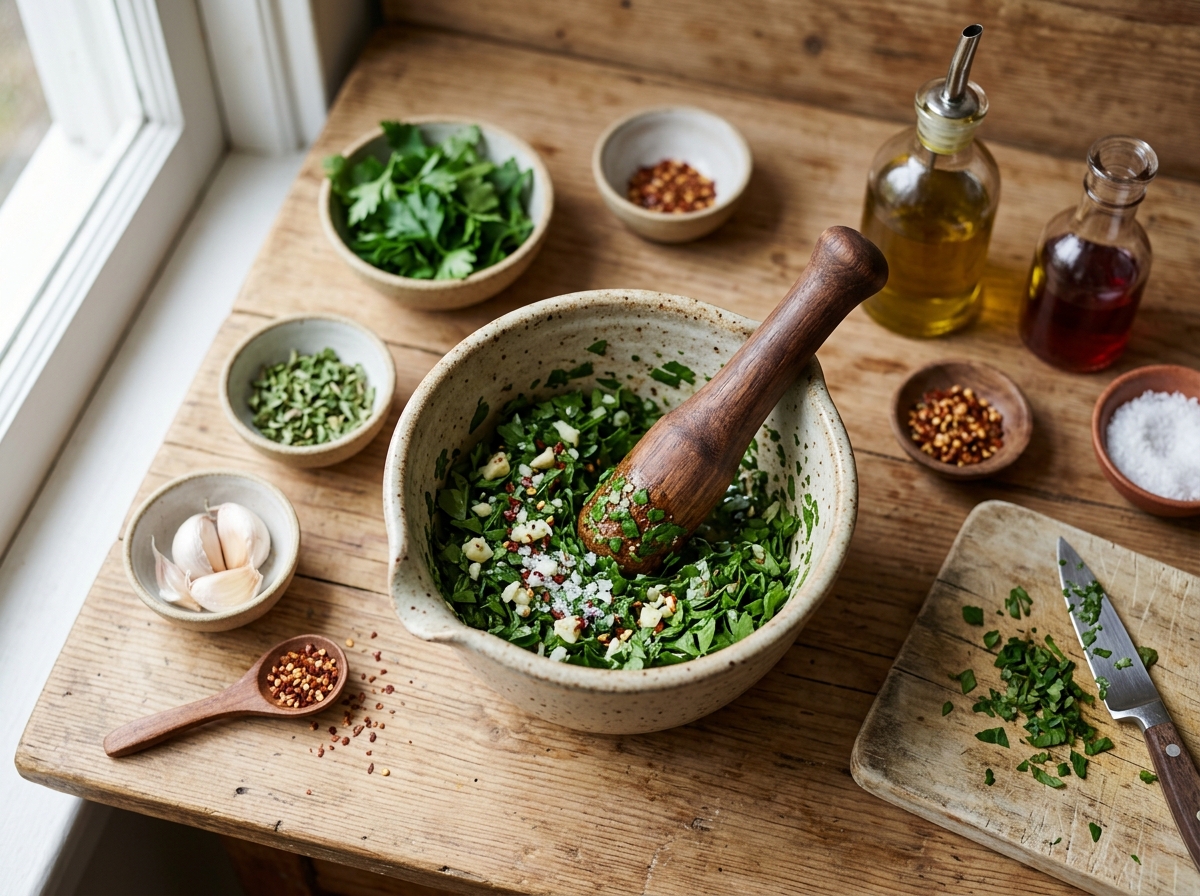
Britannica describes chimichurri as a sauce of Argentine origin that typically includes parsley, oregano, garlic and red wine vinegar. It is best known as the sauce for grilled meat. Argentines traditionally allow little besides salt and pepper on their steaks, and chimichurri is the notable exception. Wikipedia describes it as an uncooked sauce, used both as a cooking ingredient and as a table condiment. Cooks may baste meat with it as it cooks, or spoon it over the cooked surface as the meat rests.
Beyond that, the story gets hazy. The Daily Meal notes that chimichurri's true origin remains a mystery, with very little written record before modern times. One popular tale credits an Irishman named Jimmy McCurry. Another points to Argentina's gauchos as a plausible source. A third involves a war. Basque settlers may also have brought the sauce with them. None of these is settled, so treat them as stories rather than history.
The name is just as slippery. Merriam-Webster treats chimichurri as a word borrowed from American Spanish in Argentina and Uruguay, probably a permutation of the Spanish chirriburri. That word is a variant of churriburri or zurriburri, meaning something like hubbub or rabble, and probably comes from a Basque word for noise or rumor. It is a fitting name for a sauce with so many competing origin stories.
How chimichurri varies
There are two broad styles. Green chimichurri, or chimichurri verde, is built on finely chopped flat-leaf parsley. Red chimichurri, chimichurri rojo, brings in red pepper and spice for a deeper color and a little heat. Britannica adds that across South America there are countless versions that vary by region and by cook, with different herbs, spices, vinegars and oils.
The traditional use is on grilled meat, but the modern twist is to treat it as an all-purpose herb sauce. The version we cook on Meez comes from Love and Lemons, and it leans into exactly that. It is an easy take on Argentinian chimichurri meant for drizzling over roasted vegetables, using as a salad dressing, or tossing with a cooked grain. Cilantro, mint, lemon juice or chili flakes show up in many home versions, and each moves the sauce a little further from the classic.
When to make chimichurri
This is a Quick Favorites sauce. It needs a knife, a bowl and a handful of pantry staples, so it suits a weeknight when you want a simple dinner to feel considered. Make a batch on Sunday and it will liven up several meals through the week.
It shines brightest from late spring through summer, when parsley is lush and the Northern Hemisphere is full of zucchini, corn, peppers, eggplant, tomatoes and new potatoes, all of which are good grilled and spooned with green sauce. It works in autumn too. On a weeknight in October, it can lift roasted cauliflower, carrots or winter squash. For a backyard gathering, set out a bowl beside a platter of grilled vegetables and let people help themselves.
What to serve with chimichurri
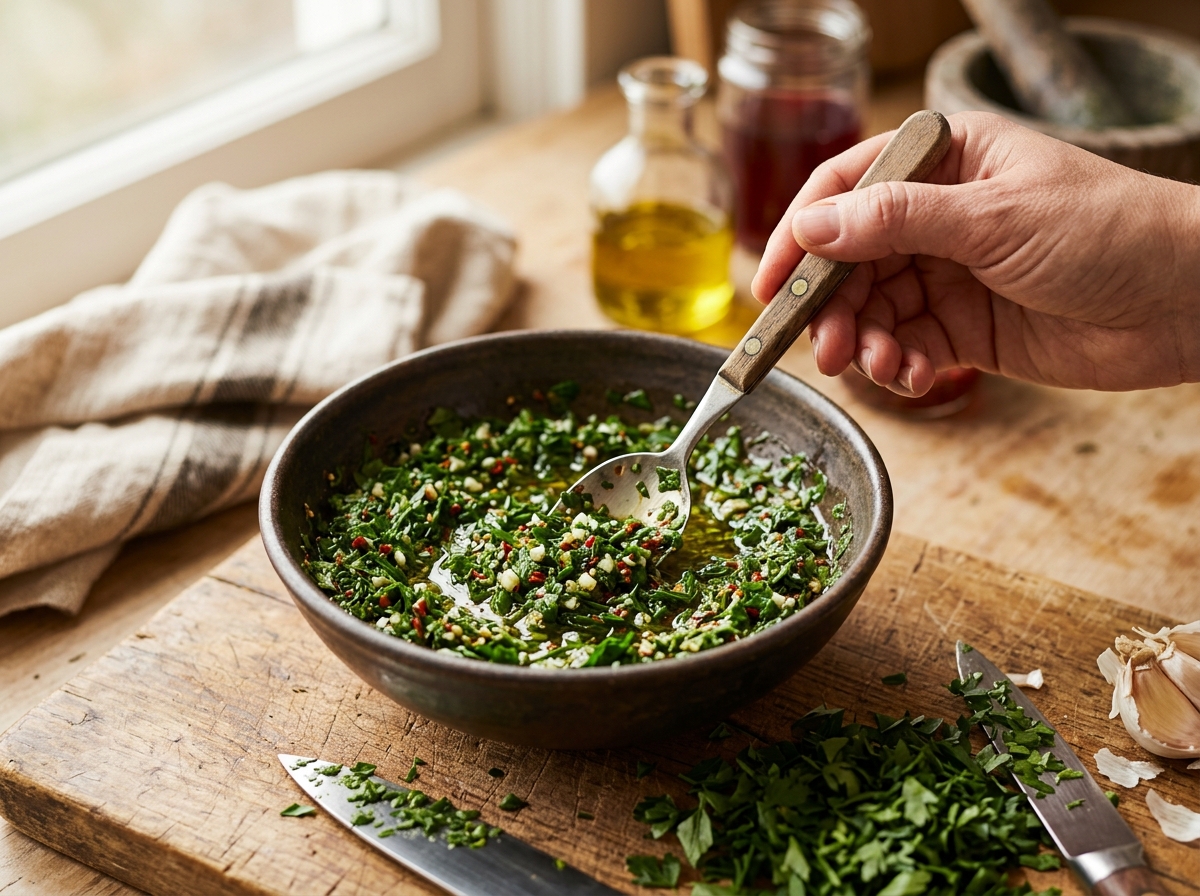
- Grilled or roasted vegetables. Charred edges and a sharp, herby sauce balance each other. Try zucchini, peppers, mushrooms or cauliflower.
- Crusty bread. Plain toasted bread soaks up the oil and turns the sauce into an easy snack.
- Roasted or boiled potatoes. Their mild, starchy richness gives the vinegar something to push against.
- A grain bowl. Rice, quinoa or farro tossed with the sauce becomes a full meal with a few roasted vegetables and beans.
- A crisp white wine or cold lager. Both have enough acidity and freshness to keep up with the garlic and vinegar. For a non-alcoholic option, try sparkling water with lemon.
Make it at home
When you are ready to cook, get the recipe for the full list and method, or cook it step by step in Cook Mode so your hands stay free while you chop.
Questions about chimichurri
Is chimichurri Argentinian?
Yes, most sources list Argentina as its place of origin, and it is closely tied to Argentine grilling. How and when it first appeared is unclear, since there is little written record before modern times.
What does chimichurri mean?
The word has no firm translation. Merriam-Webster traces it to Spanish words meaning hubbub or rabble, which may in turn come from a Basque word for noise or rumor.
What is the difference between green and red chimichurri?
Green chimichurri is built mainly on finely chopped flat-leaf parsley. Red chimichurri is the other common variety, with a redder color and more spice.
Is chimichurri vegetarian?
Traditionally it is an uncooked blend of herbs, garlic, oil and vinegar, so it is naturally vegetarian. That makes it easy to use on vegetables, grains and salads as well as meat.
Sources
- Chimichurri
- CHIMICHURRI Definition & Meaning - Merriam-Webster
- Chimichurri (Wikipedia)
- The Unknown Origins Of Chimichurri Sauce - Daily Meal
Last reviewed November 10, 2026. Written by the Meez editorial team with Meez Magic, from the sources above.
Original Recipe Source
This article is inspired by a recipe from Love and Lemons.
Visit the original source for their version of this recipe and more great content.
Related Topics
Enjoyed this article? Share it with fellow food lovers!
Ready to Cook This Recipe?
Experience our immersive Cook Mode with step-by-step visual guidance, voice narration, and built-in timers.