

What Is Sheet-Pan Lasagna? Origins, Variations and Sides
Sheet-pan lasagna keeps everything people love about the classic, with browned edges, savory sauce and creamy ricotta, but skips the careful layering. Here is where it came from, how it varies and what to put on the table with it.
Featured Recipe
Best Sheet-Pan Lasagna Recipe
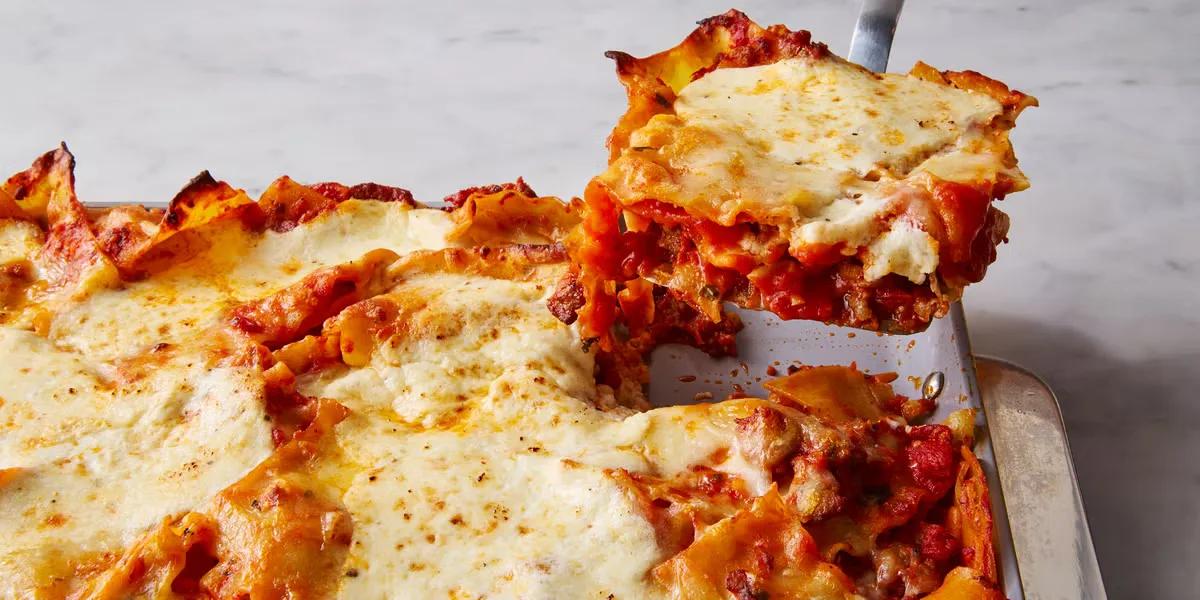
Sheet-pan lasagna is an Italian-American pasta bake that trades the tall, layered slab for a wide, shallow pan. Broken lasagna noodles are tossed in sauce and spread out, then finished with spoonfuls of ricotta on a single top layer. The result has the things people crave from lasagna: tender pasta, a savory red sauce, melted cheese and edges that turn crisp and a little chewy.
People love it because it delivers all that without the careful assembly. There is no building of layers and no waiting for a deep dish to cook through to the middle. Every piece gets a share of browned edge and creamy ricotta, and that is a better deal than the corner piece going to whoever gets there first.
Where it comes from
Classic lasagna is generally considered Italian, and most accounts place its roots in the country's southern and central regions, with Naples and Emilia-Romagna often named. Beyond that, the story gets debated, and the details of who made it first are not settled.
The sheet-pan version is a modern shortcut with no documented history that we can point to. It belongs to the recent habit of moving familiar baked dishes onto a rimmed pan, where more surface area means faster cooking and more crisp edges. It is best understood as a home-cook adaptation of lasagna, not a regional tradition.
How it varies
Traditional lasagna comes in a few well-known styles. One is the Neapolitan type, built with ricotta and often meatballs or sausage. Another is the northern lasagna al forno, with ragù and béchamel. Both are layered, patient dishes. Sheet-pan lasagna borrows the flavors of the first, with a tomato-based sauce and ricotta, but changes the structure completely.
Within the sheet-pan format, there is plenty of room to make it your own:
- Meat sauce or meatless. A sauce with ground meat or sausage makes it heartier, while a vegetable-forward sauce suits a lighter supper.
- Greens and vegetables. Spinach or kale folded into the sauce, or mushrooms and roasted squash alongside, are common additions.
- The cheese on top. Ricotta is the signature, but some cooks add a sprinkle of Parmesan or a blanket of mozzarella for more pull.
- A little heat. Red pepper flakes or spicy sausage push it toward a more assertive dish.
The traditionalist's objection is fair: this is not a layered lasagna and does not pretend to be. The modern twist is the point. You give up the tidy square and get the same comfort, faster and with more crunch. The version we cook on Meez comes from Delish.
When to make it
This is a natural Sunday dinner. It has the feel of a long-cooked family meal but asks far less of you, so it works when you want people around the table without spending the afternoon assembling layers. It is also a good quick favorite for a weeknight, when you want something that feels like a proper baked pasta.
It shines from early autumn through winter, when a hot, bubbling pan is exactly what you want. A weeknight in October is ideal, with the first cold evenings arriving and apples, winter squash, kale, broccoli and mushrooms all at their best in the Northern Hemisphere. It also suits a January night when the garden is bare and pantry staples are doing the work. In spring, tender spinach, peas and asparagus lighten it up nicely. A wide pan also feeds a crowd easily, so it holds up for a potluck or a casual gathering before a game.
What to serve with it
- A sharp green salad. Bitter leaves such as arugula or radicchio, dressed with lemon and olive oil, cut through the richness of the cheese and sauce.
- Garlic bread. It is a familiar partner, and it is useful for mopping up any sauce left on the pan.
- Roasted broccoli or green beans. Their slight char and fresh bite balance the soft pasta without competing with it.
- A medium-bodied red. Chianti or a Montepulciano d'Abruzzo has enough acidity to stand up to tomato sauce.
- Sparkling water with lemon. A simple choice that keeps a heavy meal feeling lighter, and it works for everyone at the table.
Make it at home
When you are ready to cook, get the recipe for the full ingredients and method. If you like to keep your hands free and your place in the instructions, you can cook it step by step in Cook Mode.
Questions about sheet-pan lasagna
What is sheet-pan lasagna?
It is a simplified lasagna made on a single rimmed pan. Broken noodles are coated in sauce and topped with dollops of ricotta, instead of being stacked in neat layers.
How is it different from traditional lasagna?
Traditional lasagna is layered noodles, sauce and cheese in a deep dish, cut into squares. The sheet-pan version spreads everything thin and wide, so you get more crisp edges and a quicker, less fussy assembly.
Is sheet-pan lasagna authentic Italian food?
Not in the traditional sense. Lasagna itself is Italian, but this pan-based shortcut is a modern home-cooking adaptation, and we have no evidence of a historical origin for it.
What should I serve with sheet-pan lasagna?
A crisp, lightly bitter salad and garlic bread are the usual choices, with roasted vegetables as another good option. A medium-bodied red wine rounds out the meal nicely.
Last reviewed October 23, 2026. Written by the Meez editorial team with Meez Magic.
Original Recipe Source
This article is inspired by a recipe from Delish.
Visit the original source for their version of this recipe and more great content.
Related Topics
Enjoyed this article? Share it with fellow food lovers!
Ready to Cook This Recipe?
Experience our immersive Cook Mode with step-by-step visual guidance, voice narration, and built-in timers.