

Where Alfredo Sauce Comes From and What to Serve With It
Alfredo sauce started in Rome as little more than butter and Parmesan tossed with fettuccine. Here is where it came from, how it changed in America, and how to build a meal around it.
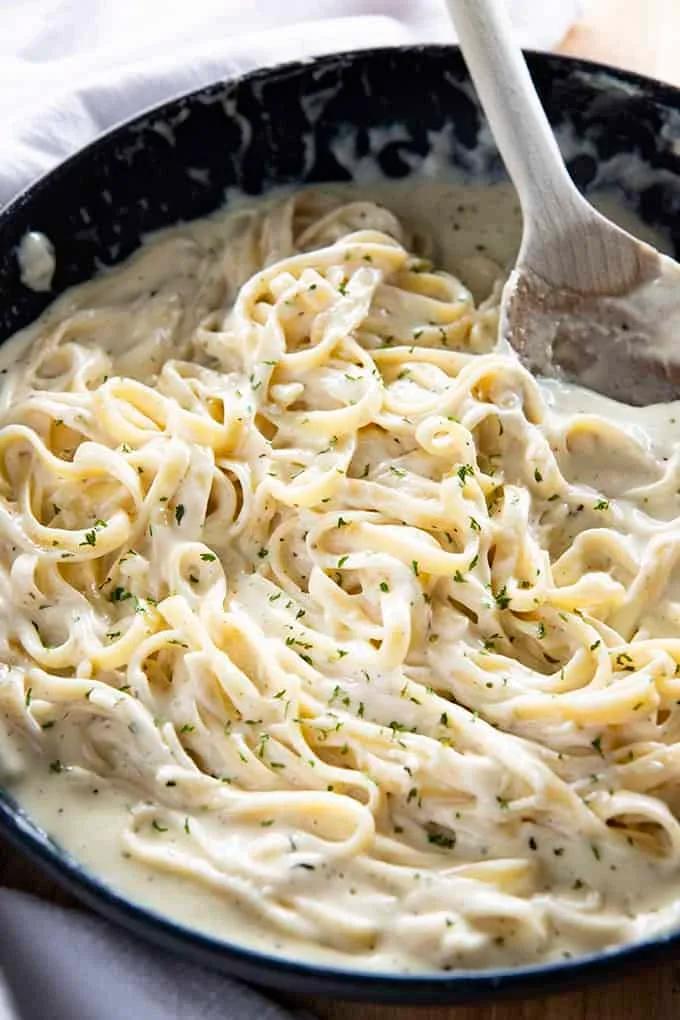
Featured Recipe
Best Homemade Alfredo Sauce
Alfredo sauce is a cheese sauce from Italian cooking: smooth, pale gold and rich enough to cling to every strand of pasta. The version most of us know leans on garlic and a generous hand of Parmesan, and it tastes mellow, salty and deeply savory all at once.
People love it because it asks so little and gives so much. It comes together in the time it takes pasta to cook, it suits cooks of any skill, and it turns a plain bowl of noodles into something that feels like a treat.
Where Alfredo sauce comes from
The sauce began as a dish: fettuccine tossed with butter and Parmesan, which melts and emulsifies into a creamy coating on the pasta. It comes from Rome and is credited to a restaurateur named Alfredo di Lelio (1882–1959). Most sources date its invention to about 1908, though one gives a looser range of 1907 to 1908.
The story most often told is a tender one. Alfredo made the dish for his wife, Ines, who had lost her appetite after giving birth to their first son, Armando. He piled extra butter onto the fettuccine, which is why it was first known as fettuccine al triplo burro. At the time he was running a small oil and wine shop in Piazza Rosa. In 1914 he converted a shop on Via della Scrofa into a restaurant called “Alfredo,” and the dish carried his name from then on.
Not everyone agrees on the details. The modern restaurant Il Vero Alfredo insists on the 1908 date and the Piazza Rosa origin, and calls the idea of a 1914 invention unfounded. The 1914 date is better read as the year the dish reached a restaurant menu.
The dish then crossed the Atlantic. One account says that in the 1920s the film stars Douglas Fairbanks and Mary Pickford honeymooned in Rome, asked for the recipe, and sent di Lelio engraved golden silverware. They are said to have helped spread the word in Hollywood. Today the dish is far better known in America than in Italy, where it is a first course rather than the main event.
How it varies
The Roman original is spare: butter, Parmesan and pasta water, nothing else. The American-style sauce is the one most home cooks mean when they say Alfredo. It usually adds cream and garlic, which makes it thicker, richer and more forgiving. It is also easy to keep warm and reheat gently, which suits a busy kitchen.
The version we cook falls on the American side, with a garlic-forward, creamy finish. From there, cooks tend to go in a few directions:
- Lighter: a splash of pasta water loosens the sauce and keeps it glossy.
- Brighter: lemon zest, black pepper or fresh parsley cut the richness.
- Heartier: broccoli, mushrooms or peas stirred in turn it into a full dinner.
- Baked: the sauce goes over pasta and vegetables under a layer of cheese.
When to make it
Alfredo is a natural for a quick favorite. On a weeknight in October, with the first cold evening and nothing planned, it takes very little effort to get a pot of pasta onto the table. It also works as a gentle weekend project: make fresh fettuccine by hand on a Saturday afternoon, then finish the sauce just before you sit down.
It shines from autumn through winter, when you want something warm and generous. That is also when broccoli, cauliflower, mushrooms, kale and Brussels sprouts are at their best in the Northern Hemisphere, and all of them are good company for a creamy sauce. In early spring, peas and asparagus bring a fresher note.
What to serve with it
- Roasted broccoli or cauliflower. The browned edges and a little bitterness balance the cream.
- A sharp green salad. Lemon and a simple vinaigrette refresh the palate between bites.
- Garlic bread. It is indulgent, and it is also the best tool for scraping the bowl clean.
- Sautéed mushrooms. Their earthy flavor stands up to the sauce and keeps the meal vegetarian.
- A crisp white wine or sparkling water with lemon. Acidity and bubbles cut through the richness.
Make it at home
The version we cook on Meez comes from Thesaltymarshmallow. Get the recipe for the full method, or cook it step by step in Cook Mode so you can keep your hands free at the stove.
Questions about Alfredo sauce
Who invented Alfredo sauce?
Most accounts credit Alfredo di Lelio, a Roman restaurateur, who is said to have created the dish around 1908. The popular story says he made it for his wife, Ines, after she gave birth to their son.
Is Alfredo sauce really Italian?
Yes, it began in Rome, though it is much more famous in America than in Italy. The creamy, garlicky version common in the United States is an Italian-American adaptation of the original butter and Parmesan dish.
How is Alfredo different from a white sauce?
Alfredo gets its body from melted cheese and butter, with cream in the American style. A classic white sauce, or béchamel, is thickened with a flour-and-butter base and milk.
What should I serve with Alfredo sauce?
Something green and something sharp work best, such as roasted broccoli or a lemony salad. Garlic bread and a crisp white wine round out the meal.
Sources
- Fettuccine Alfredo
- Fettuccine «Alfredo»: The Original Recipe - Memorie di Angelina
- In the heart of Rome, since 1908 (Il Vero Alfredo)
- Alfredo alla Scrofa
- Rome Then & Now: The Truth about Fettuccine Alfredo
Last reviewed October 25, 2026. Written by the Meez editorial team with Meez Magic, from the sources above.
Original Recipe Source
This article is inspired by a recipe from Thesaltymarshmallow.
Visit the original source for their version of this recipe and more great content.
Related Topics
Enjoyed this article? Share it with fellow food lovers!
Ready to Cook This Recipe?
Experience our immersive Cook Mode with step-by-step visual guidance, voice narration, and built-in timers.