

Authentic Chimichurri Sauce: Argentina & Uruguay's Best
Bright, garlicky, and packed with fresh herbs, authentic chimichurri is the sauce that turns any grilled meat into a South American feast. Discover the story and technique behind this beloved condiment.
Featured Recipe
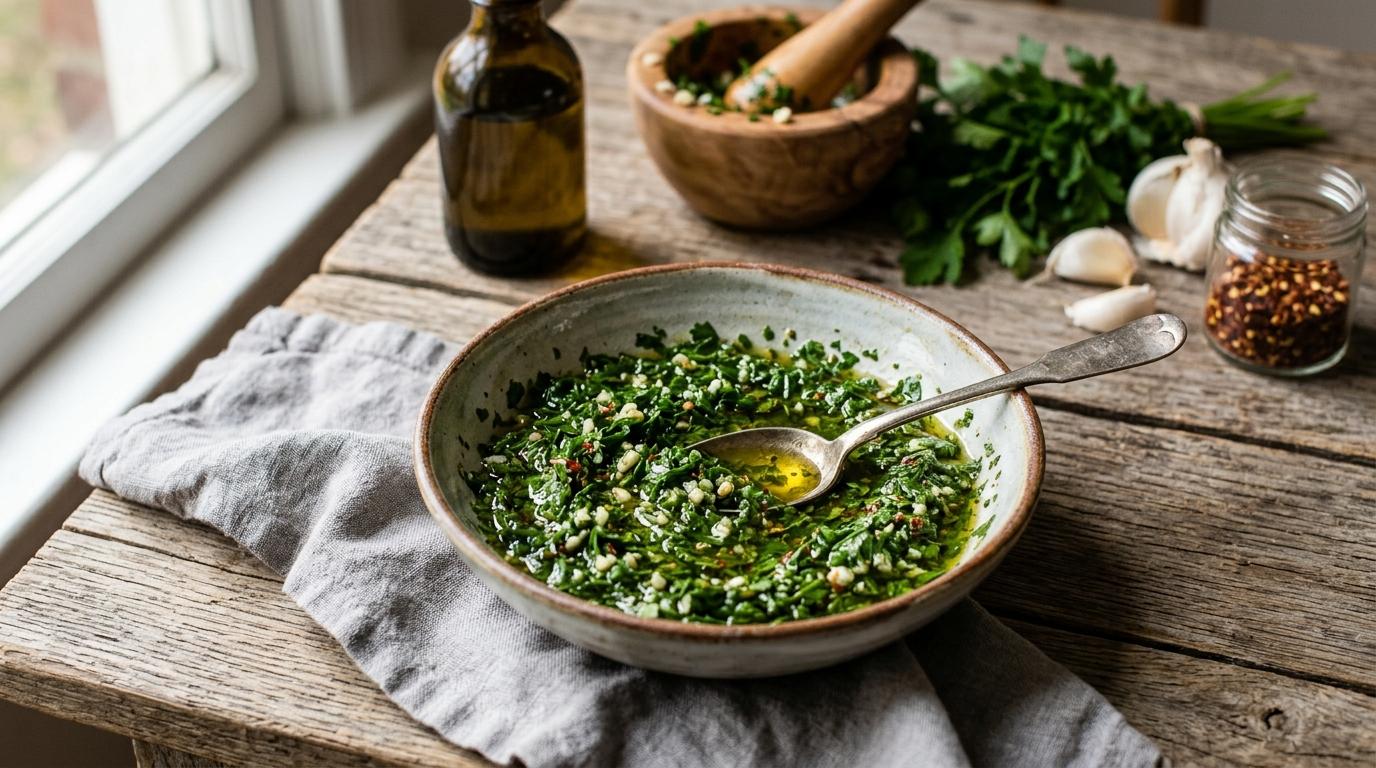
Authentic Chimichurri (Uruguay & Argentina)
There's a reason every asado in Argentina and every parrillada in Uruguay comes with a small dish of vivid green sauce on the table. That sauce is authentic chimichurri, and once you taste its bright, garlicky punch against a smoky grilled steak, you'll understand why it's considered non-negotiable across the Río de la Plata region. This recipe comes from Cafedelites, and we've transformed it into an immersive cooking experience on Meez.
The Story Behind This Dish
Chimichurri's origins are the subject of friendly debate, with both Argentina and Uruguay claiming it as their own. Some food historians trace the name to Basque or Irish immigrants who settled in the region in the 19th century, while others point to indigenous roots. What's certain is that chimichurri became inseparable from the gaucho tradition of open-fire grilling, where cattle ranchers needed a simple, portable sauce to brighten fatty cuts of beef cooked over wood coals.
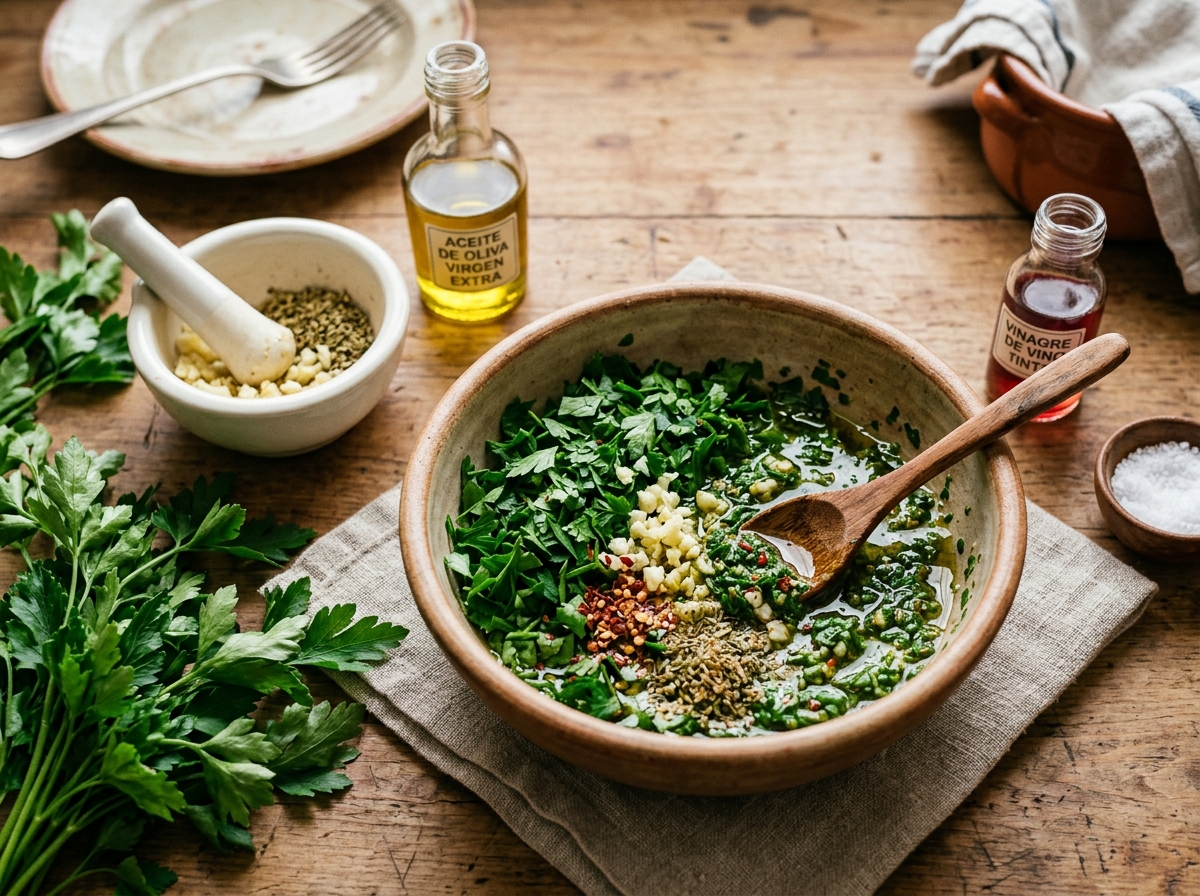
Unlike many sauces that simmer for hours, chimichurri is a raw, uncooked blend — parsley, garlic, chili, oregano, vinegar, and oil left to marry at room temperature. Every family has their own ratio, and regional versions swap in cilantro, add bell pepper, or lean heavier on vinegar versus oil. In Uruguay, you'll often find it slightly milder; in Argentina, some cooks push the garlic and chili harder. Either way, it remains the definitive companion to grilled and barbecued dishes across South American tables.
Key Ingredients Spotlight
Fresh flat-leaf parsley is the backbone here — its grassy, slightly peppery flavor is what gives chimichurri its signature green vibrancy, so skip the dried stuff entirely. Good quality olive oil matters too, since it's not cooked away but rather infused with the aromatics, carrying their flavor directly onto your meat. Finally, don't skimp on fresh garlic and red chili; they're what separate a lively chimichurri from a flat, one-note herb oil.
Pro Tips for Perfect Results
Getting chimichurri right is less about technique and more about patience and balance. Keep these tips in mind:
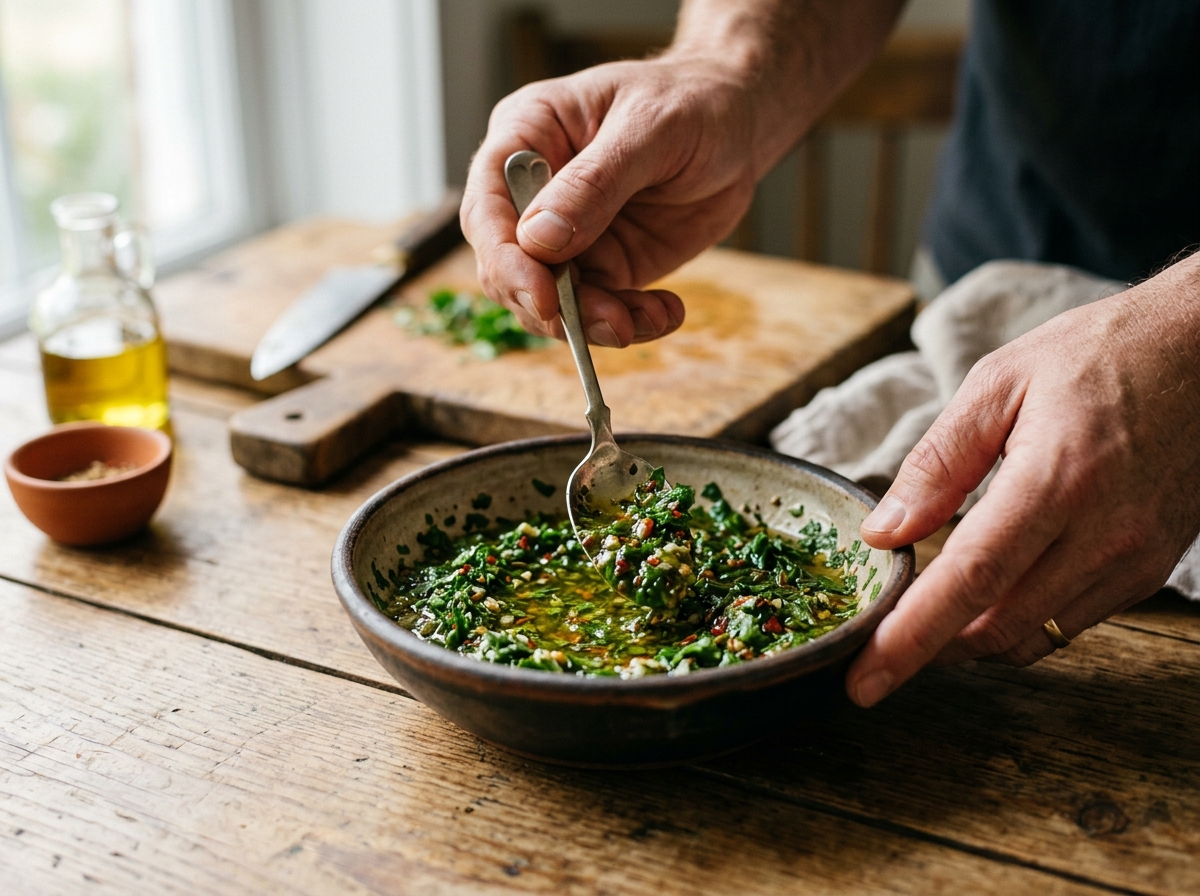
- Chop, don't blend: Pulsing everything in a food processor turns the herbs to mush and mutes their brightness. Hand-chopping keeps the texture rustic and the flavors distinct.
- Let it rest: Five to ten minutes is the bare minimum, but if you have two hours or even overnight in the fridge, the garlic and chili mellow beautifully into the oil.
- Baste, don't marinate: Chimichurri's vinegar content isn't meant to tenderize raw meat over hours — it's a finishing sauce. Brush it on during and after grilling for the best flavor payoff.
- Adjust chili to taste: Start with less than you think you need; you can always chop in more heat, but you can't take it out.
Serving & Pairing Suggestions
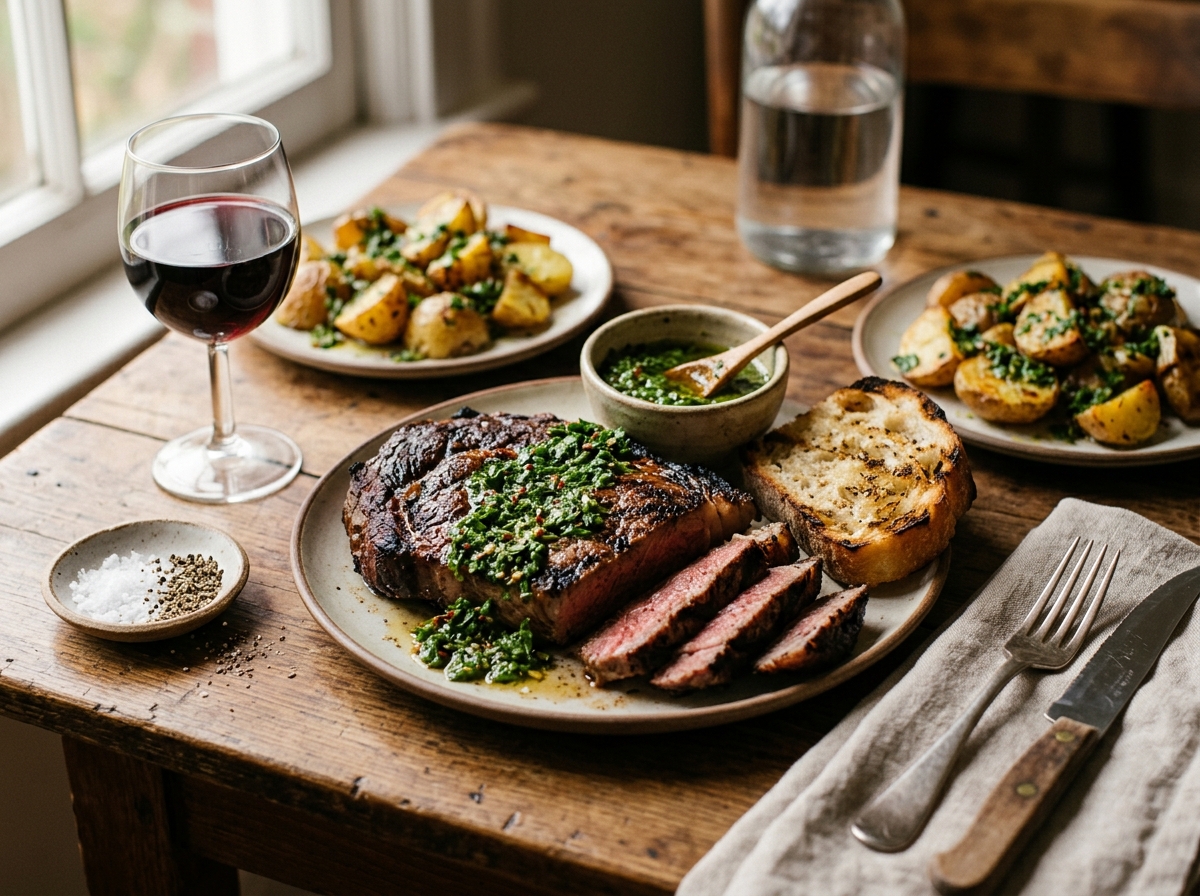
Classic chimichurri belongs on grilled steak — think a smoky ribeye or skirt steak fresh off the coals — but its uses extend well beyond beef. Brush it onto grilled chicken thighs, roasted potatoes, or grilled vegetables like zucchini and eggplant. It also doubles beautifully as a punchy salad dressing or a dip for crusty bread. Pair your meal with a bold Malbec or a crisp Tannat, both regional wines that stand up to chimichurri's acidity and garlic bite.
Make It Your Own
While the traditional version is hard to beat, chimichurri is forgiving and easy to riff on. Try adding a spoonful of finely chopped red bell pepper for sweetness, swap red wine vinegar for sherry vinegar for a deeper tang, or stir in a pinch of smoked paprika for extra depth. Some cooks add a touch of lemon juice alongside the vinegar for brightness, while others blend in cilantro for a more herbaceous, Tex-Mex-leaning twist. However you tweak it, keep the ratios balanced so no single ingredient overwhelms the rest.
Conclusion
Once you've made your own batch of authentic chimichurri, you'll never look at a plain grilled steak the same way again. View the full recipe and follow along step-by-step in Cook Mode for a guided, hands-on experience in the kitchen.
Original Recipe Source
This article is inspired by a recipe from Cafedelites.
Visit the original source for their version of this recipe and more great content.
Related Topics
Ready to Cook This Recipe?
Experience our immersive Cook Mode with step-by-step visual guidance, voice narration, and built-in timers.