

Where Does Chicken Shawarma Come From? Origins and Bowls
Chicken shawarma bowls take the spiced, spit-roasted meat of the Middle East and pile it over fresh vegetables and a cool sauce. Here is where the dish comes from, how it varies and what to put on the table with it.
Featured Recipe
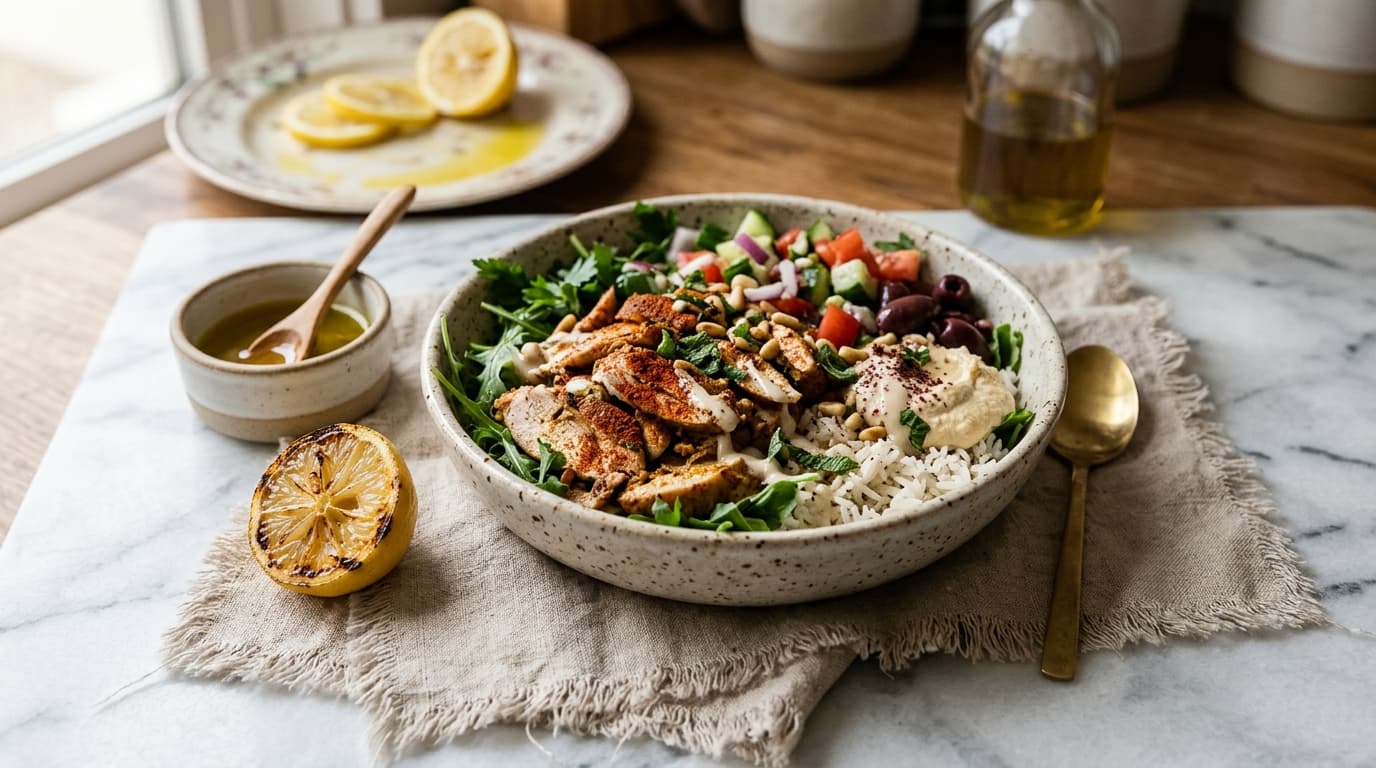
Chicken Shawarma Bowl
A chicken shawarma bowl is the Middle Eastern street-food classic served in a bowl instead of a wrap. Chicken is marinated in warm, earthy spices, cooked until the edges brown and turn a little crisp, then sliced and set over a base of fresh, crunchy vegetables with a cool, tangy sauce on top.
People love it because every bite has contrast: savory and juicy against bright and crisp, warm against cold. It is also easy to build to taste, and it looks good on the table, with each component sitting in its own colorful section.

Where chicken shawarma comes from
Shawarma is generally placed in the Ottoman Empire, and it is made from thin cuts of seasoned, marinated meat. One account describes it as a practical, filling meal for laborers and the working class. The same account says the name comes from a Turkish word meaning “turning,” a nod to meat cooked on a rotating vertical spit.
The precise origins are unknown. Some writers credit a man named Iskender Efendi with creating the first chicken version in Bursa, but the dates in that story are inconsistent, so it is best read as a popular tale rather than settled history. Traditionally, shawarma was made with lamb or mutton. Chicken, turkey, beef and veal all appear in later versions.
The dish spread and picked up local accents. In Jordan, for example, cooks flavored lamb and chicken shawarma with regional spices such as cardamom, cumin and allspice. Chicken grew more popular there because it is lighter in taste and easier to come by. Much later, New York City had a shawarma boom in the 1990s, helped along by Middle Eastern cab drivers who wanted a taste of home, along with convenience, low prices and halal options.
How it varies
The classic street version is carved from a spit and tucked into a wrap bread such as pita, laffa or lavash, with chopped vegetables and assorted condiments. Falafel is sometimes used as a filling in place of meat. Those wheat-based wraps are the traditional vehicle, and the bowl is the modern spin that drops the bread and lets the meat share the stage with vegetables and grains.
The bowl is also where home cooks get flexible. Instead of a vertical spit, the chicken is usually cooked in a skillet, in the oven or on a grill, which is far more practical for a home kitchen. Bases range from rice to greens to roasted vegetables, and the sauce might be a garlicky yogurt sauce or a sesame-based one. Spice blends differ from cook to cook, so some versions lean warm and sweet and others lean smoky and sharp.
The version we cook on Meez comes from Iowa Girl Eats, and it is built for bold, fresh, Mediterranean-style flavor. It is gluten-free as written by its source, and as with any recipe it is worth checking the labels on spices and packaged ingredients.
When to make it
This is a good Sunday dinner for the kind of Sunday when you want to cook something with a little care but not spend the evening at the stove. The chicken can marinate while you get on with the day, and everyone can assemble their own bowl at the table.
It also fits the fresh and light mood well. It shines from late spring through summer, when cucumbers, tomatoes, radishes, mint and parsley are at their best in the Northern Hemisphere. A warm evening in June or a farmers’ market haul in August suits it perfectly. Early autumn works too, when the last tomatoes are still sweet and the first roasted vegetables start to make sense.

What to serve with it
- A cucumber and tomato salad with lemon and herbs. It adds cool crunch and acidity that balances the spiced chicken.
- Hummus. A scoop of creamy chickpea and tahini spread adds richness to the bowl. Check the label if you are avoiding gluten.
- Roasted vegetables. Cauliflower, peppers or zucchini pick up the same spices and make the meal heartier.
- Olives and quick pickles. Pickled onions or turnips add a sharp, salty bite between mouthfuls of chicken.
- Mint lemonade or sparkling water with lemon. Both are refreshing and keep the meal light. A chilled dry white wine also works for the grown-ups.
Make it at home
Ready to cook? Get the recipe for the full ingredient list and method, or cook it step by step in Cook Mode so your screen stays on and your hands stay free.
Questions about chicken shawarma bowls
Where does shawarma come from?
Most accounts place its origin in the Ottoman Empire, where meat was cooked on a rotating vertical spit. The exact beginnings are unclear, and stories naming a single inventor should be treated with caution.
Is shawarma traditionally made with chicken?
Not originally. It was traditionally lamb or mutton, and chicken, turkey, beef and veal came into use over time. Chicken is especially popular today because it is lighter and widely available.
What is the difference between a shawarma bowl and a shawarma wrap?
The seasoned meat is the same idea, but a wrap tucks it into flatbread with vegetables and sauce. A bowl serves those same elements over a base such as rice or greens, which makes it easy to keep gluten-free when the ingredients are chosen with care.
What should I serve with a chicken shawarma bowl?
Fresh, acidic sides work best: a cucumber and tomato salad, hummus, roasted vegetables, olives or quick pickles. A mint lemonade or sparkling water with lemon rounds out the meal.
Sources
- Shawarma
- Shawarma Origin: Know The Popular Story Behind This Levantine Dish
- The History of Chicken Shawarma Gyro in New York City
- The History of Shawarma
Last reviewed November 11, 2026. Written by the Meez editorial team with Meez Magic, from the sources above.
Original Recipe Source
This article is inspired by a recipe from Iowagirleats.
Visit the original source for their version of this recipe and more great content.
Related Topics
Enjoyed this article? Share it with fellow food lovers!
Ready to Cook This Recipe?
Experience our immersive Cook Mode with step-by-step visual guidance, voice narration, and built-in timers.