

What to Serve With Gluten-Free Dinner Rolls (and When)
Gluten-free soft dinner rolls are the pillowy, butter-ready rolls an American holiday table expects, made without wheat. Here is where they fit, what to put alongside them, and how they compare with the classics.
Featured Recipe
Gluten-Free Soft Dinner Rolls
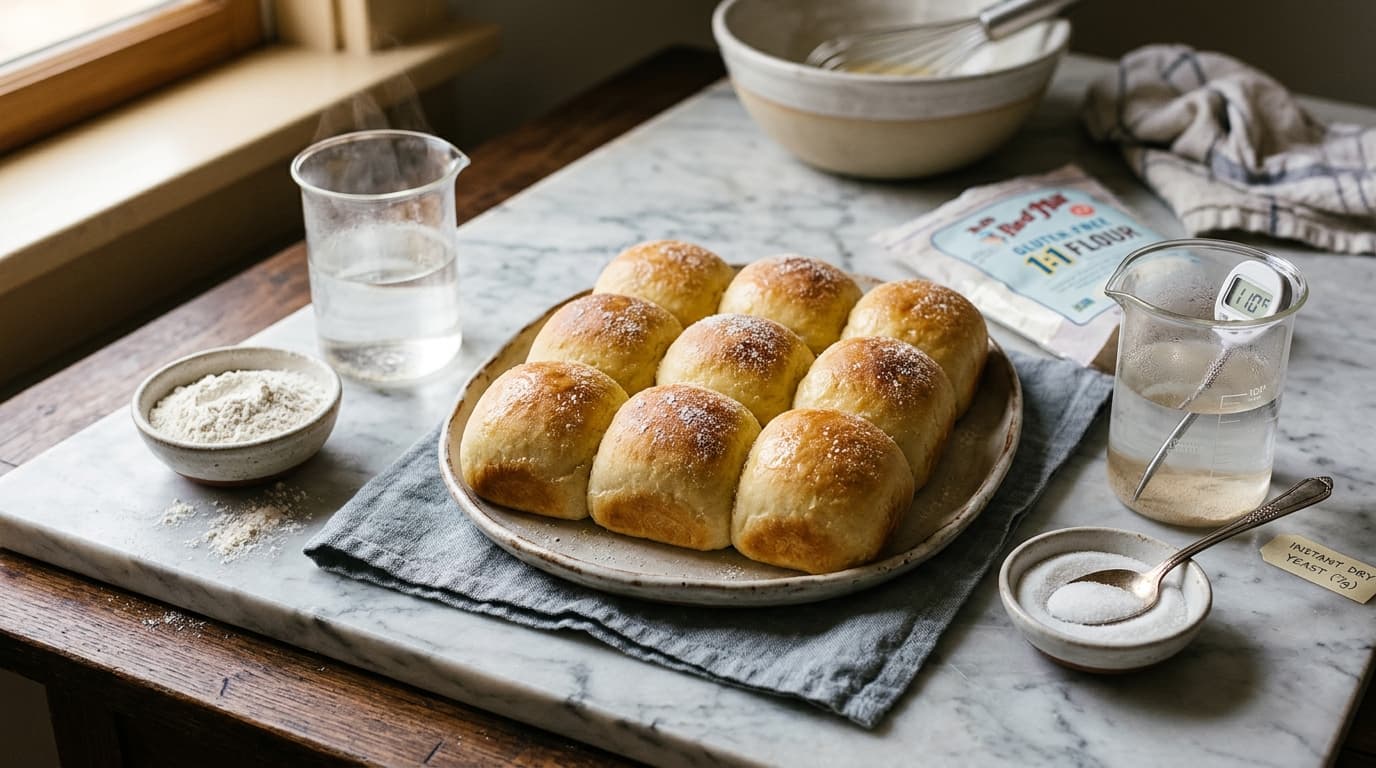
Gluten-free soft dinner rolls are a classic American table bread: small, rounded and golden on top, with a tender crumb that tears open and lets off a little steam. Brushed with butter while still warm, they have the gentle, slightly sweet, milky quality that people remember from a good bread basket.
People love them because they are easy to eat and easy to share. They go with almost anything, they mop up gravy and soup, and they make a plain plate feel like a proper dinner. For anyone who has gone without a soft roll at the table, a gluten-free one that stays tender is the whole appeal.

Where soft dinner rolls come from
There is no documented inventor or birthplace for this particular roll, and it would be a stretch to invent one. Small, individually shaped yeast rolls are generally understood as part of the broader European bread tradition that came to American kitchens, and they became a fixture of the everyday and holiday dinner table over time. Most accounts of American rolls point to regional favorites rather than a single origin.
Gluten-free versions are a more recent chapter. As gluten-free flour blends and binders became easier to find, home bakers began working out how to get a roll that is soft rather than dense, and recipes like this one are the result.
How dinner rolls vary
Traditional American rolls come in several shapes and styles. Parker House rolls, often linked to a Boston hotel of the same name, are folded and buttery. Cloverleaf rolls are baked as three small balls in a muffin cup. Potato rolls get their softness from mashed potato in the dough. Those are all wheat-based traditions, and they set the standard for what a good roll should feel like: light, tender and a little rich.
Gluten-free bakers aim for the same feel with different tools. Binders such as psyllium husk or xanthan gum stand in for the structure gluten would normally give, and blends of gluten-free flours replace wheat flour. Today's twists are mostly on the top and the finish: a brush of garlic or herb butter, a scatter of sesame or poppy seeds, a sprinkle of flaky salt, or a honey glaze for the holidays. Shaped as a single round or tucked into a pan so the sides stay pale and soft, they stay true to the idea of a roll for sharing.
When to make them
These rolls are made for feeding a crowd. A big batch of small, equal rolls is easier to pass around than a loaf that needs slicing, and everyone at the table can take one without any fuss. That makes them a natural for a holiday bread basket, a Sunday supper with extended family, or a potluck where one gluten-free dish needs to hold its own.
They shine most from October through December. In the Northern Hemisphere that is the season of winter squash, sweet potatoes, parsnips, carrots, Brussels sprouts, apples, pears and cranberries, all of which sit well beside a warm roll. A weeknight in late October with a pot of soup is as good an excuse as Thanksgiving itself.
The version on Meez is gluten-free as written by its source, but labels vary, so it is worth checking the packaging on every ingredient you use.

What to serve with them
- Roast turkey or chicken with pan gravy. Soft rolls are made for soaking up gravy. Thicken the gravy with cornstarch or another gluten-free thickener, and check that the stock is labelled gluten-free.
- A pot of vegetable soup. Butternut squash or tomato soup is a good fit, since the roll is there for dunking. Again, check the stock label.
- Roasted root vegetables. Carrots, parsnips and sweet potatoes bring sweetness and a little char that suits the mild flavor of the rolls.
- Mashed potatoes and green beans. A comforting, plain pairing that rounds out a holiday plate without competing with anything.
- Warm apple cider or sparkling water with cranberry. Both are naturally gluten-free, and their tartness balances the butter on the rolls.
For a simple spread, set out good butter, a little honey and a bowl of flaky salt, and let people dress their own rolls.
Make them at home
The version we cook on Meez comes from Gluten-Free Baking. Get the recipe for the full ingredients and method, or cook it step by step in Cook Mode if you want your hands free while you shape the dough.
Questions about gluten-free dinner rolls
What is a soft dinner roll?
It is a small, individually shaped yeast roll with a thin crust and a tender, fluffy inside, served alongside a main meal. It is meant for tearing, buttering and dunking rather than for making sandwiches.
Where do American dinner rolls come from?
There is no single documented origin. They are generally traced to European yeast-bread traditions that became part of everyday American cooking, with regional styles such as Parker House and cloverleaf rolls developing along the way.
How do gluten-free rolls differ from traditional ones?
Traditional rolls get their structure from wheat gluten. Gluten-free rolls rely on a blend of gluten-free flours and binders such as psyllium husk or xanthan gum, so the dough is often looser and stickier to handle.
What should I serve with gluten-free dinner rolls?
Anything saucy or hearty works: roast poultry with gravy, soup, roasted vegetables and mashed potatoes. Check labels on stocks and thickeners so the whole plate stays gluten-free.
Last reviewed November 11, 2026. Written by the Meez editorial team with Meez Magic.
Original Recipe Source
This article is inspired by a recipe from Glutenfreebaking.
Visit the original source for their version of this recipe and more great content.
Related Topics
Enjoyed this article? Share it with fellow food lovers!
Ready to Cook This Recipe?
Experience our immersive Cook Mode with step-by-step visual guidance, voice narration, and built-in timers.