

What Makes Gluten-Free Pie Crust Flaky? A Closer Look
A good gluten-free pie crust bakes up golden, tender and flaky, with enough structure to hold a generous filling. Here is the story behind the American pie crust, how it varies, and when to bake one.
Featured Recipe
Easy Gluten-Free Pie Crust
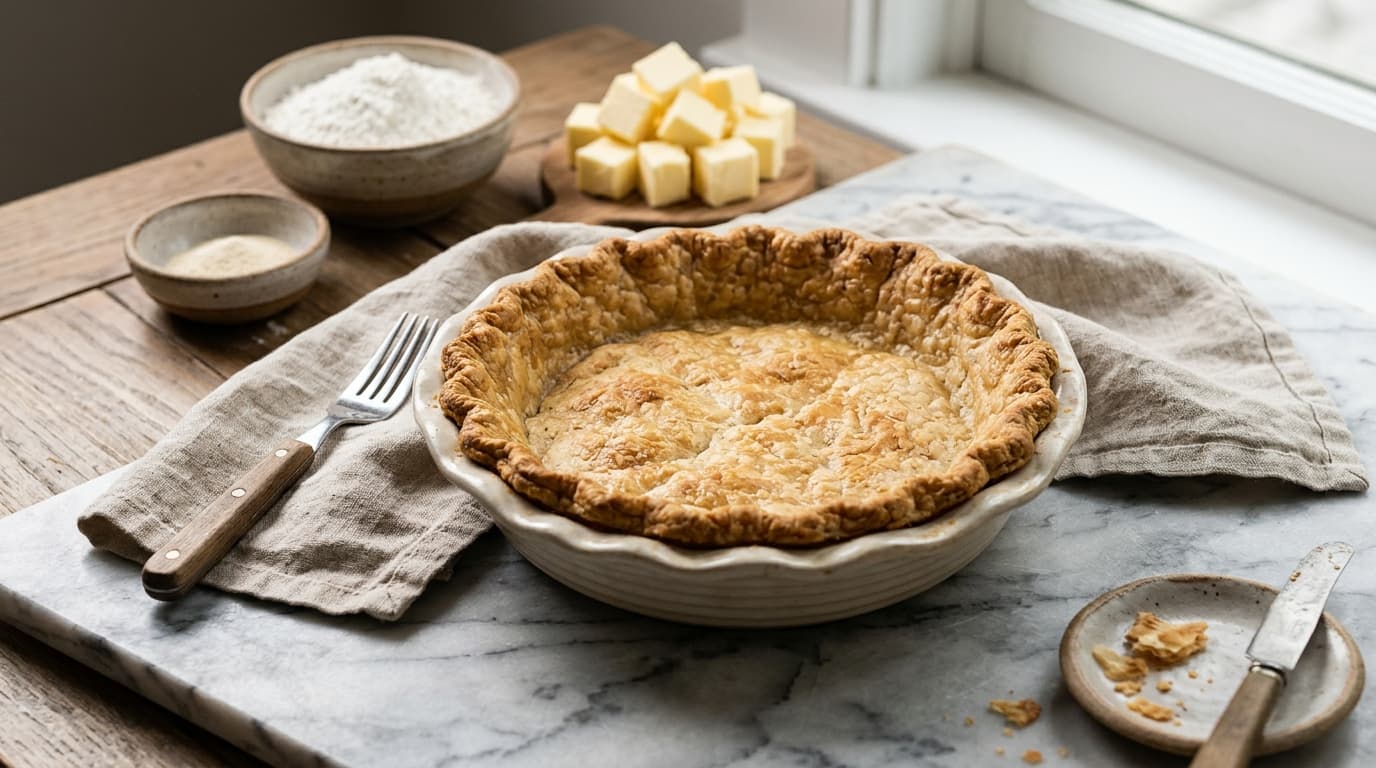
A good pie crust is buttery at the edges, tender in the middle and crisp enough to hold a slice upright on the fork. This easy gluten-free pie crust, a staple of American home baking, bakes up golden and flaky, with a rich flavor that works under almost any filling.
People love it because it removes the usual worry about gluten-free baking, that the crust will be sandy, pale or fall apart when you cut it. A crust that behaves like a regular one means the pie can be the star, whether it is a fruit pie, a custard pie or a cream pie, and everyone at the table gets the same slice.

Where pie crust comes from
There is no documented history for this particular gluten-free crust, so we will keep this part short. Pie crust itself is old. Most accounts place its early use in Europe, where a firm shell of dough was often a practical way to hold and cook a filling, and where it was not always meant to be eaten. Settlers are generally credited with bringing pie-making traditions to North America, where the sweet, tender, fruit-filled pie became closely tied to home cooking.
The gluten-free crust is a modern development, shaped by bakers who wanted the same pie on the table without wheat flour. It follows the same logic as a classic American crust: cold fat, a little liquid and a gentle hand.
How it varies
A traditional American pie crust is made with wheat flour and either butter, shortening or lard. Butter gives flavor, shortening gives tenderness, and lard has its loyal fans in the South and the Midwest. Families often have a preference they will defend at length.
Gluten-free crusts depart from that tradition in one important way. Wheat flour gets its structure from gluten, so gluten-free versions use a flour blend and often a binder, such as xanthan gum, to hold the dough together. That is why a well-made gluten-free crust can be rolled, lifted and crimped much like a classic one, and why a poorly balanced one turns crumbly.
Beyond the crust itself, there are plenty of ways to use it:
- Single-crust pies, such as pumpkin, pecan or custard, where the crust is shaped and filled.
- Double-crust pies, such as apple or cherry, with a top crust that is vented or cut into a lattice.
- Hand pies and tarts, using the same dough in smaller, easier-to-share shapes.
- Savory bakes, such as a vegetable quiche, if you leave out the sweet and go for herbs and cheese.
As a rule of thumb, the traditional way is a plain crust with a sweet filling. A modern twist might be a little cinnamon or sugar worked into the dough, or a sprinkle of coarse sugar on the top crust.
When to make it
This crust suits any moment that calls for something sweet. It is a good fit for a Sunday afternoon when you want a pie cooling on the counter by supper, and equally good for feeding a crowd. A few crusts made ahead and filled with different things let you offer more than one pie without much extra effort.
Autumn is its best season. Apples, pears, pumpkin, sweet potatoes and cranberries are all at their best from September through November, and a holiday table in October or November usually wants at least one pie. In summer, the crust is a natural match for blueberries, raspberries, cherries and peaches. In spring, it carries rhubarb and early strawberries well.

What to serve with it
Because the crust is a base, what goes with it depends on the filling. These are reliable starting points:
- Softly whipped cream. Its cool, light texture suits nearly any filling, from apple to chocolate cream.
- Vanilla ice cream. A scoop beside a warm slice of fruit pie is a classic, and a quick check of the label is always worthwhile.
- Sharp cheddar. A thin slice next to apple pie is an old New England habit, and the salty bite plays well against sweet fruit.
- Coffee or black tea. Their bitterness keeps a rich custard or pecan pie from feeling heavy.
- Warm spiced apple cider. It echoes the flavors of an autumn pie and makes a cozy drink for a crowd.
Make it at home
The version we cook on Meez comes from Gluten-Free Palate. It is gluten-free as written by its source, and as with any packaged ingredient, labels are worth checking. Get the recipe, or cook it step by step in Cook Mode if you want your hands free while the dough comes together.
Questions about gluten-free pie crust
Why is gluten-free pie crust often crumbly?
Without gluten, there is nothing in the dough that naturally stretches and holds it together. Gluten-free crusts rely on a flour blend and usually a binder to make up for it, which is why a well-balanced version matters.
What makes a pie crust flaky?
Flakiness comes from small pieces of cold fat that stay separate in the dough. As the crust bakes, the fat melts and leaves thin, tender layers behind. The same idea applies to gluten-free crusts.
Where did pie crust originate?
Most accounts trace pie crust to Europe, where dough was used to enclose and cook fillings. Pie-making then became a strong part of home baking in North America. Specific dates and inventors are hard to pin down.
What pies go well with a gluten-free crust?
Almost any pie that suits a standard crust will work, including apple, cherry, pumpkin, pecan and custard. Fillings that are thickened with a gluten-free starch or set with eggs are a natural match.
Last reviewed November 11, 2026. Written by the Meez editorial team with Meez Magic.
Original Recipe Source
This article is inspired by a recipe from Glutenfreepalate.
Visit the original source for their version of this recipe and more great content.
Related Topics
Enjoyed this article? Share it with fellow food lovers!
Ready to Cook This Recipe?
Experience our immersive Cook Mode with step-by-step visual guidance, voice narration, and built-in timers.