

What Makes Gluten-Free Chocolate Chip Cookies Chewy?
Gluten-free chocolate chip cookies with crisp golden edges, gooey centers and the deep, nutty flavor of browned butter. Here is where they came from, how they vary, and what to serve with them.
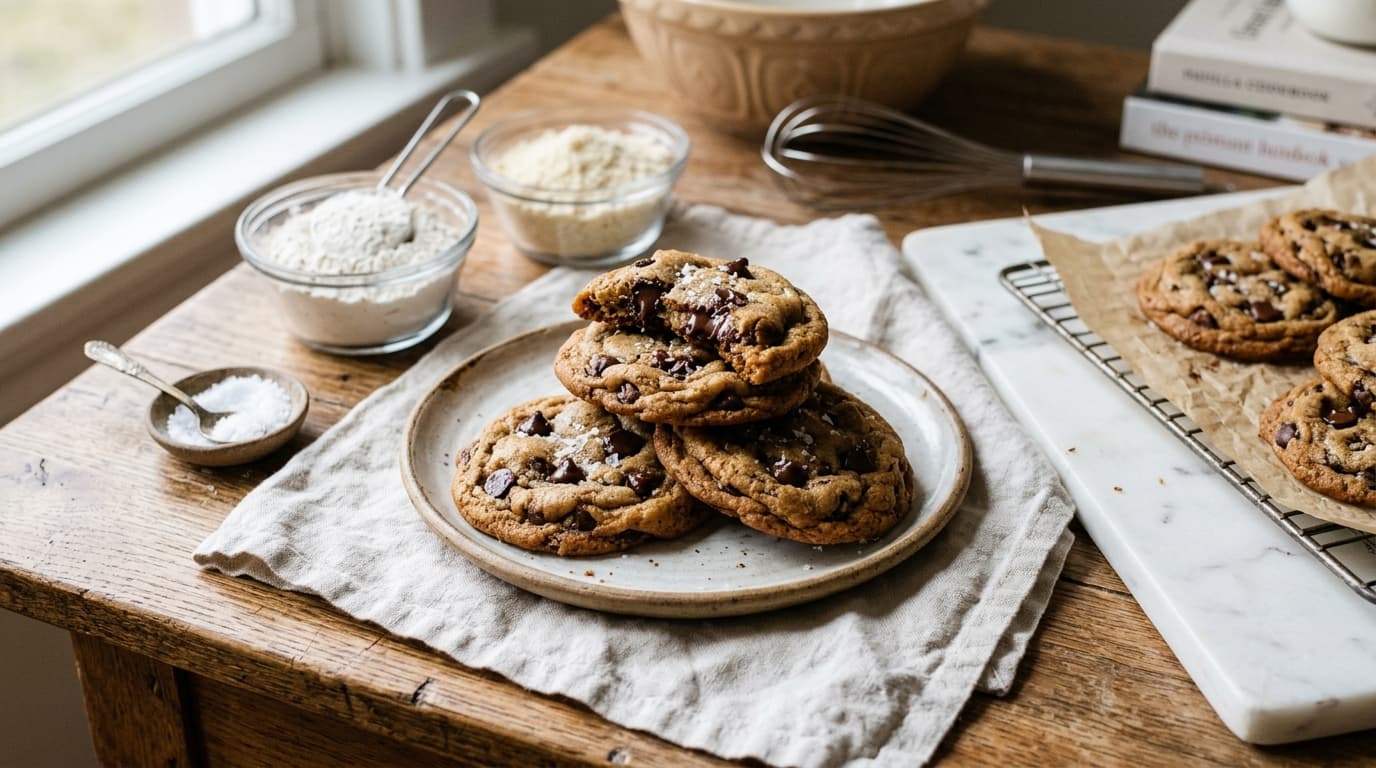
Featured Recipe
Gluten-Free Chocolate Chip Cookies (5-Star Recipe!)
Gluten-free chocolate chip cookies are the American classic with one change: the flour. Done well, they look and eat like the cookies you remember, with crisp, golden edges, a soft and slightly gooey middle, and pools of melted chocolate in every bite.
People love them because they stop feeling like a compromise. The browned butter gives them a toasty, caramel-like depth, and the chew is the kind you reach for a second cookie to check on. They are also easy to love at a table where not everyone eats the same way.

Where gluten-free cookies come from
The chocolate chip cookie itself is an American staple, but the research we drew on for this post does not document its origin, so we will not repeat a tidy legend here. What it does describe is how the gluten-free version changed over time.
According to a 2018 post from King Arthur Baking, gluten-free baking has improved a great deal. Earlier, home bakers mixed their own blends by hand, usually tapioca starch, rice flour and potato flour. The cookies that came out were sometimes only marginally similar to the originals. Packaged gluten-free all-purpose flour was the next step, though it worked best with recipes written specifically for it.
That is the honest history: a classic cookie, adapted by home bakers over time, with better flour blends doing much of the work. There is no single inventor to credit.
How gluten-free chocolate chip cookies vary
Traditional chocolate chip cookies are made with wheat flour. The gluten-free version swaps in a blend, and the quality of that blend matters more than almost anything else. A good all-purpose gluten-free flour blend gives you structure and tenderness without grittiness.
The version we cook on Meez comes from Meaningful Eats. It leans on three habits: browning the butter, letting the dough rest before baking, and using a high-quality flour blend. Browning adds flavor, and resting gives the flour time to absorb moisture, which helps the texture and keeps the cookies from spreading too thin.
From there, the variations are mostly about the chocolate and the finish:
- Chocolate: chopped bars melt into layered puddles, while chips hold their shape. Dark, semisweet and milk chocolate all work, depending on how sweet you like things.
- Finish: a few flakes of sea salt on top sharpen the sweetness and the browned butter.
- Add-ins: toasted pecans or walnuts are the usual extras, and they suit the nutty butter.
The traditional approach is a simple creamed-butter dough. Browning the butter is the modern touch, and it is the one most worth keeping.
When to make gluten-free chocolate chip cookies
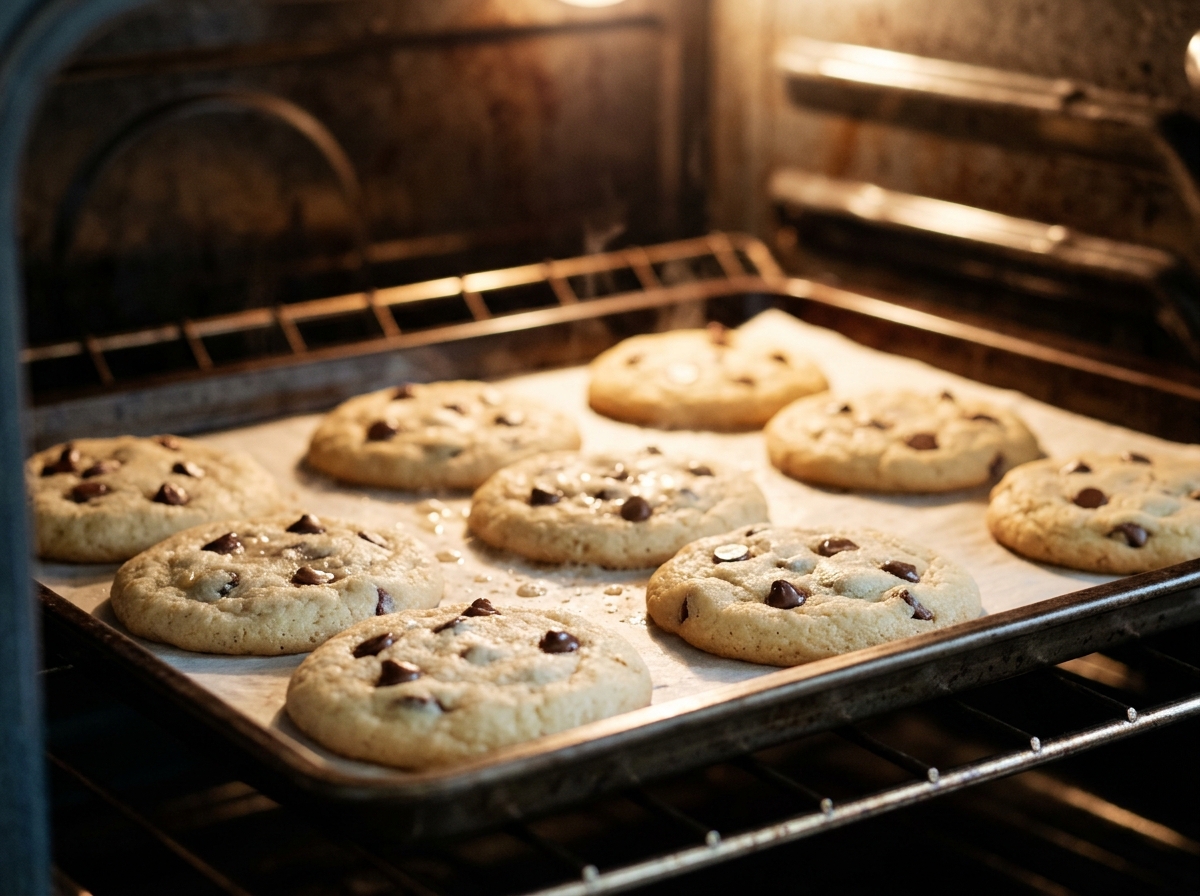
These are a quick favorite when you want something sweet without a big project. The dough comes together in one bowl, and a short rest while you tidy up is built into the process. They suit a weeknight when the craving hits just as much as a weekend.
They also work for feeding a crowd. The dough scoops easily and bakes in batches, so a full tray is easy to put out at a school event, a game-day gathering or a potluck. Because they are gluten-free, they let everyone share the same plate.
The cookies are good in any season, but they shine in the cool months. On an October weeknight or a December baking weekend, a warm cookie fits the apples, pears, pumpkins and cranberries filling the market. In midsummer they make a good pair for strawberries and cherries.
What to serve with them
- Cold milk or a milk alternative: the classic, and it softens the sweetness. Oat drinks are worth checking for a gluten-free label.
- Strong black coffee: its bitterness suits browned butter and dark chocolate.
- Vanilla ice cream: sandwich a scoop between two cookies, or serve it alongside. Check the label, since some flavors contain cookie pieces or other add-ins.
- Fresh fruit: sliced apples or pears in autumn, and strawberries in late spring, give a fresh contrast to the rich cookie.
- Hot chocolate: for a cold evening, though it is a sweet-on-sweet pairing, so keep the cocoa lightly sweetened.
The version on Meez is gluten-free as written by its source, and it is always worth checking labels on your flour blend, chocolate and any extras.
Make it at home
When you are ready to bake, get the recipe for the full ingredients and method, or cook it step by step in Cook Mode so your hands stay free while the butter browns.
Questions about gluten-free chocolate chip cookies
Who invented gluten-free chocolate chip cookies?
No single inventor is documented. Home bakers adapted the classic over time, first with hand-mixed blends of starches and flours, and later with packaged gluten-free all-purpose flours.
Do gluten-free chocolate chip cookies taste different from regular ones?
They can, depending on the flour blend. A good blend, together with browned butter, gives a chewy, caramel-rich cookie that is close to the classic, while a weaker blend can taste gritty or dry.
Why brown the butter for cookies?
Browning the butter adds a toasty, nutty flavor that regular melted or softened butter does not have. It is one of the main reasons these cookies taste so rich.
What should I serve with chocolate chip cookies?
Cold milk and coffee are the classics, and vanilla ice cream makes it a dessert. Fresh fruit adds a bright contrast. Check labels so every item stays gluten-free.
Sources
Last reviewed November 11, 2026. Written by the Meez editorial team with Meez Magic, from the sources above.
Original Recipe Source
This article is inspired by a recipe from Meaningfuleats.
Visit the original source for their version of this recipe and more great content.
Related Topics
Enjoyed this article? Share it with fellow food lovers!
Ready to Cook This Recipe?
Experience our immersive Cook Mode with step-by-step visual guidance, voice narration, and built-in timers.