

What Is Spanish Beef and Pimenton Stew with Garlic Mash?
Beef and pimenton stew with truffle oil and garlic mash is a Spanish-leaning braise: smoky paprika, red wine and Serrano ham over a silky, garlicky mash. Here is where it fits, how it varies and what to put on the table beside it.
Featured Recipe
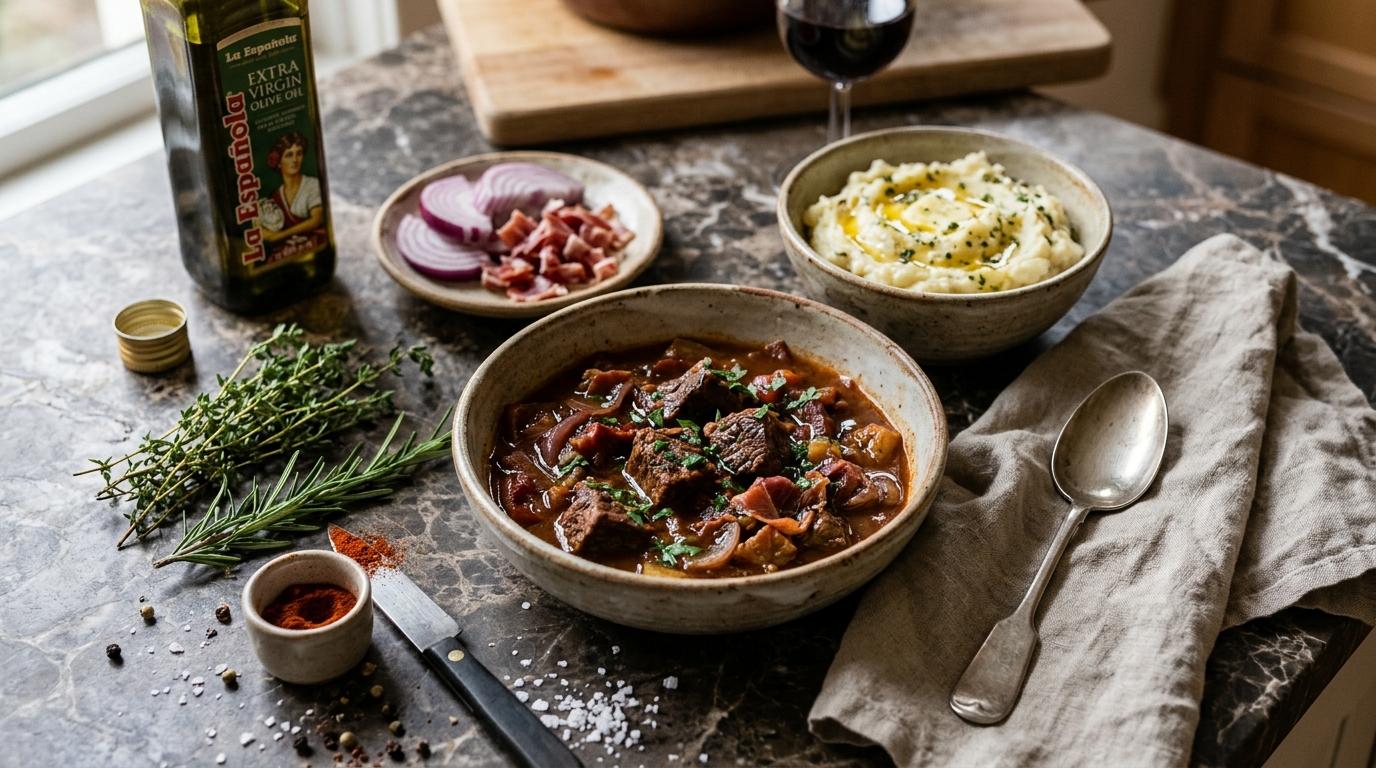
Beef and pimenton stew with truffle oil and garlic mash
Beef and pimenton stew with truffle oil and garlic mash is a Spanish-style braise built on tender chunks of beef in a deep red, smoky sauce. The sauce gets its character from sweet and hot pimentón, red wine, tomatoes and a little Serrano ham. Spooned over a soft, garlicky mash, it is the kind of dinner that fogs up the windows and quiets the table.
People love it because it manages to be rustic and a little luxurious at once. The stew is savory, gently spiced and mellow from long cooking, while the mash carries a faint, earthy perfume of truffle. Sweet piquillo peppers and fresh parsley keep the whole bowl from feeling heavy.
Where it comes from
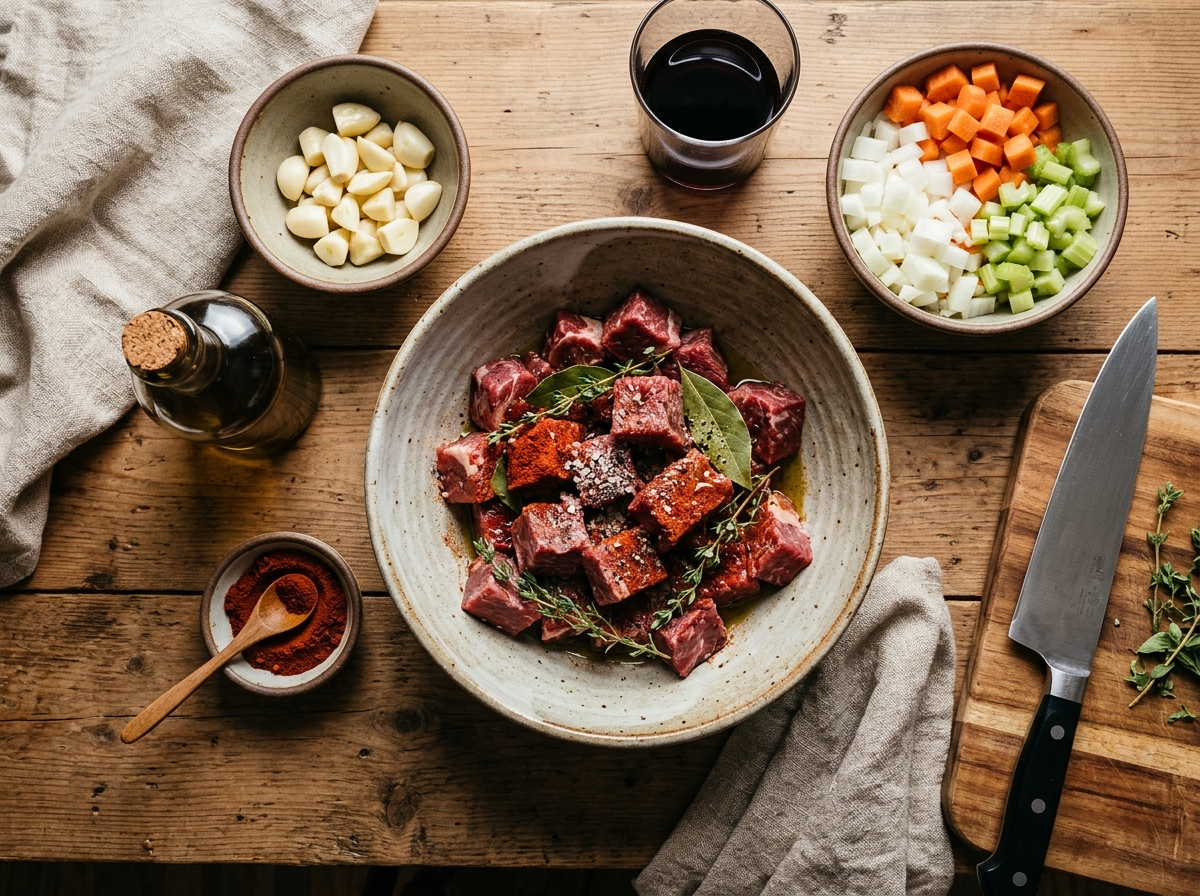
This one has no documented history as a traditional dish, and it is best to say so plainly. It is a modern recipe published by the olive oil company La Española, which presents it as a beef stew with a Spanish twist, suited to any season. We have found no record of it as a regional classic, so we will not invent a backstory.
What we can say is that its parts are familiar. Slow-braised beef with wine, paprika and cured ham follows the general logic of Spanish stews, and pimentón (Spanish paprika) is a staple of that kitchen. The truffle-scented mash is the newer idea, borrowed from a more contemporary, restaurant-style way of serving a stew.
How it varies
The traditional end of the spectrum would serve a braise like this with crusty bread, rice or fried potatoes. The mash and truffle oil are the modern twist, and they turn a rustic pot into something closer to a plated main course. The source gives the same dish for UK and US cooks, with floury potatoes such as Maris Piper or King Edward named for the mash. In the US, Russets do a similar job.
Cooks tend to adjust it in a few easy ways:
- Heat level: the recipe uses both sweet and hot pimentón, so you can lean toward either one depending on who is eating.
- The cut: stewing beef is the standard, but chuck or shin work along the same lines.
- The base: skip the truffle oil and the mash is still lovely with plain olive oil. Or serve the stew over polenta or with bread for mopping.
- The ham: Serrano adds a salty, savory depth, and it is worth keeping if you can find it.
When to make it
It is made for a Sunday dinner. The stew rewards unhurried cooking and the house smells wonderful while it works, so it also suits a weekend project when you want to spend an afternoon in the kitchen. It is cozy comfort food at its most direct, and it holds well, so you can make the stew ahead and finish the mash just before sitting down.
The source calls it suited to any season, but it shines from October through February. A cold evening in November, with the clocks changed and the dark arriving early, is exactly its moment. That is also when root vegetables, cabbage, kale, Brussels sprouts, winter squash, apples and pears are at their best in the Northern Hemisphere, and all of them make good company for the stew.
What to serve with it
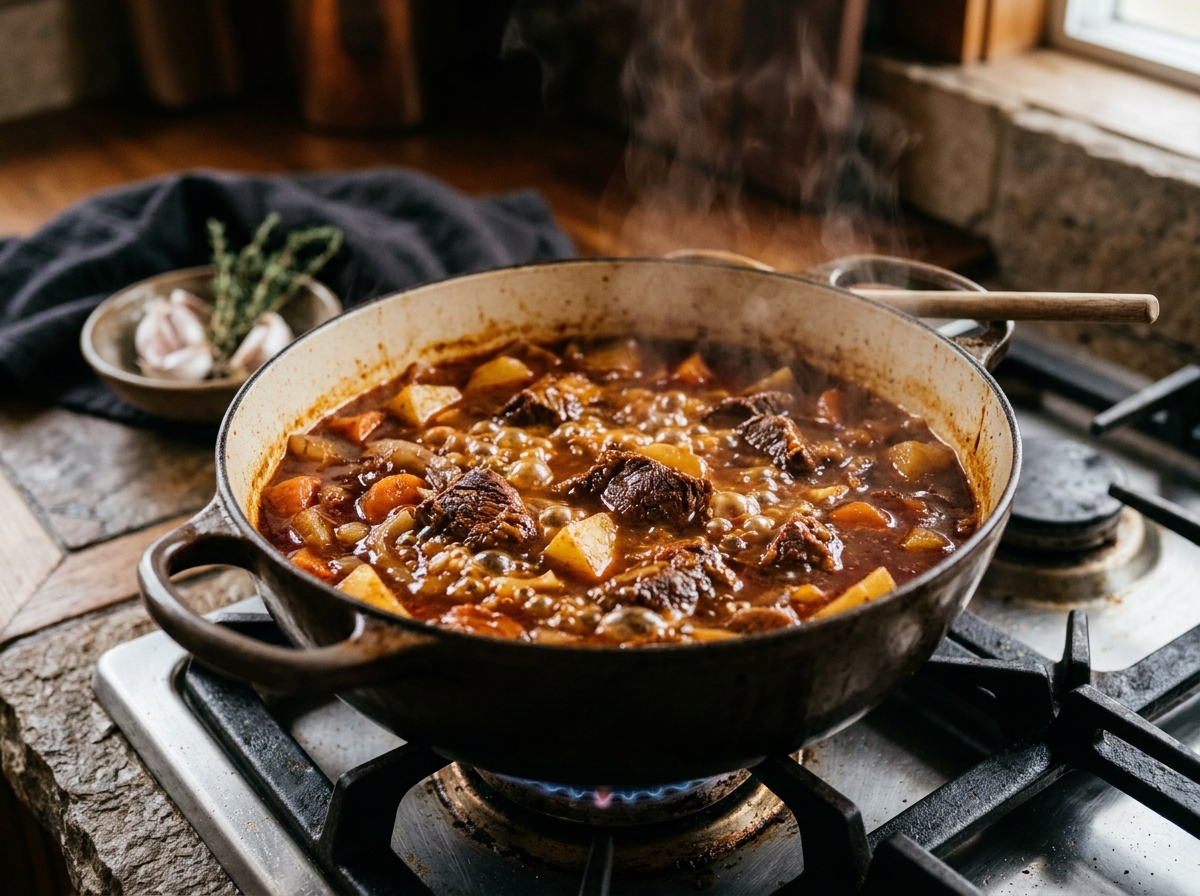
The mash already fills the starch slot, so the best sides add freshness or bitterness against a rich, smoky sauce.
- Garlicky greens: kale, chard or cavolo nero, sautéed in olive oil, bring a pleasant bitterness that cuts through the richness.
- Roasted carrots or squash: their sweetness echoes the sweet pimentón and piquillo peppers.
- A sharp green salad: dress it with sherry vinegar. The acidity resets your palate between spoonfuls.
- Crusty bread: it is there for the sauce that the mash leaves behind.
- A Spanish red: a Rioja or Ribera del Duero suits the paprika and the beef. A glass of the same wine you cooked with is never a bad idea.
Make it at home
The version we cook on Meez comes from La Española Olive Oil. When you are ready, get the recipe for the full ingredients and method, or cook it step by step in Cook Mode so your hands stay free at the stove.
Questions about beef and pimenton stew
Is this a traditional Spanish dish?
Not as far as we can document. It is a modern recipe from an olive oil brand, though it draws on familiar Spanish flavors such as pimentón, red wine, cured ham and olive oil.
What is pimentón?
Pimentón is Spanish paprika, made from dried ground peppers and often smoked. It comes in sweet and hot styles, and this stew uses both for color, smokiness and a gentle kick.
How is it different from goulash?
Both are paprika-rich beef stews, but goulash is Hungarian and built around Hungarian paprika. This one leans on smoky Spanish pimentón, red wine, Serrano ham and piquillo peppers, and it is served over garlic mash.
What should I serve with it?
Garlicky greens, roasted carrots or squash, a sherry-vinegar salad and crusty bread all work well. A Spanish red wine finishes the table nicely.
Sources
- Beef and pimenton stew with truffle oil and garlic mash - La Española Olive Oil
- Beef and Pimenton Stew with Truffle Oil and Garlic Mash (La Española Olive Oil, US site)
Last reviewed October 28, 2026. Written by the Meez editorial team with Meez Magic, from the sources above.
Original Recipe Source
This article is inspired by a recipe from Laespanolaoliveoil.
Visit the original source for their version of this recipe and more great content.
Related Topics
Enjoyed this article? Share it with fellow food lovers!
Ready to Cook This Recipe?
Experience our immersive Cook Mode with step-by-step visual guidance, voice narration, and built-in timers.