

What Is Moroccan Chicken Tagine? Origins and What to Serve
Moroccan chicken tagine is a fragrant, slow-simmered stew with tender chicken and a spiced, savory-sweet sauce. Here is where it comes from, how it varies and what to serve beside it.
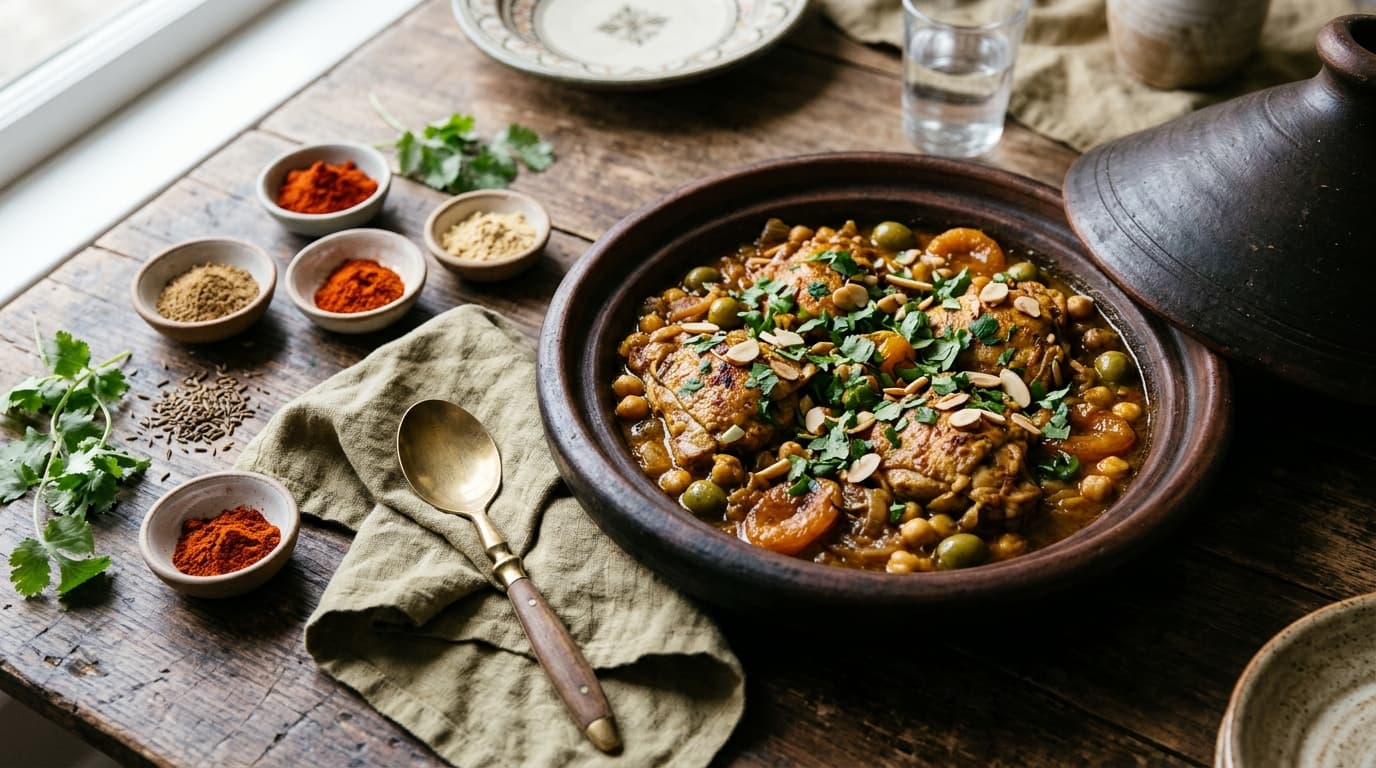
Featured Recipe
Moroccan Chicken Tagine
Moroccan chicken tagine is a slow-simmered stew in which chicken turns tender and soft in a sauce that smells of warm spices, onion and citrus. The sauce is savory with a gentle sweetness, rich enough to soak into bread or grains, and bright enough that the dish never feels heavy.
People love it because it looks like a showpiece but behaves like an easy supper. Everything cooks together in one pot, the kitchen fills with fragrance, and the meal arrives at the table steaming and golden. It is Moroccan home cooking at its most generous.

Where tagine comes from
The word tagine names two things: a North African cooking vessel, with a flat-rimmed dish and a tall conical lid, and the stews cooked in it. According to Britannica, it is essential in Morocco, Tunisia and Algeria as both a cooking tool and a main dish. Wikipedia places its origin in the Maghreb.
Beyond that, the story is debated. Britannica says tagines likely began with nomadic Berbers, who used them as portable ovens, and that the Romans potentially introduced the ceramic version. Some early writings credit the idea to the Roman empire, a compact vessel that is easy to transport, while other accounts favor Berber culture. Historians have not settled it.
The written trail is clearer later on. One source says the oldest written evidence dates to the Abbasid Caliphate (750–1517). Moroccopedia adds that the tagine rose in popularity during the early Muslim conquests and, by one account, became a staple during Harun al-Rashid's rule in the 8th century. Even the name has competing explanations: one source gives a Greek origin, another says it means “low clay pot” in Arabic.
How tagine varies
There is no single tagine. Moroccan and Algerian versions are slow-cooked stews of sliced meat, poultry or fish with vegetables or fruit, and spices, nuts and dried fruits often join in. Cooks across the region also use related earthenware vessels, such as the tangia from Marrakesh and the lidless Tunisian tagine.
Chicken tagine alone has many family versions. A well-known pairing is preserved lemon with olives, tart and salty against the tender meat. Another leans sweet, with dried fruit and a scatter of toasted nuts. Some cooks pile in root vegetables, while others keep the pot almost all sauce and chicken.
The traditional method uses the conical clay vessel, which keeps the stew moist as it simmers. The version we cook on Meez comes from Once Upon a Chef, and it takes a modern, practical route: no special cookware required. An ordinary pot does the job, which makes the dish far easier to try on a regular evening.
When to make chicken tagine
This is a natural Sunday dinner. It rewards an unhurried afternoon, mostly hands-off once it is simmering, and it feeds a table without a lot of fuss. It also works for a small dinner party, since you can bring the pot to the table and let everyone serve themselves.
It shines from autumn through early spring. On a chilly October evening, with carrots, turnips, squash and sweet potatoes in season, it is the kind of dish that warms a room. In winter, citrus is at its best in the Northern Hemisphere, and the lemony, fragrant sauce suits that moment well.

What to serve with it
- Couscous. Its fluffy grains catch the sauce, and it is the classic partner for a tagine.
- Warm flatbread or crusty bread. Tearing off pieces to scoop up chicken and sauce is part of the fun.
- A cucumber and tomato salad. Cool, crisp and lightly dressed, it freshens up the rich sauce.
- Roasted carrots or squash. They echo the sweetness of the spices and add color to the table.
- Mint tea or a crisp white wine. Sweet hot tea is the traditional finish, while a dry, citrusy white cuts through the richness.
Make it at home
Ready to cook it? Get the recipe for the full ingredient list and method, or cook it step by step in Cook Mode so your hands stay free at the stove.
Questions about Moroccan chicken tagine
What does tagine mean?
Tagine is both the name of a North African clay cooking vessel and of the stews made in it. One source translates it as “low clay pot” in Arabic, while another traces the word to a Greek origin.
Where does tagine come from?
It is generally placed in the Maghreb, the region that includes Morocco, Algeria and Tunisia. Some historians credit Berber tribes and others the Romans, and the oldest written evidence dates to the Abbasid Caliphate.
Do you need a tagine pot to make tagine?
Not for this version. The traditional vessel is lovely to use, but the Once Upon a Chef version is built to work in everyday cookware.
How is tagine different from a regular stew?
Tagine is defined by its spicing, its slow simmer and often its mix of savory and sweet elements such as fruit or preserved lemon. Traditionally it is also cooked in the conical-lidded vessel that gives it its name.
Sources
Last reviewed November 2, 2026. Written by the Meez editorial team with Meez Magic, from the sources above.
Original Recipe Source
This article is inspired by a recipe from Onceuponachef.
Visit the original source for their version of this recipe and more great content.
Related Topics
Enjoyed this article? Share it with fellow food lovers!
Ready to Cook This Recipe?
Experience our immersive Cook Mode with step-by-step visual guidance, voice narration, and built-in timers.