

What Is Kousa Mahshi? Lebanese Stuffed Zucchini Explained
Kousa mahshi is Lebanese stuffed zucchini, often cooked alongside eggplant until the vegetables turn silky and the filling soaks up the sauce. Here is where it comes from, how it varies, and when it is worth the effort.
Featured Recipe
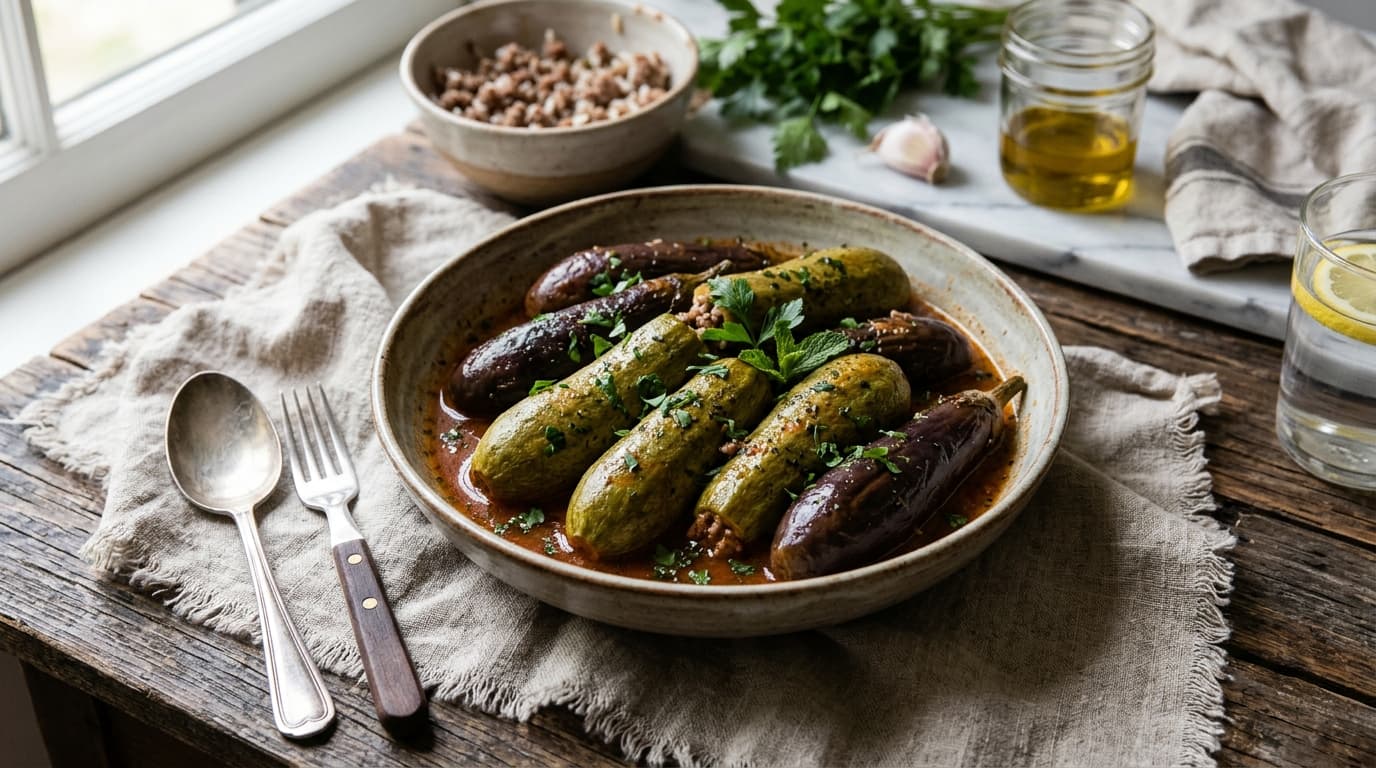
Authentic Kousa Mahshi (Lebanese Stuffed Zucchini & Eggplant)
Kousa mahshi is the Lebanese way with stuffed zucchini: small, pale squash hollowed out, filled with seasoned rice, and cooked gently in a pot until the vegetable turns soft and almost sweet. The filling swells and takes on the flavor of the sauce around it, so every bite is tender squash, savory rice and a little tang.
People love it because it tastes like care. Nothing about it is flashy, but the smell of it cooking fills a house, and the pot comes to the table looking generous and a bit old-fashioned in the best way. In the version we cook, eggplant joins the zucchini, which is how it appears under its fuller name, koussa mahshi wa batenjan.

Where kousa mahshi comes from
The word mahshi simply means "stuffed" in Arabic, and kousa is squash, so the name tells you exactly what to expect. Beyond that, the history is blurry. Arab America notes that the origin of mahshi can be traced to Syria, although the exact origin is unknown. Some writers go further back and claim stuffed vegetables as part of Ancient Greek cuisine, but that is a claim, not a settled fact.
What is better documented is that stuffing vegetables is old in the Arab kitchen. Medieval Arabic cookbooks show cooks stuffing zucchini, eggplants, carrots, onions, cabbage, grape leaves, potatoes and tomatoes. Kousa mahshi sits inside that long tradition rather than being a single invented dish with a famous inventor.
The idea also travels well beyond Lebanon. Stuffed squash turns up in many cuisines, and the name in different languages generally means literally "stuffed squash." Turkey has its own kabak dolması, and Wikipedia lists kousa mahshi as the Arab-world entry in that wider family.
How it varies
The biggest fork is the sauce. Many cooks simmer kousa mahshi in a tomato-based broth, while a close relative, sheikh al-mahshi, is zucchini stuffed with minced lamb and nuts and, in its original form, bathed in yogurt sauce. Derivative versions of that dish use tomato sauce instead, so the two end up looking similar in the pot even though they began differently.
The vegetables change from house to house as well. Zucchini is the constant, but eggplant is a common partner, and the same filling can go into peppers, cabbage or grape leaves. Families differ on whether the filling includes meat and how strongly it is spiced or flavored with herbs and lemon. The traditional approach is hollowing the squash by hand with a narrow coring tool, which is made for exactly this job. A modern twist might be a lighter, vegetarian filling or a roasted finish, but the shape of the dish stays the same.
The version we cook on Meez comes from hadias lebanese cuisine. The author describes it as a regular part of her mother's monthly dinner rotation, and that feels right: it is a dish that belongs to a household calendar.
When to make it
Kousa mahshi is a Sunday dinner dish and a proper weekend project. Coring and filling the vegetables takes patience, so it suits an afternoon when you want to be in the kitchen, ideally with someone to talk to or help pack the squash. Once it is in the pot, the cooking looks after itself and the table gets a one-pot centerpiece.
It shines from late summer into early fall, when zucchini and eggplant are at their peak in the Northern Hemisphere and tomatoes, peppers and fresh mint are still around. A Sunday in September, with the windows open and the market bags still full of squash, is about perfect. It also works in October, when the evenings cool and a warm, saucy pot becomes welcome.

What to serve with it
- Plain yogurt or a cucumber-yogurt salad. Its cool tang offsets the rich, tomato-sauced vegetables.
- A crisp salad. Something like fattoush or a simple tomato, cucumber and parsley salad adds crunch and freshness.
- Warm flatbread. Useful for mopping up the sauce at the bottom of the pot.
- Pickled vegetables or olives. A small dish of something briny cuts through the softness of the squash.
- Mint tea or a dry white wine. Both are light enough that they refresh rather than weigh down a filling meal.
Make it at home
When you are ready to cook, get the recipe for the full ingredient list and method, or cook it step by step in Cook Mode so your hands stay free while you stuff and arrange the pot.
Questions about kousa mahshi
What is kousa mahshi?
It is a Lebanese dish of zucchini hollowed out and stuffed with a seasoned filling, then simmered in sauce. The name means "stuffed squash" in Arabic, and eggplant often cooks alongside it.
Where does kousa mahshi come from?
Mahshi in general is often traced to Syria, though the exact origin is unknown. Medieval Arabic cookbooks already describe stuffing zucchini and other vegetables, so the tradition is long.
How is it different from sheikh al-mahshi?
Sheikh al-mahshi is a related dish of zucchini stuffed with minced lamb and nuts, traditionally served in a yogurt sauce. Kousa mahshi is the broader, everyday stuffed zucchini that is commonly cooked in a tomato-based sauce.
What do you serve with kousa mahshi?
Something cool and something crisp: yogurt, a fresh herb salad and warm bread cover most of what the meal needs. Pickles and mint tea round it out.
Sources
- Kousa Mahshi, A Taste Bud's Awakening Dish - Arab America
- Sheikh al-mahshi - Wikipedia
- Stuffed squash - Wikipedia
Last reviewed November 2, 2026. Written by the Meez editorial team with Meez Magic, from the sources above.
Original Recipe Source
This article is inspired by a recipe from Hadiaslebanesecuisine.
Visit the original source for their version of this recipe and more great content.
Related Topics
Enjoyed this article? Share it with fellow food lovers!
Ready to Cook This Recipe?
Experience our immersive Cook Mode with step-by-step visual guidance, voice narration, and built-in timers.