

What Is Kimchi Jjigae? Korea's Comforting Kimchi Stew
Kimchi jjigae is a bubbling Korean stew of sour, well-fermented kimchi, rich pork and soft tofu. Here is where it comes from, how it varies, and what to put on the table beside it.
Featured Recipe
Kimchi Jjigae Recipe: Easy Korean Kimchi Stew with Pork & Tofu
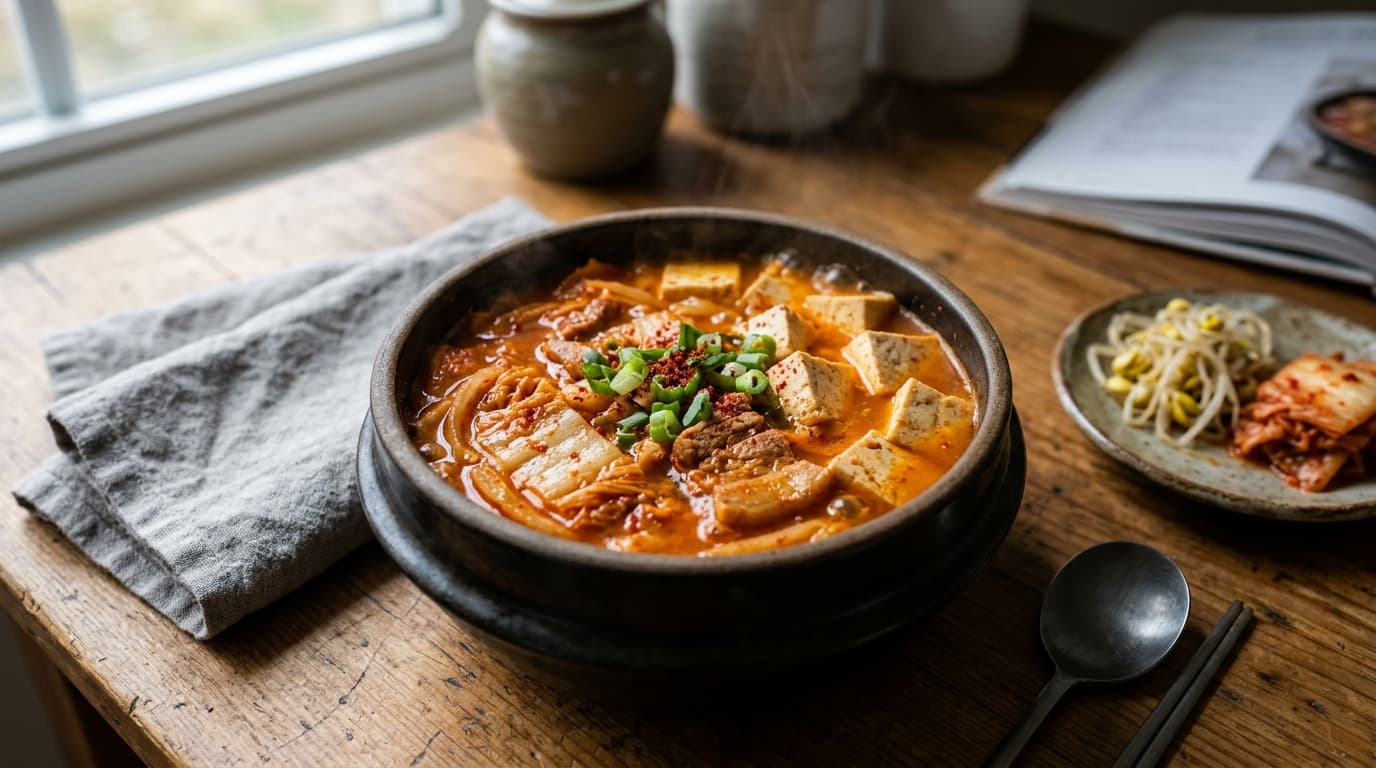
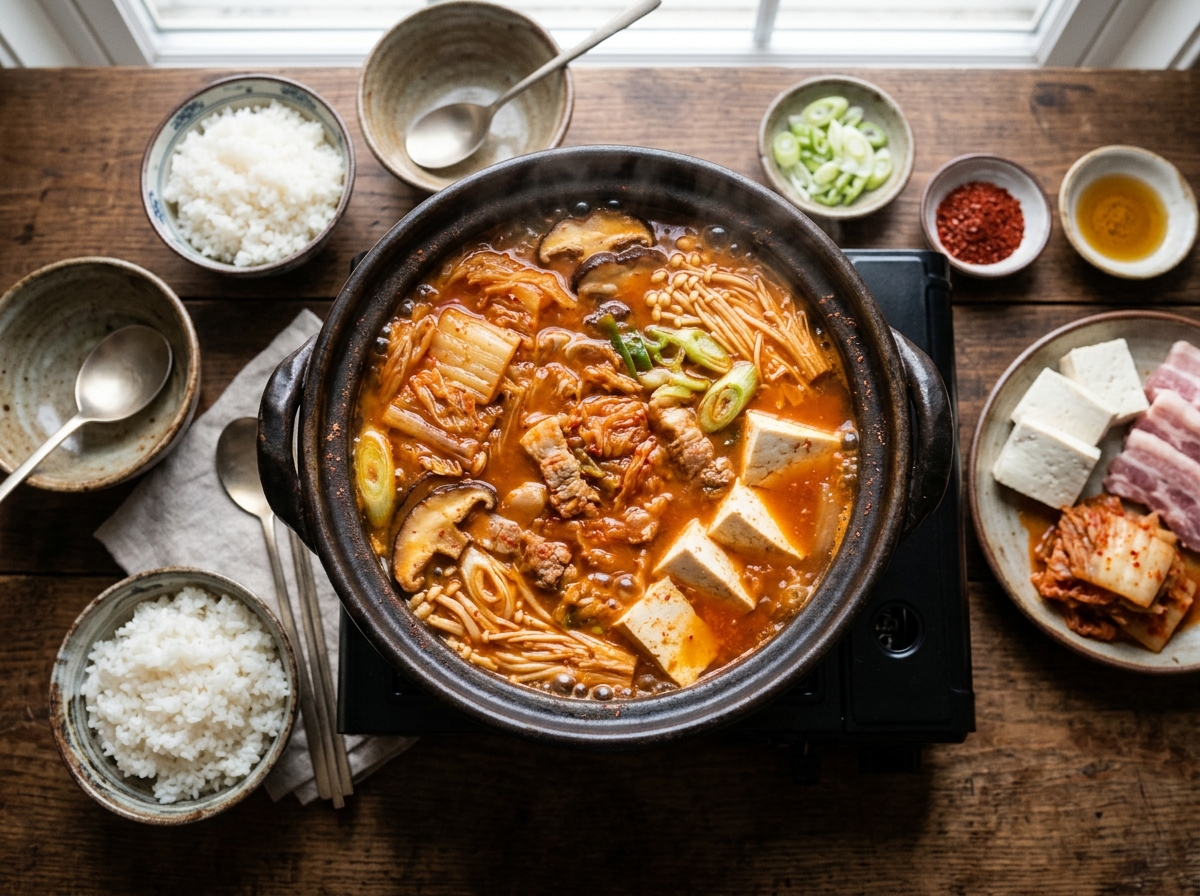
Kimchi jjigae is a Korean stew built on well-fermented napa cabbage kimchi, thin slices of pork belly and soft, medium-firm tofu. It arrives at the table still bubbling, in a deep red broth that is sour, spicy and savoury all at once, with cabbage that has gone silky and pork that has melted into the liquid.
People love it because it tastes far bigger than its short list of parts suggests, and because it is made for rice. You spoon the hot, tangy broth over a mound of white rice, add a piece of tofu or pork, and repeat until the pot is empty. It is the kind of food Korean home cooks turn to without thinking.
Where kimchi jjigae comes from
No one can point to a single inventor or a first pot, and the honest answer is that the exact origin is unclear. Most accounts place the stew in the Joseon Dynasty (1392–1910), and it is often linked to the arrival of red chili peppers in Korea. Kimchi was already a staple by then, so using it as the base of a hot, peppery stew was a natural step. Some sources place its development in the middle of the Joseon era.
It is generally described as a humble dish that grew out of everyday home cooking rather than court cuisine. That fits the way it is made today, with a jar of kimchi doing most of the work.
It also belongs to a wider family. A jjigae is a Korean stew, often shared from one pot, and most Korean meals include either a jjigae or something similar. Jjigae are usually named for their main ingredient, such as dubu jjigae (tofu) and saengseon jjigae (fish), or for their seasoning, like doenjang jjigae. Kimchi jjigae is named for the kimchi at its centre.
How it varies
The pork version is the one most often served in restaurants, and it is the classic home version too. A second common variation uses tuna in place of pork, which makes a lighter, quicker pot with a different kind of richness. Both start from the same base of kimchi and a source of fat or protein.
The kimchi matters more than anything else. The stew is traditionally cooked with older, more deeply fermented kimchi, sometimes called ripe or sour kimchi. It has a stronger flavour than fresh kimchi, and that sharpness is what gives the broth its depth. Fresh kimchi makes a milder, brighter stew, but it is not quite the same dish.
Beyond that, families make it their own. Some add onion or scallions, some add mushrooms, and some stir in a little extra gochujang or gochugaru for heat. Modern twists include adding instant noodles, a slice of processed cheese, or a spoonful of the brine from the kimchi jar. The tofu and pork version remains the benchmark.
When to make kimchi jjigae
This is a Sunday dinner dish and a cozy comfort dish. It needs little fuss, one pot and a bowl of rice per person, so it suits a slow weekend evening when you want something deeply warming. It also works for a weeknight in November, when you come home cold and want dinner on the table without a long shopping list.
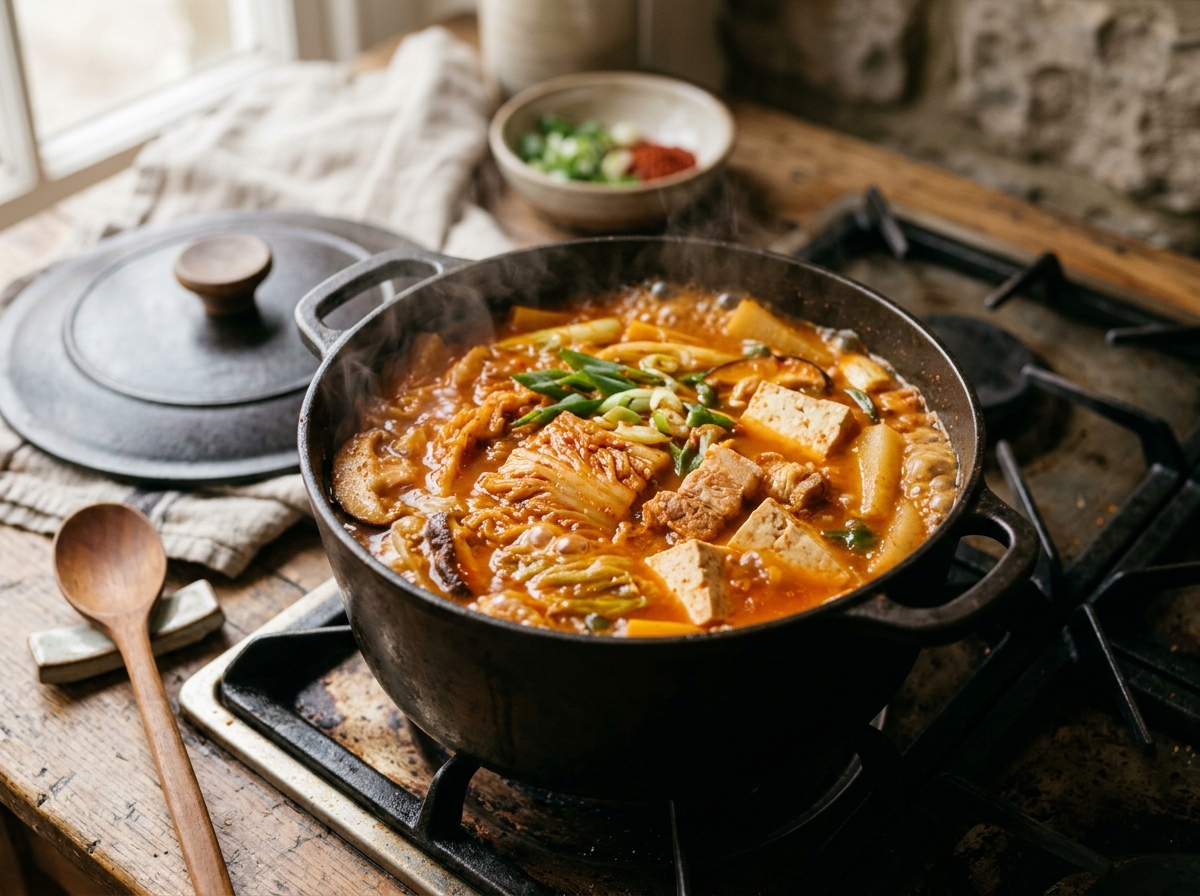
It shines from late autumn through winter. Napa cabbage, daikon radish, scallions, leeks, mushrooms and winter squash are all at their best in the Northern Hemisphere then, and they make good companions at the same table. A pot of kimchi jjigae also handles a jar of kimchi that has gone too sour to eat on its own, which makes it a useful dish at any time of year.
What to serve with kimchi jjigae
- Steamed short-grain rice. This is not optional. It softens the heat and soaks up the broth.
- Simple banchan. Seasoned spinach, bean sprouts or sliced cucumbers add cool, clean contrast to the rich stew.
- Rolled omelet (gyeran-mari). Its mild, slightly sweet flavour calms the spice, and it is easy to make while the stew simmers.
- Scallion pancake. Crisp edges and a chewy middle turn the stew into a bigger, more generous meal, especially for guests.
- Drinks. Roasted barley tea keeps the meal light. For something stronger, a cold lager or a glass of soju cuts through the fat of the pork.
Make it at home
The version we cook on Meez comes from Masala Monk. When you are ready to cook, get the recipe for the full ingredients and method, or cook it step by step in Cook Mode so your screen stays on while your hands are busy.
Questions about kimchi jjigae
Where does kimchi jjigae come from?
It comes from Korea, and it is generally thought to have developed during the Joseon Dynasty after chili peppers arrived. The exact origin is not documented, so most sources describe it in cautious terms.
Why is old kimchi used for kimchi jjigae?
Older, more fermented kimchi has a stronger, more sour flavour that gives the stew its depth. Fresh kimchi works, but the broth tastes flatter.
What does kimchi jjigae taste like?
It tastes tangy, spicy and savoury, with the richness of pork and the mild softness of tofu. The cabbage turns tender and sweet-sour as it simmers in the broth.
How is kimchi jjigae different from sundubu jjigae?
Kimchi jjigae is built around fermented kimchi, usually with pork or tuna. Sundubu jjigae centres on very soft, uncurdled tofu in a spicy broth, so it is silkier and less sour.
Sources
Last reviewed November 7, 2026. Written by the Meez editorial team with Meez Magic, from the sources above.
Original Recipe Source
This article is inspired by a recipe from Masalamonk.
Visit the original source for their version of this recipe and more great content.
Related Topics
Enjoyed this article? Share it with fellow food lovers!
Ready to Cook This Recipe?
Experience our immersive Cook Mode with step-by-step visual guidance, voice narration, and built-in timers.