

What Is Karnıyarık? Turkey's Stuffed Eggplant Explained
Karnıyarık is a Turkish dish of eggplant slit open and filled with ground meat, onions and tomatoes. Here is where the name comes from, how it varies, and when it is worth making.
Featured Recipe
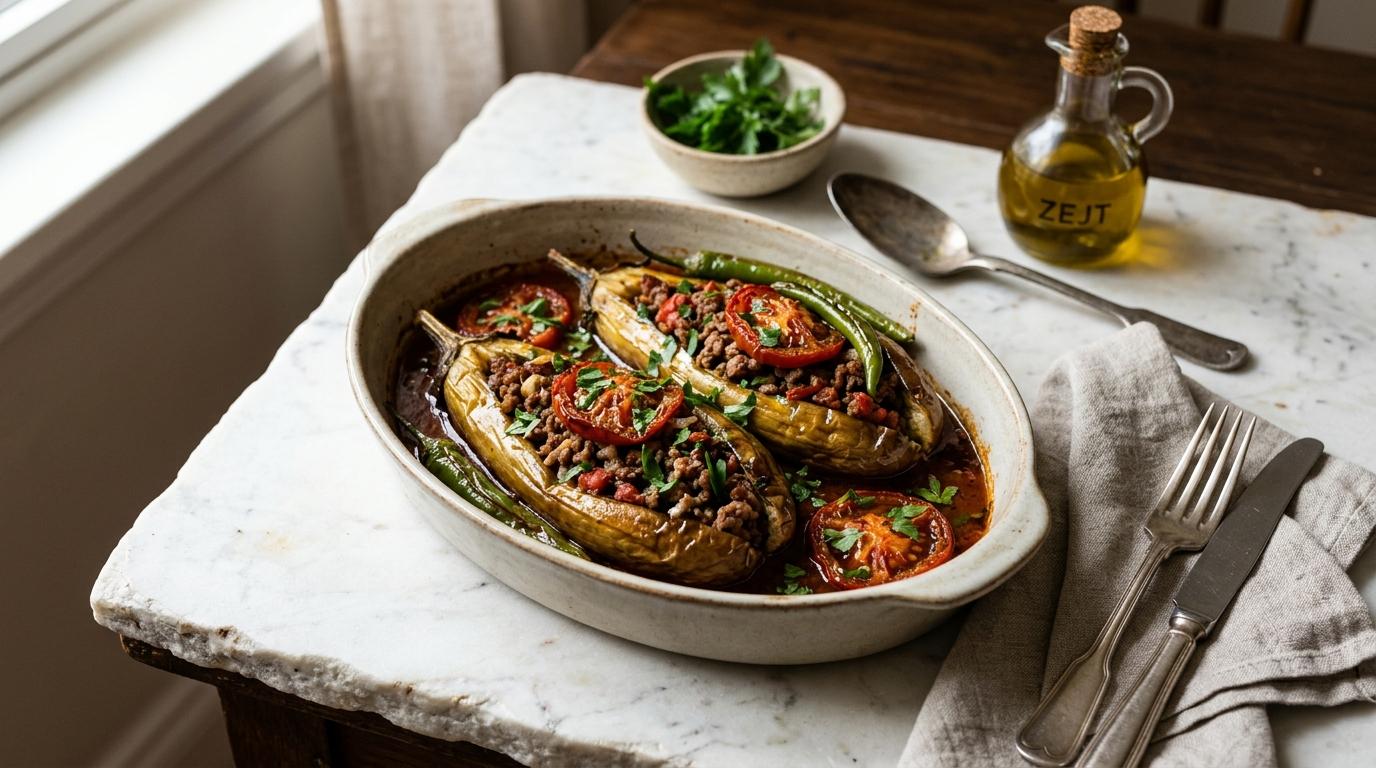
Turkish Meat Stuffed Eggplant Recipe (Karniyarik)
Karnıyarık is a Turkish dish of whole eggplants, slit down the middle and filled with a savory mix of ground meat, onions, garlic, tomatoes and parsley. The eggplant turns silky and almost creamy, while the filling underneath is rich, soft and gently sweet from slowly cooked onions and tomato.
People love it because it feels both humble and generous. Each eggplant is a self-contained portion, the flavors are familiar rather than fiery, and it tastes even better spooned over rice with its pan juices. It is a main course that looks like you fussed, and in truth you did, a little.
Where karnıyarık comes from
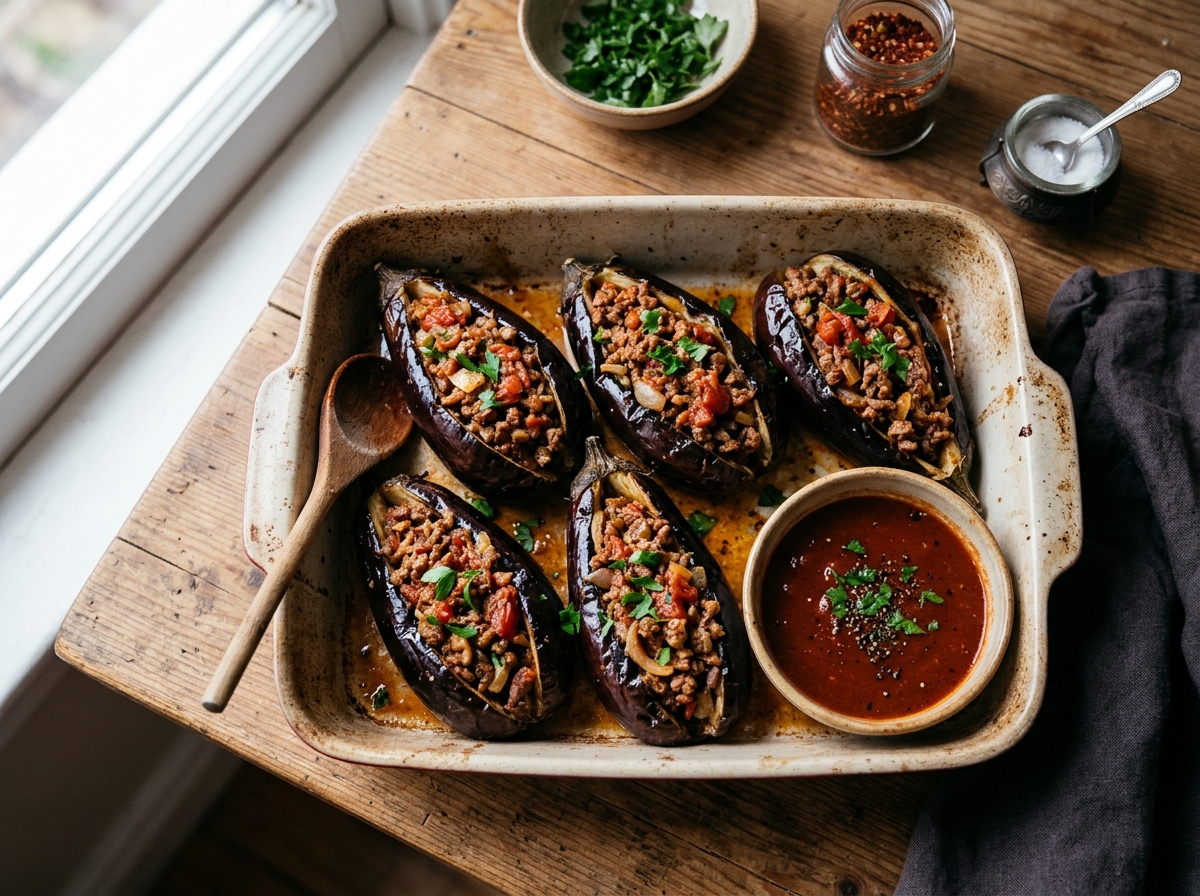
The name is the most reliable piece of history we have. Karnıyarık translates literally as "riven belly," and some sources render it as "split belly." Either way, it describes the eggplant slit open so it can hold its filling. Turkey is listed as the dish's place of origin, and it is very popular across Turkey and Anatolia, turning up on the menus of almost every restaurant that serves home-style food.
Beyond that, the record is thin. One Turkish cuisine site calls it a classic Ottoman dish and says it has been a staple of Ottoman and Anatolian kitchens for centuries, with roots in palace cooking, where eggplant was prized as the "queen of vegetables." That is a common story, but we could not find a documented date, cook or first appearance, so treat it as tradition rather than proven fact.
What is well established is its relationship to imam bayıldı, the vegetarian eggplant dish. Karnıyarık is often described as its meat-filled counterpart.
How karnıyarık varies
The core of the dish is steady: eggplant, onions, garlic, black pepper, tomatoes, parsley and ground meat. Around that core, cooks make their own choices.
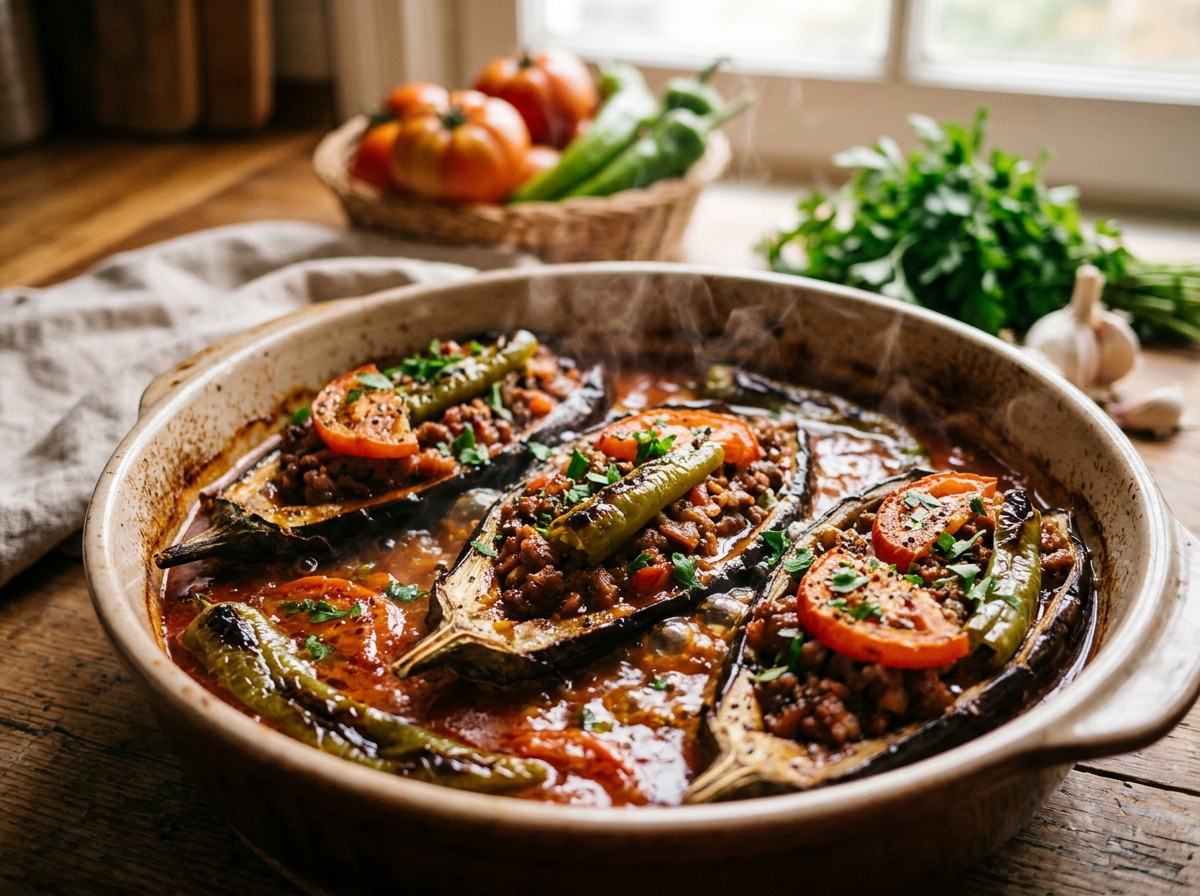
- Green peppers. Many versions include them in the filling, while others treat them as optional. Some cooks lay a pepper or a tomato slice on top of each eggplant.
- The eggplant itself. Traditionally it is fried before stuffing, which gives it a deep, silky texture. Many home cooks today roast or bake it instead for a lighter result.
- The meat. Beef is the usual choice, though lamb is a natural swap if you like a stronger flavor.
- Imam bayıldı. This is the vegetarian cousin, with no meat in the filling. It is a separate dish in its own right and not just a substitution.
A modern twist you will see is a sprinkling of cheese over the top or a spicier filling with pepper flakes. Purists would say the original does not need either, and honestly, they have a point.
When to make karnıyarık
This is a Sunday dinner dish. It takes a bit of attention, from preparing the eggplants to browning the filling, so it suits an afternoon when you are home anyway. It also works as a weekend project if you enjoy cooking that unfolds in stages and fills the kitchen with the smell of onions and tomato.
Eggplant is at its best from late summer into early fall in the Northern Hemisphere, exactly when tomatoes, peppers and fresh parsley are also at their peak. A Sunday in September, with the farmers' market haul still on the counter, is about as good a moment as you will find. In Turkey it is generally served at dinner as the main dish, eaten hot, so it also earns a place on a cool October evening.
What to serve with karnıyarık
- Rice pilaf. This is the traditional partner. It soaks up the tomatoey juices and balances the richness of the eggplant.
- Plain yogurt. A cool spoonful on the side adds tang and keeps the meal from feeling heavy.
- A shepherd-style salad. Chopped tomato, cucumber and onion with a sharp lemony dressing gives a crisp, fresh contrast.
- Crusty bread. Useful for mopping up what the rice leaves behind.
- Ayran or black tea. Salty, cold ayran suits the savory filling, and strong tea is a fitting way to finish the meal.
Make it at home
The version we cook on Meez comes from Cooking Gorgeous. When you are ready to cook, get the recipe, or cook it step by step in Cook Mode so your hands can stay in the pan and your eyes on the stove.
Questions about karnıyarık
What does karnıyarık mean?
It means "riven belly," and is sometimes translated as "split belly." The name refers to the eggplant being slit open lengthwise so it can be filled.
Is karnıyarık an Ottoman dish?
It is often described that way, and some accounts link it to Ottoman palace cooking. We could not find a documented origin date, so the Ottoman connection is best taken as a widely repeated tradition.
How is karnıyarık different from imam bayıldı?
Karnıyarık is filled with ground meat, while imam bayıldı is the vegetarian version. They share the same eggplant base and a similar flavor profile.
What do you serve with karnıyarık?
Rice pilaf is the classic side, often with yogurt on the table. A simple tomato and cucumber salad and some bread round out the meal well.
Sources
- Karnıyarık - Wikipedia
- Karnıyarık - Traditional Turkish Recipe (196 flavors)
- Authentic Turkish Karnıyarık Recipe - Traditional Stuffed Eggplant with Ground Beef
Last reviewed October 21, 2026. Written by the Meez editorial team with Meez Magic, from the sources above.
Original Recipe Source
This article is inspired by a recipe from Cookingorgeous.
Visit the original source for their version of this recipe and more great content.
Related Topics
Enjoyed this article? Share it with fellow food lovers!
Ready to Cook This Recipe?
Experience our immersive Cook Mode with step-by-step visual guidance, voice narration, and built-in timers.