

What Is Hungarian Goulash? Origins, Variations and Sides
Hungarian goulash is a deep red, paprika-scented beef dish that sits somewhere between a soup and a stew. Here is where it comes from, how it varies, and how to build a Sunday meal around it.
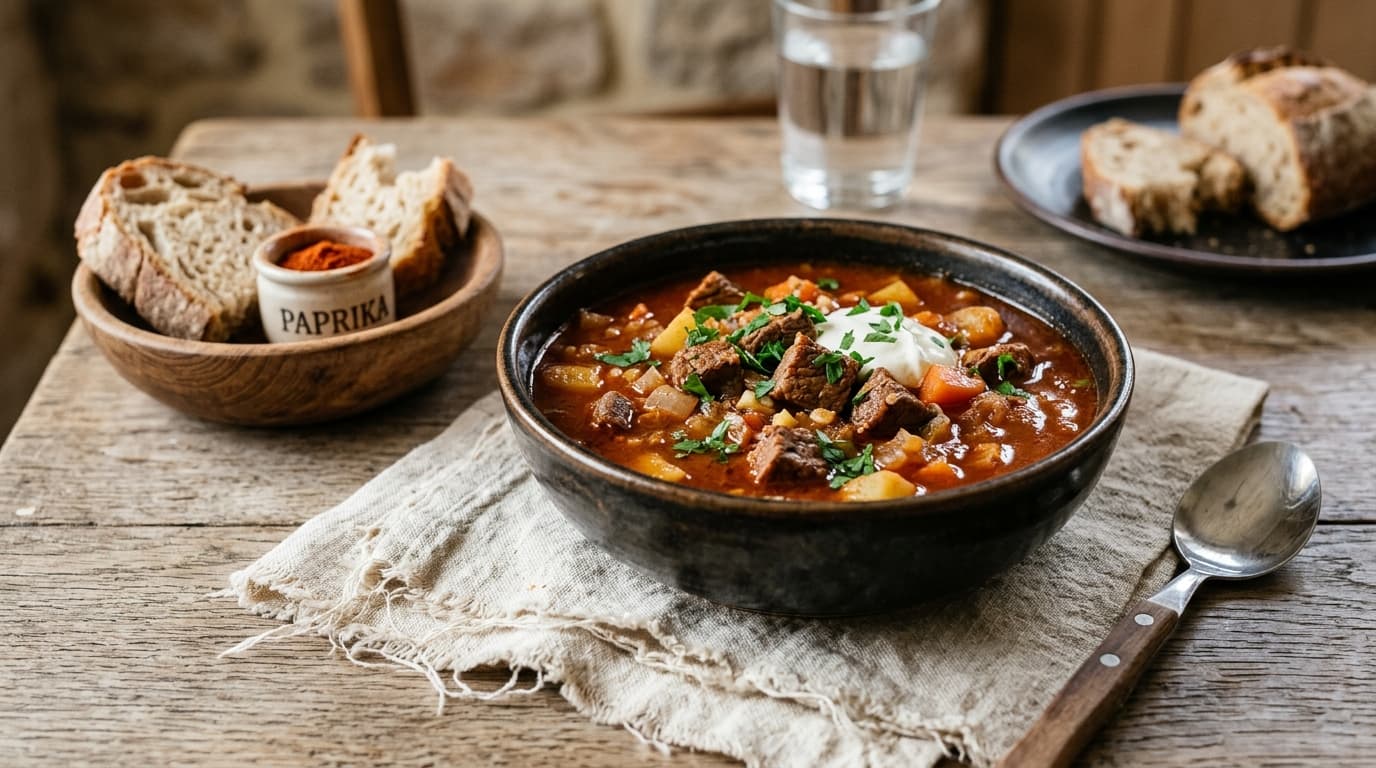
Featured Recipe
Hungarian Goulash (Gulyás)
Hungarian goulash, or gulyás, is a brick-red, paprika-scented beef dish from Hungary, and it lands somewhere between a soup and a stew. The beef cooks until it yields to a spoon, the onions melt into the broth, and the whole pot smells sweet, earthy and faintly smoky.
People love it because it asks so little and gives so much. It is humble food built from a few inexpensive things, but a slow simmer turns them into something deeply savory. It is the kind of bowl that makes a cold evening feel manageable.

Where goulash comes from
The name tells much of the story. Gulya means "herd of cattle" in Hungarian, and gulyás means "cattle herder", so goulash is quite literally the herdsman's dish. National Geographic places those herdsmen on the Great Hungarian Plain more than 1,000 years ago, roaming with long-horned cattle.
Britannica traces the dish to the 9th century and to the stews of Magyar shepherds. Before heading out with their flocks, they cooked cut-up meat slowly with onions and other flavourings until the liquid was absorbed. The result was dried in the sun and packed in bags made from sheep's stomachs. At mealtime, water was added to bring it back to life as a hot meal.
That early version would not have looked like the red bowl we know now. Paprika and potatoes are said to be post-16th-century additions, which means the familiar flavor arrived well after the dish itself. The Oxford English Dictionary's first recorded use of the word "goulash" in English is dated 1866.
How goulash varies
In Hungary, gulyás is better understood as a family of dishes than as one recipe. National Geographic describes it as a group of meaty, paprika-spiced soups and braised dishes, and notes that in Hungary it is never a stew in the English-speaking sense. The soup form, gulyásleves, is made with beef, vegetables, ground paprika and other spices.
The most atmospheric version is bográcsgulyás, or "cauldron goulash", which is often still cooked outdoors over an open fire in a cauldron. It is a reminder of the dish's open-air roots, and many cooks swear the fire makes a difference.
Beyond that, the choices are personal. Some cooks keep the broth thin and brothy, others cook it down until it is thick and spoonable. Some add potatoes and carrots, others keep it mostly meat and onion. The version we cook on Meez comes from CooksCrafter, and it leans toward the heartier, stew-like end of the range, with beef slow-simmered in plenty of paprika.
One caution for anyone searching: in the United States, "goulash" often means a different dish, usually ground beef and macaroni in a tomato sauce. It is a comforting meal in its own right, but it is a separate tradition from the Hungarian pot.
When to make it
Goulash suits a Sunday dinner perfectly. It rewards a lazy afternoon of low simmering, and it tastes even better the next day, so you get a second meal almost for free. It also works as a weekend project when you want the house to smell wonderful and have time to stand at the stove.
It shines from autumn through winter. A weeknight in October, when the first cold snap arrives and peppers, onions, potatoes, carrots and early cabbages are still at the market, is just right. In the deep of January, when the root vegetables in your pantry are the main fresh thing you have, it earns its place all over again.

What to serve with it
- Crusty bread. A rye or country loaf is made for mopping up the paprika-red broth.
- Egg noodles or small dumplings. Soft, simple starches soak up the sauce and turn a bowl into a full meal.
- A dollop of sour cream. Its cool tang tempers the paprika and adds a little richness.
- Pickles or a cucumber salad. Something sharp and crisp cuts through the beef and resets your palate between spoonfuls.
- A glass of red wine or a dark lager. A medium-bodied red or a malty beer matches the dish without overpowering it.
Make it at home
Ready to try it? Get the recipe for the full ingredient list and method, or cook it step by step in Cook Mode so you can keep your hands on the pot and your eyes on the stove.
Questions about Hungarian goulash
Is goulash a soup or a stew?
Both, depending on who is cooking. In Hungary, gulyás covers a family of paprika-spiced soups and braised dishes, and the soup form is called gulyásleves. English speakers tend to call the thicker versions stew.
What does gulyás mean?
It means "cattle herder" or "cowboy" in Hungarian, from gulya, a herd of cattle. The dish is named for the herdsmen who cooked it while tending their animals on the Great Hungarian Plain.
Is American goulash the same as Hungarian goulash?
No. American goulash is usually a ground beef and macaroni dish in tomato sauce, while Hungarian goulash is built around beef, onions and plenty of paprika, and is cooked slowly in a pot or cauldron.
What should I serve with goulash?
Crusty bread, egg noodles or small dumplings, and a spoonful of sour cream are the classic companions. A crisp pickle or cucumber salad on the side keeps the meal from feeling too heavy.
Sources
Last reviewed November 11, 2026. Written by the Meez editorial team with Meez Magic, from the sources above.
Original Recipe Source
This article is inspired by a recipe from Cookscrafter.
Visit the original source for their version of this recipe and more great content.
Related Topics
Enjoyed this article? Share it with fellow food lovers!
Ready to Cook This Recipe?
Experience our immersive Cook Mode with step-by-step visual guidance, voice narration, and built-in timers.