

What Is Hashweh? Lebanese Spiced Rice with Beef and Nuts
Hashweh is a Lebanese dish of spiced rice and ground meat, scattered with toasted pine nuts. It started as a stuffing and now often stands alone as a one-pot supper.
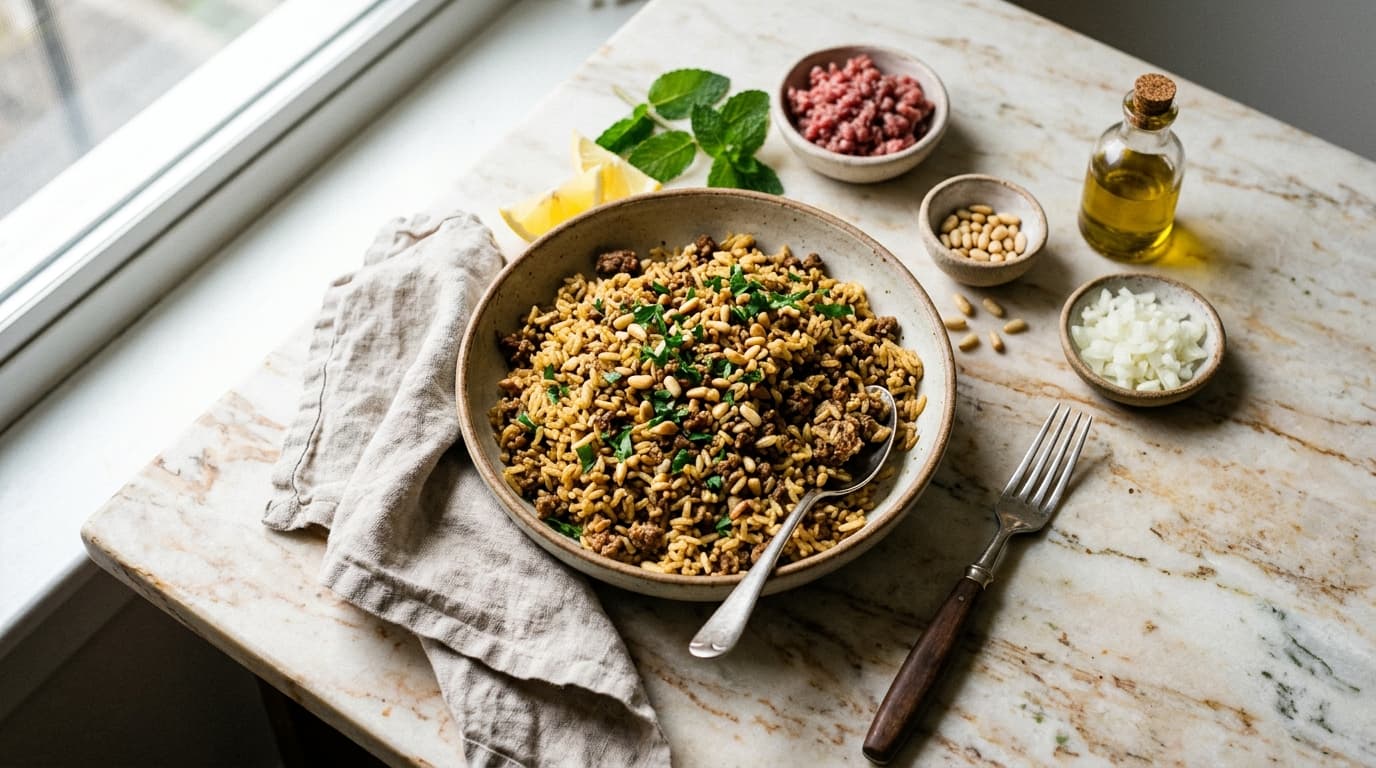
Featured Recipe
Hashweh - Lebanese Ground Beef and Rice
Hashweh is a Lebanese dish of rice cooked with browned ground meat and warm spices, finished with toasted pine nuts. The grains stay separate and fluffy, the beef is savory and crumbly, and the cinnamon and allspice give it a gentle sweetness that smells like a holiday kitchen. The nuts add a buttery crunch on top.
People love it because it is humble and generous at once. It comes together in a single pot, it feeds a table without fuss, and it tastes as though it took more effort than it did. Spoon it next to roast chicken or eat a bowl of it on its own with cool yogurt, and it works either way.

Where hashweh comes from
The name tells most of the story. Hashweh means "stuffing" in Arabic, and the dish began as the rice and ground-meat filling for roast chicken, lamb and turkey. According to the sources we read, the spiced mixture traditionally filled whole lambs or chickens for special occasions. Over time cooks began serving it on its own, and it became a standard at family dinners and holidays.
Hashweh is best known as a Lebanese dish, and it is also made in Syria, Palestine and Jordan. Where it first appeared is unclear. One source says the exact origin is unknown because the history of the Middle East is so tangled. Another traces it to Levantine cooking in general, where stuffed dishes are common, and says the mixture once filled vegetables such as eggplant, zucchini and bell peppers. In Lebanon it is often described as a peasant dish, because it is cheap and easy to make.
You will see the name spelled hushweh and hashwi too. They all refer to the same idea: seasoned rice and meat, with nuts.
How hashweh varies
Tradition points to ground lamb, but many cooks now use ground beef, and that is what we cook here. Lebanese-American cookbook author Maureen Abood describes a family staple of rice and ground beef or lamb, often served with roasted chicken and topped with nuts. Pine nuts are the classic choice. Slivered almonds are a common companion or stand-in, and some cooks use both.
The biggest split is how the dish is used. As a stuffing, it goes into a bird, a lamb, or hollowed vegetables. As a pilaf, it is served in a dish at the table as a main or a side. Some versions also fold toasted vermicelli into the rice, which is wheat-based and not part of the version we cook.
The version we cook on Meez comes from Cooking Gorgeous. It is gluten-free as written by its source, though it is always worth checking the labels on your spices and any stock.
When to make hashweh
Hashweh suits a Sunday supper, when you want something fragrant and filling without much washing up. It also works well as a weeknight dinner in October, when the evenings turn cool and you want a bowl of something warm and spiced. Autumn is a natural fit. Pomegranates, pears, apples and winter squash are all in season in the Northern Hemisphere then, and they sit well alongside it.
It earns a place on a holiday table too, as the rice next to a roast bird or a leg of lamb, which is close to its original job. It also scales up easily for a potluck or a gathering where you need one big dish that people will go back to.

What to serve with hashweh
- Plain yogurt, or yogurt with cucumber and mint. The cool tang cuts through the richness and balances the warm spices. It is the classic partner when hashweh is the main dish.
- Roast chicken or lamb. This brings the dish back to its roots, with the rice acting as the stuffing on the side.
- A chopped Lebanese-style salad. Tomato, cucumber, parsley and mint with lemon and olive oil add freshness and crunch.
- Green beans stewed in tomato. This is a soft, savory vegetable side that suits the rice, and it can be made without any wheat.
- Mint tea or sparkling water with lemon. Both are light and clean, and neither competes with the spices.
Make hashweh at home
When you are ready to cook, get the recipe for the full ingredients and method, or cook it step by step in Cook Mode if you want your hands free at the stove.
Questions about hashweh
What does hashweh mean?
Hashweh means "stuffing" in Arabic. The dish began as the filling for roast chicken, lamb and turkey before it was also served on its own.
Is hashweh Lebanese?
It is best known as a Lebanese dish and is a classic of Lebanese home cooking. It is also made in Syria, Palestine and Jordan, and its exact origin is not documented.
Is hashweh made with beef or lamb?
Ground lamb is described as the traditional meat, but ground beef is a very common substitute and is what many home cooks use today.
How is hashweh different from a regular rice pilaf?
A plain pilaf is usually just seasoned rice. Hashweh adds browned ground meat, warm spices like cinnamon and allspice, and toasted nuts, which makes it substantial enough to serve as a main dish.
Sources
- Hashweh Recipe - Lebanese Rice with Ground Beef - Cooking Gorgeous
- Lebanese Hashweh Recipe
- Make this Lebanese Spiced Rice Side Dish with Ground Beef!
- Lebanese Hashweh • Unicorns in the Kitchen
- Hashweh Rice Recipe (Lebanese Pilaf with Beef and Chicken) - Maureen Abood
Last reviewed November 17, 2026. Written by the Meez editorial team with Meez Magic, from the sources above.
Original Recipe Source
This article is inspired by a recipe from Cookingorgeous.
Visit the original source for their version of this recipe and more great content.
Related Topics
Enjoyed this article? Share it with fellow food lovers!
Ready to Cook This Recipe?
Experience our immersive Cook Mode with step-by-step visual guidance, voice narration, and built-in timers.