

What Is Canh Bí Đỏ? Vietnamese Kabocha Squash Soup Explained
Canh bí đỏ is a gentle Vietnamese soup of sweet kabocha squash in a savory pork or chicken broth, made in home kitchens every fall. Here is what it is, how cooks vary it, and what to put on the table beside it.
Featured Recipe
Vietnamese Kabocha Squash Soup Recipe by Tasty
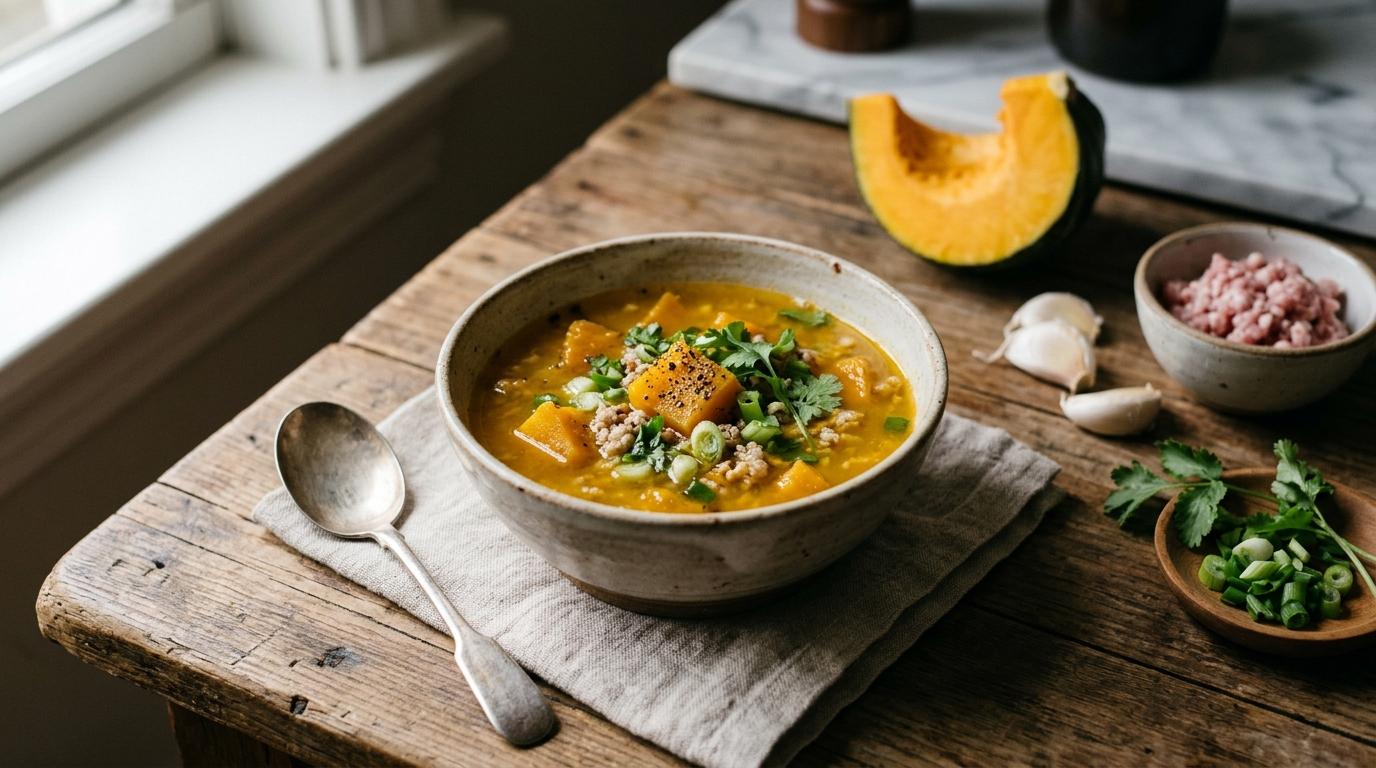
Vietnamese kabocha squash soup, known as canh bí đỏ, is a light, brothy soup built on a simple idea: sweet, tender squash simmered until it nearly melts, in a broth seasoned with fish sauce and garlic. Ground pork gives it savory depth, and a scatter of spring onion and black pepper at the end keeps it fresh. It is not a thick, puréed autumn soup. The squash softens and gives up its sweetness to the broth, while some pieces stay whole enough to spoon up.
People love it because it asks so little and gives back so much. It has few ingredients, it comes together on a weeknight, and the result tastes gentle and nourishing without being bland. It is the kind of soup you can eat a second bowl of without noticing.
Where it comes from
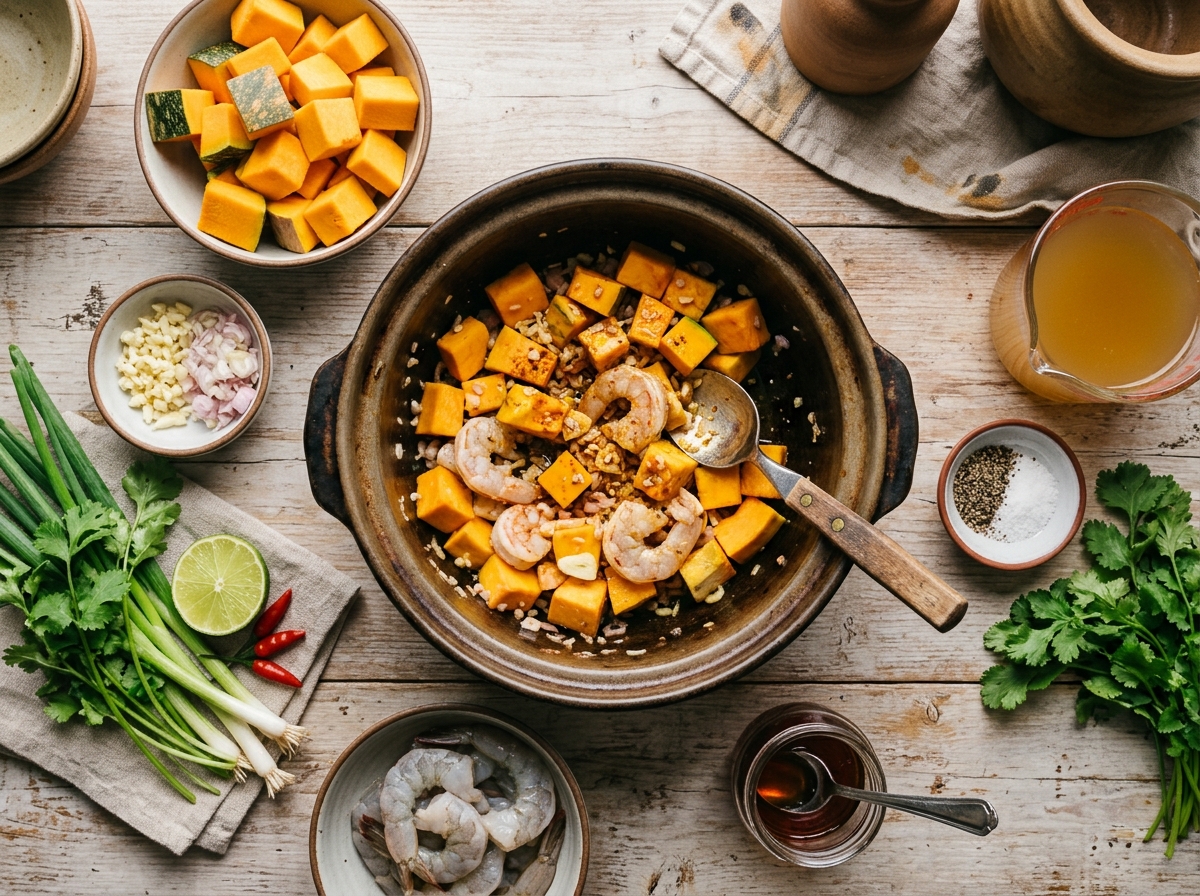
There is no documented history for canh bí đỏ that we can point to, so we will not invent one. What the sources agree on is its place in everyday life. Vietnamese home cooks describe it as a simple, popular soup for fall and winter, and as a staple in many households. One cook says her grandmother makes it at least once a fortnight. The cook behind the version we use remembers her mother making it in bulk because of the health benefits of kabocha.
The name is a useful guide. Bí đỏ is the Vietnamese name for the squash, which is also called Japanese pumpkin, and canh is the word for the light, brothy soups that usually share the table with rice. Beyond that, most accounts of the dish are family stories rather than records, and that suits a soup that has always lived in home kitchens.
How it varies
The base idea stays the same while the protein and the broth change from house to house.
- Minced pork. The most straightforward version, called canh bí đỏ thịt bằm, uses pork mince, spring onion and salt in plain water, and lets the squash sweeten the broth by itself.
- Chicken. Some cooks use chicken thighs with garlic, green onions and fish sauce for a lighter, cleaner broth.
- Pork ribs. A richer take starts with a stock made from pork bones, then adds the squash, a little sugar and fish sauce, with pepper and green onion stirred in just before serving.
- Diaspora twists. Chef Tu David Phu's Vietnamese American version uses chicken stock, sliced shiitake mushrooms and hand-shaped pork meatballs seasoned with oyster sauce and sesame oil.
The skin is a point of disagreement. Kabocha skin is tough, and many Vietnamese cooks peel it and use the flesh, while others are less strict. The version we cook on Meez comes from tasty.co. It uses ground pork, garlic and fish sauce, with a little sugar to round the flavor.
When to make it
This is a cozy comfort soup, and it shines from early October through the winter, when kabocha and other winter squash are at their best at Northern Hemisphere markets. That is also the season for sweet potatoes, apples, pears, mushrooms and hardy greens, so a squash soup fits in with whatever else is in your basket.
It suits a weeknight in October when you want something warm that does not take long. It also works for a Sunday supper, when you can make a big pot and let it cover a couple of lunches. Because it is gentle, it is a good choice when someone at the table is under the weather or when the first cold snap has you craving something soothing.
What to serve with it
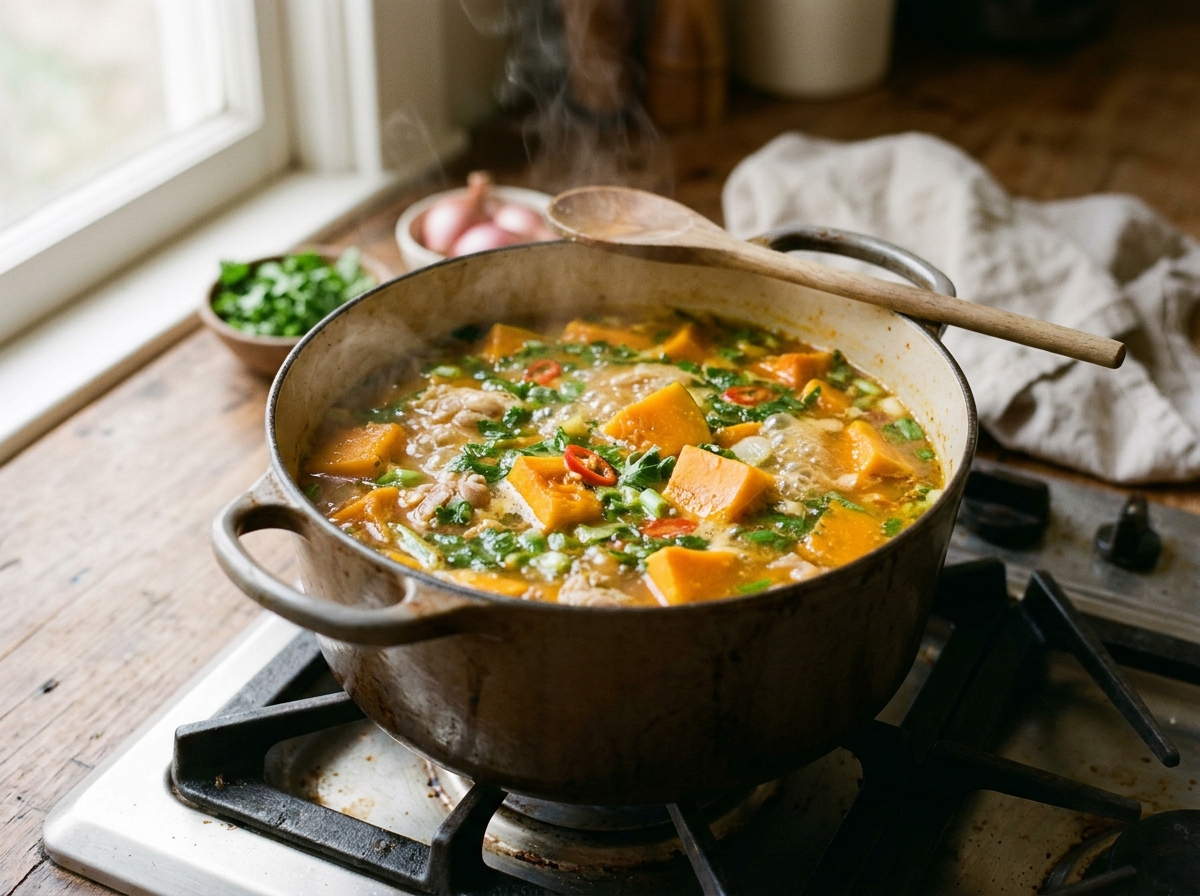
In a Vietnamese meal, canh is one part of a spread rather than the whole of it. A few things round it out well:
- Steamed jasmine rice. The soup is mild and brothy, and rice turns it into a proper meal. Spoon broth over the rice as you eat.
- Caramelized braised pork or fish. A salty, sticky braise is the classic contrast to a light soup, and a little goes a long way.
- Sautéed greens. Garlicky bok choy or morning glory adds a crisp, slightly bitter note against the sweet squash.
- Pickled mustard greens or a simple vegetable pickle. The tang resets your palate between spoonfuls.
- Hot tea. Plain jasmine or roasted barley tea keeps the whole meal soft and warming.
Make it at home
Ready to cook it? Get the recipe for the full ingredient list and method, or cook it step by step in Cook Mode if you want your hands free at the stove.
Questions about Vietnamese kabocha squash soup
What does canh bí đỏ mean?
Canh is a Vietnamese brothy soup served with rice, and bí đỏ is the word for kabocha squash, also called Japanese pumpkin. So canh bí đỏ is simply kabocha squash soup.
Is kabocha the same as pumpkin?
They are related but not identical. Kabocha is a Japanese winter squash with dense, sweet, slightly fluffy flesh, which is why it holds its shape while still softening into the broth.
Can I make it without pork?
Yes. Home cooks make it with chicken thighs, pork ribs or even meatballs, and the squash supplies plenty of sweetness whichever protein you choose.
How is it different from American pumpkin soup?
Canh bí đỏ is a clear, brothy soup seasoned with fish sauce, garlic and pepper, with chunks of squash left in. American pumpkin soup is usually puréed, creamy and spiced with warm baking spices.
Sources
- Vietnamese Kabocha Squash Soup Recipe by Tasty
- Vietnamese Kabocha Squash Soup with Chicken (Canh Bí Đỏ Nấu Gà) - Vicky Pham
- Vietnamese Kabocha Squash Soup with Pork Ribs (Canh Bi Do Nau Suon Heo) - Vicky Pham
- Canh Bí Đỏ (Kabocha Squash Soup) Recipe — Chef Tu David Phu
- Vietnamese Kabocha Squash Soup (Canh Bí Đỏ Thịt Bằm) - Wok and Kin
Last reviewed October 28, 2026. Written by the Meez editorial team with Meez Magic, from the sources above.
Original Recipe Source
This article is inspired by a recipe from Tasty.
Visit the original source for their version of this recipe and more great content.
Related Topics
Enjoyed this article? Share it with fellow food lovers!
Ready to Cook This Recipe?
Experience our immersive Cook Mode with step-by-step visual guidance, voice narration, and built-in timers.