

What is an autumn harvest chicken skillet? A fall dinner
An autumn harvest chicken skillet is an American one-pan dinner of seared chicken and fall vegetables, seasoned with warm herbs and spices. Here is what defines it, how cooks vary it, and what to serve alongside.
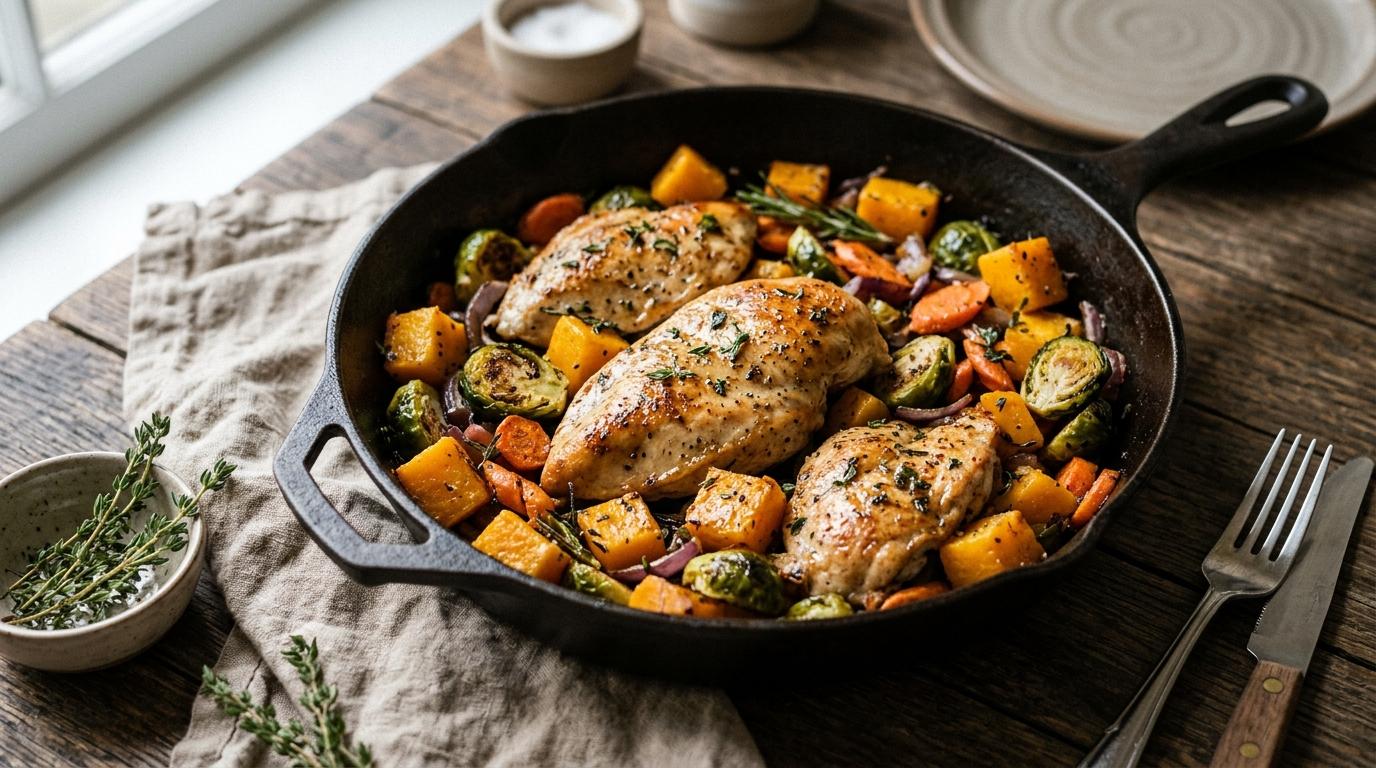
Featured Recipe
Autumn Harvest Chicken Skillet Recipe
Autumn harvest chicken skillet is an American one-pan dinner built on browned chicken breasts and a handful of fall vegetables: butternut squash, Brussels sprouts, carrots and red onion. The pan fills with the smell of rosemary and thyme, and a little cinnamon and nutmeg give the broth a gentle, almost sweet warmth. The squash softens at the edges, the sprouts pick up color, and the chicken stays moist in the sauce.
People love it because it tastes like a big seasonal meal without the work of one. Everything cooks in a single skillet, so the vegetables absorb the browned bits left by the chicken, and the cleanup is a single pan. It is comforting without being heavy, which is why it turns up on so many cool-weather menus.
Where it comes from
This is a modern home-cooking dish with no documented origin. No person, region or year is tied to it, and we won't invent one. The name appears on many recipe sites, usually as a loose description of seared chicken cooked with whatever fall produce is around, rather than a fixed formula.
What the versions share is an idea that is very much part of American home cooking: a skillet supper, built from a seasonal harvest and seasoned with the herbs and baking spices people associate with autumn. The details change from cook to cook, which is part of the dish's charm.
How it varies
Because the name is more a theme than a formula, the versions you find online differ quite a bit.
- The squash-and-sprouts version. The one we cook pairs chicken breasts with butternut squash, Brussels sprouts, carrots and red onion, seasoned with rosemary, thyme, cinnamon and nutmeg, then simmered in chicken broth.
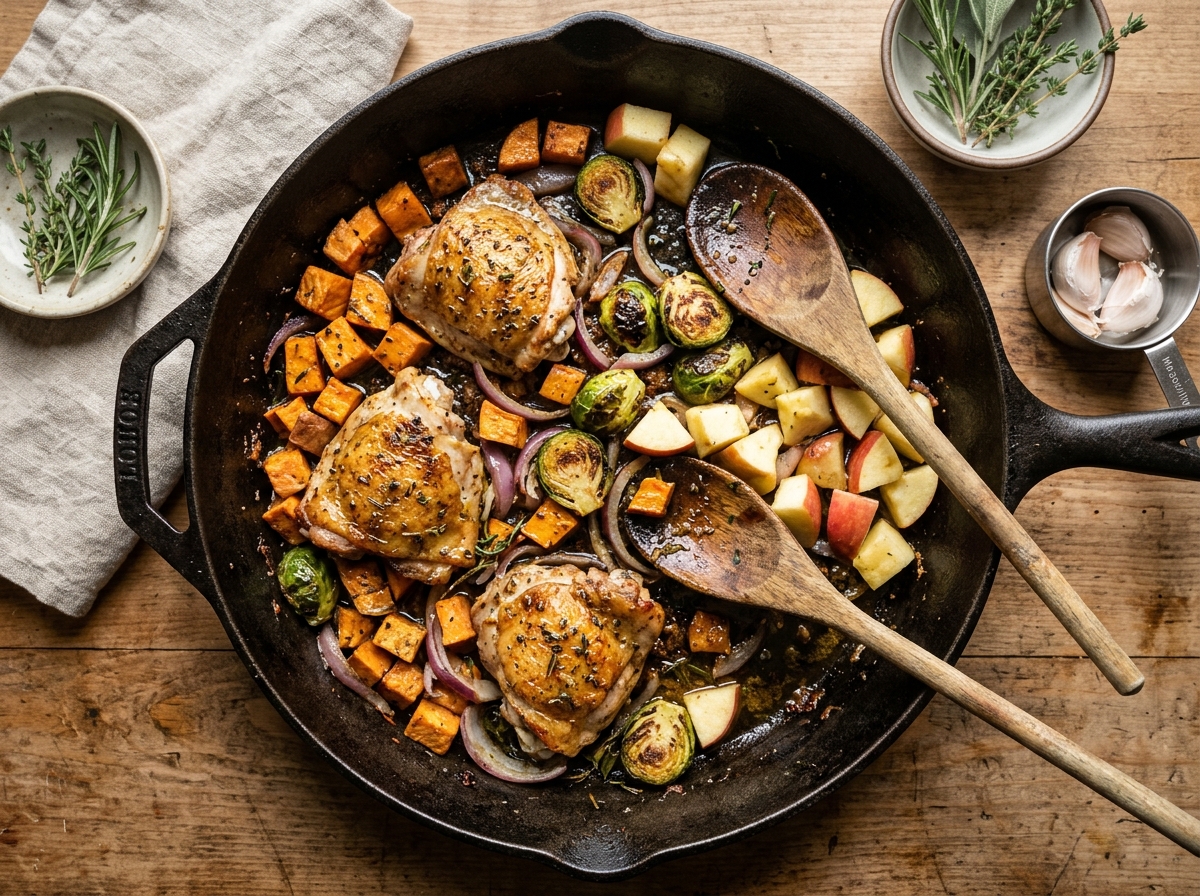
- The apple and thyme version. Another take keeps it lighter: seared chicken with caramelized red onions, apple slices and a buttery thyme sauce, for a savory-and-slightly-sweet result.
- The bacon, sweet potato and cranberry version. A third starts with diced bacon, then adds cubed chicken, sweet potato, Brussels sprouts and dried sage. It finishes with baby spinach, pecans and dried cranberries for crunch and sweetness.
- The root vegetable version. Some cooks add parsnips and sweet potatoes alongside the squash and carrots, and suggest boneless, skinless thighs when you want juicier meat.
Chicken breasts are the usual choice, but thighs are a reasonable swap if you prefer darker, more forgiving meat. Herbs are the other lever: rosemary leans woodsy and bold, while thyme and sage are softer and more savory.
When to make it
This skillet suits a weeknight in October, when it is dark by dinner and you want something warm that doesn't need much attention. It also works for a slow Sunday supper, when you have time to let the vegetables brown properly and the kitchen can fill with the smell of rosemary.
The dish shines from early fall into November, when the Northern Hemisphere's markets are full of butternut squash, Brussels sprouts, carrots, apples, sweet potatoes, parsnips and pears. Buying those vegetables at their peak is what makes the pan taste the way the name promises. In midsummer, when those vegetables are out of season, it loses most of its point.
What to serve with it
The skillet is a full meal on its own, so sides can stay simple. A few that work well:
- Crusty bread. It mops up the herby broth, which is too good to leave in the pan.
- Buttered rice or egg noodles. Either gives the sauce something soft to cling to if you want a more filling plate.
- A sharp green salad. Bitter greens with a mustardy vinaigrette cut through the sweetness of the squash and carrots.
- Mashed potatoes or polenta. These make it feel like a Sunday dinner and soak up the sauce.
- Dry white wine or hard cider. A crisp Chardonnay or a dry cider echoes the autumn flavors without competing. For a non-alcoholic option, try warm spiced apple cider.
Make it at home
The version we cook on Meez comes from ilovescake.com. When you are ready to cook, get the recipe, or cook it step by step in Cook Mode, which keeps the instructions on screen while your hands are busy at the stove.
Questions about autumn harvest chicken skillet
What is an autumn harvest chicken skillet?
It is an American one-pan dinner of seared chicken and seasonal fall vegetables, cooked together in a skillet with warm herbs and spices. The exact vegetables vary, but squash, Brussels sprouts, carrots and onions are common.
Is it a traditional American dish?
Not in the sense of having a documented history. It is a modern home-cooking idea shared widely online, and each cook adapts it to what is in season.
Can I use chicken thighs instead of breasts?
Yes. Boneless, skinless thighs give a juicier result and are more forgiving, while breasts make a leaner dish. Both suit the skillet format.
How is it different from sheet-pan chicken and vegetables?
A skillet dish is built on the stovetop, so the chicken's browned bits flavor the vegetables and a simmering broth turns into a sauce. A sheet pan roasts everything dry in the oven and usually has no sauce.
Sources
- Autumn Harvest Chicken Skillet - Cook Craze
- Autumn Harvest Chicken Skillet Recipe | I Love Scake
- Fall Harvest Chicken Skillet - Ava Jane's Kitchen
- Autumn Harvest Chicken Skillet: Your Cozy One-Pan Meal! - Taste Curious
Last reviewed October 28, 2026. Written by the Meez editorial team with Meez Magic, from the sources above.
Original Recipe Source
This article is inspired by a recipe from Ilovescake.
Visit the original source for their version of this recipe and more great content.
Related Topics
Enjoyed this article? Share it with fellow food lovers!
Ready to Cook This Recipe?
Experience our immersive Cook Mode with step-by-step visual guidance, voice narration, and built-in timers.