

What Is African Peanut Stew? Origins, Variations, Serving
African peanut stew, also called maafe or groundnut stew, is a rich, savory pot with deep roots in West Africa. Here is where it comes from, how cooks make it their own, and what to put on the table beside it.
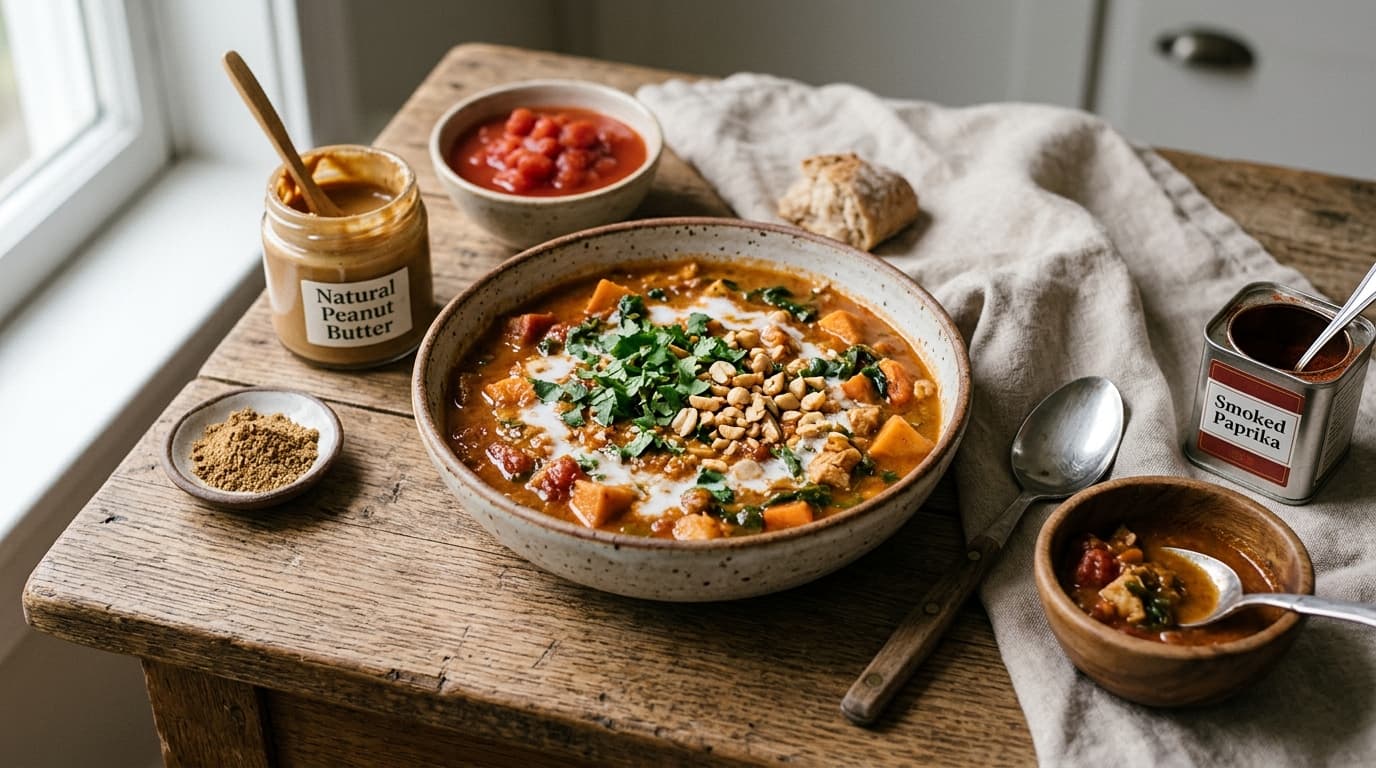
Featured Recipe
African Peanut Stew Recipe
African peanut stew is a thick, glossy pot that sits somewhere between a soup and a curry. The sauce is creamy and savory, with a roasted nuttiness up front and a gentle warmth that builds as you eat. Spooned over rice, it is the kind of dinner that fills the kitchen with a toasty, spiced smell long before it reaches the table.
People love it because it is generous. It feeds a crowd, it reheats well, and it tastes like it took far more effort than it did. It is also dairy-free, so the richness comes entirely from the peanuts. The version on Meez is gluten-free as written by its source, and as always it is worth checking the labels on anything you buy.

Where peanut stew comes from
Peanut stew, also called groundnut stew, is known in much of West Africa as maafe. The usual starting point for its history is Senegal and Mali, the two countries commonly named as its place of origin. In Mali the dish goes by tigadègèna, from the Bamanankan words for peanut, paste and sauce, so the name translates roughly as peanut butter sauce.
The story goes back further than the peanut as we know it. Historian Dr. Jessica B. Harris, writing for Saveur, notes that peanut stews across West Africa have ancient roots in dishes made with native groundnuts, from before the peanut arrived from the New World. In other words, the idea of a rich, nut-thickened stew was already there, and the peanut slotted into it.
Exact dates and a single inventor are not documented, so be wary of any source that offers them. What the evidence supports is a family of related dishes shared across the region, not one fixed recipe.
How it varies
Recipes vary widely, and that is part of the fun. Harris's West African version, inspired by Malian maafe and Ghanaian groundnut stews, uses chicken, okra, tomatoes, eggplant and hot chiles. Other cooks lean on beef or lamb, and many make a fully vegetable-based pot.
Neighboring countries have their own takes:
- Domoda: In Senegal, domoda refers to a flour-thickened soup or stew. It is related but different from maafe, which gets its body from the peanuts themselves.
- Ndolé: This Cameroonian relative combines stewed ground peanuts with crayfish, garlic, onions and bitter ndoleh leaves, sometimes with fish, beef or shrimp. It is widely regarded as Cameroon's national dish.
- Caril de amendoim: In southern Mozambique, this peanut curry is made with coconut milk and chicken or horse mackerel, and is served with xima, a firm maize porridge.
The version we cook on Meez comes from Cotter Crunch. It is a home-kitchen take that can be made on the stove, in a slow cooker or in an Instant Pot, which makes it easy to fit into a busy week. It is a modern, flexible interpretation more than a strict traditional maafe, and that is fine.
When to make it
This is a Sunday dinner stew. Start it in the afternoon, let it simmer or slow-cook while you do other things, and sit down to a pot that is big enough for leftovers. It is also a good quick favorite on a weeknight when you want something that feels substantial without much fuss, and a cozy comfort meal for the nights when you need one.
It shines from October through February in the Northern Hemisphere. That is when sweet potatoes, winter squash, carrots, cabbage, kale and collard greens are at their best, and all of them sit comfortably next to a peanut-rich sauce. A cold, wet evening in November is about as right as it gets. Because it scales up easily, it also suits feeding friends after a long day outdoors or a few families at one table.

What to serve with it
- Steamed white or brown rice: The classic base. It soaks up the sauce and keeps the meal gluten-free and simple.
- Sautéed greens: Kale, collards or spinach with garlic add a fresh, slightly bitter edge that cuts through the richness.
- Fried or roasted plantains: Their sweetness plays well against the savory, spiced sauce.
- A crisp cucumber and tomato salad with lime: Cool, sharp and juicy, it resets the palate between spoonfuls.
- Hibiscus tea or ginger tea: Tart iced hibiscus (known as bissap in parts of West Africa) or a hot ginger tea balances the heaviness of the stew.
Make it at home
When you are ready to cook, get the recipe for the full ingredients and method. If you like to have each step in front of you while your hands are busy, cook it step by step in Cook Mode.
Questions about African peanut stew
What is maafe?
Maafe is the common West African name for peanut stew, also called groundnut stew. It is a sauce-based stew built around ground peanuts or peanut paste, usually with vegetables and often meat, and it is usually served over rice.
Where does peanut stew come from?
Senegal and Mali are the places most often named as its origin, and versions are found across West Africa. Harris notes its roots in older dishes made with native groundnuts, from before the peanut reached Africa from the New World.
How is peanut stew different from domoda?
Domoda is a Senegalese stew or soup thickened with flour. Maafe gets its thickness and flavor from peanuts, so the two are related but not the same dish.
Is peanut stew a soup or a curry?
It is a bit of both. It is thick enough to eat over rice like a curry, but spoonable and brothy enough that many people call it a soup.
Sources
Last reviewed November 11, 2026. Written by the Meez editorial team with Meez Magic, from the sources above.
Original Recipe Source
This article is inspired by a recipe from Cottercrunch.
Visit the original source for their version of this recipe and more great content.
Related Topics
Enjoyed this article? Share it with fellow food lovers!
Ready to Cook This Recipe?
Experience our immersive Cook Mode with step-by-step visual guidance, voice narration, and built-in timers.