

Timpano di maccheroni: history of Italy's baked pasta drum
Timpano di maccheroni is a domed Italian pasta pie: ragù-sauced maccheroni, meatballs, chicken and mozzarella sealed in a savory pastry crust. This is the story behind the drum, how it varies, and when it deserves a place on your table.
Featured Recipe
Timpano di Maccheroni
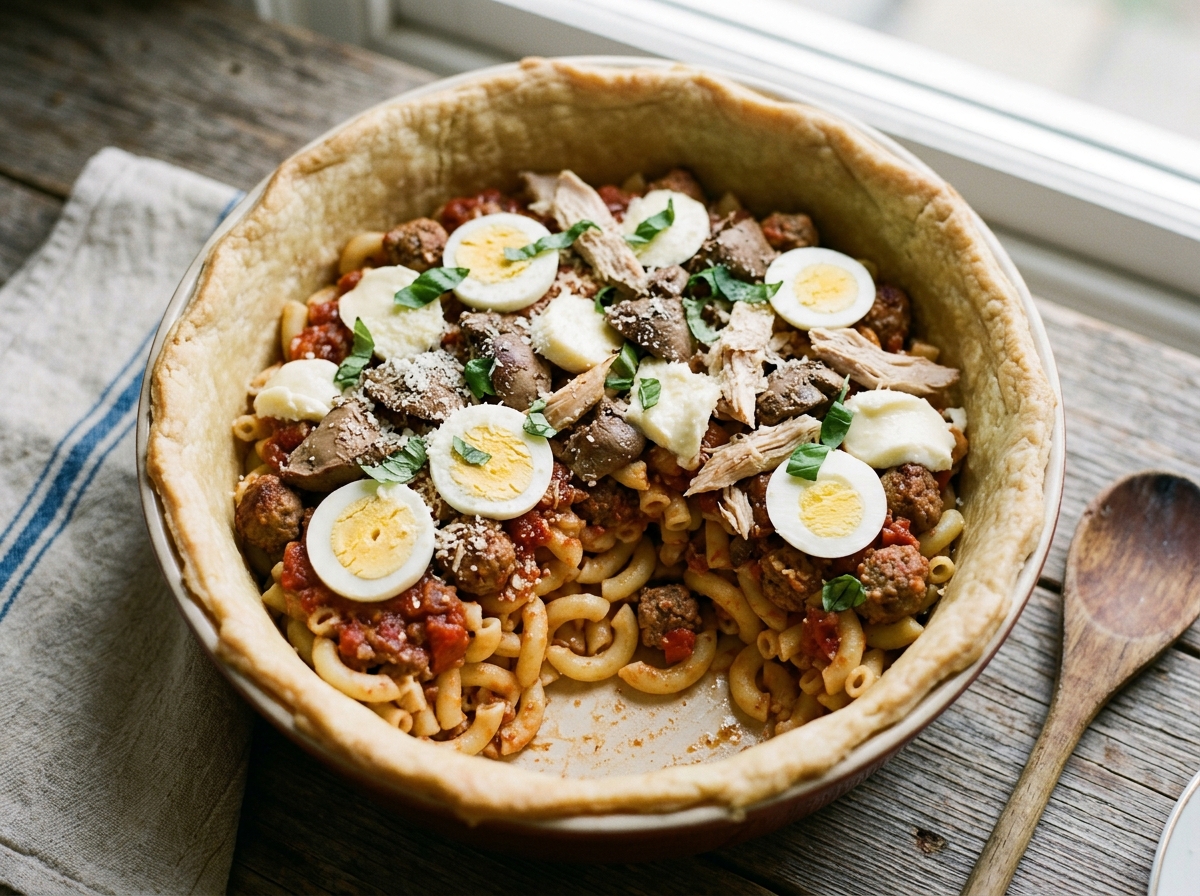
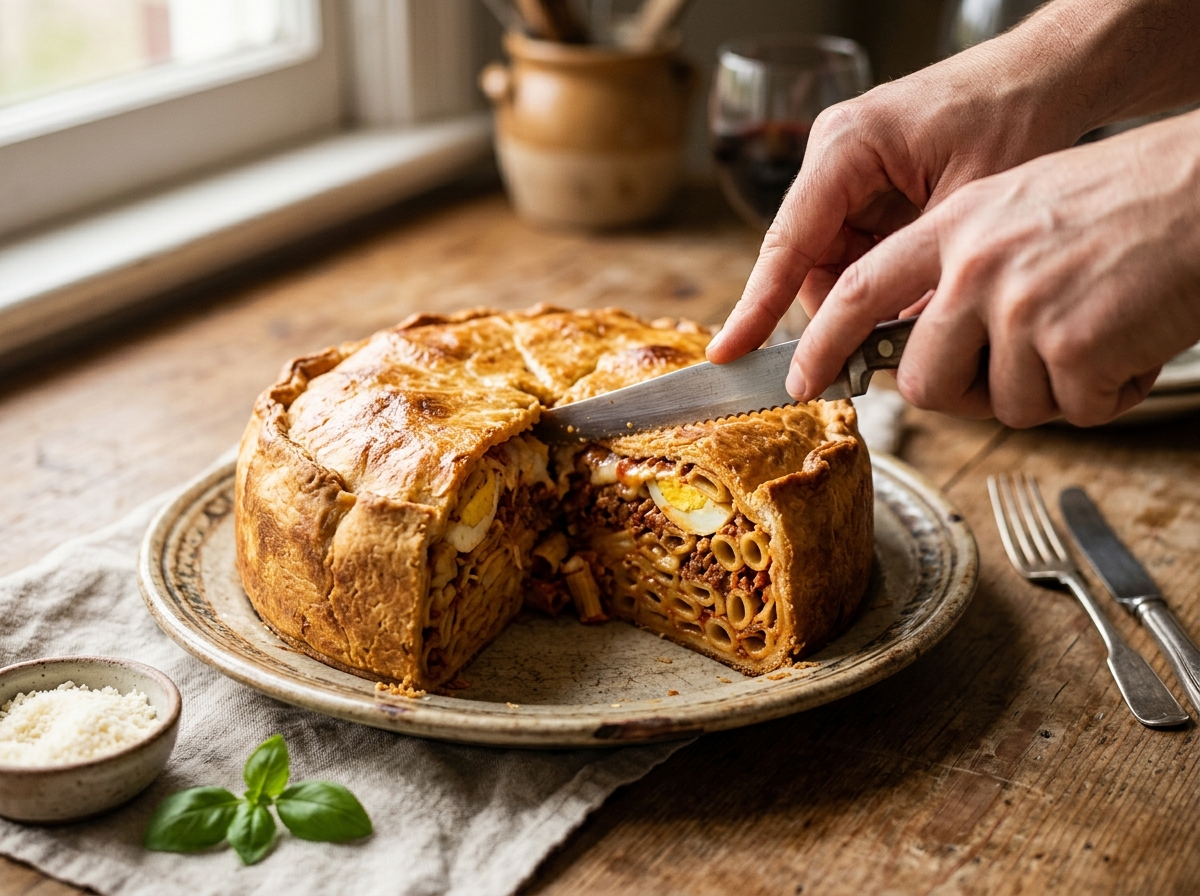
Timpano di maccheroni is an Italian baked pasta pie: a tall dome of savory pastry packed with sauced maccheroni, ragù, meatballs, chicken, chicken livers and mozzarella. Turned out onto a platter and cut, it holds its shape in neat wedges, golden crust outside and a rich, layered tangle of pasta and filling within.
People love it for the moment of the cut as much as the taste. The crust is buttery and a little crisp, the pasta inside is tender and gravy-soaked, and every slice has a bit of everything: a meatball here, melted cheese there, the deep savor of the livers underneath. It is a dish made to be carried to the table whole and admired before anyone picks up a fork.
Where timpano comes from
The name is the best clue. Timpano is said to come from tamburo, the Italian word for drum, and its cousin timballo comes into Italian from the French timbale, meaning kettledrum. Both describe the shape: a dome or drum, baked in a mold and turned out.
Beyond that, the history is a little tangled. Most accounts place the dish in southern Italy, where one Italian source explains that baked pasta without béchamel is called timballo, and becomes timpano when the pasta is lined with a sheet of pastry dough. The same source notes that many editions of Ippolito Cavalcanti's Cucina Pratica contain numerous timpano recipes, which were probably among the first written codifications of Italian baked pasta.
Anna Del Conte describes a Neapolitan version, timpano di maccheroni alla pompadour, as an eighteenth-century recipe by the Prince of Francavilla, who dictated his recipes to his secretary Vincenzo Corrado. Corrado revised them and published them in Il Cuoco Galante, which became a bestseller. Some sources reach further back, suggesting the dish was likely first made by the chefs of the Medici family, and one Italian page ties it to the cooks of Catherine de' Medici in France. These claims are harder to pin down, so treat them as tradition rather than settled fact. What is clear is that the dish grew more popular in the nineteenth century, and it appears in Giuseppe Tomasi di Lampedusa's 1958 novel The Leopard, where a grand timballo is a sign of an aristocratic table.
How it varies
Timballo is a wide family. It can be built from pasta, rice or potatoes, bound with cheese, meat, fish, vegetables or even fruit. Some versions skip the pastry entirely and are lined with fried aubergine or breadcrumbs. Timpano, in the stricter southern sense, is the one wrapped in dough.
The filling changes from kitchen to kitchen. Del Conte's alla pompadour leans on chicken and prosciutto, while the version we cook here goes bigger, with ragù, meatballs, chicken livers and mozzarella. A Florentine cousin, the pasticcio alla fiorentina, is sometimes linked back to the so-called timpano dei Medici.
Modern cooks often make small changes: leaving out the livers for a milder flavor, adding peas or hard-boiled eggs, or baking individual drums instead of one giant one. Tradition says one big dome, brought out in front of everyone.
When to make timpano
This is a weekend project, and it rewards that attitude. The ragù, meatballs and pastry all want their own time, so plan to cook it across a lazy Saturday or a long Sunday. It suits a Sunday dinner, when the table is already full and nobody is checking the clock.
It is also one of the best dishes for feeding a crowd. One timpano serves a big group generously, and it can be cut at the table like a cake. Think of a birthday, a holiday gathering or a family reunion.
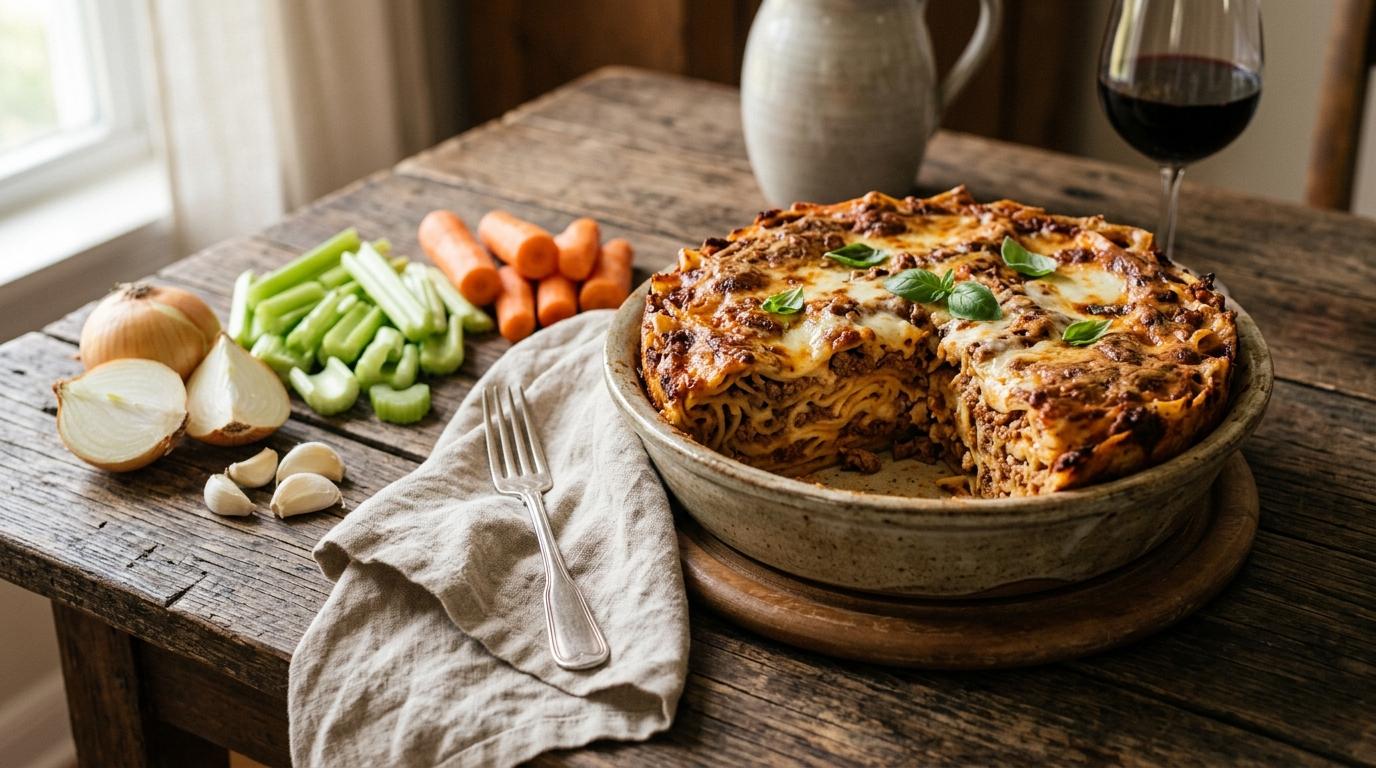
Autumn into winter is its season. The rich filling and the oven running for hours suit cold evenings. In the Northern Hemisphere that is also when radicchio, chicories, fennel, cauliflower, winter squash and the first citrus are at their best, and they make the ideal contrast to something this heavy.
What to serve with it
The timpano is the main event and a meal in itself, so keep everything else bright and light.
- A bitter greens salad. Radicchio or endive with lemon and good olive oil cuts through the richness.
- Roasted or raw fennel. Its clean, anise sweetness refreshes the palate between slices.
- Sautéed broccoli rabe or escarole. A garlicky, slightly bitter green is a classic southern Italian partner for rich food.
- A medium-bodied red wine. Montepulciano d'Abruzzo or a Sangiovese has the acidity to stand up to ragù and cheese.
- Something citrus to finish. Sliced oranges or a lemon sorbet end the meal on a light note.
Make it at home
The version we cook on Meez comes from Thegutsygourmet. When you are ready to start, get the recipe, or cook it step by step in Cook Mode so you can keep your place while the pots are going.
Questions about timpano
What does timpano mean?
Timpano is said to come from the Italian word for drum, tamburo, a nod to the dish's round, domed shape. It is also called timballo, a word borrowed from the French timbale, meaning kettledrum.
What is the difference between timpano and timballo?
Timballo is the broader term for a baked, molded dish of pasta, rice or potatoes with other ingredients. In the south of Italy, timpano usually means the version where the pasta is lined with a sheet of pastry dough.
Where does timpano come from?
Most accounts point to southern Italy, especially Naples, with eighteenth-century recipes written down by Vincenzo Corrado and Ippolito Cavalcanti. Stories linking it to the Medici are popular but harder to verify.
What do you serve with timpano?
A sharp, bitter salad, a simple sautéed green and a red wine with good acidity are all you need. The timpano is rich enough to carry the meal on its own.
Sources
- Timballo
- Timpano Is The Hearty Pasta Cake That Will Impress All Your Dinner Guests - Tasting Table
- Timpano di maccheroni alla pompadour from Anna Del Conte on Pasta by Anna Del Conte
- Maccheroni al forno, da una antica ricetta.
- TIMPANO DEI MEDICI - Un Principe in Cucina
Last reviewed October 30, 2026. Written by the Meez editorial team with Meez Magic, from the sources above.
Original Recipe Source
This article is inspired by a recipe from Thegutsygourmet.
Visit the original source for their version of this recipe and more great content.
Related Topics
Enjoyed this article? Share it with fellow food lovers!
Ready to Cook This Recipe?
Experience our immersive Cook Mode with step-by-step visual guidance, voice narration, and built-in timers.