

The history of chicken marsala: from Sicily to your table
Chicken marsala is thin-sliced chicken in a mushroom and Marsala wine sauce, with roots that trace back to Sicily. Here is where it comes from, how it varies and what to put on the table with it.
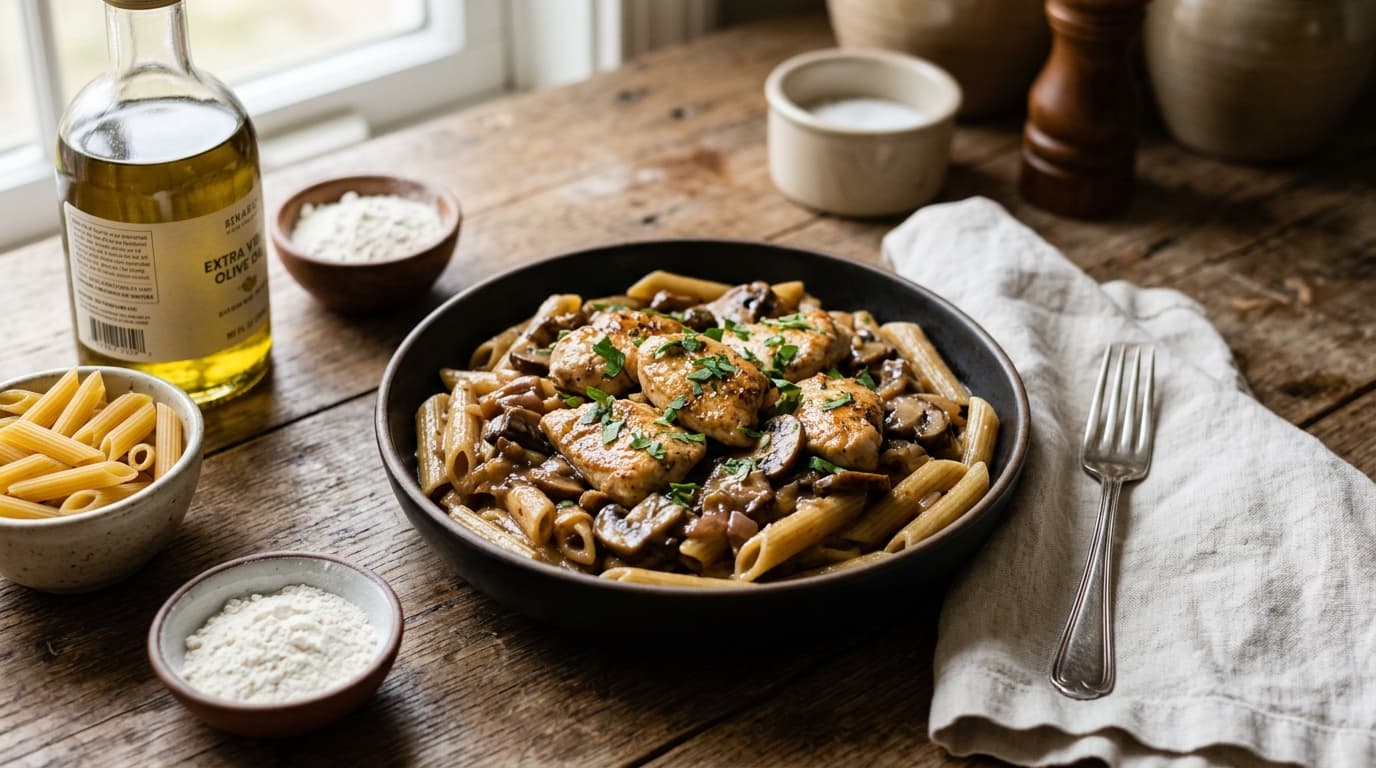
Featured Recipe
Gluten Free Chicken Marsala
Gluten-free chicken marsala is thin cutlets of chicken, browned in a skillet and finished in a glossy sauce of Marsala wine, mushrooms and shallots. The sauce is savory with a faint nutty sweetness, the mushrooms turn deep and meaty, and the chicken stays tender because the slices are so thin. It is an Italian classic that was made for one pan.
People love it because it looks like restaurant food and behaves like weeknight food. The sauce is silky enough to feel special, yet the whole dish comes together in a single skillet, so it works for a quiet Tuesday and for company alike.

Where chicken marsala comes from
The dish goes by pollo al marsala or scaloppine al marsala in Italian, and its home is Sicily. It is named for the wine, which is made around the city of Marsala on the island's western coast. Marsala is a fortified wine with Protected Designation of Origin status in the EU, and dry versions are the ones used for savory cooking.
The written record on the dish itself is thin. Most accounts date it to the 19th century and say it may have started with English families living in western Sicily, where the wine was being made and shipped. That fits the wine's own story: the English merchant Woodhouse is credited with popularizing fortified Marsala beyond Sicily, believing it would sell well in England. A restaurant-blog version of the tale credits French families in Sicily during the Napoleonic wars, who wanted a gravy-style dish like those from home and had a Sicilian chef create one. Treat that as legend rather than record.
What is better supported is the dish's later life. It spread widely with Italian migration to the United States in the early 1900s, which is why many people now think of chicken marsala as an Italian-American restaurant staple. It still has Sicilian roots.
How chicken marsala varies
The traditional method coats the chicken in wheat flour, sears it briefly, then builds a sauce from Marsala wine in the same pan. That flour coating helps the cutlets brown and gives the sauce a little body. Gluten-free versions swap the wheat flour for a gluten-free alternative and keep the rest of the method intact. The version on Meez is gluten-free as written by its source, and it is worth checking labels on the Marsala, stock and any other packaged ingredients you use.
Other differences come down to the cook:
- Veal or chicken. The original scaloppine format suits veal, but chicken breast is now far more common.
- Cream or no cream. Some Italian-American kitchens add cream for a richer sauce. Others rely on reduced wine and pan juices alone.
- Aromatics. Garlic is typical, while shallots give a softer, sweeter background, which is the route this skillet version takes.
- Dry or sweet Marsala. Dry is the usual choice for savory dishes, and sweet Marsala tends to push the sauce toward dessert.
The version we cook on Meez comes from What the Fork. It leans into mushrooms and shallots and ends up with a silky sauce that coats the chicken.
When to make chicken marsala
This is a good weeknight dinner that does not feel like one. It is also a good pick for a small dinner with friends, because you can have the cutlets sliced and the mushrooms prepped before anyone arrives and finish the dish while they sit down.
It shines from early autumn into winter. A weeknight in October, when mushrooms are at their best and shallots, Brussels sprouts, winter squash and kale are all in the market, is about ideal. A Sunday supper in November, when the evenings are dark and the kitchen is warm, suits it just as well. In spring, asparagus and peas make good partners if you want a lighter plate.

What to serve with chicken marsala
You want something that catches the sauce, and a bright green on the side to balance it. Everything below is gluten-free as named, though packaged items are worth a label check.
- Creamy polenta. Corn polenta is naturally gluten-free and makes a soft bed for the mushroom sauce.
- Mashed potatoes. Plain, buttery and ideal for mopping up every bit of sauce.
- Gluten-free pasta. Tossed with a little butter or olive oil, it echoes the Italian table and takes on the sauce well.
- Roasted green beans or asparagus. A little char and a squeeze of lemon cut through the richness.
- A simple arugula salad. Peppery leaves with lemon and olive oil keep the meal fresh.
For a drink, a crisp dry white such as Vermentino or Pinot Grigio keeps things light. Sparkling water with lemon is a good non-alcoholic choice.
Make it at home
Ready to cook it? Get the recipe for the full ingredient list and method, or cook it step by step in Cook Mode so you can keep your hands on the skillet.
Questions about chicken marsala
Is chicken marsala really Italian?
Yes, it is Italian in origin, and most accounts place it in Sicily in the 19th century. It became especially popular in the United States through Italian migration in the early 1900s, so many people know it as an Italian-American restaurant dish.
What is Marsala wine?
Marsala is a fortified wine from around the city of Marsala in western Sicily. It comes in dry and sweet styles, and the dry kind is used for savory cooking like this.
What is the difference between chicken marsala and chicken piccata?
Both use thin chicken cutlets cooked in a skillet. Chicken marsala has a mushroom and Marsala wine sauce that is earthy and slightly sweet, while chicken piccata is built on lemon and capers and tastes sharper.
What should I serve with chicken marsala?
Choose something that soaks up the sauce, such as polenta, mashed potatoes or gluten-free pasta, and add a green vegetable or a peppery salad for contrast.
Sources
- Chicken marsala
- Chicken marsala (Simple English Wikipedia)
- Marsala wine
- The Story Behind Chicken Marsala - Gaetano's Italian Restaurant
Last reviewed November 11, 2026. Written by the Meez editorial team with Meez Magic, from the sources above.
Original Recipe Source
This article is inspired by a recipe from Whattheforkfoodblog.
Visit the original source for their version of this recipe and more great content.
Related Topics
Enjoyed this article? Share it with fellow food lovers!
Ready to Cook This Recipe?
Experience our immersive Cook Mode with step-by-step visual guidance, voice narration, and built-in timers.