

History of Sugar Cookies: From Nazareth to Your Kitchen
Soft sugar cookies are an American classic with roots in 1700s Pennsylvania. Here is where they came from, how they vary, and when to bake a batch.
Featured Recipe
Soft Sugar Cookie Recipe
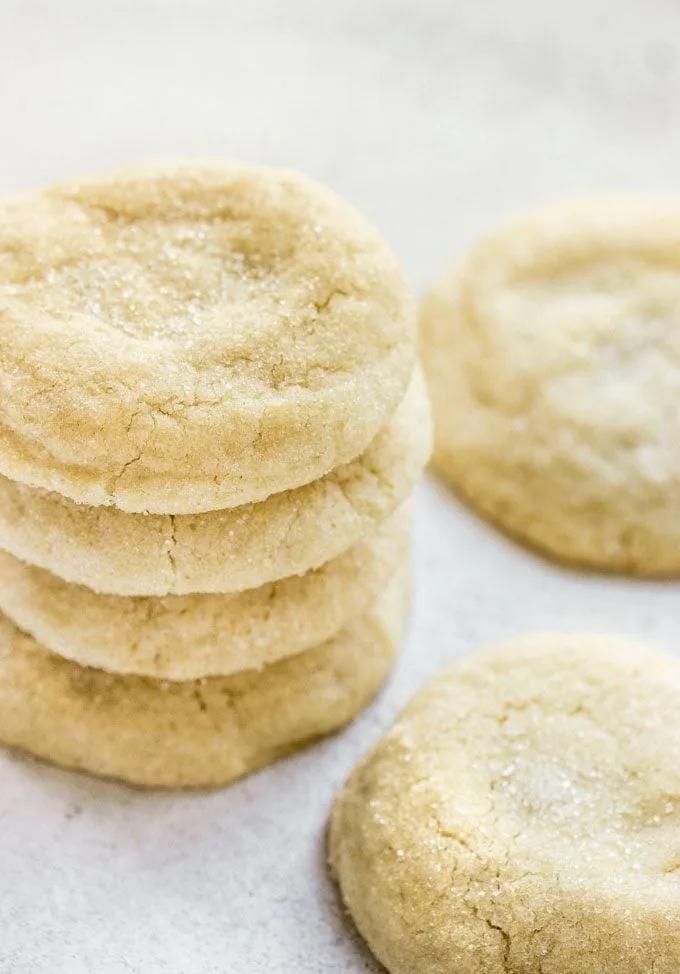
The soft sugar cookie is an American dessert built on very little: butter, sugar, flour, eggs and vanilla. What comes out is a thick, tender cookie with a slightly crisp edge, a chewy middle and a clean, buttery sweetness that tastes like vanilla more than anything else.
People love it because it asks nothing of you. It does not need a filling, a glaze or a clever flavor to be good, and it welcomes all three if you want them. It is the cookie that disappears first from a plate, and the one that works for a child's birthday and a quiet afternoon with coffee.
Where sugar cookies come from
Sugar cookies are generally listed as an American creation, and most accounts place the first American versions in the 1700s. The story people tell most often points to Nazareth, Pennsylvania, where German Protestant settlers are said to have baked what were called Nazareth cookies. Some early versions were cut into keystone shapes, a nod to Pennsylvania's nickname, the Keystone State. Those early cookies ranged from hard and dry to chewy, so the soft cookie we love today is a later refinement.
The wider family tree is older. One account traces cookies in general back to 7th-century Persia, and another says Dutch settlers brought their koekje, meaning "little cake," to North America in the late 1500s. Those are background stories rather than a straight line to the sugar cookie, so treat them as context.
Print gives a few more clues. One account credits Amelia Simmons's American Cookery, published in Hartford, Connecticut, with including a sugar cookie recipe. By the 1870s, according to historian David Walbert, plain cookies were common weekday fare in middle-class homes. The name itself is said to have been coined to set simple sugar-based cookies apart from peanut butter and oatmeal ones. In the Victorian era, bakers fussed over large, fancy cakes while cookies stayed quick, easy family food, which may be why the sugar cookie never needed a famous inventor.
How sugar cookies vary
The basic definition is loose. Sugar cookies can be formed by hand, dropped onto a baking sheet, or rolled out and cut into shapes. That range is where most of the variety comes from.
- Rolled and cut-out: the holiday standard, firm enough to hold the shape of a star or a heart and made for icing and sprinkles.
- Soft and chewy drop-style: the kind we make here, thick and tender, often rolled in extra sugar or topped with a swirl of frosting.
- Crisp and snappy: closer to the hard, dry end of the early American versions, good for dunking.
Traditional versions keep to vanilla and a plain sugar finish. Modern twists add almond extract, citrus zest, cream cheese frosting or colored sanding sugar. All of these are variations on the same simple base.
When to make soft sugar cookies
These fit three occasions well. For a quick favorite, they suit a weeknight when you want something homemade without a long project. For something sweet on a Sunday afternoon, one batch covers a few days of coffee breaks. For feeding a crowd, they make a good bake-sale or classroom-party cookie because they are easy to stack, travel well and appeal to nearly everyone.
They are a year-round cookie, but the seasons offer good pairings. In December, bake them alongside the pears, cranberries and citrus at the market. In April and May, serve them with the first strawberries and rhubarb. On a crisp October weeknight, they go well next to a warm apple dessert or a mug of cider.
What to serve with them
- Cold milk: the classic match, since the dairy tempers the sweetness and keeps the cookie tasting buttery.
- Hot coffee or black tea: bitterness balances a sweet, soft cookie, especially in the afternoon.
- Fresh strawberries or other berries: their tartness makes the plate feel lighter, and spring berries suit the cookie's simple flavor.
- Vanilla ice cream: a scoop between two cookies makes an easy sandwich that needs no extra work.
- Warm spiced cider: a good cool-weather drink for a cookie platter at a gathering.
Make it at home
The version we cook on Meez comes from Pretty. Simple. Sweet. Get the recipe for the full ingredient list and method, or cook it step by step in Cook Mode if you want your hands free while you bake.
Questions about sugar cookies
Where do sugar cookies come from?
They are generally listed as American. Most accounts trace them to the 1700s and German Protestant settlers in Nazareth, Pennsylvania, though cookies in general are much older.
What were Nazareth cookies?
Nazareth cookies were an early American version of the sugar cookie, said to be baked by German Protestant settlers in Pennsylvania. Some were shaped like keystones, a reference to the state's nickname.
Why are they called sugar cookies?
One account says the name was coined to separate plain, sugar-based cookies from peanut butter and oatmeal cookies. The name describes a simple cookie where sugar and butter are the main flavors.
What is the difference between soft and cut-out sugar cookies?
Both come from the same basic idea, but cut-out cookies are rolled and shaped, so they are firmer and hold their edges for decorating. Soft sugar cookies are made thick and tender, with a chewy center.
Sources
- Sugar cookie
- The Sweet Origins Of Sugar Cookies - Mashed
- Sugar Cookies in Victorian America - Kristin Holt
- The History of Sugar Cookies
- History of Sugar Cookies: Origins, Facts & Sweet Traditions
Last reviewed October 24, 2026. Written by the Meez editorial team with Meez Magic, from the sources above.
Original Recipe Source
This article is inspired by a recipe from Prettysimplesweet.
Visit the original source for their version of this recipe and more great content.
Related Topics
Enjoyed this article? Share it with fellow food lovers!
Ready to Cook This Recipe?
Experience our immersive Cook Mode with step-by-step visual guidance, voice narration, and built-in timers.