

What Is Kabob Koobideh? Persian Ground Meat Kebab Explained
Kabob koobideh is Iran's best-known ground meat kebab: juicy, savory and charred at the edges, with onion and plenty of smoke. Here is where it comes from, how it varies and what to put on the table with it.
Featured Recipe
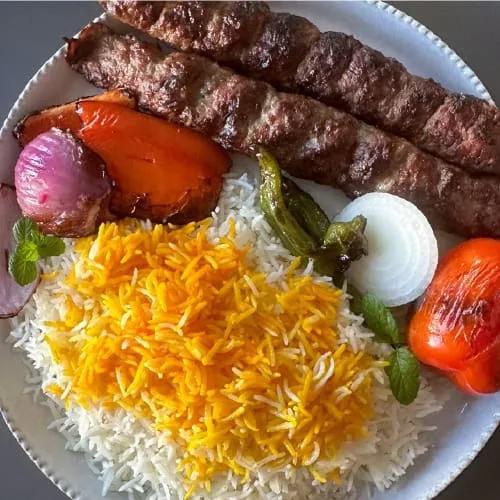
Kabob Koobideh (Juicy Skewered Grilled Persian Kabobs)
Kabob koobideh is a Persian grilled kebab made from ground meat, usually lamb or beef, seasoned simply with onion, salt and black pepper and shaped onto wide, flat skewers. Over hot coals it turns deeply browned and lightly crisp outside while staying tender and juicy within, with the sweet edge of onion and the smell of woodsmoke in every bite.
People love it because it is so plain and so good. There is no sauce to hide behind and no long list of spices. It is just well-seasoned meat, fire, and a pile of fluffy rice or warm flatbread to catch the juices. This Middle Eastern classic is easy to share, easy to eat with your hands, and hard to stop at one skewer.
Where kabob koobideh comes from
Kabob koobideh is an Iranian dish. Encyclopedic sources list Iran as its place of origin and name Golpayegan, Tehran and Bonab as the regions associated with it. No one can point to an inventor or a founding date, so any precise story about its first appearance should be treated with suspicion.
The name itself tells you a good deal. Kabab means grilled meat, and koobideh comes from the Persian koobidan, meaning to pound or beat. That points to the traditional method: the meat was pounded on a flat stone with a wooden mallet until it became a smooth, sticky paste that clings to a skewer. Today most cooks use a grinder and then knead the mixture by hand. It is also described as an Iranian variant of kofta kebab, and an alternate name, koufteh kabab, comes from the verb kouftan, which also relates to pounding.
Persian food writers often call it a national dish, and it is a fixture on the menus of Persian restaurants both in Iran and abroad.
How it varies
The meat is the first difference. Lamb is the classic choice, but beef is a common alternative, and many home cooks have strong opinions about which is better. The seasoning is deliberately spare, mostly grated onion, salt and black pepper, so small decisions matter: how finely the onion is grated, how long the mixture is worked, and how much fat is in the meat.
Regional cousins exist too. Bonab kabab, named for the city of Bonab in East Azerbaijan province, is made from ground mutton, onion and salt, and is known for its large size. Wikipedia lists koobideh as a similar dish. The kebab we cook on Meez is a family version, and its author says every Persian household has its own secret koobideh.
Traditional means a stone, a mallet and a charcoal fire. The modern twist is a grinder, a food processor for the onion, and sometimes a gas grill or a hot cast-iron pan for cooks without a yard. The flavor shifts a little, but the idea stays the same.
When to make it
Koobideh shines in summer, when the grill is already lit and the market is full of tomatoes, cucumbers, radishes, basil, mint and tarragon. Those are the right companions, which is why it fits the Fresh & Light mood despite being a meat dish. A late-spring weekend or a warm evening in September works just as well.
- Sunday dinner: an unhurried afternoon of shaping skewers and lighting the fire, with the table set when the smoke clears.
- Feeding a crowd: the mixture scales up easily, the skewers cook fast, and guests can build their own plates from a big platter.
- A weeknight in July: prepare the meat ahead and the actual cooking is short, leaving you time for a simple salad.
What to serve with kabob koobideh
- Saffron rice: the traditional partner. Buttery, fragrant rice soaks up the juices from the kebab.
- Grilled tomatoes: charred until soft and sweet, they add acidity and are usually cooked right alongside the meat.
- A plate of fresh herbs, radishes and raw onion: bites of green and crunch cut through the richness.
- Flatbread: use it to wrap the meat off the skewer and mop up whatever is left on the plate.
- Yogurt drink or hot tea: a salted, tangy yogurt drink such as doogh is a classic pairing, and black tea is the usual way to end the meal.
Make it at home
The version we cook on Meez comes from Mulberry Blvd. Get the recipe for the full method, or cook it step by step in Cook Mode if you want your hands free while you work.
Questions about kabob koobideh
What does koobideh mean?
It comes from the Persian koobidan, meaning to pound or beat, a reference to the traditional way of working the meat into a paste on a flat stone. Paired with kabab, it means roughly pounded grilled meat.
Is kabob koobideh made with lamb or beef?
Either. Lamb is the classic choice and beef is a widely used alternative. Both are seasoned with onion, salt and black pepper.
How is koobideh different from other kofta kebabs?
It is considered an Iranian variant of kofta kebab. Its seasoning is restrained, with little beyond onion, salt and pepper, and the meat is worked until smooth so it clings to wide, flat skewers.
What is Bonab kabab, and is it the same thing?
Bonab kabab is a regional kebab from the city of Bonab, made from ground mutton, onion and salt and known for its large size. It is similar to koobideh but is its own regional dish.
Sources
- Kabab koobideh
- Kabab koobideh - Wikiwand
- Bonab kababi
- Kabab Koobideh - Grilled Minced Meat Kabab (Labsalliebe)
Last reviewed October 20, 2026. Written by the Meez editorial team with Meez Magic, from the sources above.
Original Recipe Source
This article is inspired by a recipe from Mulberryblvd.
Visit the original source for their version of this recipe and more great content.
Related Topics
Enjoyed this article? Share it with fellow food lovers!
Ready to Cook This Recipe?
Experience our immersive Cook Mode with step-by-step visual guidance, voice narration, and built-in timers.