

History of Pot Roast: Where the Red Wine Braise Fits
Red wine braised pot roast is an American one-pot classic with deep French roots and a lot of immigrant kitchen history behind it. Here is where it comes from, how it varies, and what to put on the table beside it.
Featured Recipe
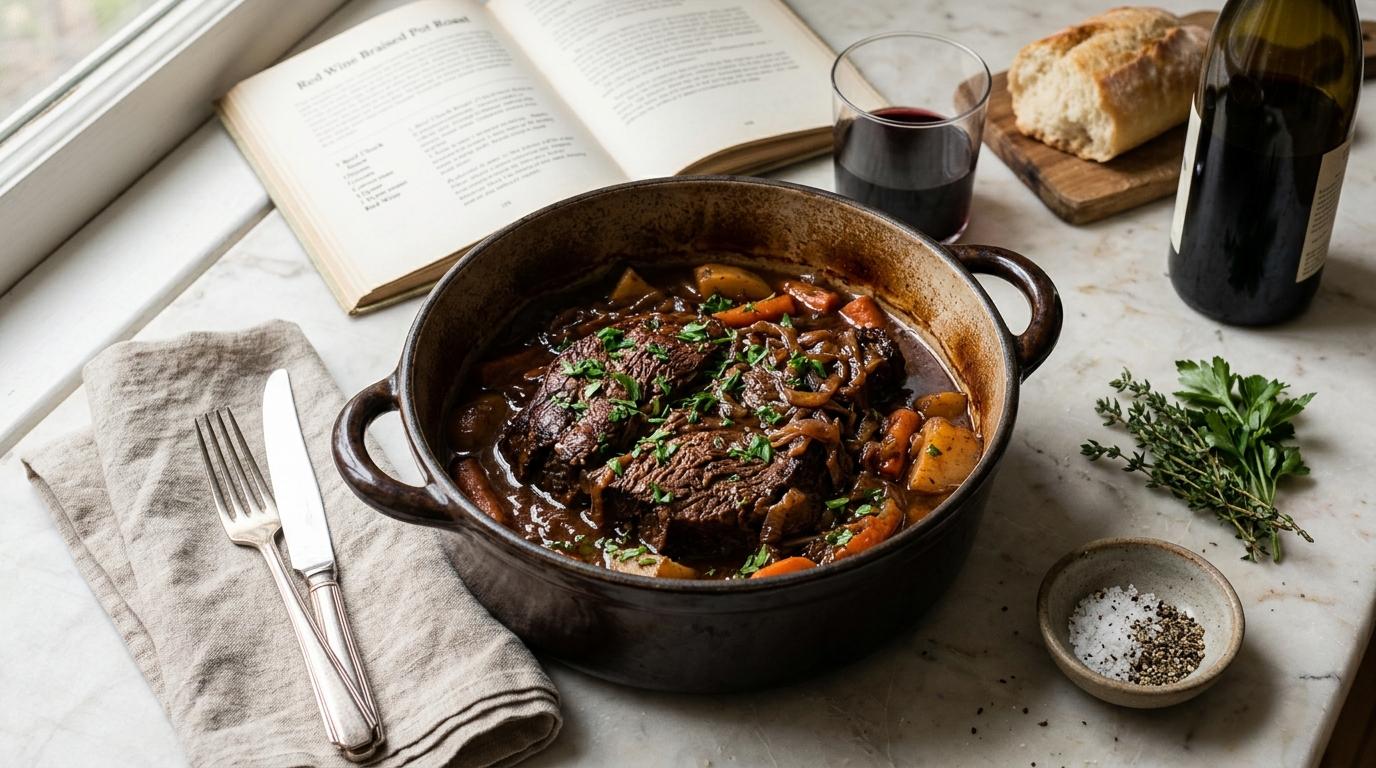
Red Wine Braised Pot Roast
Red wine braised pot roast is an American home-cooking staple: a large piece of beef cooked slowly in a covered pot until it yields to a fork, surrounded by carrots and onions that have gone soft and sweet in the cooking liquid. The gravy is dark and glossy, with the savory depth of well-browned meat and the gentle tartness of red wine.
People love it because it rewards patience without demanding much attention. The house fills with the smell of beef, wine and herbs, the meat comes apart in thick, tender pieces, and everything you need for dinner is sitting in one pot. It is comfort food that also happens to look good on a table full of guests.
Where pot roast comes from
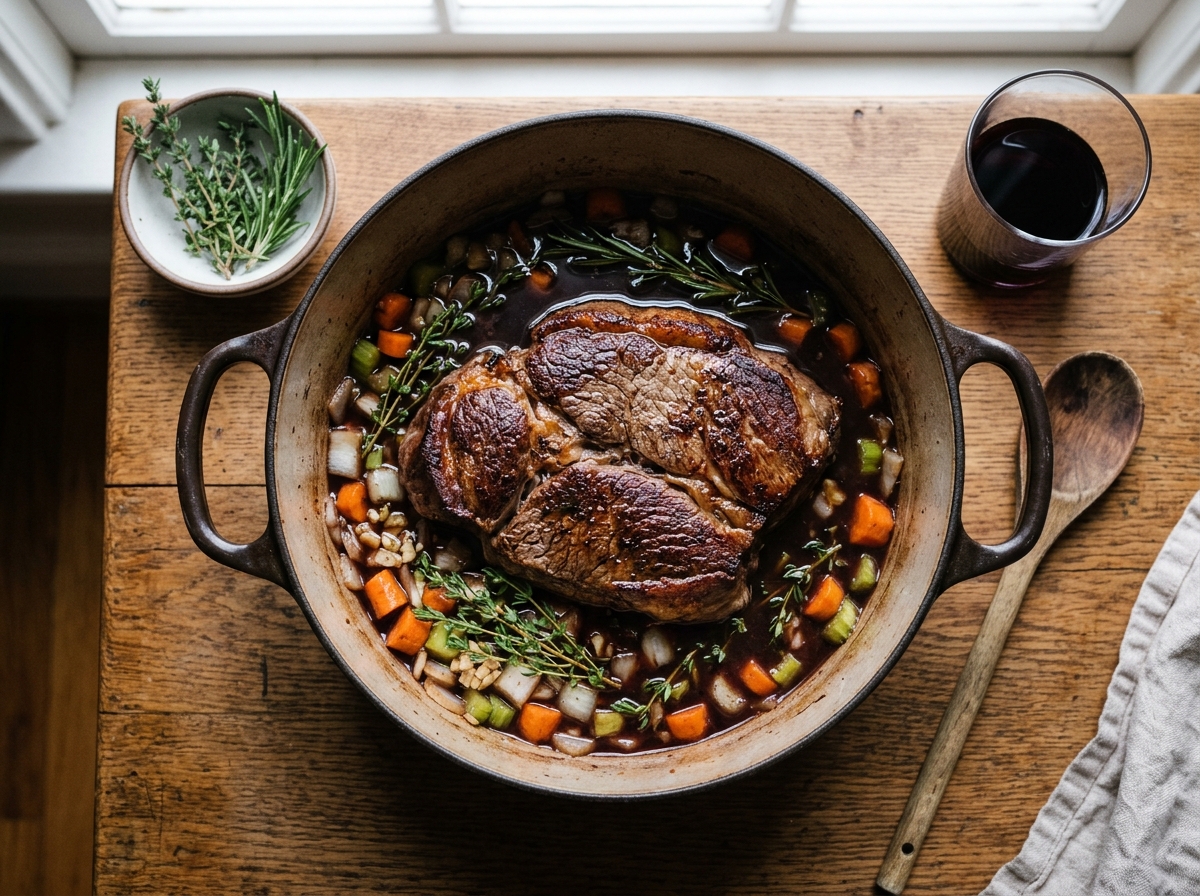
Pot roast has no single inventor and no single birthplace. Accounts agree that it grew out of braising, a method long used in thrifty kitchens across Europe and North America to make tough cuts of beef tender. The version most Americans know is generally traced to European immigrants in the 19th and 20th centuries, when cuts like chuck roast became household staples.
The technique itself is old. The French word braiser comes from braise, the live coals that were once piled under and over a covered pot. One ancestor of the American dish is the French boeuf à la mode, which appears in older American cookbooks as “alamode beef.” The name “pot roast” came later: Dictionary.com labels it an Americanism dating to about 1880–85, and one source notes that it showed up in American cookbooks only after the method was already well established.
German American and American Jewish cooking also left their mark on the dish. In parts of the country you will still hear it called “Yankee pot roast.” The basic definition has stayed steady: beef, usually brisket or chuck, cooked in one piece in a covered pot and served in its own gravy, often with carrots, potatoes and onions cooked in the same liquid.
How it varies
Because pot roast is a method more than a formula, nearly every family has its own take. The traditional Yankee style leans on beef, root vegetables and a savory broth, with little else. Others add tomato for a brighter gravy, or build a sweeter, softer flavor with plenty of onions. Brisket gets the nod in many Jewish households, and some cooks lean toward a tangy, vinegar-marinated approach that echoes German sauerbraten.
Red wine is the choice that moves the dish toward its French ancestors. It adds acidity and a deep, fruity backbone that water or plain stock cannot match, and it cooks down into a gravy with real body. Fresh herbs such as thyme and rosemary are a common companion. Modern twists tend to be about the finish: a spoonful of something tangy at the end, a handful of fresh herbs on top, or a gravy blended smooth. The Meez version stays close to the classic shape and uses the wine to do the heavy lifting.
When to make it
This is a Sunday dinner by temperament. It suits the afternoon when you are home anyway, with the oven or stovetop quietly working while you do other things. It is also a good weekend project: not difficult, but it earns its place on a day when there is no rush.
It shines from October through February. In the Northern Hemisphere, that is when carrots, parsnips, onions, potatoes, celery root and winter squash are at their best, and when thyme and rosemary still hold up well. A cool Sunday in November, with the first real chill outside, is just about perfect. It also works for a small dinner party, since it can be finished ahead and holds well while you tend to the table.
What to serve with it
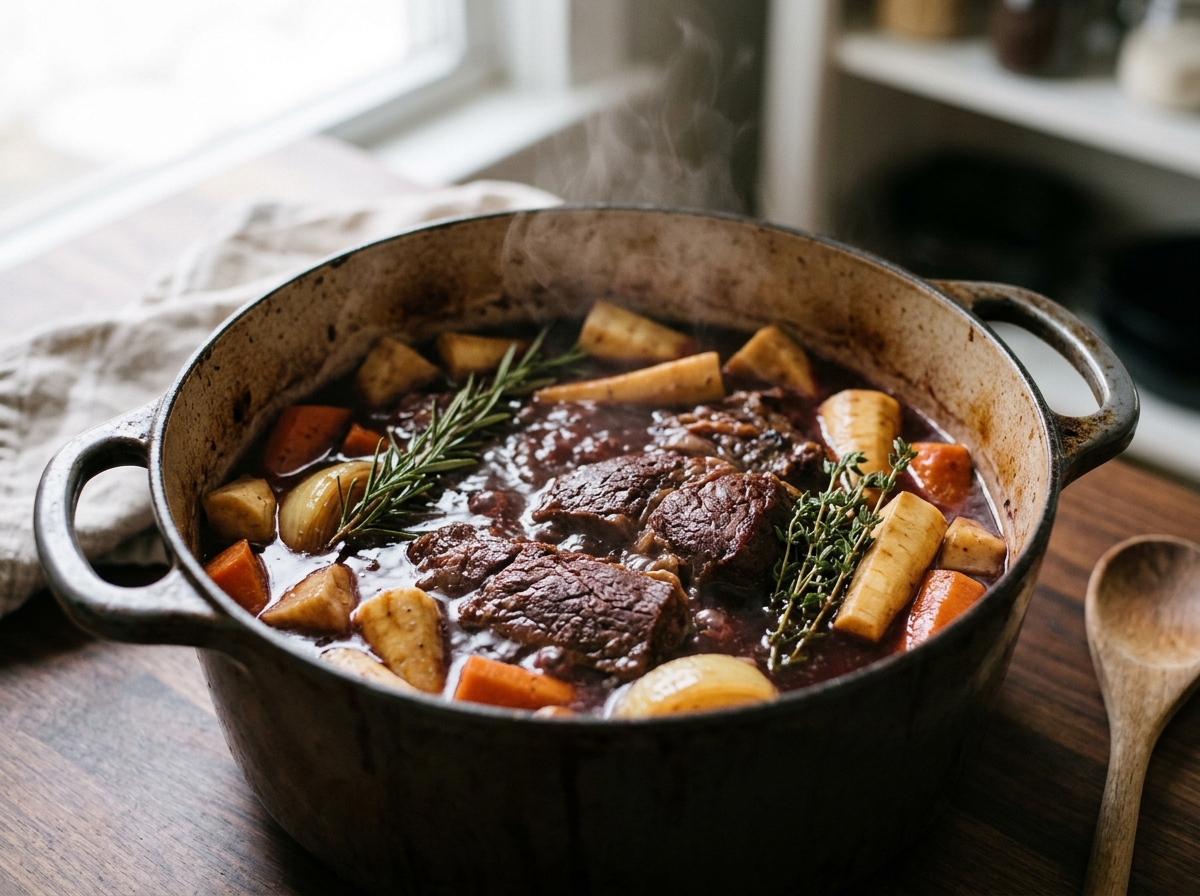
- Mashed potatoes or buttery egg noodles. Both catch the gravy, which is half the point of the meal.
- Crusty bread. It mops up what the potatoes miss and suits a table where people go back for more sauce.
- Roasted Brussels sprouts or green beans. Something green with a little char balances the richness of the beef.
- A sharp salad. Bitter greens with a mustardy vinaigrette cut through the gravy and reset the palate.
- A glass of the same red. A medium to full-bodied red echoes the braise. Pour something similar to what went into the pot, or a simple dry red you enjoy.
Make it at home
The version we cook on Meez comes from Half Baked Harvest. When you are ready, Get the recipe for the full ingredient list and method, or cook it step by step in Cook Mode so your hands stay free at the stove.
Questions about pot roast
Is pot roast French or American?
Both, in a sense. The braising method and its ancestor boeuf à la mode are French, but the name “pot roast” is an Americanism from around the 1880s, and the dish as Americans know it was shaped by immigrant cooks from several traditions.
What is Yankee pot roast?
It is a name sometimes used for the classic American style of pot roast: beef cooked in a covered pot with vegetables such as carrots, potatoes and onions, then served with its own gravy.
How is pot roast different from beef stew?
Pot roast is cooked as one large piece of meat and carved or pulled apart at the end, while stew is cut into small pieces before cooking. Pot roast also uses less liquid, so the result is closer to a gravy than a soup.
What should I serve with pot roast?
Something to soak up the gravy, such as mashed potatoes, noodles or crusty bread, plus a green vegetable or sharp salad to balance the richness. A glass of red wine finishes the meal nicely.
Sources
- POT ROAST Definition & Meaning
- Pot roast facts for kids
- Sunday Pot Roast
- Where Did Pot Roast Originate?
Last reviewed October 28, 2026. Written by the Meez editorial team with Meez Magic, from the sources above.
Original Recipe Source
This article is inspired by a recipe from Half Baked Harvest.
Visit the original source for their version of this recipe and more great content.
Related Topics
Enjoyed this article? Share it with fellow food lovers!
Ready to Cook This Recipe?
Experience our immersive Cook Mode with step-by-step visual guidance, voice narration, and built-in timers.