

History of Gluten-Free Bread and Why a Sandwich Loaf Matters
Gluten-free sandwich bread is a soft, high-rising American loaf made for ham and cheese, PB&J and French toast. Here is where gluten-free bread came from, how it varies, and when it is worth baking.
Featured Recipe
Gluten-Free Sandwich Bread
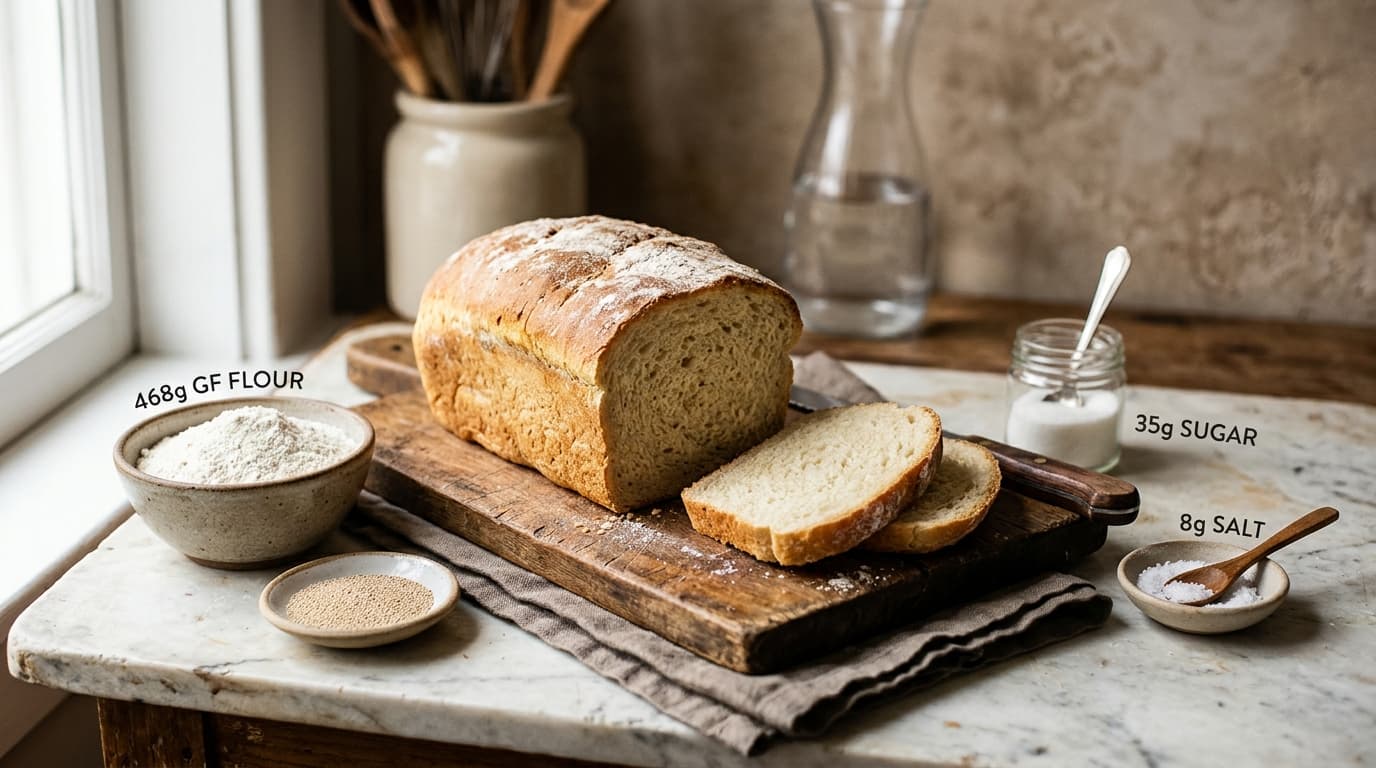
Gluten-free sandwich bread is the plain, tall, square-sliced loaf of American lunchboxes, made without wheat. A good one has a golden crust, a tender crumb and enough structure to hold a stack of ham and cheese without crumbling in your hands. It smells like a bakery on a weekend morning.
People love it because it brings back the everyday sandwich: the PB&J, the BLT club, the grilled cheese with a crisp, buttery edge. It also makes a good breakfast loaf, sliced thick for gluten-free toast with butter and jam or soaked for French toast.

Where gluten-free bread comes from
This particular loaf has no documented origin story. It is a modern baker's solution to a modern problem, so we will not invent a founder or a first batch. The wider history of gluten-free bread is easier to trace.
Bread-making is thought to have begun about 10,000 years ago, and wheat has been farmed since the first civilisations. Gluten-free diets, by contrast, are a relatively new phenomenon that became popular only in the past few decades. One account credits Anton Schär, who studied the effects of removing wheat from children's diets in the 1920s, with developing products that grew into the first brand of packaged gluten-free foods.
Bread was the hard part. It is a staple of American kitchens, and its structure is complicated to imitate. In ordinary bread, kneading activates gluten, the protein that holds a loaf together and helps it rise. Gluten-free bakers have to replace that job. Early 1990s gluten-free loaves leaned heavily on rice, corn and potato starches plus xanthan gum, with the starches imitating gluten's structure and the gum adding elasticity. In that decade the loaves were sold mostly in health food stores, and they were not considered appetizing. A tall, soft sandwich loaf like this one shows how far home baking has come.
How it varies
The classic American sandwich loaf is a plain white-style bread baked in a loaf pan. It is the template for this recipe, and it is the traditional shape. Wheat versions rely on gluten and a long knead. Gluten-free versions skip the knead and rely on a mix of flours, starches and a binder, so the dough behaves more like a thick batter.
Gluten-free loaves differ mainly in their flour blends, so some are lighter and some more wholesome and nutty. Some bakers add seeds, or swirl in cinnamon and raisins for a breakfast loaf. These are modern twists rather than anything handed down in families. The loaf is also more versatile than its name suggests. The source suggests ham and cheese, a PB&J, a BLT club, a grilled sandwich and French toast, and the same slices could just as easily be turned into a vegetarian sandwich with egg salad or sliced tomato and cucumber.
The version we cook on Meez comes from King Arthur Baking. It is gluten-free as written by its source, and as with any packaged ingredient, labels are worth checking.
When to make it
This is a weekend project. Give it an unhurried Saturday or Sunday, bake it in the morning, and eat the first slices warm for a late breakfast. It is also a good loaf to make ahead when you are feeding a crowd: a tray of sandwiches for a game day, a picnic or a school event goes a lot further when everyone can eat the same bread.
It works in every season, but it fits some better than others. In late summer, when tomatoes, lettuce and sweet corn are at their best, it makes the best BLT you will have all year. In October, with apples and pears in the market, it is ideal for French toast with sliced fruit. In January, with citrus at its peak, a warm grilled cheese beside a bowl of soup is hard to beat.

What to serve with it
- Tomato soup. It is the classic partner for a grilled cheese, and the crisp, buttery slices are good for dipping. Check the label on any canned or boxed soup, since some contain thickeners with gluten.
- A crisp green salad with a simple vinaigrette. It adds freshness and crunch next to a rich sandwich such as a BLT club.
- Fresh fruit. Berries in summer, sliced apples and pears in autumn and oranges in winter all go well with French toast or PB&J.
- Eggs. Soft scrambled or fried eggs with slices of the loaf make a good breakfast plate, and the loaf holds up to a runny yolk.
- Coffee, tea or cold milk. These are the drinks most often paired with breakfast and lunch sandwiches, and they suit both the sweet and savory uses of this loaf.
Make it at home
When you are ready to bake, Get the recipe for the full ingredient list and method, or cook it step by step in Cook Mode so your hands stay free while the dough rises.
Questions about gluten-free sandwich bread
When did gluten-free bread first appear?
One account credits Anton Schär with work in the 1920s that grew into the first brand of packaged gluten-free foods. Good-tasting loaves took much longer, and in the 1990s gluten-free bread was sold mostly in health food stores and was not considered appetizing.
How is gluten-free bread different from wheat bread?
In wheat bread, kneading activates gluten, which holds the loaf together and helps it rise. Gluten-free bread has to replace that role with other ingredients, so the dough is handled differently and often looks more like a thick batter.
Why do gluten-free loaves use xanthan gum?
Early 1990s gluten-free breads relied on starches plus xanthan gum, with the starches imitating gluten's structure and the gum adding elasticity. Many gluten-free breads still use a binder for the same purpose.
What can I make with this loaf besides sandwiches?
The source suggests gluten-free toast with butter and jam for breakfast, French toast and grilled sandwiches. It is also a good loaf for a BLT club or a PB&J.
Sources
- THE HISTORY OF Gluten-Free Bread - BAY AREA ENTERTAINER
- A Brief History Of Gluten Free Bread
- What Is Gluten-Free Bread and How Is It Made? - Escoffier
- A Brief History of Gluten-Free Baking
Last reviewed November 11, 2026. Written by the Meez editorial team with Meez Magic, from the sources above.
Original Recipe Source
This article is inspired by a recipe from King Arthur Baking.
Visit the original source for their version of this recipe and more great content.
Related Topics
Enjoyed this article? Share it with fellow food lovers!
Ready to Cook This Recipe?
Experience our immersive Cook Mode with step-by-step visual guidance, voice narration, and built-in timers.