

History of Blueberry Muffins and Gluten-Free Versions
Blueberry muffins are an American quick-bread classic with no single inventor and a long run in home kitchens. Here is where they come from, how they vary, and how to build a gluten-free spread around them.
Featured Recipe
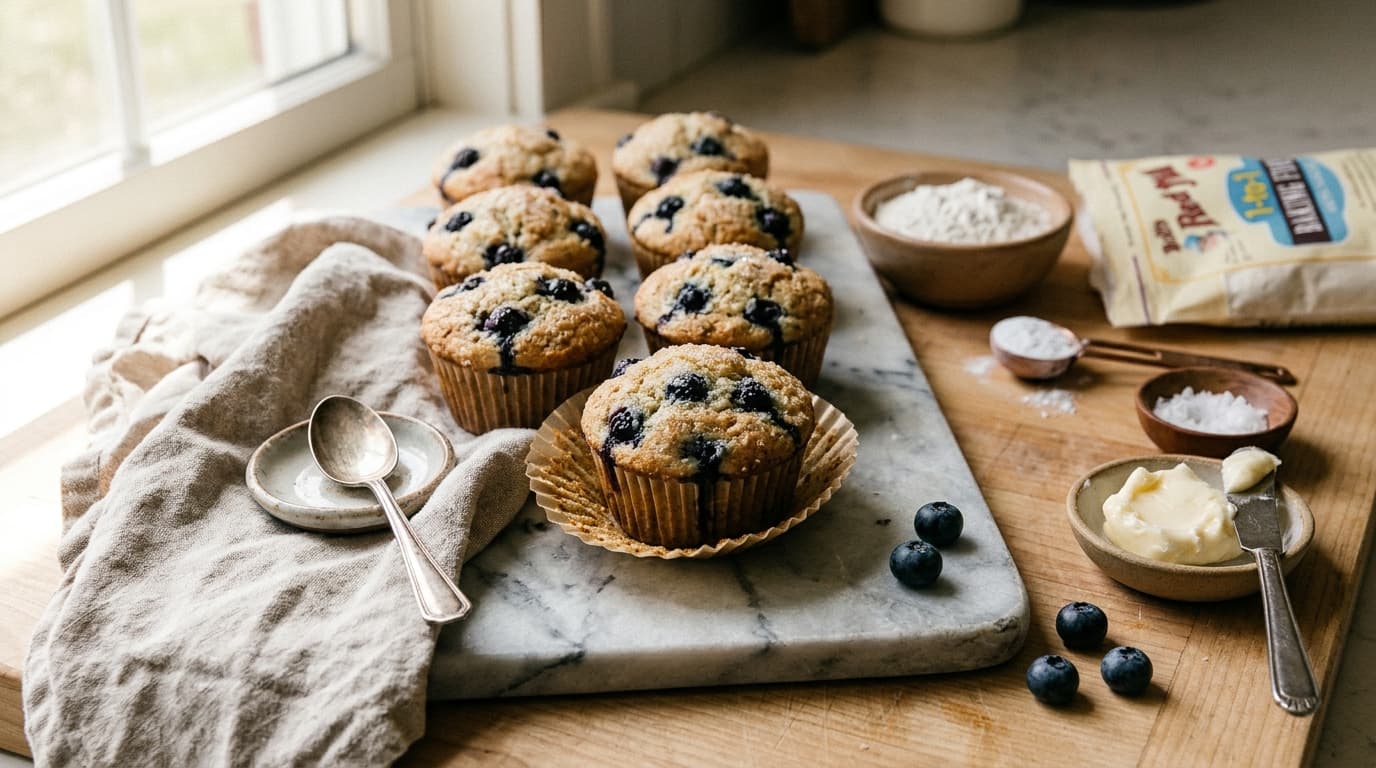
The Best Gluten-Free Blueberry Muffins
A gluten-free blueberry muffin should have a high, rounded top, a soft and tender crumb, and enough fruit that nearly every bite hits a warm, jammy pocket of berry. These American muffins are packed with blueberries and finished with a little granulated sugar, which bakes into a thin crunchy crust over the top.
People love them because they sit between breakfast and dessert. They are sweet enough to feel like a treat, plain enough to eat with coffee at the counter, and easy to carry. Gluten-free versions have a reputation for turning dry or crumbly, which is why a muffin that stays moist and full of fruit is worth keeping on hand.

Where blueberry muffins come from
No one knows who made the first blueberry muffin. The Baking Heritage account says there is no single known inventor and suggests the muffin probably developed gradually, as American cooks added local berries to quick-bread muffin batter in the late 19th and early 20th centuries.
The muffin itself has a longer story. The name comes from an earlier British baking tradition, but the quick-bread muffin, also called the American muffin, is generally given the United States as its place of origin. It is raised with chemical leavening rather than yeast, so it needs no rising time. Recipes for it are common in 19th-century American cookbooks, and The Kentucky Housewife (1839) is one early book that includes muffin recipes.
Older yeast-raised muffins are a separate line. They are the ancestors of the English muffin, which Puratos dates to the early 18th century. The American version is sweeter and more cake-like, and the blueberry muffin has become a staple of breakfast tables, bakery cases and office meetings. Blueberry is the official muffin of Minnesota.
How it varies
The traditional American blueberry muffin was made with wheat flour. Today the same muffin turns up in many forms, and gluten-free baking is one of the more recent ones. Bakers use gluten-free flour blends and adjust the batter so the crumb holds together and stays moist, and this fruit-heavy version is a good example.
Other variations are mostly about the top and the berries:
- Sugar-crusted tops give a light crunch, as in the version we cook.
- Streusel tops add a crumbly, buttery layer, often with cinnamon.
- Lemon zest brightens the batter and plays well with the berries.
- Wild blueberries are smaller and more intensely flavored, and they spread more evenly through the crumb.
- Frozen berries work in any season, though they bleed more color into the batter.
Bakery-style jumbo muffins and plain mini muffins are the same idea at different sizes.
When to make blueberry muffins
These suit something sweet on a slow Saturday morning, when you want a warm muffin and a second cup of coffee. They also suit feeding a crowd. A batch makes a good brunch spread, a school or office breakfast, a bake sale table or a potluck contribution, and it is a thoughtful thing to bring when someone in the group avoids gluten.
Blueberries are at their best in the Northern Hemisphere from early to late summer, so a July morning is the natural time to bake them. Peaches, cherries, raspberries and the first stone fruit are in season then too, which makes it easy to build a fruit-heavy breakfast around the muffins. In colder months, frozen berries keep the habit going, and a muffin on a gray October weekday does a lot of good.
What to serve with them
- Plain Greek yogurt. Its tang offsets the sweet muffin, and it adds protein to a breakfast that is otherwise mostly carbohydrate.
- Soft scrambled eggs. A savory plate next to a sweet muffin makes a proper brunch.
- Fresh melon, peaches or citrus segments. Juicy, cool fruit balances the dense, rich crumb.
- Coffee or black tea. The bitterness cuts the sugar, and the pairing is hard to beat.
- Cold milk or fresh orange juice. Both are easy, familiar choices for a crowd and for kids.
Whatever you add, it is worth reading labels on yogurt, spreads and anything packaged.
Make it at home
The version we cook on Meez comes from Gluten-Free Baking. It is gluten-free as written by its source, and it is worth checking the labels on every ingredient you buy. Get the recipe for the full method, or cook it step by step in Cook Mode if you want your hands free while you bake.
Questions about blueberry muffins
Who invented the blueberry muffin?
Nobody knows. Most accounts describe a gradual process in which American cooks added local berries to quick-bread muffin batter in the late 19th and early 20th centuries.
What is the difference between an American muffin and an English muffin?
The American muffin is a quick bread, leavened without yeast and usually sweet and cake-like. The English muffin is a yeast-raised, griddle-cooked bread that is typically unsweet, and it descends from much older yeast muffins.
How is a blueberry muffin different from a cupcake?
A muffin is usually less sweet and less rich, and it is not frosted. The sugar-crusted top on this version gives it a little sparkle without turning it into a cupcake.
What should I serve with blueberry muffins?
Plain yogurt, scrambled eggs, fresh fruit and a hot drink all work well. They add something tangy, savory or juicy to balance the sweetness.
Sources
- The History and Origins of the Blueberry Muffin - Baking Heritage
- Muffin - Wikipedia
- How The American Muffin Has Morphed Over The Years - The Daily Meal
- The Muffin - Puratos USA
Last reviewed November 11, 2026. Written by the Meez editorial team with Meez Magic, from the sources above.
Original Recipe Source
This article is inspired by a recipe from Glutenfreebaking.
Visit the original source for their version of this recipe and more great content.
Related Topics
Enjoyed this article? Share it with fellow food lovers!
Ready to Cook This Recipe?
Experience our immersive Cook Mode with step-by-step visual guidance, voice narration, and built-in timers.