

History of Beef Bourguignon: Where This French Stew Began
Beef bourguignon is the French red wine stew with tender beef, bacon, mushrooms and small onions in a glossy sauce. Here is where it came from, how cooks vary it, and how to build a meal around it.
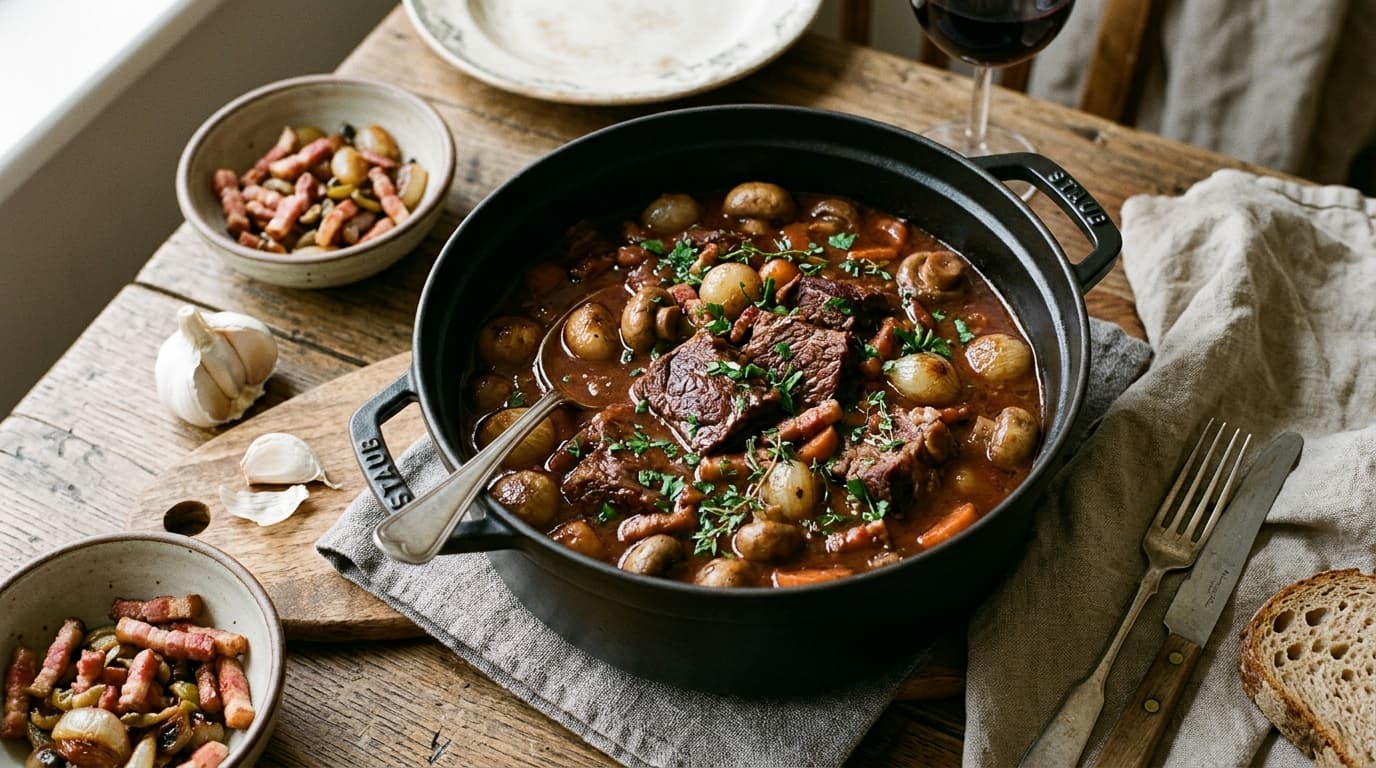
Featured Recipe
Beef Bourguignon (French Classic)
Beef bourguignon is the French stew that turns a tough cut of beef into something you can cut with a spoon. The meat is cooked in red wine until it falls apart, and the sauce turns dark, glossy and savory, with bacon, mushrooms and small sweet onions folded through. It smells of wine, thyme and browned meat, and it fills a kitchen the way few dishes do.
People love it because it is generous and forgiving. It is a dish for taking your time, and it rewards you with a sauce that wants bread or potatoes to soak it up. Our version is a classic French beef bourguignon, easy enough to cook at home and rich enough for a special table.

Where beef bourguignon comes from
The name points to Burgundy, and several accounts place the dish there, pairing red wine with Charolais beef. Wikipedia, however, lists its place of origin as France with the region given as Paris, which fits the dish's long life in Parisian bistros. Like most old stews, its roots are probably humble and hard to pin to one kitchen.
Some sources trace the idea back to the Middle Ages, when slow cooking in liquid was a way to tenderize tough meat. The written record is later. Bourguignon has been used since the mid-nineteenth century as a culinary term for dishes cooked with wine, and burgundywine.com notes that recipes à la Bourguignonne from the same period exist for leg of lamb and rabbit, with similar garnishes. That suggests the style is probably older than its documentation.
Tasting History describes an early form as a peasant dish, a sauce for leftover stewed beef, and presents a sauce-style recipe from 1885. It credits Auguste Escoffier with elevating and popularizing the dish, after which it moved from a sauce to the stew we know now. Julia Child then brought it to home cooks. According to one travel guide, her use of beef cubes rather than a single large piece helped make it a household favorite. By then it was already a fine-dining staple in Paris, London and New York.
How it varies
The classic build is beef, red wine (often red Burgundy), beef stock, bacon lardons, onions, a bouquet garni, pearl onions and mushrooms. That is where most cooks start, and the differences are mostly about how much ceremony they add.
- Sauce-style and stew-style. The older form was more a sauce for beef. Today the dish is nearly always a full stew, with the vegetables cooked into or alongside it.
- One piece or cubes. Some traditional cooks braise a large cut and slice it. Cubes, the approach many home cooks use today, cook more evenly and are easier to serve.
- Garnish. Purists cook the mushrooms and pearl onions separately and add them at the end so they keep their shape and flavor. Quicker versions cook everything together.
- Modern twists. Cooks add carrots, swap in other wines, or move the pot to a slow cooker. These work, though they are not the classic.
When to make it
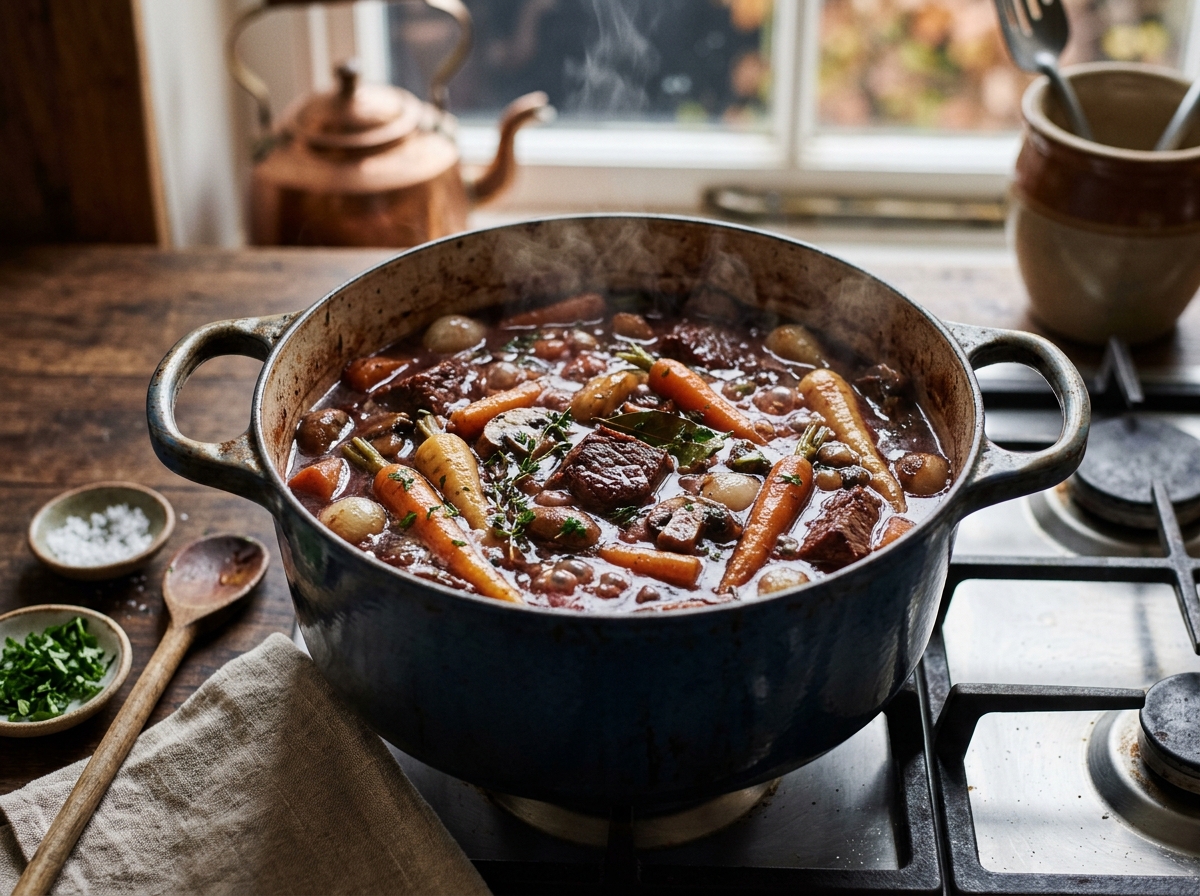
Beef bourguignon belongs to a Sunday dinner. It is a dish you start in the afternoon and leave mostly alone, while the house fills with the smell of it. It is also a good weekend project, since the browning, the sauce and the garnishes give you something to do without being hard, and the result feels earned.
It shines from late autumn through winter. A cold night in October or November is ideal, when mushrooms are at their best and root vegetables like carrots, parsnips and celery root are coming in. It also suits a January dinner party, because the stew can be made ahead and gets better after a rest. In the Northern Hemisphere, that is when a heavy red wine stew makes the most sense.
What to serve with it
The sauce is the point, so choose sides that carry it.
- Buttery mashed potatoes. They catch every drop of sauce and soften the richness of the wine.
- Egg noodles. A traditional pairing that is quick to cook and easy to ladle over.
- A crusty baguette. For mopping the bowl, which you will want to do.
- A green salad with a sharp vinaigrette. The acidity cuts through the stew and resets your palate between bites.
- A glass of red Burgundy. If you are cooking with wine, pour a little of the same style at the table. A Pinot Noir is a natural match.
Make it at home
The version we cook on Meez comes from La Cuisine de Géraldine. It keeps the French original in spirit, with tender beef and a rich red wine sauce, and makes it manageable for a home kitchen. Get the recipe for the full ingredients and method, or cook it step by step in Cook Mode if you want your hands free at the stove.
Questions about beef bourguignon
What is beef bourguignon?
It is a French beef stew cooked in red wine, traditionally with bacon, onions, mushrooms and herbs. The long, gentle cooking makes the meat tender and the sauce deep and glossy.
Where does beef bourguignon come from?
Most accounts place it in Burgundy, though Wikipedia lists France with Paris as the region, and the exact origin is not firmly documented. It is likely older than its first written recipes in the nineteenth century.
Who made beef bourguignon famous?
Auguste Escoffier is credited with elevating it in French haute cuisine, and Julia Child brought it to home cooks around the world. Parisian bistros also helped make it a standard of French cooking.
How is beef bourguignon different from regular beef stew?
The defining difference is the red wine, traditionally a Burgundy, along with the bacon, mushrooms and pearl onions. That gives it a deeper, more savory sauce than a typical stew built on stock and vegetables.
Sources
- Beef bourguignon
- Beef Bourguignon — Tasting History
- Beef Bourguignon - burgundywine.com
- Beef Bourguignon
Last reviewed November 11, 2026. Written by the Meez editorial team with Meez Magic, from the sources above.
Original Recipe Source
This article is inspired by a recipe from Lacuisinedegeraldine.
Visit the original source for their version of this recipe and more great content.
Related Topics
Enjoyed this article? Share it with fellow food lovers!
Ready to Cook This Recipe?
Experience our immersive Cook Mode with step-by-step visual guidance, voice narration, and built-in timers.