

Gochujang Buttered Noodles: 15-Minute Korean Fusion Magic
Sweet, savory, buttery, and spicy — gochujang buttered noodles are the 15-minute weeknight dish that tastes like a restaurant creation. Here's the story behind this Korean-fusion favorite.
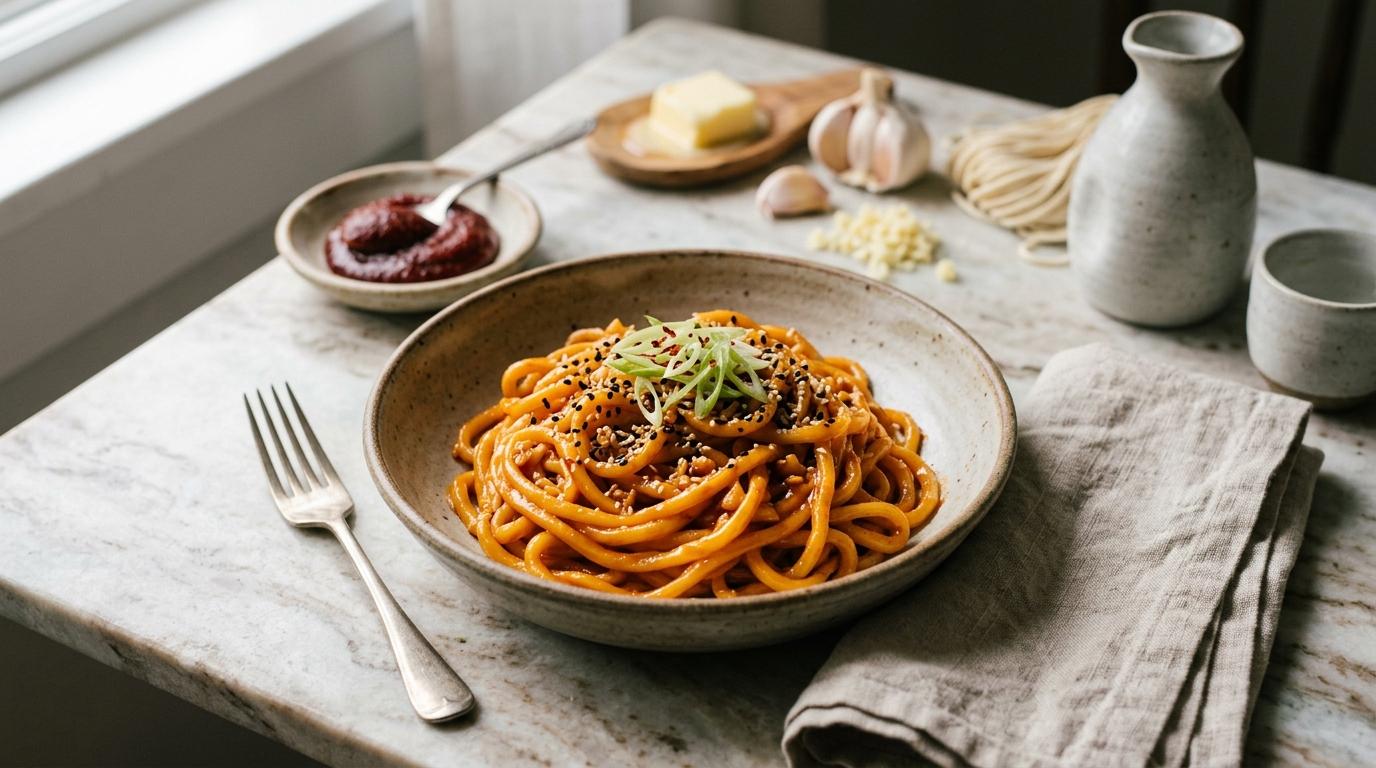
Featured Recipe
Gochujang Buttered Noodles
There's a specific kind of magic that happens when a pat of butter melts into a spoonful of gochujang. The sharp, funky heat of the fermented chili paste softens into something rounder and richer, and suddenly you're not sure if you're eating Korean food or Italian comfort food or something entirely new. That's exactly the appeal of gochujang buttered noodles — a dish that takes fifteen minutes, one pan, and a handful of pantry staples to make something that tastes like it took much longer. This recipe comes from Spoonsofflavor, and we've transformed it into an immersive cooking experience on Meez.
The Story Behind This Dish
Gochujang has been a cornerstone of Korean cooking for centuries, traditionally fermented over months in earthenware pots and used in everything from stews to marinades to the beloved bibimbap. But its journey into global kitchens over the past decade has sparked countless cross-cultural experiments, and butter noodles is one of the most successful. The concept borrows from the same logic as Italian aglio e olio or Korean-American army stew: take a bold, umami-packed base and let it cling to strands of pasta with the help of fat and starchy cooking water. Butter itself isn't traditional in Korean cuisine, but its addition here softens the fermented punch of gochujang, creating a sauce that feels indulgent rather than aggressive. It's the kind of dish that reflects how modern home cooks build flavor — not by sticking to one cuisine's rulebook, but by borrowing techniques that simply make sense together. You'll find versions of this on late-night noodle bars and food blogs alike, each one a little different but all chasing that same sweet-spicy-savory balance.
Key Ingredients Spotlight
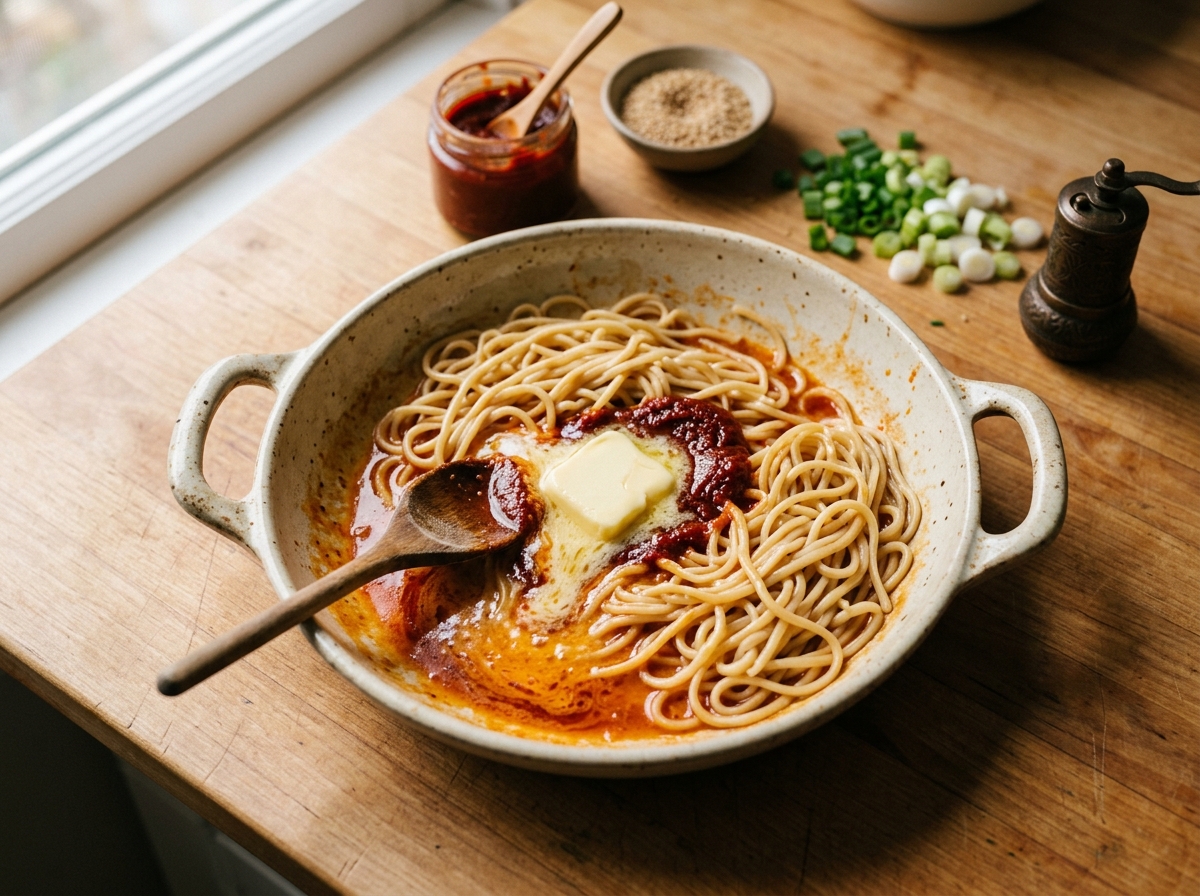
Gochujang is the heart of this dish — a fermented Korean chili paste made from glutinous rice, fermented soybeans, and red chili powder. It brings deep umami, gentle heat, and a subtle sweetness that regular hot sauce can't replicate. Look for it in the Asian foods aisle or at a Korean grocery store; once opened, it keeps for months in the fridge. Gochugaru, the coarse Korean chili flake, is optional but adds a smoky red color and extra kick if you like things spicier. Finally, don't skimp on real butter — it's what mellows the gochujang's sharpness and gives the sauce its glossy, clingy texture. If you want to explore more dishes built on similar bold flavors, check out the full Korean recipe collection for inspiration.
Pro Tips for Perfect Results
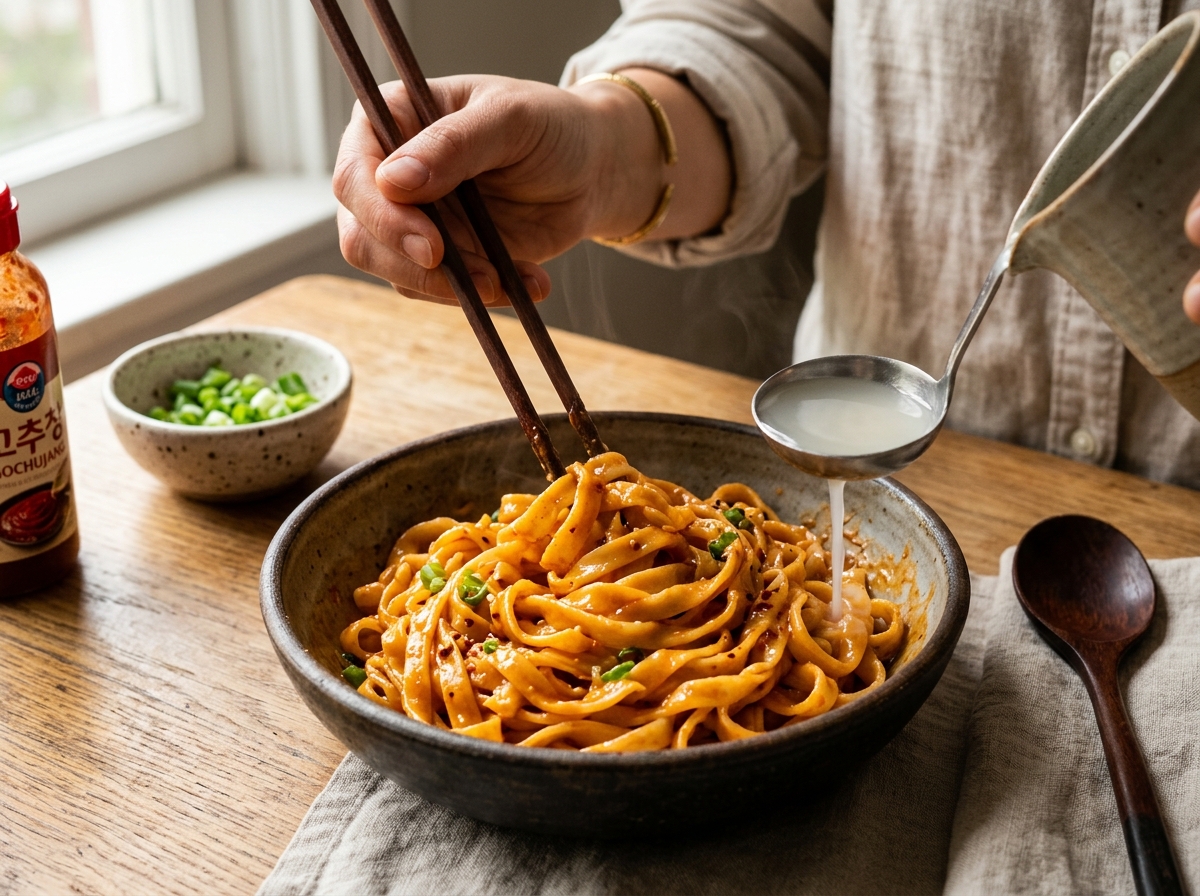
A few small moves separate good gochujang noodles from great ones. First, always reserve your pasta water before draining — that starchy liquid is what turns a thick paste into a silky, clingy sauce. Second, don't rush the garlic step; sautéing it in butter until just fragrant (not browned) builds a flavor base that supports everything else. Third, taste and adjust before adding the noodles. Gochujang brands vary in saltiness and heat, so a little extra honey or lime juice can make a big difference. Finally, add your lime juice and cilantro after turning off the heat — this keeps the citrus bright and prevents the herbs from wilting into bitterness.
Serving & Pairing Suggestions
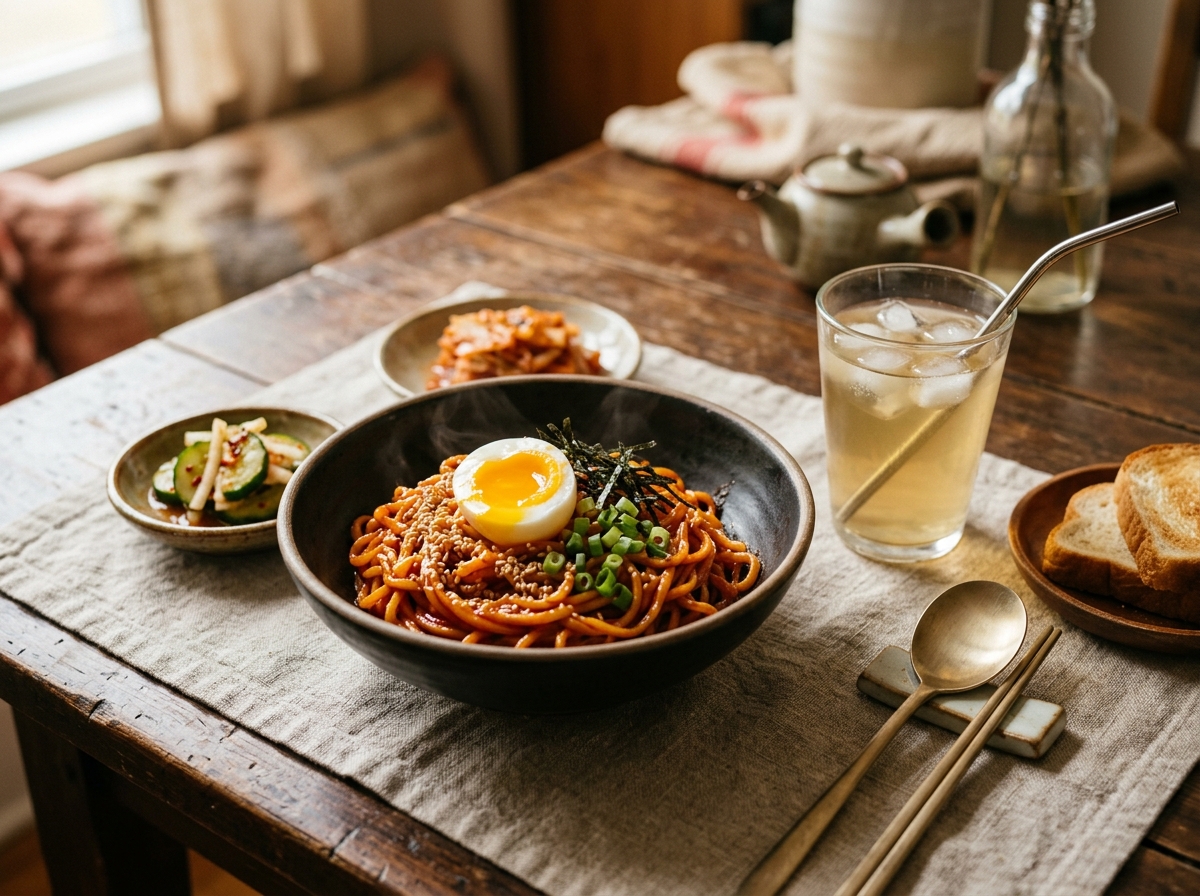
These noodles are satisfying enough to stand alone as a quick dinner, but they also play well with simple additions. A soft-boiled or fried egg on top adds richness, while a sprinkle of toasted sesame seeds or crushed peanuts brings welcome crunch. For a more complete meal, serve alongside quick-pickled cucumbers or a light cabbage slaw to cut through the buttery sauce. If you're leaning into the fusion spirit, a cold glass of barley tea or a crisp lager both pair nicely with the sweet heat of the dish.
Make It Your Own
This recipe is endlessly adaptable. Swap regular pasta for soba, udon, or even rice noodles for a different texture. Add protein like seared shrimp, crispy tofu, or shredded rotisserie chicken to make it a full meal. Vegetarians can boost heartiness with sautéed mushrooms or baby bok choy tossed in during the last minute of cooking. If you prefer a milder version, reduce the gochugaru and add an extra teaspoon of honey; for more heat, double the chili flakes and finish with a drizzle of chili oil.
Conclusion
Gochujang buttered noodles are proof that great cooking doesn't need to be complicated — just a few bold ingredients and a little confidence. Ready to make it yourself? View the full recipe and try Cook Mode on Meez for step-by-step guidance as you go.
Original Recipe Source
This article is inspired by a recipe from Spoonsofflavor.
Visit the original source for their version of this recipe and more great content.
Related Topics
Enjoyed this article? Share it with fellow food lovers!
Ready to Cook This Recipe?
Experience our immersive Cook Mode with step-by-step visual guidance, voice narration, and built-in timers.