

What is gyro meat? Origins, variations and what to serve
Gyro meat is seasoned meat cooked until crisp at the edges, then shaved thin and tucked into warm pita. Here is where it comes from, how it varies, and how to build a meal around the easy ground beef version.
Featured Recipe
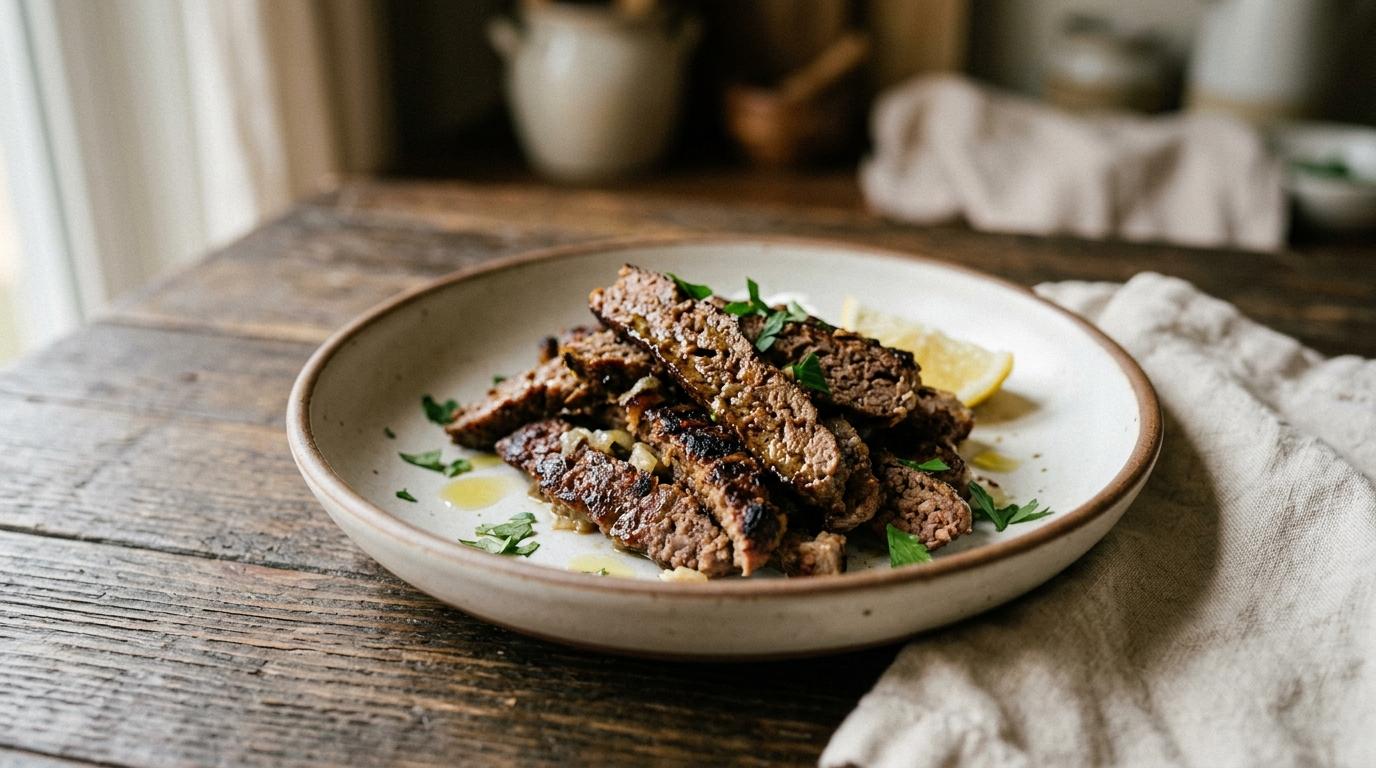
Easy Gyro Meat Recipe with Ground Beef (Viral Doner Kebab–Style)
Gyro meat is the heart of the Greek gyro: seasoned meat pressed into a dense mass, cooked until the outside browns and crisps, then shaved into thin, tender ribbons. It is savory and garlicky, with the dried-herb warmth of oregano, and every slice carries a mix of juicy middle and crackly edge. Folded into warm pita with tomato, onion and cool tzatziki, it is one of the most satisfying handheld meals there is.
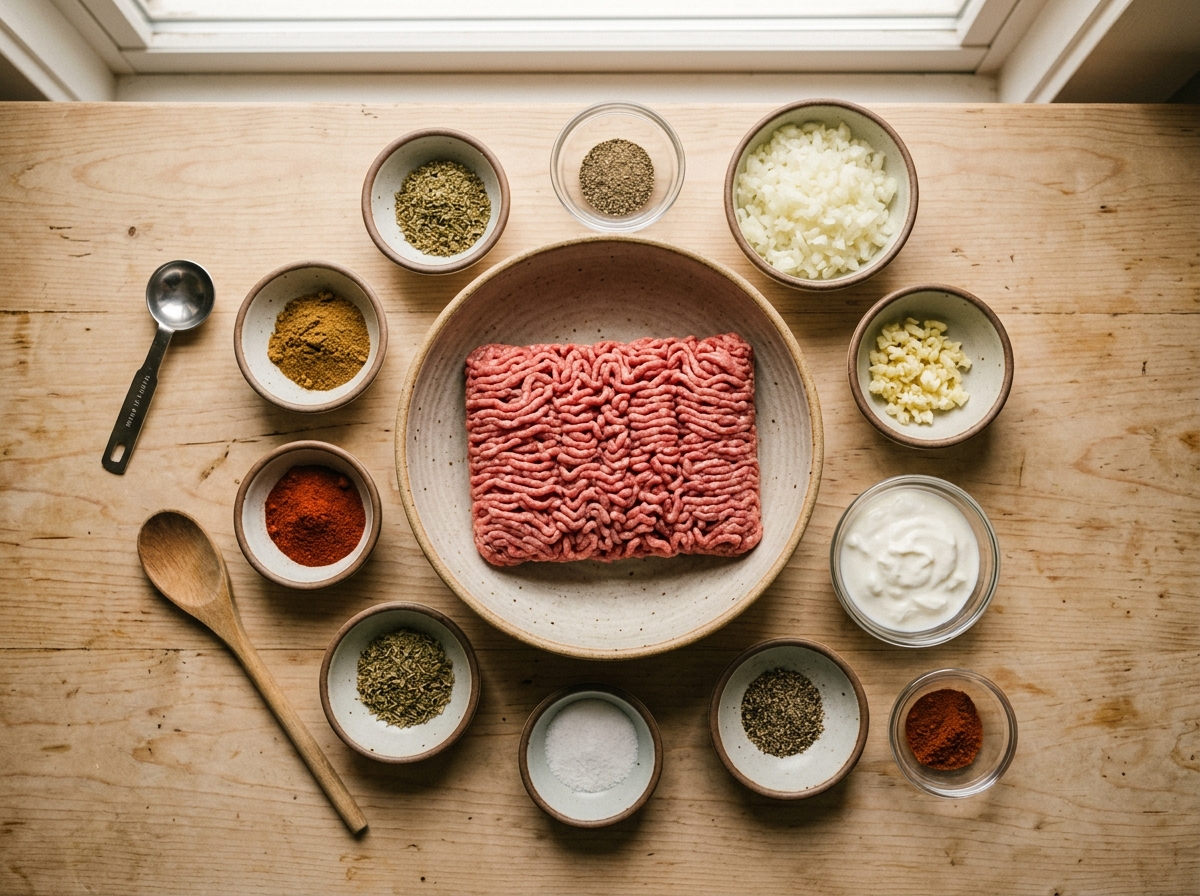
People love it because it tastes like something that took a rotating spit and a street-side shop, yet it eats like a casual sandwich. The version here skips the rotisserie entirely. It uses ground beef and a doner kebab–style method that gets you those shaved, crisp-edged slices from an ordinary home oven.
Where gyro comes from
The word itself helps. Gyro is tied to a Greek word meaning “to turn,” and it describes how the meat cooks, rotating beside the heat. Grilling meat on skewers is much older in the Eastern Mediterranean, and one source traces it back to the Mycenaean and Minoan periods. The stacked, vertical-spit style is a newer arrival.
Accounts agree that it reached Greece in the 1920s. Refugees from Constantinople and Smyrna brought it with them, and the Wikipedia entry connects this to the 1922–23 Greece–Turkey population exchange, when Greeks from Asia Minor carried their version of the dish to Greece. The older name döner was once used in Greece too, which shows the family resemblance.
From there, gyro grew up as city food. One Greek source describes it as a twentieth-century dish suited to fast, high-volume service, growing alongside souvlaki shops and late-night street food. The sandwich most Americans know has its own story: most food historians cited by What’s Cooking America say the name “gyro” and today’s sandwich are recent inventions that took shape in New York in the early 1970s. Gyro is related to döner kebab and shawarma, though those are stacked slices of meat rather than a minced loaf.
How gyro varies
In mainland Greece, pork became the dominant gyro meat, according to GetGreece, thanks to availability, cost and preference. Chicken gyro came later as an alternative. The classic Greek serving rolls the meat in pita with onion, tomato, lettuce, tzatziki and, often, fried potatoes right inside the wrap.
Beef or mixed-meat versions are common elsewhere, and the ground beef approach here belongs to that home-cook tradition. The modern twist is the method: the meat is rolled thin, baked, then broiled so the edges crisp, which mimics what a vertical spit does. Because the result is just great sliced meat, it also works well in warm tortillas, over rice bowls, or on a salad, which is why it fits comfortably alongside tacos.
When to make gyro meat
This is a strong choice for feeding a crowd. One batch makes a lot of sliced meat, and everyone builds their own: pita for some, tortillas for others, a pile of toppings in the middle of the table. It suits a game-day gathering, a backyard birthday, or a Sunday supper when the house is full.
It shines in summer, when tomatoes, cucumbers, bell peppers, red onions, mint and dill are at their best in the Northern Hemisphere and you want fresh, cooling toppings against the rich meat. It also earns a place on a cold October weeknight, since the cooking happens in the oven and the toppings can be simple.
What to serve with gyro meat
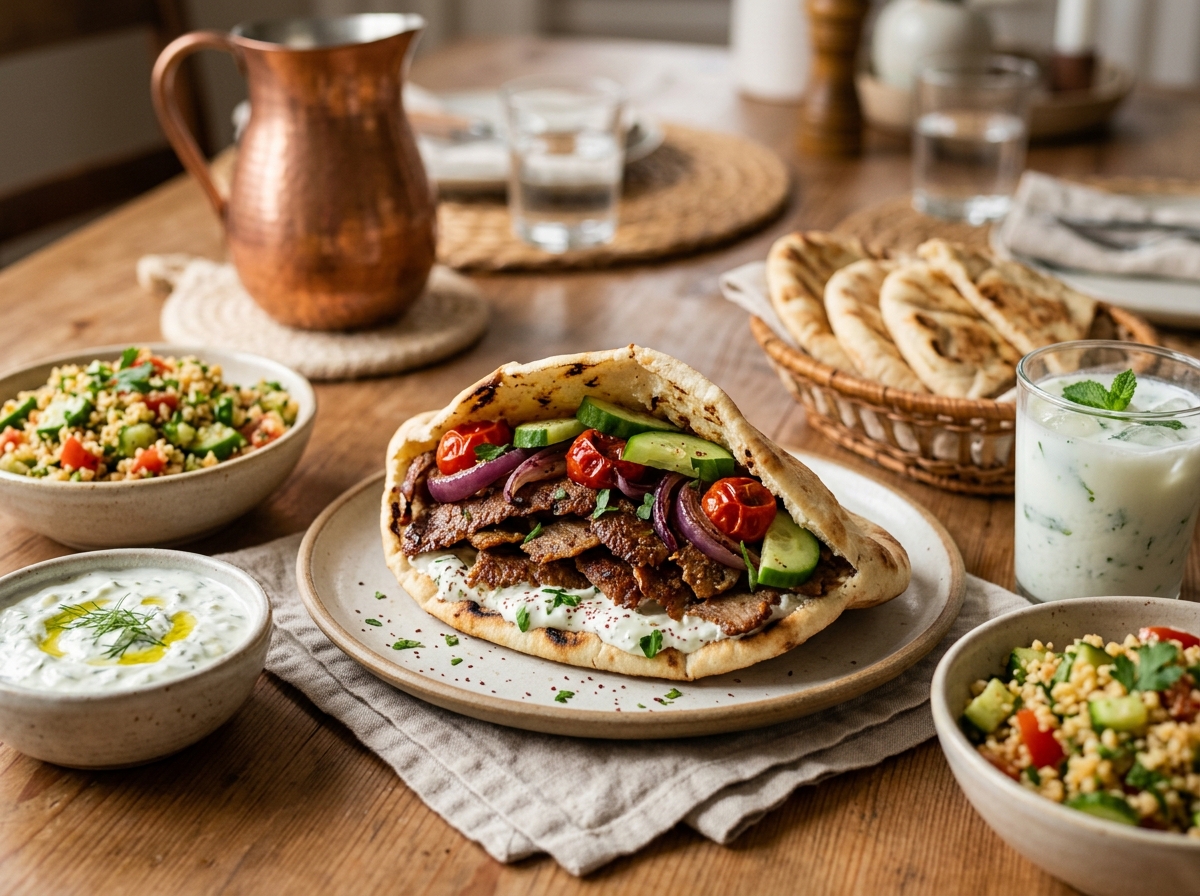
- Tzatziki. Cool, garlicky yogurt and cucumber is the natural counterweight to the seasoned beef.
- Greek salad. Tomato, cucumber, olives and feta add crunch and acidity, and the salad can be made ahead for a crowd.
- Roasted or fried potatoes. Tucked into the pita the Greek way, or served on the side, they make the meal more filling.
- Quick-pickled red onions. A sharp, tangy bite keeps each mouthful from feeling heavy.
- Something cold to drink. A crisp lager, lemonade or iced tea works for a casual table, and a chilled Greek white wine such as assyrtiko suits a more relaxed dinner.
Make it at home
The version we cook on Meez comes from Mom’s Dinner Bell. When you are ready, get the recipe, or cook it step by step in Cook Mode so your hands stay free while the meat does its work.
Questions about gyro meat
Where does the gyro come from?
Greece is the usual place of origin, with the vertical-spit style arriving in the 1920s through refugees from Constantinople and Smyrna. The sandwich and name as many Americans know them are often traced to New York in the early 1970s.
What is gyro meat made of?
In mainland Greece it is most often pork, with chicken as a later alternative. Our version uses ground beef, which suits a home oven.
How is gyro different from döner kebab and shawarma?
They are close relatives, all cooked on a vertical spit. Döner and shawarma are stacked slices of meat, while many gyros, including the American style, are made from a minced loaf.
Do I need a rotisserie to make gyro meat?
No. This method rolls the meat thin, bakes it, then broils it, which gives you crisp, shaved-style edges without any special equipment.
Sources
- Gyros
- Gyro Sandwich History (What's Cooking America)
- Facts About Gyros (Greco)
- Facts About Greek Gyro And Its History (GetGreece)
Last reviewed November 1, 2026. Written by the Meez editorial team with Meez Magic, from the sources above.
Original Recipe Source
This article is inspired by a recipe from Momsdinnerbell.
Visit the original source for their version of this recipe and more great content.
Related Topics
Enjoyed this article? Share it with fellow food lovers!
Ready to Cook This Recipe?
Experience our immersive Cook Mode with step-by-step visual guidance, voice narration, and built-in timers.