

What Is Creamy Chicken Ramen Soup? Origins and Serving Ideas
Creamy chicken ramen soup is a quick, Asian-inspired noodle bowl with a silky coconut milk broth, tender chicken and plenty of vegetables. Here is where its parts come from, how to vary it and what to serve alongside.
Featured Recipe
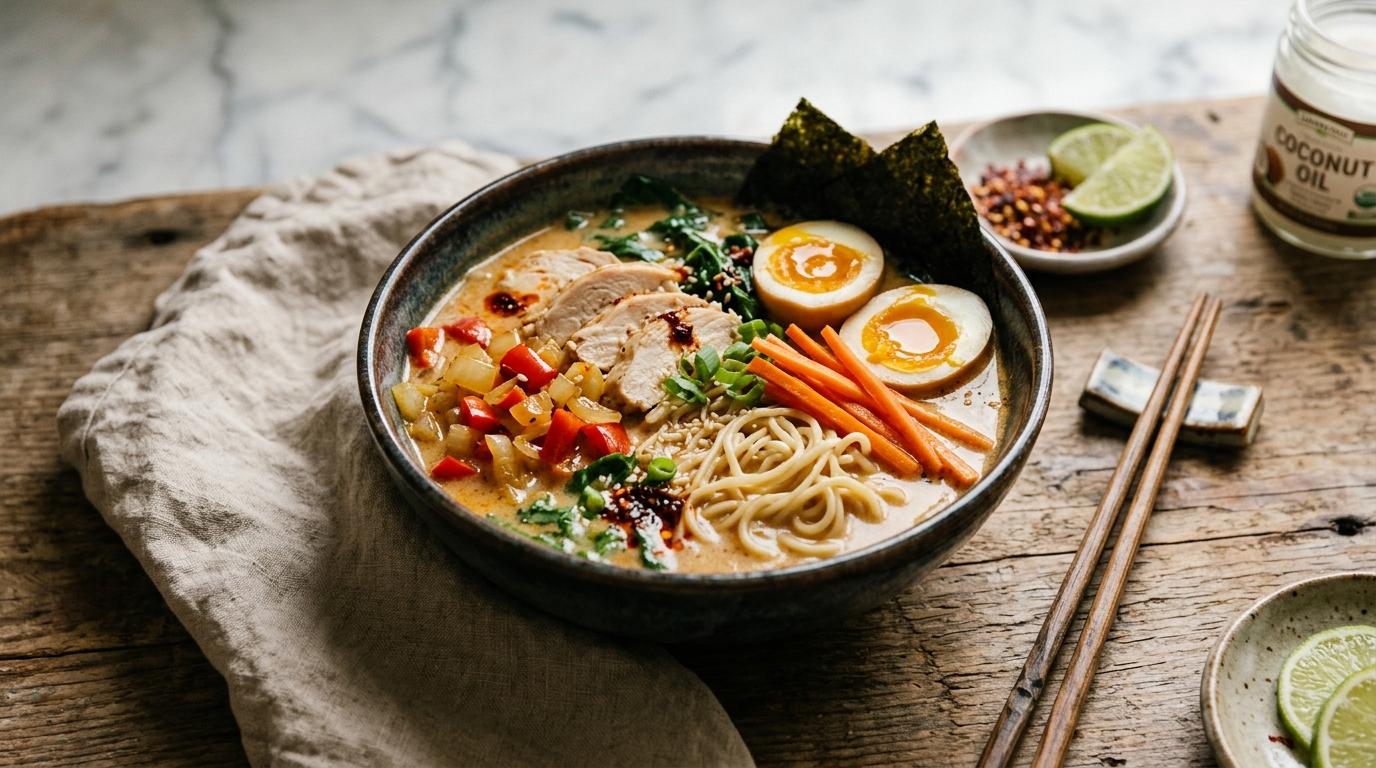
Creamy Chicken Ramen Soup
Creamy chicken ramen soup is an Asian-inspired noodle soup built on a familiar idea: chicken, noodles and vegetables in a warm broth. The difference is the coconut milk, which turns the broth pale, rounded and lightly sweet, and gives the springy ramen noodles something rich to carry.
People love it because it sits between two comfort foods. It has the reassurance of chicken noodle soup and the slurpable satisfaction of a ramen bowl, and it gets there without much fuss. The vegetables keep it fresh, the broth feels generous, and it is the kind of bowl you finish and immediately think about making again.
Where it comes from
This particular soup has no documented history. It reads as a modern home-kitchen creation, the sort of recipe that grew out of a cook wondering what coconut milk would do to chicken soup. We will not invent a backstory for it. But its parts do have real histories, and they explain why the bowl feels so natural.
Ramen itself is listed as originating in Yokohama Chinatown in Japan, as an adaptation of Chinese noodles. Most historians agree it is of Chinese origin and was brought to Japan by Chinese immigrants living in Yokohama in the late 19th century. Early versions were wheat noodles with Chinese-style roasted pork, and some immigrants sold them from portable stalls. By 1900, Japanese restaurants were serving their own versions, typically noodles, toppings and a broth seasoned with salt and pork bones.
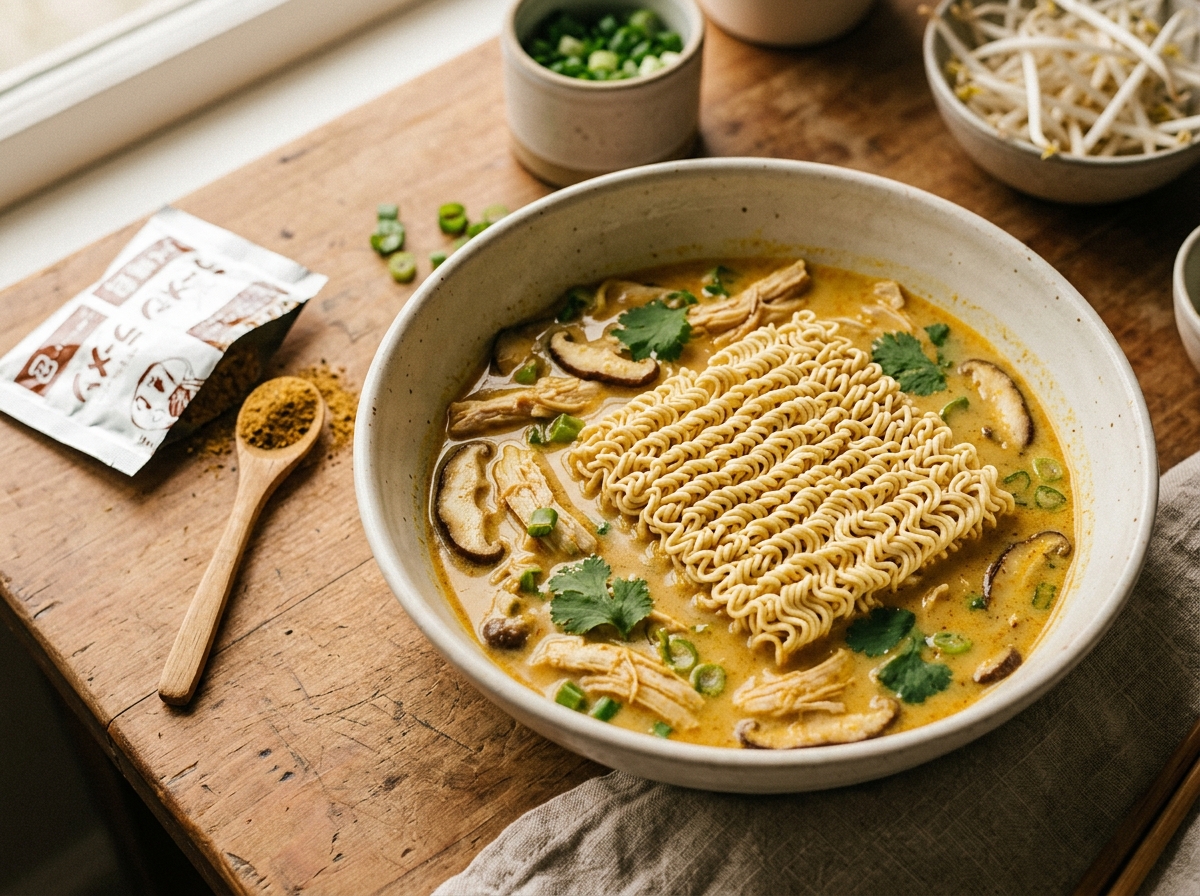
The chicken connection has its own landmarks. Tokyo-style ramen is known for a soy-flavored chicken broth. And in 1958, Momofuku Ando invented Chicken Ramen, also called Nissin Chikin Ramen and sold as Top Ramen in some countries, which is described as the first commercial success of instant noodles. Ando wanted a Chinese-style noodle soup people could make at home with only hot water. That packet is a big reason many home cooks think of ramen as something quick and made in their own kitchens.
How it varies
Traditional ramen is defined by its broth. Sapporo is known for rich miso ramen, Hakodate for salt ramen, and Kitakata for thick flat noodles in a pork-and-niboshi broth. Yokohama's Iekei ramen uses a soy-flavored pork broth. A coconut milk broth sits outside all of these, so think of this soup as ramen-inspired rather than a regional style.
Within that, the soup bends easily. Some cooks lean toward Southeast Asian flavors, since coconut broths are common in that part of the world, and add ginger, chili and a squeeze of lime. Others keep it closer to a classic chicken soup and let the vegetables lead. Common changes include:
- Protein: shrimp, tofu or leftover roast chicken in place of freshly cooked chicken.
- Vegetables: whatever is good and leafy or crisp, from bok choy and spinach to carrots and mushrooms.
- Toppings: a soft-boiled egg, sliced scallions, chili crisp or fresh herbs.
When to make it
This is a quick favorite, the soup for a weeknight when you want dinner on the table without a long list of chores. It also suits cozy comfort evenings: a cold January night, a day when someone is feeling run-down, or a Sunday supper that needs to be warm and uncomplicated.
It shines from late autumn through winter and into early spring, when hearty greens like kale and cabbage are at their best in the Northern Hemisphere, along with carrots, leeks and mushrooms. In October, it is a good use of the first cold-weather produce. By March, a handful of spring onions or tender greens brightens the bowl as the season turns.
What to serve with it
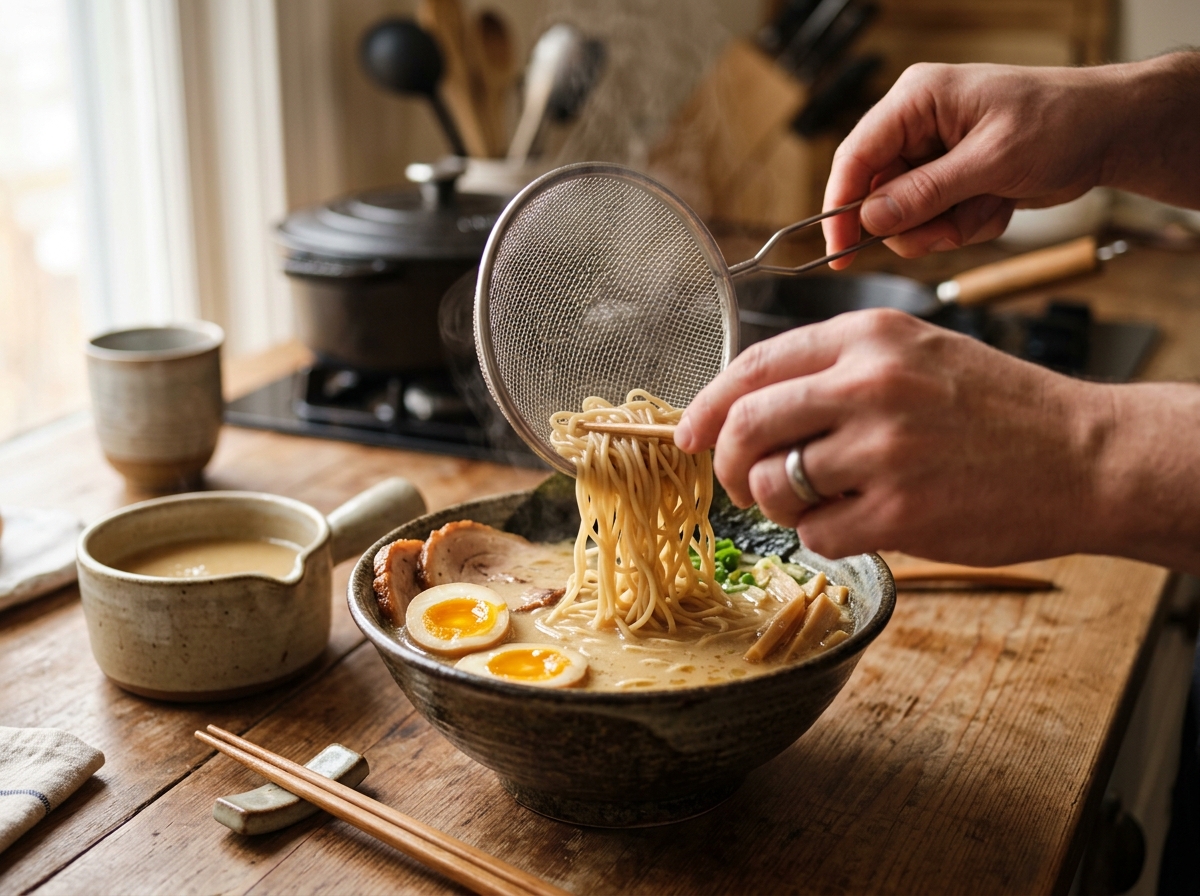
The soup is a full meal on its own, but a few simple additions round it out.
- Cucumber salad with rice vinegar: cool and sharp, it cuts through the richness of the coconut broth.
- Steamed or pan-fried dumplings: they make the meal heartier and work well for dipping or tucking into the bowl.
- Scallion pancakes or crusty bread: good for mopping up the last of the broth.
- Quick-pickled vegetables: radish or carrot adds crunch and acidity.
- Hot green tea or a crisp lager: either one keeps things clean and light between spoonfuls.
Make it at home
The version we cook on Meez comes from Delish. When you are ready, get the recipe for the full ingredients and method, or cook it step by step in Cook Mode if you would like your hands free and the instructions easy to follow at the stove.
Questions about creamy chicken ramen soup
Is creamy chicken ramen soup a traditional Japanese dish?
No. Ramen is Japanese, with Chinese roots, but a coconut milk chicken ramen soup is a modern, home-style adaptation without a documented origin. It borrows the noodles and the idea of a savory noodle bowl.
How is it different from regular ramen?
Traditional ramen is built around a specific broth, such as soy, miso or salt, and often comes with toppings like roasted pork. This soup uses coconut milk for a creamy, mild broth and leans on chicken and vegetables, so it is closer to a chicken noodle soup in spirit.
Is it the same as instant chicken ramen?
Not exactly. Instant Chicken Ramen was invented in 1958 by Momofuku Ando as a noodle soup you could make with hot water. This soup shares the chicken-and-noodle idea but is cooked from scratch with fresh ingredients and a creamy broth.
What should I serve with it?
Something crisp or crunchy works best, such as a cucumber salad, pickled vegetables or dumplings. Hot green tea or a light lager keeps the meal balanced.
Sources
Last reviewed November 9, 2026. Written by the Meez editorial team with Meez Magic, from the sources above.
Original Recipe Source
This article is inspired by a recipe from Delish.
Visit the original source for their version of this recipe and more great content.
Related Topics
Enjoyed this article? Share it with fellow food lovers!
Ready to Cook This Recipe?
Experience our immersive Cook Mode with step-by-step visual guidance, voice narration, and built-in timers.