

Cacio e Pepe: The Roman Pasta of Cheese and Pepper
Cacio e pepe looks deceptively simple: cheese, pepper, pasta. But turning those three ingredients into a glossy, creamy sauce is a technique worth mastering. Here's the story and the strategy behind Rome's favorite pasta.
Featured Recipe
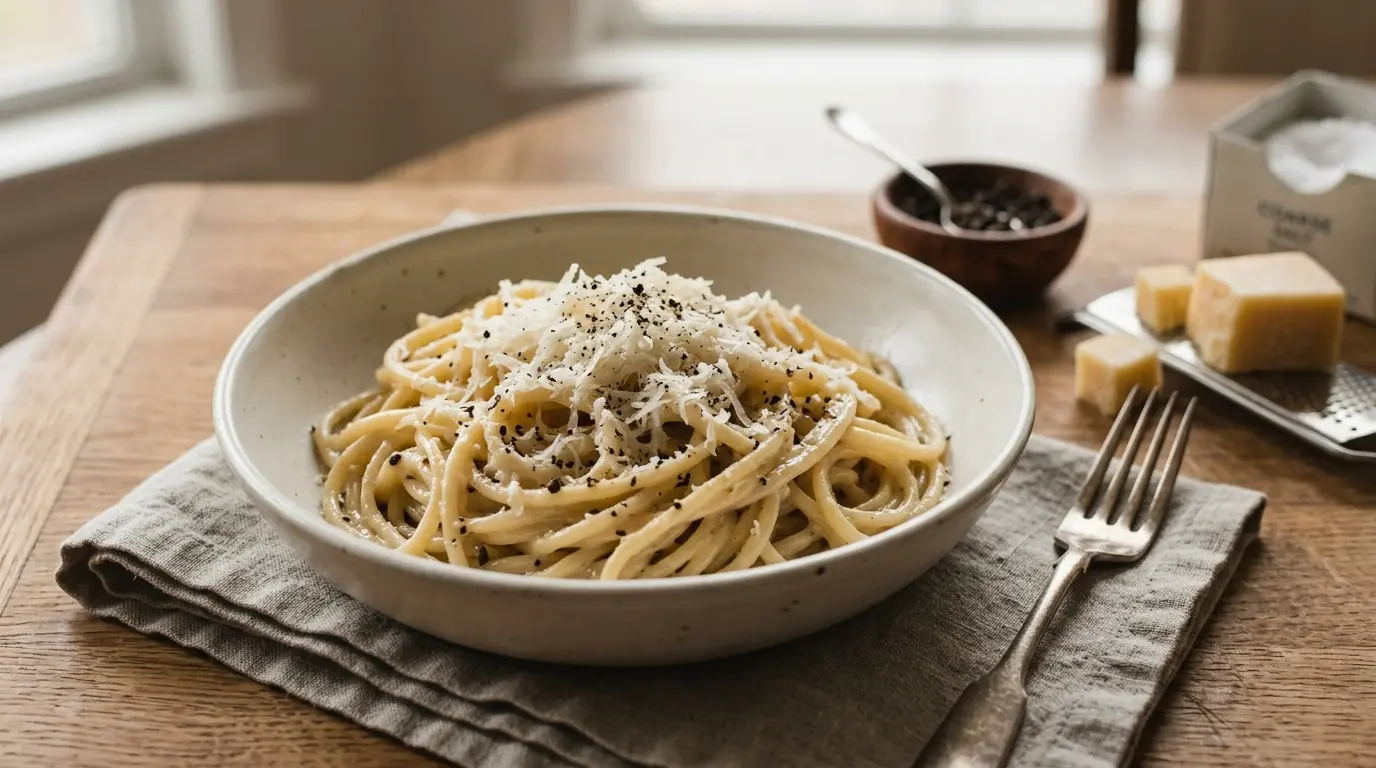
Cacio e Pepe
There's a reason cooks talk about cacio e pepe with a mix of reverence and mild dread. On paper, it's almost embarrassingly simple: cheese, pepper, pasta, water. In practice, it's one of the trickiest dishes to get right, a test of timing and technique disguised as a three-ingredient recipe. This recipe comes from Americastestkitchen, and we've transformed it into an immersive cooking experience on Meez, walking you through the exact strategy that turns starchy pasta water and grated cheese into a sauce silky enough to coat every strand without clumping or seizing.
The Story Behind This Dish
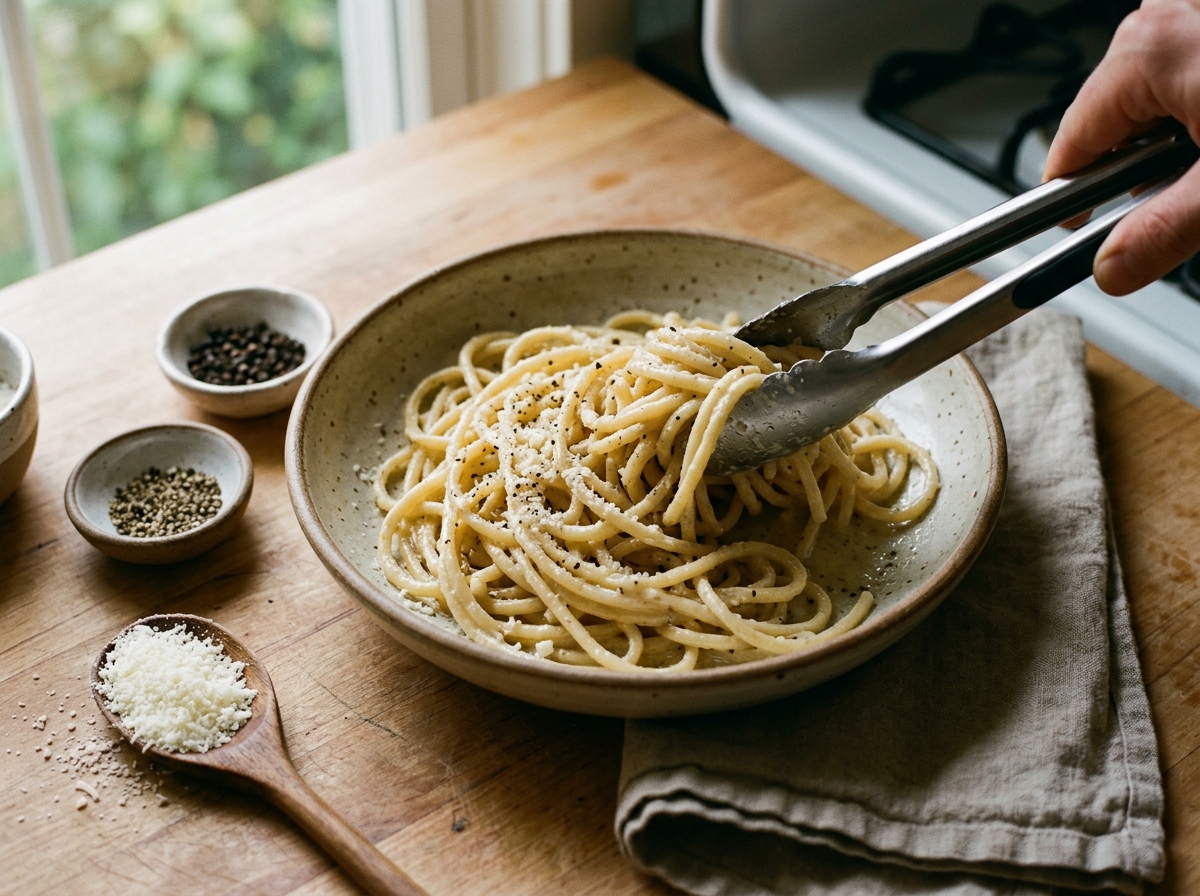
Cacio e pepe—literally "cheese and pepper" in the Roman dialect—belongs to a trio of humble Roman pasta dishes born from shepherd culture, alongside amatriciana and gricia. Shepherds spending long stretches in the hills needed food that traveled well and didn't spoil: hard sheep's milk cheese and dried pasta fit the bill, and black pepper added warmth and a hint of spice to an otherwise plain meal. Over generations, this practical shepherd's supper found its way into Roman trattorias, where it became a point of culinary pride precisely because of its difficulty. Any cook can follow a long ingredient list; only a skilled one can coax three ingredients into something transcendent. Today it's considered a litmus test for Italian home cooks and professional chefs alike, and countless variations exist across Rome, each defending their own ratio of pepper to cheese as the "authentic" one.
Key Ingredients Spotlight
Pecorino Romano is non-negotiable here—its sharp, salty, slightly funky flavor is the backbone of the dish, and its high fat content helps it melt into a sauce rather than clump. Look for a wedge (not pre-shredded) for the best melt and flavor. Black peppercorns, toasted and freshly cracked, aren't just a seasoning here—they're a co-star, delivering a warm, almost citrusy heat that balances the cheese's saltiness. Skip pre-ground pepper if you can; the aroma released from toasting whole peppercorns makes a noticeable difference. Finally, starchy pasta water functions as the emulsifier that holds everything together, so don't be tempted to swap in plain water.
Pro Tips for Perfect Results
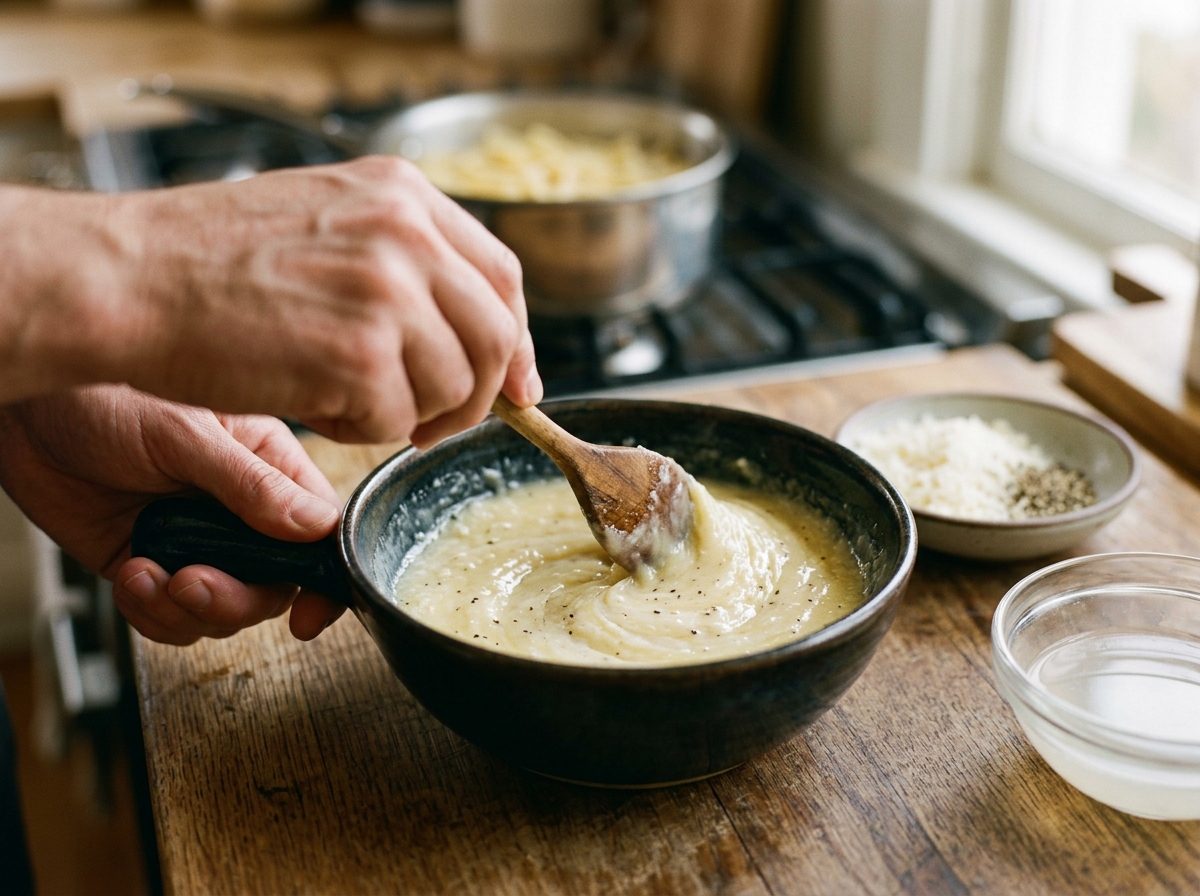
The biggest risk in cacio e pepe is the cheese seizing into a clumpy, gluey mess instead of a smooth sauce—and there are a few tricks to avoid that fate. First, blending the Pecorino with hot water into a loose paste before it ever meets the pasta gives you a stable emulsion base, rather than relying on hot pasta alone to melt raw cheese. Second, use thick spaghetti; it holds sauce better and gives you more surface area for that glossy coating to cling to. Third, work quickly and off direct heat once the pasta and cheese paste meet—too much residual heat can cause the proteins in the cheese to break and turn grainy. Finally, always reserve more pasta water than you think you'll need. It's your adjustment tool for consistency, and it's much easier to add a splash than to fix a sauce that's gone stiff.
Serving & Pairing Suggestions
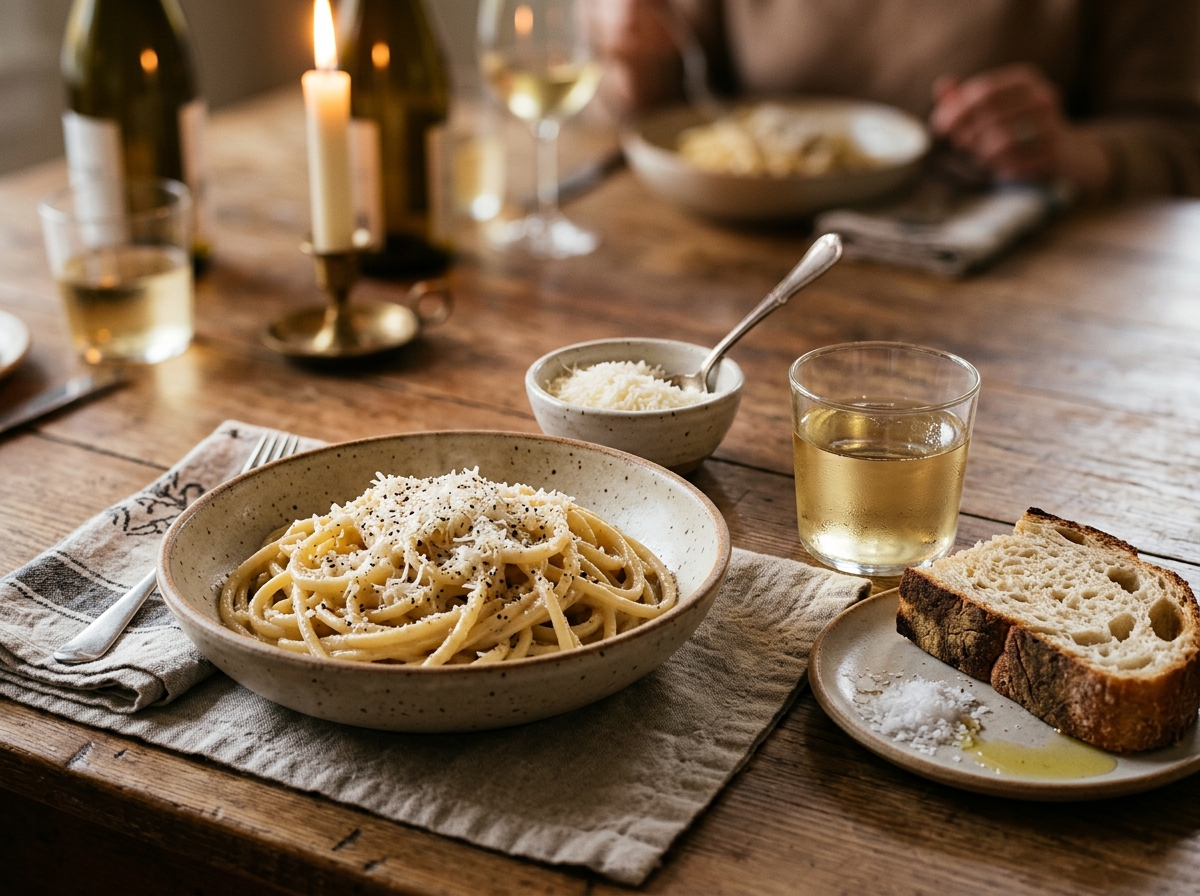
Cacio e pepe is best enjoyed the moment it hits the table—the sauce firms up quickly as it cools, so warmed bowls are essential. Serve it as a primo course, Roman-style, with extra grated Pecorino and reserved cracked pepper passed at the table so everyone can adjust to taste. A crisp, light-bodied white wine like Frascati or a dry Vermentino cuts through the richness beautifully. Keep the rest of the meal simple: a peppery arugula salad, some crusty bread, or a plate of roasted vegetables rounds things out without competing with the pasta's starring role.
Make It Your Own
While purists will insist on Pecorino Romano and black pepper only, there's room to play once you've mastered the base technique. Some cooks add a touch of Parmigiano-Reggiano alongside the Pecorino for a milder, nuttier edge. A finishing drizzle of good olive oil or a few cracks of pink peppercorn can add subtle variation without straying too far from tradition. If you want to explore other dishes in this same comforting, ingredient-driven spirit, browse more American recipes for inspiration on pantry-based cooking that punches above its ingredient count.
Conclusion
Cacio e pepe rewards patience and attention more than any fancy equipment or hard-to-find ingredients—it's proof that great cooking is often about technique, not complexity. View the full recipe and try walking through it step-by-step in Cook Mode, where timing cues make all the difference between a silky sauce and a clumpy one. Give it a try tonight.
Original Recipe Source
This article is inspired by a recipe from Americastestkitchen.
Visit the original source for their version of this recipe and more great content.
Related Topics
Enjoyed this article? Share it with fellow food lovers!
Ready to Cook This Recipe?
Experience our immersive Cook Mode with step-by-step visual guidance, voice narration, and built-in timers.