

History of Chili: Where This Texas Classic Really Began
Chili is a deep red, slow-simmered American bowl with a murky, much-argued past. Here is where it likely came from, how it varies, and when it belongs on your table.
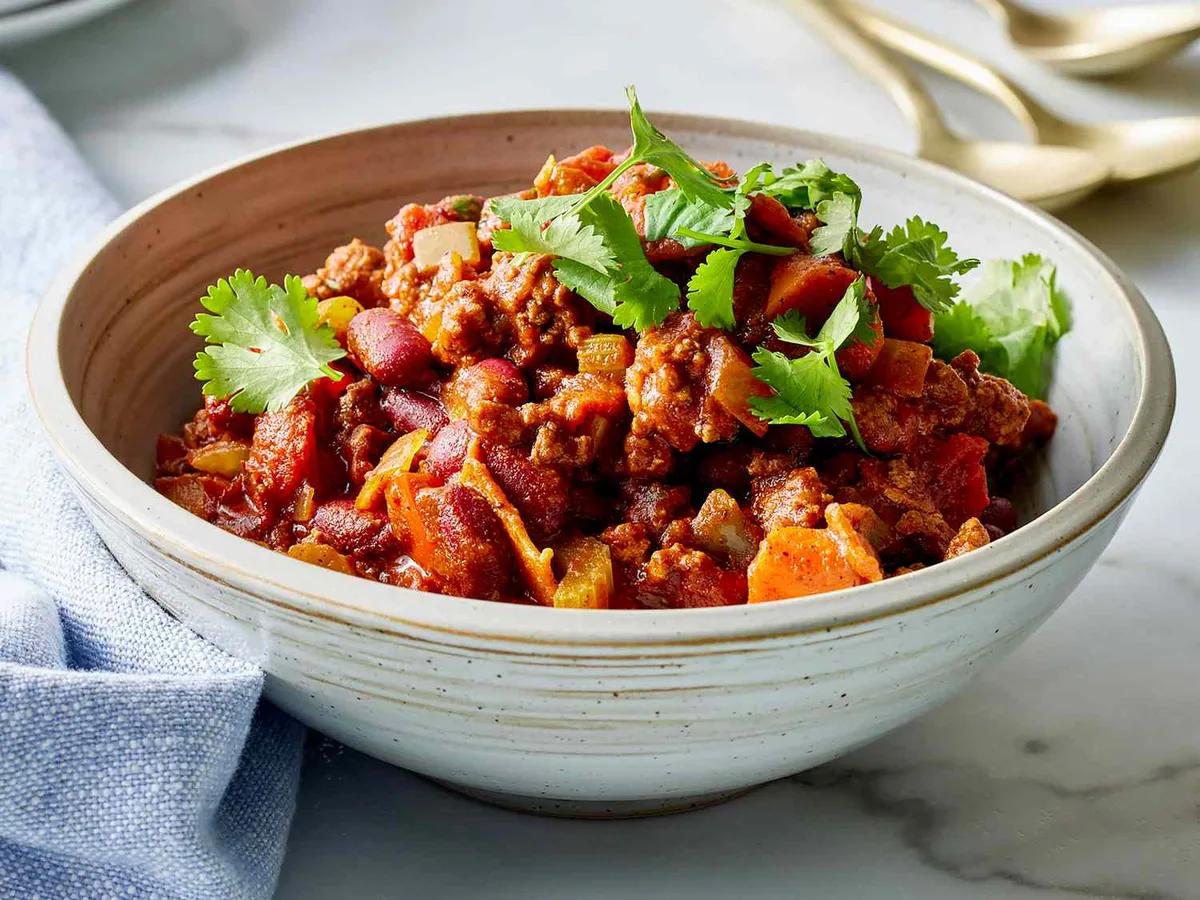
Featured Recipe
Award-Winning Chili
Award-winning chili is the American bowl that stays on the stove all afternoon and fills the house with the smell of toasted spices and simmering meat. It is thick, deep red and savory, with a slow heat that builds as you eat. A good one clings to the spoon and asks for something crunchy or creamy on top.
People love chili because it is generous and forgiving, and because it improves with time. A pot made today is good, and the same pot reheated tomorrow is usually better. That is why it turns up at cook-offs, tailgates and family tables across the country, and why everyone has an opinion on how it should be made.
Where chili comes from
Ask where chili began and you will get a lively argument. Texas Monthly notes that its genesis is nearly impossible to trace, and that W.C. Jameson's book Chili From the Southwest lists eleven competing origin theories. They include California-bound gold prospectors, Texas convicts and cowboys, and a legend about a teleporting Blue Nun. The Chili Appreciation Society International says there are about as many theories as there are family recipes.
The strongest thread leads to San Antonio. Saveur says chili con carne was invented there, and Texas named it the official state dish in 1977. The earliest similar mention dates from 1828, when a traveler to San Antonio described poor residents eating a hash with nearly as many pieces of pepper as meat, all stewed together. By the 1880s chili was strongly identified with the city, where the Chili Queens sold it in the evenings. Wikipedia adds that the dish largely came from working-class Tejana and Mexican women, who sold inexpensive chili-flavored beef stew in casual chili joints.
The dish then traveled. The San Antonio Chili Stand at the 1893 Columbian Exposition in Chicago is credited with giving many Americans their first taste. According to Adventure.com, the original Texan version had no beans or tomato and was made mainly from dried pepper paste and chuck. Today's bowl, with its longer list of ingredients, is a later evolution.
How chili varies
The biggest dividing line is beans. Purists argue a true Texas bowl is all meat and chile, in keeping with those early versions, while plenty of home cooks add beans and tomatoes for a heartier pot. Meat varies too. Ground beef is the everyday choice, but cubed chuck, venison and turkey all have their fans, and CASI points out that red meat and wild chile peppers were plentiful on the Texas plains.
Beyond that, the variations are endless. Some cooks keep the heat mild and the sauce thick, and others build a smoky, fiery pot. White chili with chicken, vegetarian versions and sweeter, spiced regional styles all have followings. Chili cook-offs only sharpen the debate, since every competitor believes their own pot is the right one.
The traditional approach is a patient simmer that lets the spices and meat come together. The modern twist is usually in the toppings or a splash of something unexpected, like coffee or a bottle of dark beer.
When to make it
Chili suits a Sunday dinner. Start it after lunch, let it simmer while you do other things, and sit down to it at dusk. It is also the definition of cozy comfort, the sort of meal you want after a cold walk or a gray, rainy afternoon.
It is one of the best dishes for feeding a crowd, too. One large pot can handle a football Saturday, a neighborhood potluck or a houseful of guests, and you can set out toppings so everyone builds their own bowl. Because it holds well on low heat, you are not stuck in the kitchen.
Chili shines from October through February. In the Northern Hemisphere, autumn brings apples, pumpkins, winter squash, sweet potatoes and the last of the peppers, all of which pair well with a bowl of chili at the table. A weeknight in late October, when the evenings turn dark early, is just about perfect.
What to serve with it
- Cornbread. Its sweetness and crumbly texture soak up the sauce and balance the heat.
- Shredded cheddar, sour cream and sliced scallions. Cool, creamy toppings soften the spice and add freshness.
- Tortilla chips or crackers. They add crunch, and you can scoop with them instead of a spoon.
- A crisp green salad or coleslaw. Something cold and sharp cuts through a rich, hearty bowl.
- A cold lager or iced tea. Both refresh the palate between spoonfuls.
Make it at home
The version we cook on Meez comes from Allrecipes, where it took second place at a local cook-off. It is easy to adjust if the pot runs too thick, and it tastes even better the next day. Get the recipe or cook it step by step in Cook Mode.
Questions about chili
Where did chili originate?
Most accounts place its origins in San Antonio, Texas, where the Chili Queens sold it in the 1880s. The full story is disputed, though, and one author counts eleven competing theories.
Is chili supposed to have beans?
It depends on who you ask. According to Adventure.com, the original Texan chili had no beans or tomato, but many modern American versions include both.
What is chili con carne?
The name means chili with meat. It is a stew of meat and chile peppers that is closely tied to Texas and was named the state dish in 1977.
What should I serve with chili?
Cornbread is the classic partner, along with toppings like cheese and sour cream. A simple salad and a cold drink round out the meal.
Sources
- Where Chili Comes From
- The Bloody San Antonio Origins of Chili Con Carne
- Chili con carne
- History of Chili - CASI - Chili Appreciation Society International
- The chili con carne story: How a humble one-pot became San Antonio's signature dish
Last reviewed October 22, 2026. Written by the Meez editorial team with Meez Magic, from the sources above.
Original Recipe Source
This article is inspired by a recipe from Allrecipes.
Visit the original source for their version of this recipe and more great content.
Related Topics
Enjoyed this article? Share it with fellow food lovers!
Ready to Cook This Recipe?
Experience our immersive Cook Mode with step-by-step visual guidance, voice narration, and built-in timers.