

Authentic Thai Pad See Ew: The Smoky Noodle Secret
Chewy wide rice noodles, charred edges, and a savory-sweet sauce make pad see ew Thailand's beloved street food dish. Learn the technique behind that smoky wok flavor and try it yourself.
Featured Recipe
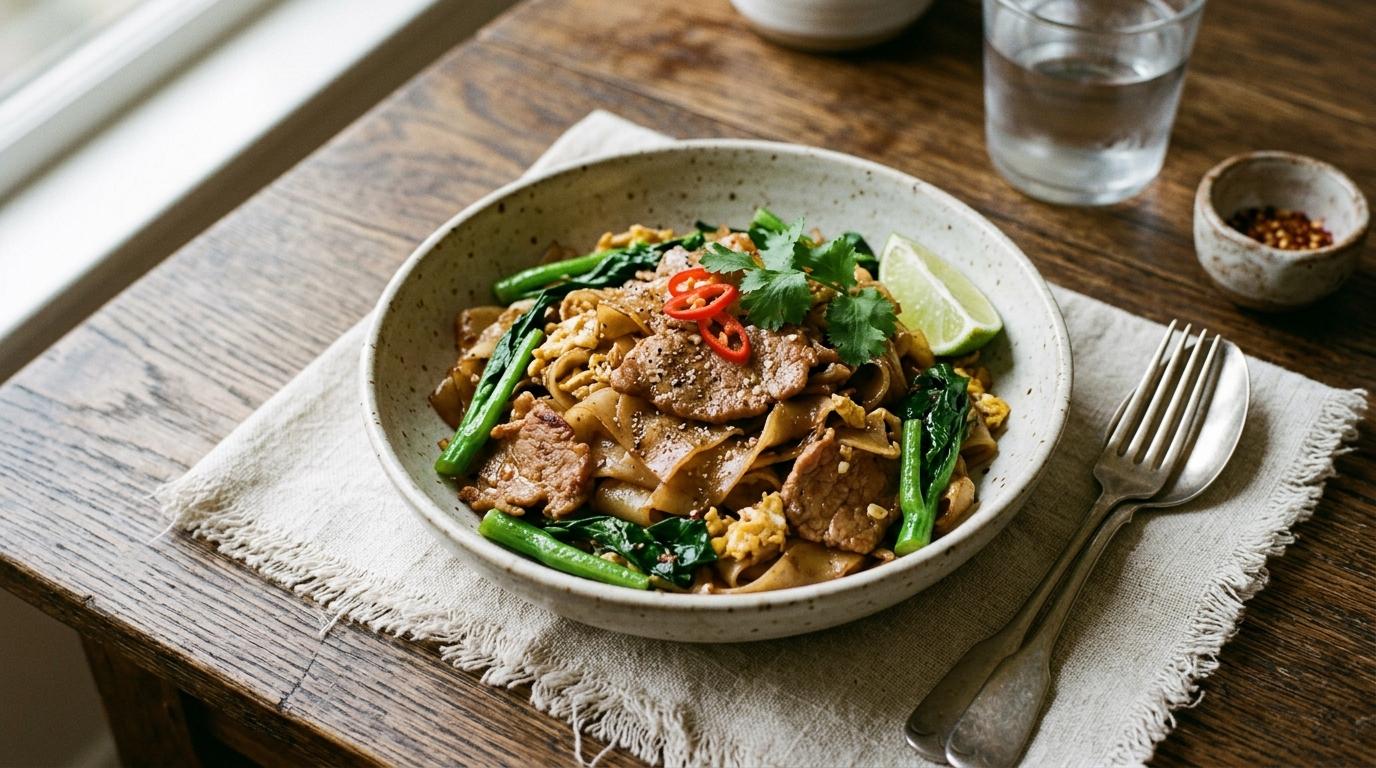
Authentic Thai Pad See Ew ผัดซีอิ้ว
There's a specific kind of smoky, slightly charred aroma that hits you when you walk past a Thai street food stall making pad see ew, and it's nearly impossible to replicate unless you understand what's actually happening in that scorching hot wok. This beloved Thai noodle dish — wide, chewy rice noodles tossed with Chinese broccoli, egg, and your protein of choice in a deeply savory sauce — has earned cult status far beyond Thailand's borders. This recipe comes from Hot-thai-kitchen, and we've transformed it into an immersive cooking experience on Meez.
The Story Behind This Dish
Pad see ew, which translates roughly to "stir fried with soy sauce," traces its roots to the Chinese immigrant communities who settled in Thailand generations ago, bringing with them wok cooking techniques and wide rice noodle traditions from southern China. Over time, Thai cooks adapted the dish with local seasonings like fish sauce and Golden Mountain sauce, folding it into the fabric of everyday Thai eating.
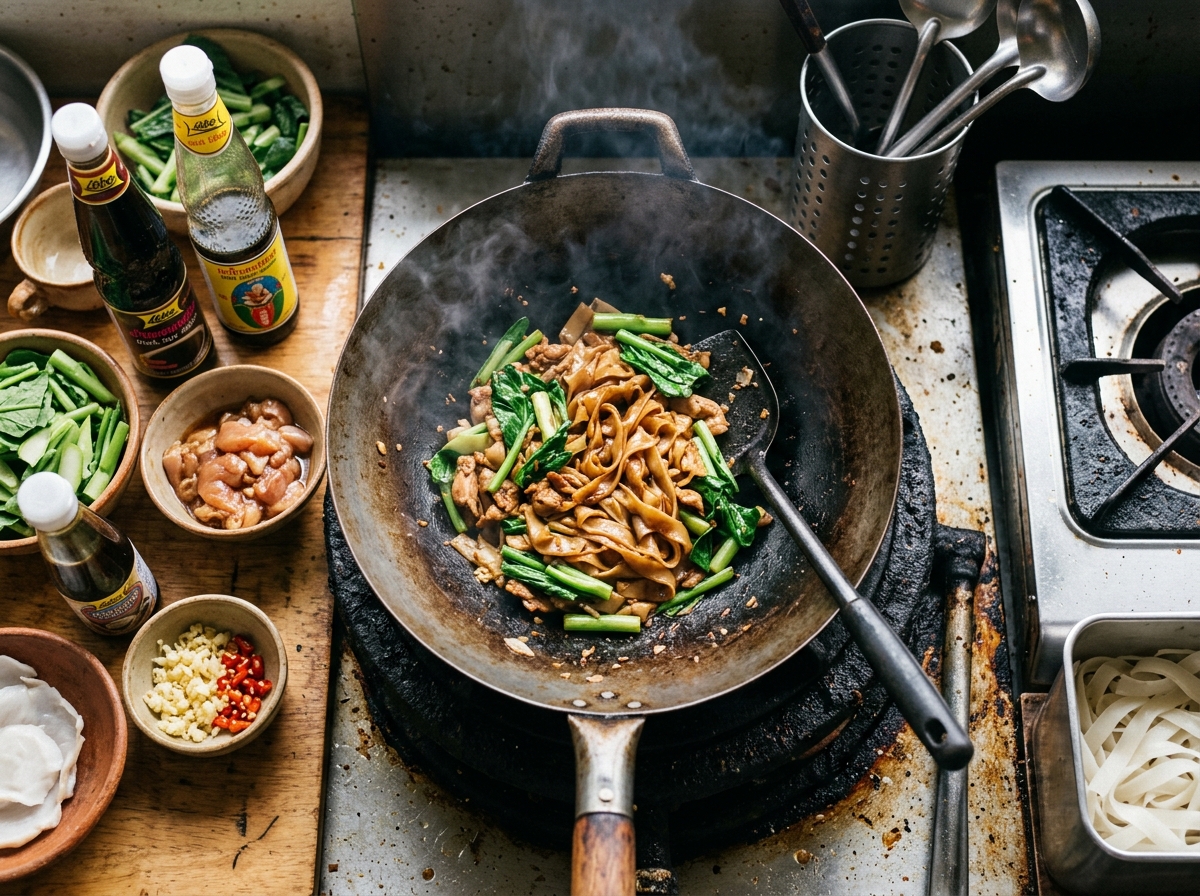
You'll find versions of this dish across Southeast Asia — Cambodia has its own take, and it shares DNA with dishes like Chinese chow fun. But in Thailand, pad see ew occupies a particular niche: it's humble comfort food, sold from carts and shophouse kitchens, often cooked one portion at a time in a blazing hot wok that's been seasoned by thousands of stir fries before it. That single-portion cooking method isn't just tradition for tradition's sake — it's essential to getting the wok hot enough to properly char the noodles, something that's nearly impossible when cooking in bulk.
Key Ingredients Spotlight
The soul of this dish lives in two places: the noodles and the sauce blend. Fresh wide rice noodles (sometimes labeled ho fun) have a pillowy, chewy texture that dried noodles simply can't replicate — look for them in the refrigerated section of an Asian grocery store, and use them the same day if possible since they dry out and become brittle. Chinese broccoli, or gai lan, brings a slightly bitter, mineral crunch that balances the sauce's sweetness; broccolini is the closest substitute if you can't find it. Finally, Thai black soy sauce is what gives pad see ew its signature deep color and subtle molasses-like sweetness — don't skip it for regular soy sauce, as the flavor profile shifts noticeably.
Pro Tips for Perfect Results
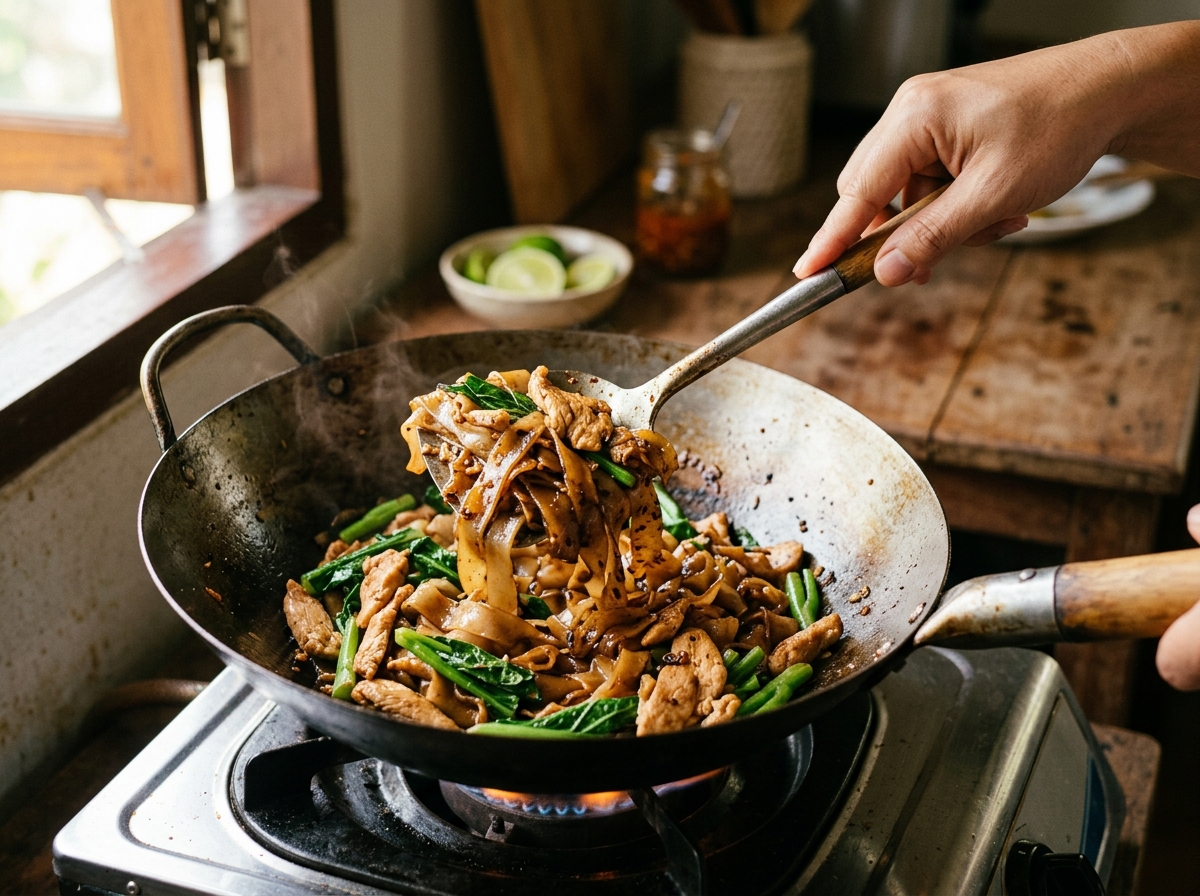
The single biggest mistake home cooks make with pad see ew is overcrowding the pan. Cooking noodles in small, individual batches (as the original method dictates) allows the wok to stay screaming hot, which is what produces those coveted charred, smoky bits — a phenomenon Thai and Chinese cooks call "wok hei," or the breath of the wok. If you dump in double portions, the pan temperature drops and you end up steaming your noodles instead of searing them.
Second, resist the urge to stir constantly. Once the noodles are coated in sauce, let them sit untouched for 15-30 seconds at a time so they actually make contact with the hot metal and char. Third, use a metal spatula but handle it gently — fresh rice noodles tear easily, and torn noodles turn to mush rather than staying delightfully chewy. Finally, keep your protein's juices separate when adding it back to the noodles; those juices will make your char go soggy in seconds.
Serving & Pairing Suggestions
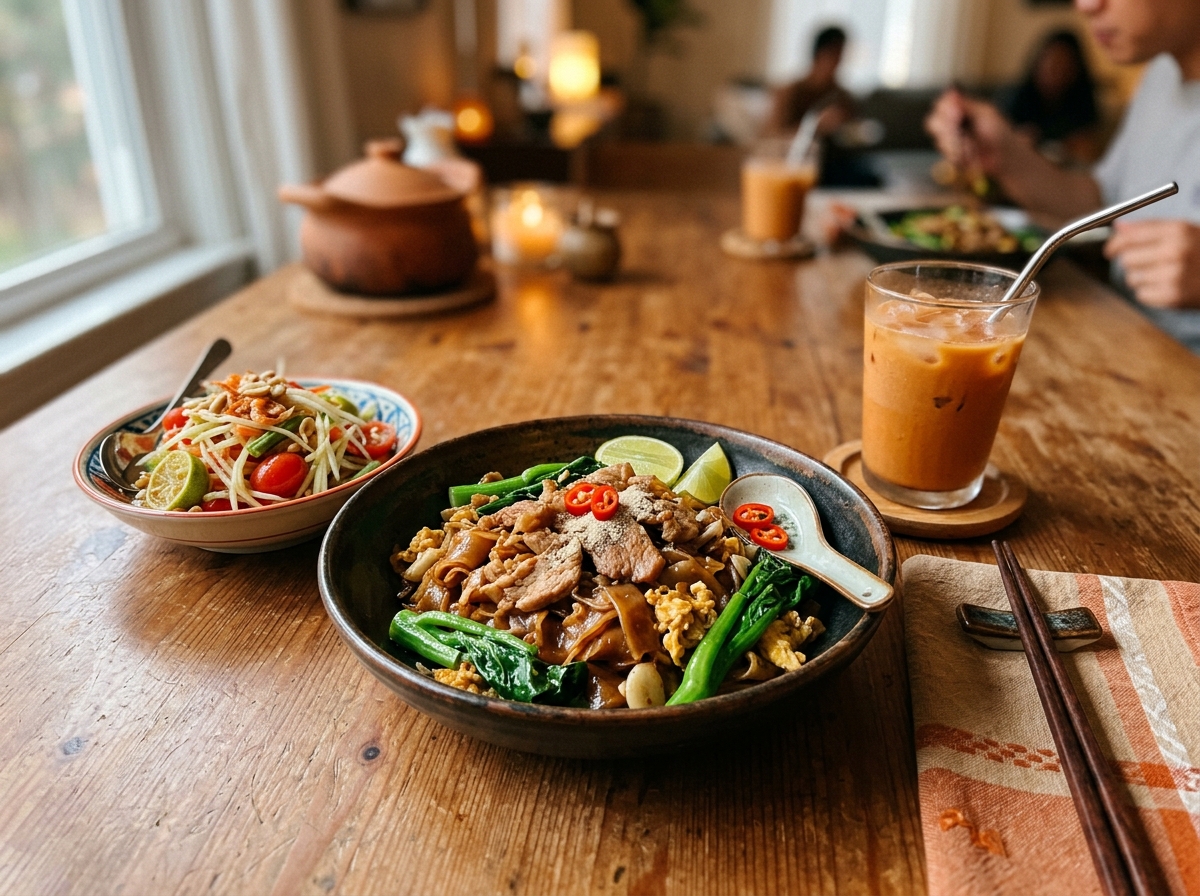
Pad see ew is typically enjoyed on its own as a complete meal, but a small side of Thai chili vinegar (prik nam som) is essentially non-negotiable for those who like a bright, tangy kick to cut through the richness. A sprinkle of ground white pepper right before serving adds a warm, slightly floral heat that's distinct from black pepper's sharpness.
If you're building out a full Thai spread, pair it with a light, herbaceous salad like som tum (green papaya salad) or a clear soup such as tom jab chai to balance the noodle dish's richness. A cold Thai iced tea or a crisp lager also works beautifully alongside the smoky, savory flavors.
Make It Your Own
While chicken, pork, and beef are all traditional protein choices, shrimp and tofu make excellent substitutes for a lighter or vegetarian version — just remember to skip the marinating soy sauce if you go that route, since those proteins don't need the extra seasoning time. Vegetarians can also swap oyster sauce for a mushroom-based vegetarian stir fry sauce without losing much depth.
Feel free to adjust the sweetness to your taste; some cooks prefer a punchier, saltier profile with less sugar, while others lean into the caramelized sweetness that develops as the noodles char. If Chinese broccoli isn't available, baby bok choy or even broccolini will work in a pinch, though the flavor will shift slightly.
Conclusion
Pad see ew rewards patience and high heat more than complicated technique, and once you understand the rhythm of searing, charring, and tossing, it becomes a weeknight staple you'll crave often. View the full recipe and follow along step-by-step with Meez's interactive Cook Mode, which walks you through timing each component so your noodles come out perfectly charred every time. Explore more dishes on our Thai recipe collection and bring a taste of Bangkok's street food scene into your own kitchen.
Original Recipe Source
This article is inspired by a recipe from Hot-thai-kitchen.
Visit the original source for their version of this recipe and more great content.
Related Topics
Enjoyed this article? Share it with fellow food lovers!
Ready to Cook This Recipe?
Experience our immersive Cook Mode with step-by-step visual guidance, voice narration, and built-in timers.