

Are Croissants French? The Story Behind the Gluten Free Kind
The croissant is French by reputation but Austrian by ancestry, and a gluten free one can still shatter into buttery layers. Here is where it comes from, how it varies, and when it earns a spot on your table.
Featured Recipe
Gluten Free Croissant Recipe | Buttery, Flaky, and Simple!
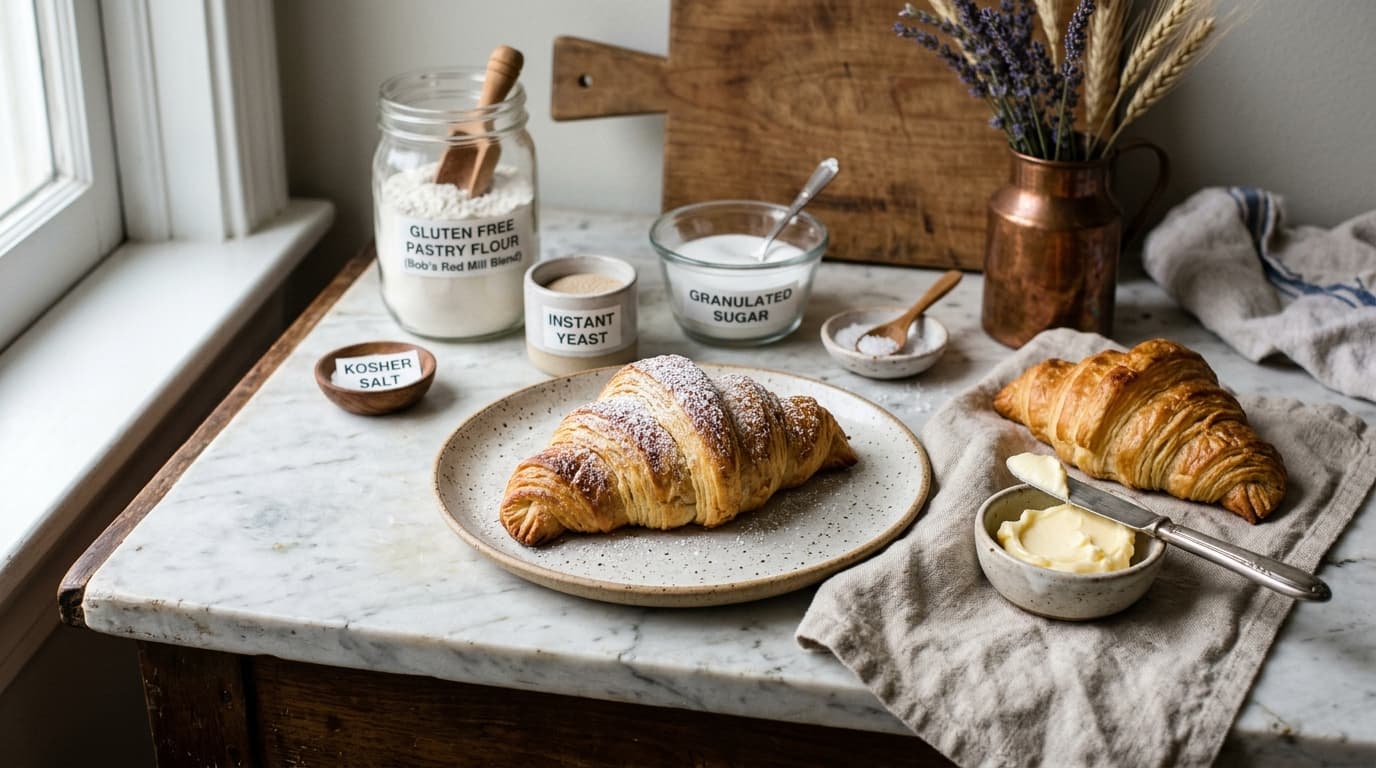
A croissant is a crescent of laminated, yeast-leavened dough: crisp and shattering on the outside, tender and slightly chewy within, with a honeycomb of buttery layers you can see when you tear it open. It is a French pastry, and the classic breakfast one, though it works just as well at any hour with coffee.
A gluten free croissant has long been the pastry people assumed they would never eat again. Done well, it delivers the same crackle and the same rich, buttery aroma, and it is a real reward for a bit of patience. That is why this one has a following among bakers who miss the bakery case.

Are croissants actually French?
Yes and no. The croissant is a French pastry in its modern form, but the idea behind it is Austrian. Experts agree it was inspired by the kipfel (also spelled kipferl), a crescent-shaped baked good made with butter or lard, sometimes with sugar and almonds. Popular lore ties the kipfel to the 1683 siege of Vienna, but it is older than that: a poem mentions it among the Christmas treats Viennese bakers presented to Duke Leopold in 1227.
How the crescent crossed into France is, in one historian's phrasing, shrouded in legend. The Smithsonian notes that no references to the croissant appeared in France before about 1850. The pastry we know now came later. Most accounts place its development in the early 20th century, when French bakers swapped the brioche-like dough of the kipferl for a yeast-leavened laminated dough. The earliest known recipe for the present-day croissant appears in 1905. The kipferl, by comparison, was denser and less flaky.
The gluten free version has a much shorter history. In fall 2016, Flakely Bakery in Philadelphia asked Drexel University's Food Lab for help building a better gluten free croissant, because the versions it had found tasted “ricey.” After many trials, the best result came partly by accident, through controlling oven spring so the croissants rose just enough.
How croissants vary
The plain butter croissant is the standard, but the same laminated dough shows up in many shapes. Wrap it around chocolate and you have a pain au chocolat. Fill it with almond cream, or sprinkle on sliced almonds, and you nod back to the almond-studded kipfel. Savory versions with ham and cheese turn it into lunch.
Traditional croissants lean on wheat gluten for structure, which is exactly what makes the gluten free version a different job. The dough still has to be laminated, meaning butter is folded into the dough to create layers, as Schär and other gluten free makers note, but the dough is handled differently and relies on other ingredients to hold its shape. The modern twist here is not a flavor so much as the fact that the pastry is flaky at all. The version we cook on Meez comes from Gluten Free on a Shoestring, and it aims at that goal: lots of layers, a crisp crust and a tender middle.
When to make gluten free croissants
This is a weekend project, and it rewards that framing. Laminated dough likes a cool kitchen and unhurried hands, so a quiet Saturday in autumn or winter is ideal. Bake them in October and serve them with apple butter or pear preserves; in December, with orange marmalade or a bowl of clementines.
They also suit a Sunday dinner in a different way than you might expect. Split warm croissants and fill them with ham and Gruyère, or tear them alongside a bowl of soup, for a relaxed supper that feels special without a roast.
For feeding a crowd, a tray of croissants is a good brunch centerpiece, especially when some guests avoid gluten and you would rather not set their plate apart. In spring, put out strawberries and rhubarb compote and let everyone build their own.

What to serve with them
- Good butter and jam. The croissant is already rich, so a bright fruit preserve, such as apricot or plum, balances it.
- Scrambled or soft-boiled eggs. Soft, creamy eggs are a simple protein that lets the pastry stay the star.
- Fresh fruit. Apples and pears in fall, citrus in winter, berries in spring: something juicy and a little tart cuts the butter.
- Coffee, café au lait or hot chocolate. Dunking is encouraged, and a crisp crust holds up to it.
- A green salad or tomato soup. For a lighter lunch or supper, the croissant stands in for bread.
Make it at home
When you are ready for the project, get the recipe and read it through once before you start. If you want a hand with the folding and resting, cook it step by step in Cook Mode.
Questions about gluten free croissants
Are croissants really French?
The modern croissant developed in France, but it descends from the Austrian kipfel. French bakers swapped the older brioche-like dough for a laminated one in the early 20th century.
What is a kipferl?
It is a crescent-shaped pastry from Austria, made with butter or lard and sometimes sugar and almonds. It was denser and less flaky than a modern croissant.
Can a gluten free croissant really be flaky?
Yes, as long as the dough is properly laminated and the bake is controlled. Bakers who tested early gluten free versions found some tasted “ricey,” and fixing that took careful work on texture and oven spring.
How is a croissant different from a pain au chocolat?
They use the same type of laminated dough. A pain au chocolat is shaped around chocolate, while a classic croissant is rolled into a crescent and left plain.
Sources
- Croissant
- Is the Croissant Really French?
- From Kipferl to Croissant History - BAKE! with Zing blog
- Gluten Free Croissant: Everything You Need to Know About These Delectable French Baked Goods
- A Flakey, Delicious Gluten-Free Croissant… Seriously.
Last reviewed November 11, 2026. Written by the Meez editorial team with Meez Magic, from the sources above.
Original Recipe Source
This article is inspired by a recipe from Glutenfreeonashoestring.
Visit the original source for their version of this recipe and more great content.
Related Topics
Enjoyed this article? Share it with fellow food lovers!
Ready to Cook This Recipe?
Experience our immersive Cook Mode with step-by-step visual guidance, voice narration, and built-in timers.