

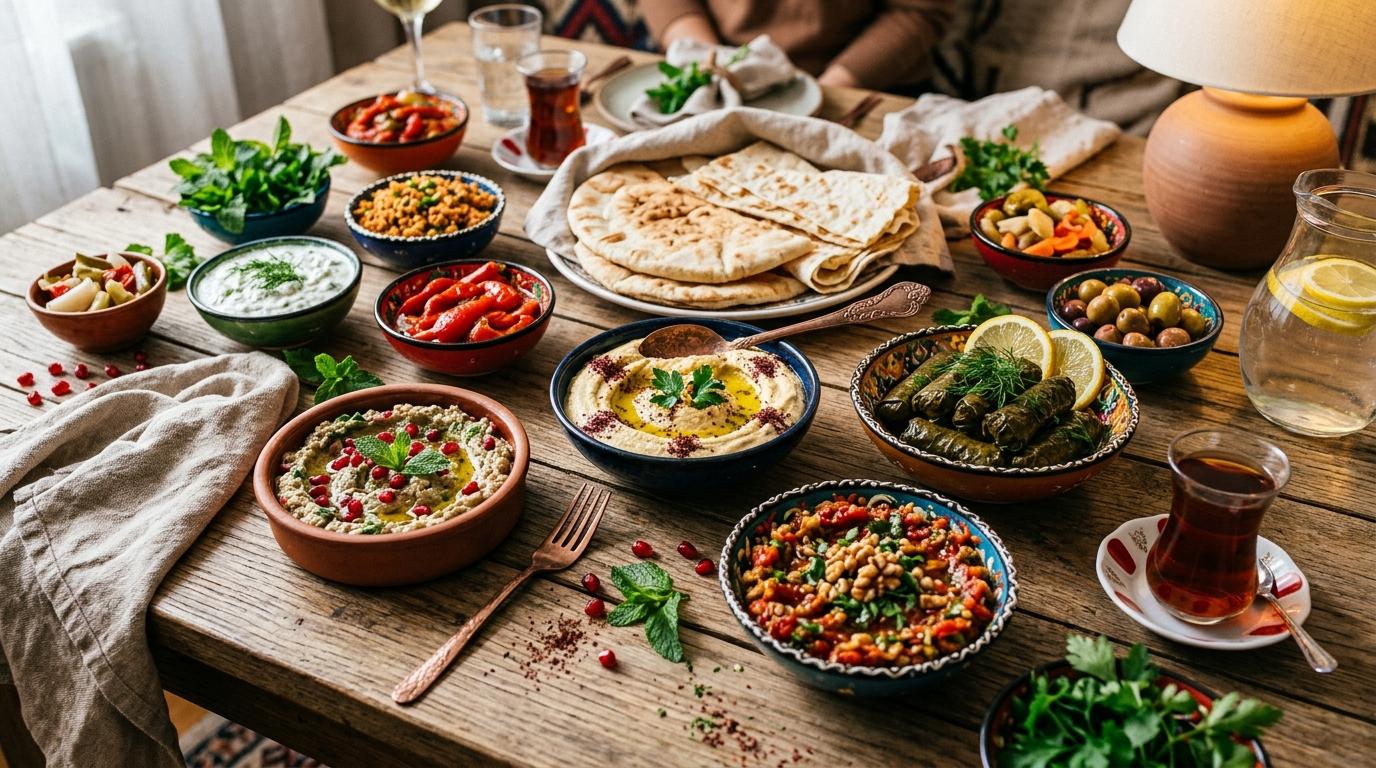
Turkish cuisine stands as one of the world's great cooking traditions, shaped by centuries of cultural exchange along the Silk Road and the Ottoman Empire's vast reach. From the spice markets of Istanbul to the olive groves of the Aegean coast, Turkey's diverse geography has created a culinary landscape that's both deeply rooted and endlessly varied.
What makes Turkish food so compelling isn't just its bold flavors — though the interplay of sweet and savory, the liberal use of herbs, and the masterful spice blending certainly captivate. It's the way food weaves through daily life here, from the leisurely breakfast spreads that can stretch for hours to the convivial meze culture that turns every meal into a social occasion.
Understanding Turkish cooking means grasping a few fundamental principles. Turkish cooks prize fresh ingredients, often shopping daily for the best vegetables, herbs, and proteins. They understand the power of simplicity — letting a perfectly ripe tomato shine in a salad, or allowing the smokiness of a well-grilled kebab to speak for itself. Most importantly, they cook with generosity, always preparing enough to share.
The Foundation: Essential Turkish Cooking Techniques
Before diving into specific recipes, let's explore the Turkish Cooking Techniques and Traditional Methods that form the backbone of this cuisine. These aren't just cooking methods — they're cultural practices passed down through generations.
Olive oil braising, known as zeytinyağlı dishes, represents perhaps the most distinctive Turkish technique. Unlike quick sautéing, this method involves gently cooking vegetables in generous amounts of olive oil at low temperatures, often finishing with lemon juice and fresh herbs. The result is vegetables that are tender but retain their shape, infused with olive oil's richness and bright with citrus.
Clay pot cooking, while less common in modern Turkish kitchens, remains important for understanding traditional flavors. The porous clay imparts a subtle earthiness while cooking food evenly and gently. You can approximate this at home using unglazed terra cotta or even heavy Dutch ovens.
Spice toasting is another crucial technique often overlooked. Turkish cooks toast whole spices like cumin, coriander, and fennel seeds before grinding, unlocking essential oils that remain dormant in pre-ground versions. The difference in flavor depth is remarkable.
Layering is fundamental to Turkish cooking philosophy. Think of börek, where paper-thin pastry sheets are brushed with butter or oil between each layer, or pilaf, where rice is first toasted in fat before liquid is added. Each step builds flavor complexity.
Morning Glory: Turkish Breakfast Culture
Turkish breakfast — kahvaltı, literally meaning "before coffee" — deserves its reputation as one of the world's great morning meals. This isn't a grab-and-go affair but a leisurely social ritual that can stretch well into late morning.
The spread typically includes fresh bread (often warm simit or crusty village bread), multiple varieties of cheese ranging from creamy beyaz peynir to sharp aged kaşar, homemade jams and preserves, olives in multiple preparations, sliced tomatoes and cucumbers, and börek or other savory pastries.
Turkish Breakfast Recipes and Traditional Morning Dishes showcase this abundance beautifully. Menemen, scrambled eggs with tomatoes and peppers, often anchors the table alongside su böreği (water börek) with its delicate layers of pastry and cheese.
The key to Turkish breakfast lies in variety and freshness. Each component should be excellent on its own — the cheese should be creamy and well-salted, the tomatoes perfectly ripe, the bread still warm. But together, they create combinations that shift throughout the meal. A bite of sharp cheese with sweet fig jam, followed by cucumber with a drizzle of olive oil, then rich börek balanced by fresh herbs.
The Art of Meze: Small Plates, Big Flavors
Meze culture in Turkey goes far beyond appetizers. These small plates represent a dining philosophy that prioritizes conversation, sharing, and the slow appreciation of diverse flavors and textures.
Authentic Turkish Meze Recipes and Appetizer Guide reveal the sophistication hidden in seemingly simple dishes. Take cacik — yogurt mixed with grated cucumber, garlic, and herbs. In less skilled hands, it's merely tzatziki's cousin. But prepared properly, with thick yogurt strained until creamy, cucumber salted and drained to remove excess water, and fresh dill chopped at the last moment, it becomes something transcendent.
Dolma, whether stuffed grape leaves or vegetables, showcases Turkish cooks' mastery of rice cookery and spice blending. The rice filling — fragrant with allspice, cinnamon, and fresh herbs — should be just tender, never mushy. The vegetables or leaves should yield gently to the bite while retaining structure.
Muhammara, a walnut and red pepper spread from Turkey's southeastern regions, demonstrates how Turkish cuisine incorporates influences from across the Middle East. Roasted red peppers are blended with toasted walnuts, breadcrumbs, and warm spices like Aleppo pepper to create something that's simultaneously smoky, nutty, and gently spiced.
The meze table thrives on contrast. Cool yogurt-based dips alongside warm börek, briny olives next to sweet roasted peppers, rich cheese balanced by sharp pickles. This interplay keeps the palate engaged throughout a long, leisurely meal.
Rice and Grains: The Heart of Turkish Meals
Turkish Pilaf and Rice Recipes with Traditional Methods form the foundation of Turkish dining. Unlike boiled rice served as a side dish, Turkish pilaf is a dish unto itself, worthy of attention and respect.
The technique starts with toasting rice in butter or oil until the grains become translucent and faintly nutty. This crucial step prevents the rice from becoming mushy while building flavor depth. The liquid — whether stock, water, or milk — is then added carefully, and the pot is covered tightly to create steam.
Variations are endless. Bulgur pilafs, particularly popular in southeastern Turkey, offer a nuttier flavor and heartier texture. Wedding pilaf, enriched with chicken stock and studded with almonds and currants, elevates rice to celebration status. Tomato pilaf, colored with tomato paste and fragrant with herbs, makes a vibrant accompaniment to grilled meats.
The key lies in restraint. Turkish pilaf shouldn't be heavily sauced or overseasoned. The grain itself should shine, supported by subtle flavors rather than overwhelmed by them.
Mastering Turkish Meat Cookery
Turkish cuisine's approach to meat reflects both pastoral traditions and sophisticated urban cooking. From simple grilled kebabs to elaborate stews, meat dishes showcase the cuisine's range and depth.
Turkish Kebab Recipes and Grilling Techniques represent perhaps Turkey's most famous culinary export. But beyond the familiar döner, a world of regional specialties awaits. [CLUSTER: Authentic Adana Kebabs Recipe: Turkish Grilled Lamb Perfection] demonstrates the art of hand-chopped meat seasoned with warm spices and grilled over high heat until charred outside and juicy within.
[CLUSTER: Authentic Iskender Kebab Recipe: Turkish Street Food Magic] takes grilled meat to another level entirely, layering tender lamb over pieces of pita bread, then topping with tomato sauce and yogurt. The interplay of temperatures, textures, and flavors creates something far more complex than its simple components suggest.
But Turkish meat cookery extends well beyond the grill. Slow-braised stews like güveç, cooked in clay pots with vegetables and aromatic spices, showcase a gentler approach. The meat becomes fork-tender while absorbing the flavors of tomatoes, onions, and herbs.
Köfte, Turkish meatballs, vary dramatically by region. Some are grilled, others baked or fried. Some include bread crumbs and eggs, while others rely solely on meat and spices. The common thread is careful seasoning and proper fat content — lean meat creates dry, tough köfte, while the right amount of fat keeps them juicy and flavorful.
Soups and Broths: Comfort in a Bowl
Turkish Soup Recipes and Traditional Broths occupy a special place in Turkish dining culture. These aren't just appetizers but often constitute complete meals, particularly during colder months.
Mercimek çorbası, red lentil soup, appears on nearly every Turkish table. Its appeal lies in simplicity — lentils cooked with onions, sometimes carrots, then puréed until smooth and finished with lemon juice and paprika oil. But achieving the perfect texture requires attention. The lentils should cook until completely soft before blending, and the final consistency should coat a spoon without being thick.
Yayla çorbası, a yogurt-based soup thickened with rice and brightened with herbs, showcases Turkish cooks' skill with dairy. The yogurt must be stabilized with egg and flour to prevent curdling when heated, a technique that requires patience and gentle cooking.
Regional soups reflect local ingredients and preferences. Istanbul's fish soup features fresh seafood and aromatic vegetables. Southeastern Turkey's spicy soups incorporate bulgur and red pepper paste. Mountain regions favor hearty bean and vegetable soups that sustain through cold winters.
Pastries and Börek: Layers of Tradition
Turkish Börek and Savory Pastry Recipes represent some of Turkish cuisine's most technically challenging yet rewarding dishes. These aren't casual weeknight dinners but special occasion foods that demonstrate a cook's skill and dedication.
Su böreği, or water börek, involves layering paper-thin sheets of pastry (yufka) with cheese and herbs, then baking until golden. The technique requires rolling dough incredibly thin — so thin you should be able to read newspaper through it. Each layer is brushed with butter or oil, creating a pastry that's crispy outside and tender within.
Sigara böreği, cigarette börek, wraps similar fillings in smaller pastry sheets, then either bakes or fries them until crisp. The key lies in proper sealing — any gaps allow filling to leak during cooking, creating soggy pastry.
Spanakli börek, filled with spinach and cheese, demonstrates how Turkish cuisine transforms simple ingredients into something elegant. The spinach must be thoroughly drained to prevent soggy pastry, while the cheese should be salty enough to season the entire filling.
Working with Yufka and Phyllo
Traditional yufka pastry requires considerable skill to prepare from scratch, but quality frozen phyllo provides an acceptable substitute for home cooks. The key lies in proper handling — thaw phyllo completely before using, keep unused sheets covered with damp towels, and work quickly to prevent drying.
When brushing with butter or oil, use a light hand. Too much fat creates greasy börek, while too little allows layers to stick together. The goal is just enough fat to separate layers and create flakiness.
Street Food Culture and Quick Bites
Turkish Street Food Recipes: Simit, Döner & More capture the energy and creativity of Turkish urban food culture. These aren't simplified versions of restaurant dishes but distinct categories with their own techniques and traditions.
Simit, Turkey's answer to the bagel, requires a specific technique involving boiling in molasses water before baking. This creates the characteristic glossy, chewy exterior and tender crumb. Street vendors sell them warm, often paired with cheese or jam for breakfast.
Döner, while now international, reaches its pinnacle in Turkey where cooks understand the importance of proper meat selection and seasoning. The rotating spit creates uneven cooking — some pieces charred and crispy, others tender and juicy — that adds textural interest impossible to achieve through other methods.
Lahmacun, often called Turkish pizza, showcases the cuisine's Middle Eastern influences. The dough should be rolled paper-thin, while the topping — a mixture of minced meat, vegetables, and spices — should be spread sparingly. When properly made, lahmacun is light enough to roll up and eat by hand.
Regional Variations and Specialties
Regional Turkish Recipes from Different Provinces reveal how geography, climate, and cultural influences have shaped distinct regional cooking styles across Turkey's diverse landscape.
The Aegean coast, with its Mediterranean climate and Greek influences, specializes in olive oil-based dishes and seafood. Vegetables are often cooked zeytinyağlı style — braised in olive oil and served at room temperature. The region's olive oil, pressed from ancient trees, adds distinctive flavor impossible to replicate with generic oils.
Southeastern Turkey, bordering Syria and Iraq, embraces the spice-forward cooking of the broader Middle East. Dishes here feature intense heat from Urfa peppers, complex spice blends, and techniques like stuffing vegetables with bulgur and meat mixtures. Gaziantep, this region's culinary capital, claims to have invented baklava and produces some of Turkey's finest pistachios.
The Black Sea region, with its cooler climate and abundant rainfall, specializes in dishes featuring corn, hazelnuts, and anchovies. Hamsi, local anchovies, appear in everything from pilaf to börek. Cornbread and corn-based dishes reflect the region's agricultural heritage.
Central Anatolia, Turkey's heartland, maintains the strongest connections to nomadic traditions. Meat features prominently, often preserved through drying or curing. Mantı, tiny dumplings served with yogurt and butter, requires considerable skill but rewards with complex flavors and textures.
Sweets and Desserts: Celebrating Sugar
Turkish Dessert Recipes: Baklava, Turkish Delight & More demonstrate Turkish pastry arts at their finest. These aren't simple home desserts but elaborate creations that require skill, patience, and quality ingredients.
Baklava represents the pinnacle of Turkish pastry making. Success depends on paper-thin phyllo, quality nuts (pistachios from Gaziantep are preferred), and properly made syrup. The syrup should be cool when poured over hot baklava — this temperature contrast allows proper absorption without creating sogginess.
Turkish delight (lokum) requires candy-making skills and precise temperature control. The mixture of sugar, starch, and flavorings must reach exact temperatures to achieve the characteristic chewy texture. Traditional flavors include rose, lemon, and mastic, though modern versions incorporate everything from pomegranate to coffee.
Muhallebi, a milk pudding, showcases Turkish cuisine's more subtle sweet preparations. Thickened with rice starch and delicately flavored, it provides a cool, refreshing end to rich meals. The key lies in constant stirring to prevent lumps and achieving the perfect consistency — thick enough to hold its shape but still creamy.
Essential Ingredients and Where to Find Them
Successful Turkish cooking depends on sourcing quality ingredients, particularly spices and specialty items that may be unfamiliar to Western cooks.
Sumac, with its tart, lemony flavor, adds brightness to salads and meat dishes. Look for deep red powder without additives — pale or brownish sumac lacks potency. Middle Eastern markets typically stock the best quality.
Turkish red pepper paste (biber salçası) provides both color and flavor to countless dishes. Available in hot and mild varieties, it adds depth that tomato paste alone cannot achieve. Store opened jars in the refrigerator where it keeps for months.
Bulgur comes in multiple grinds, from fine (#1) used in kibbeh to coarse (#4) for pilaf. Each grade serves specific purposes — fine bulgur can be "cooked" by soaking in hot water, while coarser grades require actual cooking.
Turkish cheese varieties like beyaz peynir and kaşar may be difficult to find, but feta and aged kasseri make acceptable substitutes. Seek out Middle Eastern or international markets for the widest selection.
Phyllo pastry varies dramatically in quality. Look for brands that remain pliable when thawed and separate easily into individual sheets. Avoid phyllo that crumbles or tears easily.
Building Your Turkish Pantry
Creating an effective Turkish pantry starts with understanding which ingredients offer the best return on investment. Focus first on spices and aromatics that appear across multiple dishes.
Whole spices like cumin, coriander, and allspice keep longer and taste better than pre-ground versions. Toast and grind them as needed for maximum flavor impact. A dedicated spice grinder (an old coffee grinder works perfectly) makes this process simple.
Quality olive oil makes a significant difference, particularly in zeytinyağlı dishes where it provides primary flavor. Turkish olive oils offer distinctive characteristics, but any good-quality extra virgin oil works for most applications.
Dried herbs like mint and dill appear frequently in Turkish cooking. While fresh herbs are always preferable, having dried versions ensures you can cook Turkish food year-round. Store them in airtight containers away from light and heat.
Canned tomatoes and tomato paste form the backbone of many sauces and stews. Choose high-quality brands without added seasonings — you want to control the flavoring yourself.
Bringing It All Together: Planning a Turkish Meal
Turkish meals follow patterns that balance flavors, textures, and temperatures while encouraging social interaction. Understanding these patterns helps in planning your own Turkish dinners.
Start with meze — multiple small dishes that allow guests to sample different flavors while conversation develops. Include both warm and cold options, dairy-based and vegetable-based dips, something pickled for acidity, and bread for scooping.
The main course typically centers around meat or fish, supported by pilaf or bread and accompanied by a simple salad or vegetable dish. Turkish cooks avoid competing flavors — if the meat is highly spiced, the accompaniments remain simple.
Fresh fruit often concludes everyday meals, while special occasions call for elaborate desserts. Turkish tea or coffee provides the final punctuation, extending conversation as the meal winds down.
Temperature contrast adds interest — cold yogurt alongside warm börek, room-temperature meze with hot bread, cool desserts after rich main courses. This interplay keeps the palate engaged throughout the meal.
Embracing Turkish Cooking Philosophy
Perhaps the most important lesson from Turkish cuisine involves embracing its generous, social nature. Turkish cooks don't measure precisely or time everything to the minute. They taste, adjust, and rely on their senses more than rigid rules.
This doesn't mean being careless — Turkish cooking demands respect for ingredients and techniques. But it does mean understanding that food serves a larger purpose beyond mere sustenance. It brings people together, creates memories, and expresses hospitality.
Start with simple dishes and master their techniques before attempting complex preparations. Understand how spices behave, how different cooking methods affect textures, and how flavors build throughout a meal.
Most importantly, cook with generosity. Make more than you think you'll need. Invite friends to share the meal. Take time to appreciate both the cooking process and the final results. This is the Turkish way — and it makes every meal better.
Turkish cuisine offers home cooks a lifetime of discovery. From the simplest meze to the most elaborate börek, each dish carries centuries of tradition while remaining completely accessible to modern kitchens. The techniques translate beautifully to contemporary cooking, while the flavors provide endless inspiration for your own culinary creativity.
Sources & further reading
- Turkish Cuisine: A Guide to Traditional Turkish Food — Give Recipe
- Popular Turkish Food and In-Depth Guide to Authentic Turkish Dishes — Turkey Homes