

Turkish Breakfast Recipes: Traditional Morning Dishes
Turkish breakfast is a celebration that transforms morning into a feast. From creamy menemen to flaky börek, these traditional recipes bring the warmth of Turkish hospitality to your table.
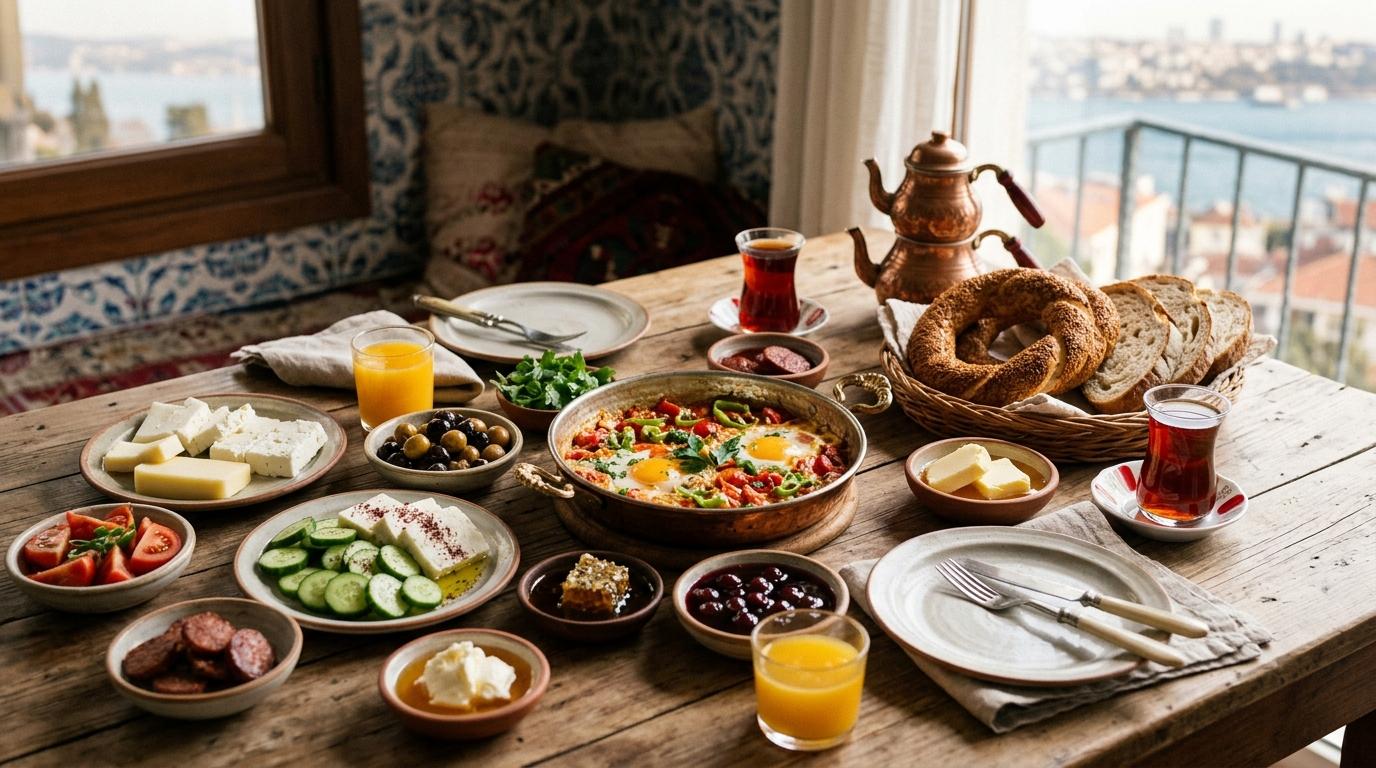
Turkish breakfast isn't just a meal — it's a ritual that turns morning into an occasion. While exploring Turkish recipes, you'll discover that breakfast holds special significance in Turkish culture, often stretching for hours with family and friends gathered around tables laden with small plates of cheese, olives, honey, and warm bread.
Unlike the rushed coffee-and-toast routine many of us know, Turkish breakfast invites you to slow down. The Turkish word "kahvaltı" literally means "before coffee," but this meal is anything but an afterthought. It's a carefully orchestrated symphony of flavors, textures, and temperatures that sets the tone for the entire day.
What makes Turkish breakfast special isn't just the abundance — it's the balance. Creamy cheeses offset by sharp pickles. Sweet honey drizzled over fresh bread. Warm, savory dishes like menemen alongside cool yogurt and cucumbers. Each element plays its part in creating a harmonious start to the day.
The Heart of Turkish Breakfast: Menemen
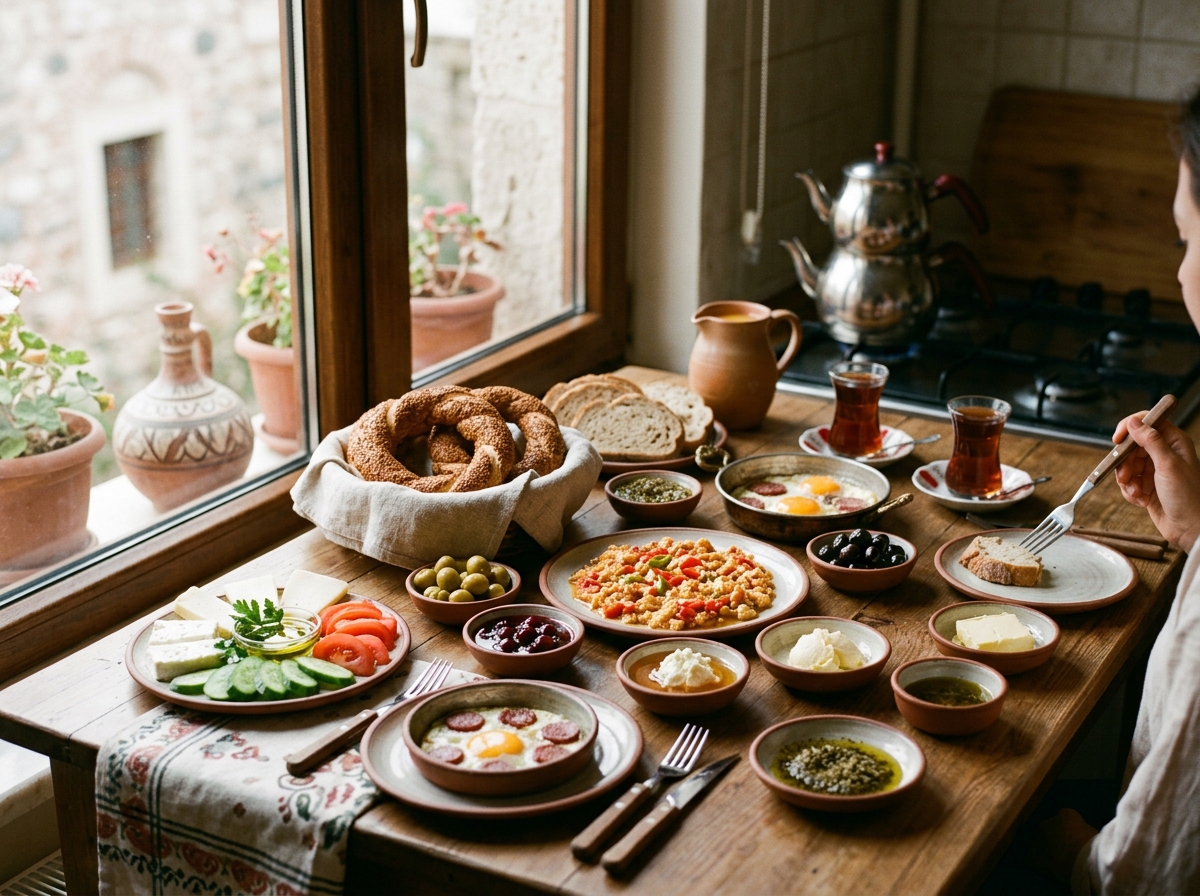
If Turkish breakfast had a signature dish, menemen would be it. This scrambled egg dish cooked with tomatoes, peppers, and onions represents everything wonderful about Turkish cooking: simple ingredients transformed through technique into something greater than the sum of their parts.
The key to great menemen lies in patience. You're not making scrambled eggs with vegetables thrown in — you're building layers of flavor. Start with good olive oil in a wide, shallow pan. Turkish cooks prefer a "tava," a round pan similar to a cast-iron skillet that retains heat beautifully.
Dice your onions finely and cook them until they're soft and translucent, not browned. Add bell peppers — green are traditional, though some regions use red — and cook until they begin to soften. Fresh tomatoes come next, either grated on a box grater (skins discarded) or roughly chopped. The tomatoes should cook down into a thick, concentrated base.
Here's where technique matters: push the vegetable mixture to one side of the pan and crack your eggs into the empty space. Let them set for about thirty seconds, then gently stir them into the vegetables. The eggs should remain in soft, creamy curds, not a uniform scramble.
Season with salt, black pepper, and a pinch of red pepper flakes. Some cooks add crumbled feta or beyaz peynir (Turkish white cheese) in the final moments. Serve immediately with fresh bread for scooping.
Börek: Flaky Pastry Perfection
Börek represents the more ambitious side of Turkish breakfast — layers of paper-thin phyllo pastry filled with cheese, spinach, or herbs. While making phyllo from scratch requires serious skill, working with store-bought phyllo can still yield impressive results.
Su böreği, or "water börek," is the most common breakfast version. The name refers to the technique of briefly boiling the phyllo sheets before layering them with filling. This creates incredibly tender layers that melt in your mouth.
For cheese börek, mix crumbled feta with ricotta or cottage cheese, beaten eggs, and chopped fresh dill or parsley. The filling should be creamy but not wet — excess moisture will make your börek soggy.
Layer the phyllo sheets in a buttered baking dish, brushing each sheet with melted butter or olive oil. Spread thin layers of filling between every few sheets. The top layer should be phyllo, brushed generously with butter for a golden finish.
Bake at 375°F until golden and crispy. The finished börek should sound hollow when tapped and the layers should be visible when sliced. Let it rest for ten minutes before cutting — this helps the layers set and makes serving easier.
Key Ingredients for Authentic Turkish Breakfast
Turkish breakfast relies on high-quality, simple ingredients. Beyaz peynir, a briny white cheese similar to feta but milder, appears on every breakfast table. If you can't find it, Bulgarian or French feta work well as substitutes.
Kaşar peyniri, a semi-hard cheese with a nutty flavor, adds richness. Kashkaval or aged provolone can substitute. Turkish olives tend to be smaller and more intensely flavored than Greek varieties — look for mixed olive medleys at Middle Eastern markets.
Honey is crucial, preferably a floral variety that complements rather than overwhelms. Turkish pine honey has a distinctive resinous note, but orange blossom or wildflower honey work beautifully too.
Fresh herbs play important roles. Dill, parsley, and mint appear frequently. Turkish cucumbers are smaller and less watery than American varieties, but any crisp cucumber works for the classic tomato-cucumber salad.
Don't forget the bread. Simit, Turkey's answer to the bagel, has a distinctive sesame-molasses crust. Turkish pide or lavash provide perfect vehicles for scooping up soft cheeses and dips.
Simit: Turkey's Beloved Ring Bread
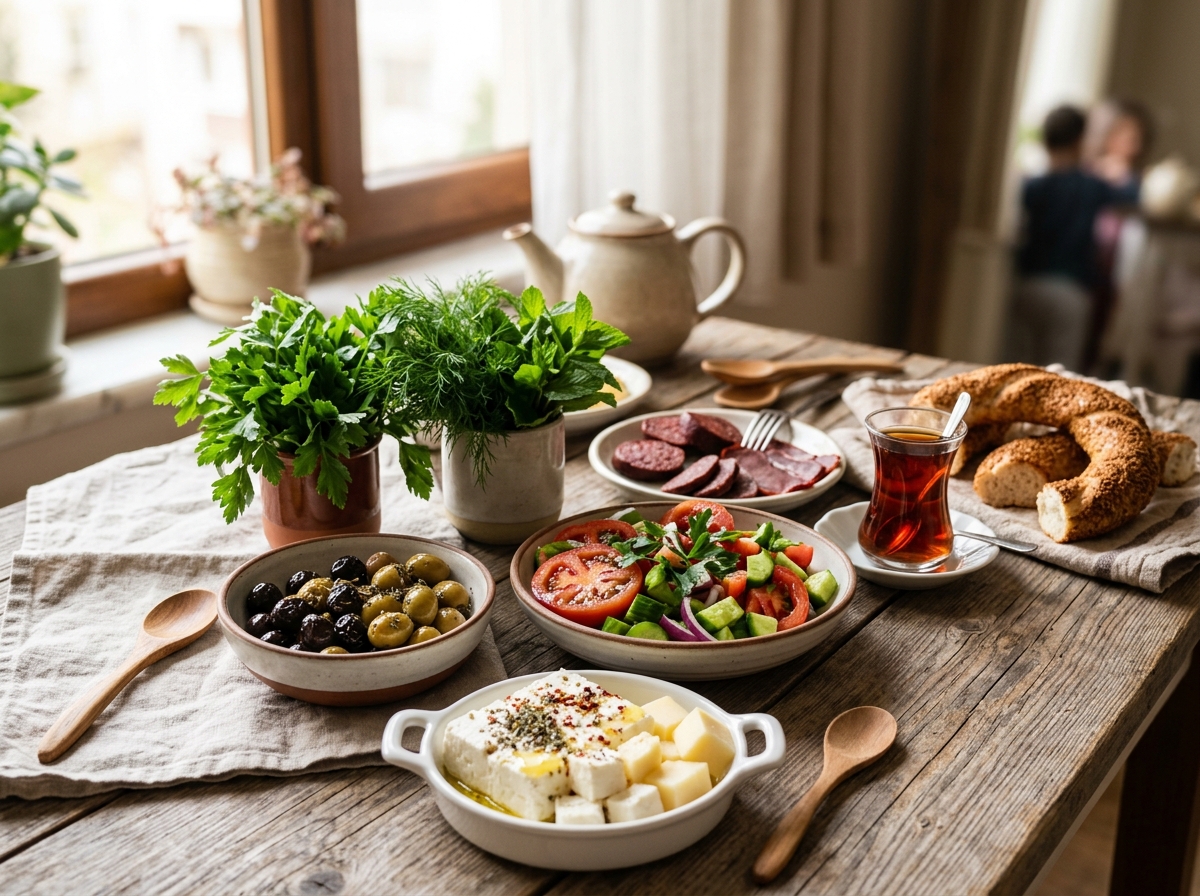
Walking through any Turkish city in the morning, you'll encounter simit vendors with their distinctive glass carts. These circular breads, encrusted with sesame seeds and sporting a glossy, molasses-darkened crust, are Turkish breakfast essentials.
Making simit at home requires planning — the dough benefits from a long, slow rise that develops complex flavors. The distinctive crust comes from a brief dip in molasses water before the final sesame coating.
Mix bread flour, yeast, salt, and a touch of sugar with warm water to form a firm but pliable dough. Knead until smooth and elastic, then let rise slowly in the refrigerator overnight. This cold fermentation creates the slightly tangy flavor that makes simit special.
Shape the dough into rings, dip briefly in diluted molasses, then roll in sesame seeds. The molasses coating helps the seeds adhere and creates that characteristic mahogany color when baked.
Bake on a stone or heavy baking sheet at high heat until deeply golden. Fresh simit should have a crisp exterior and chewy interior, perfect for tearing and dipping into honey or spreading with cheese.
Turkish Tea: The Perfect Breakfast Companion
No Turkish breakfast is complete without çay, the strong, amber-colored tea served in small, tulip-shaped glasses. Turkish tea preparation is an art form that uses a special double teapot called a çaydanlık.
The bottom pot holds water, while the top contains loose tea leaves. As water boils below, steam heats the tea above, creating a concentrated brew. This concentrate is diluted with hot water when serving, allowing each person to control the strength.
Turkish tea is typically black tea from the Black Sea region, with a robust flavor that pairs perfectly with rich breakfast foods. The small serving size encourages multiple glasses throughout the meal, fostering conversation and extending the breakfast experience.
If you don't have a çaydanlık, you can approximate the technique using two regular pots or a tea concentrate made strong and diluted to taste.
Building Your Turkish Breakfast Spread
The magic of Turkish breakfast lies in abundance and variety. Start with your warm dishes — menemen and börek — then arrange small plates of cold accompaniments around them.
Cheese should include both soft and hard varieties. Arrange sliced tomatoes and cucumbers simply, dressed with just olive oil and salt. Add small bowls of honey, jam, and kaymak (clotted cream) if you can find it.
Olives, pickles, and preserved vegetables provide acidic counterpoints to rich cheeses and eggs. Turkish breakfast often includes çemen, a spicy fenugreek paste, or acuka, a walnut-pepper spread that adds heat and complexity.
Hard-boiled eggs, sliced and arranged on a plate, offer protein variety. Fresh herbs — sprigs of dill, parsley, or mint — let diners customize their bites.
Regional Variations and Modern Adaptations
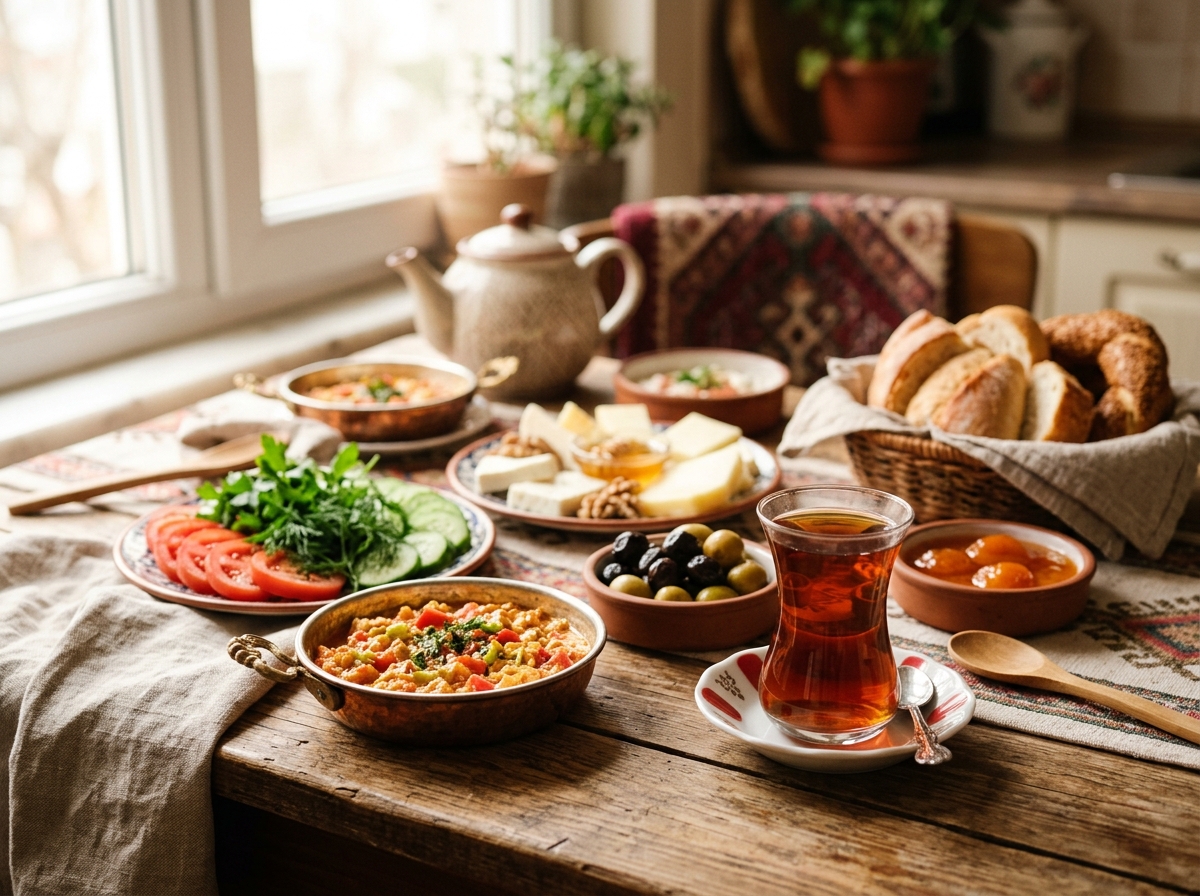
Turkish breakfast varies by region, reflecting local ingredients and traditions. Eastern Turkey might feature more dairy products and honey, while coastal regions incorporate more fish and vegetables.
Van breakfast, from the eastern region, includes local aged cheeses and honey from high-altitude meadows. Southeastern regions often add spicier elements and more varied vegetable dishes.
Modern Turkish breakfast has evolved to include items like jams, cereals, and even croissants in urban hotels, but traditional elements remain central to the experience.
For home cooks adapting these recipes, focus on quality over quantity. You don't need twenty different items to create an authentic feel — a few well-executed dishes with good ingredients will capture the spirit better than an overwhelming spread of mediocre components.
Timing Your Turkish Breakfast
Turkish breakfast rewards planning and patience. Prepare cold items the night before — slice vegetables, arrange cheese plates, and set out preserves and honey. Hard-boil eggs in advance and peel them in the morning.
Start hot dishes just before serving. Börek can be assembled earlier and baked while you prepare menemen. Have your tea brewing as the final touches come together.
Remember that Turkish breakfast is meant to be leisurely. Build in extra time for conversation and multiple cups of tea. This isn't a meal to rush — it's an experience to savor.
Bringing Turkish Breakfast Home
Creating an authentic Turkish breakfast spread connects you to centuries of tradition and hospitality. The careful balance of flavors, the emphasis on fresh ingredients, and the communal nature of the meal offer a different way of starting the day.
Whether you're making a simple weekday menemen or planning an elaborate weekend spread, these Turkish breakfast recipes bring warmth and tradition to your morning routine. Like all the best Turkish recipes, they prove that the most satisfying dishes often come from the simplest ingredients, prepared with care and shared with people you love.
The next time you find yourself rushing through breakfast, remember the Turkish approach: slow down, gather the people you care about, and turn your morning meal into something worth savoring. Your day — and your taste buds — will thank you.
Sources & further reading
- Menemen (food) — Wikipedia
- Turkish breakfast — Wikipedia
- A History of Börek — History Today
- Humble Beginnings of Culinary Masterworks: Turkish Börek — Google Arts & Culture (Turkey Tourism Promotion and Development Agency)
Related Topics
Enjoyed this article? Share it with fellow food lovers!
Import a recipe, start cooking
Paste any recipe URL and we'll turn it into a Cook Mode experience with step-by-step visuals, voice narration, and built-in timers.