

What is Adana kebab? Origins, flavor and what to serve
Adana kebab is Turkey's famously spicy, juicy lamb kebab, pressed onto wide skewers and grilled over fire. Here is where it comes from, how it varies and what to put on the table with it.
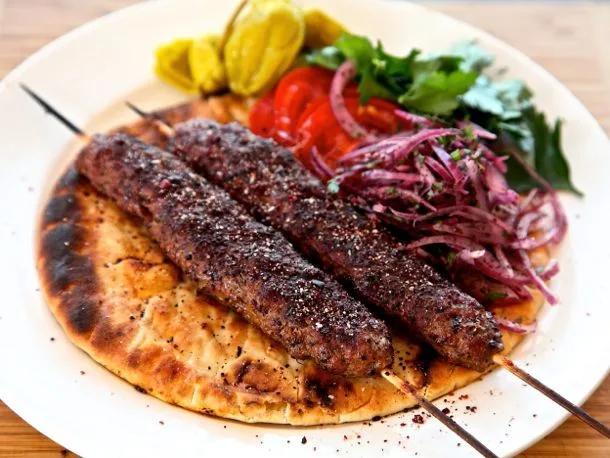
Featured Recipe
Adana Kebabs (Ground Lamb Kebabs)
Adana kebab is a Turkish grilled classic: minced lamb pressed onto wide, flat skewers and cooked over hot coals until the outside chars and the fat starts to drip and flare. The meat is soft and almost bouncy, much richer than a typical burger or meatball, with a savory sweetness from the lamb fat and a slow-building heat from sun-dried pepper flakes.
People love it because it is so direct. There is fire, fat and chili, then the tang of sumac to cut through it, all wrapped in warm flatbread with raw onion and a blistered tomato on the side. It is bold without being complicated, and it tastes like a summer night outdoors.
Where Adana kebab comes from
The kebab is named for Adana, the fourth largest city in Turkey, and it is a real point of local pride. Beyond that, the story gets less tidy. Most accounts credit a cook from Birecik, a town that was once part of the Eyalet of Aleppo, and some food writers see the dish as the product of a Turkish-Arabic culinary blend.
There is also a popular legend that a chef named Cagan created it in Adana and served it to the Ottoman sultan Selim I during his early sixteenth-century campaigns. It makes a good tale, but treat it as a legend rather than a documented fact. Kebab-style cooking in the wider Çukurova region, where Adana sits, goes back a very long way. Archaeological finds of about 4,000 years suggest meat was cooked on skewers over fire there, though nobody knows what those early kebabs were like.
What is firmly documented is the modern protection. The Adana version received a Controlled Designation of Origin in February 2005, after several legal trials. Under that status, an original Adana kebabı may only be made by a vendor who has passed an on-the-spot inspection by the Adana Chamber of Commerce. The traditional recipe uses hand-chopped meat and lamb's tail fat, which helps explain the texture.
How it varies
The traditional kebab is defined by its hand-chopped lamb and tail fat, its pepper heat and its charcoal fire. Ordering in Turkey often means choosing how hot you want it, from mild to properly fiery. Some cooks add a little tomato paste or sweet red pepper, while others keep the seasoning to little more than salt and chili.
The serving style varies too. At a restaurant, the skewer usually comes laid over flatbread that soaks up the juices, or rolled up into a wrap. Home cooks outside Turkey often use ground lamb, a grill pan or a broiler instead of a charcoal pit, and some blend in a little beef. These are practical adjustments, and they will still taste like a good home-cooked version. The version we cook on Meez comes from Serious Eats, and it leans on sumac and sun-dried pepper flakes for that bright, deep flavor.
When to make Adana kebab
This is a summer dish at heart. Make it on a warm weekend evening when the grill is already hot, for a few friends gathered around a table in the yard. It also works on a long July weeknight, since the kebabs cook fast and the sides need little more than chopping.
Summer is when the best accompaniments are in season in the Northern Hemisphere: ripe tomatoes, sweet and hot peppers, cucumbers, red onions, parsley and mint. Late summer and early September, when peppers and eggplant are at their peak, are especially good. On a mild October night you can still cook the kebabs under a hot broiler and get plenty of char.
What to serve with Adana kebab
- Warm flatbread or lavash. It catches the fat and juices and doubles as a wrap for the meat.
- Sumac onion salad with parsley. Sharp, sour raw onion cuts through the richness of the lamb and refreshes your palate between bites.
- Grilled tomatoes and long green peppers. Blistered on the same fire, they add sweetness and a soft, juicy counterpoint to the firm meat.
- Bulgur or rice pilaf. A mild, buttery grain turns a skewer into a full dinner and tempers the heat.
- Ayran or şalgam. Cold, salty ayran (a yogurt drink) soothes the chili, while şalgam, a tangy fermented turnip and carrot juice, is a classic pairing with Adana kebab. A cold lager works well too.
Make it at home
Ready to light the grill? Get the recipe for the full ingredient list and method, or cook it step by step in Cook Mode so your hands stay free while the coals heat up.
Questions about Adana kebab
Where does Adana kebab come from?
It is named for the city of Adana in southern Turkey. Many accounts say its creator came from Birecik, in what was once the Eyalet of Aleppo, so the exact origin is debated.
Why is Adana kebab legally protected?
In February 2005 the version made in Adana province received a Controlled Designation of Origin. An original Adana kebabı may only be sold by a vendor who has passed an inspection by the Adana Chamber of Commerce.
Is Adana kebab very spicy?
It is known as a spicy kebab, but the heat is more warm and rounded than sharp, thanks to dried pepper flakes. In Turkey you can usually ask for it milder or hotter.
How is Adana kebab different from shish kebab?
Shish kebab is made from cubes of whole meat on a skewer. Adana kebab is made from hand-chopped lamb and fat, shaped around a wide skewer, which gives it a softer, juicier bite and a more assertive spice.
Sources
- Adana kebabı
- Adana Kebab (Adana Kebabı) - Traditional Turkish Recipe
- World of Turkish Kebabs: Adana Kebab
- Adana Kebab | A best seller in the past and the present
Last reviewed October 21, 2026. Written by the Meez editorial team with Meez Magic, from the sources above.
Original Recipe Source
This article is inspired by a recipe from Serious Eats.
Visit the original source for their version of this recipe and more great content.
Related Topics
Enjoyed this article? Share it with fellow food lovers!
Ready to Cook This Recipe?
Experience our immersive Cook Mode with step-by-step visual guidance, voice narration, and built-in timers.