

Turkish Meze Recipes: Authentic Appetizers Guide
Turkish meze transforms any meal into a social celebration. These authentic appetizer recipes bring the flavors of Istanbul's meyhanes to your table with traditional techniques and time-tested combinations.
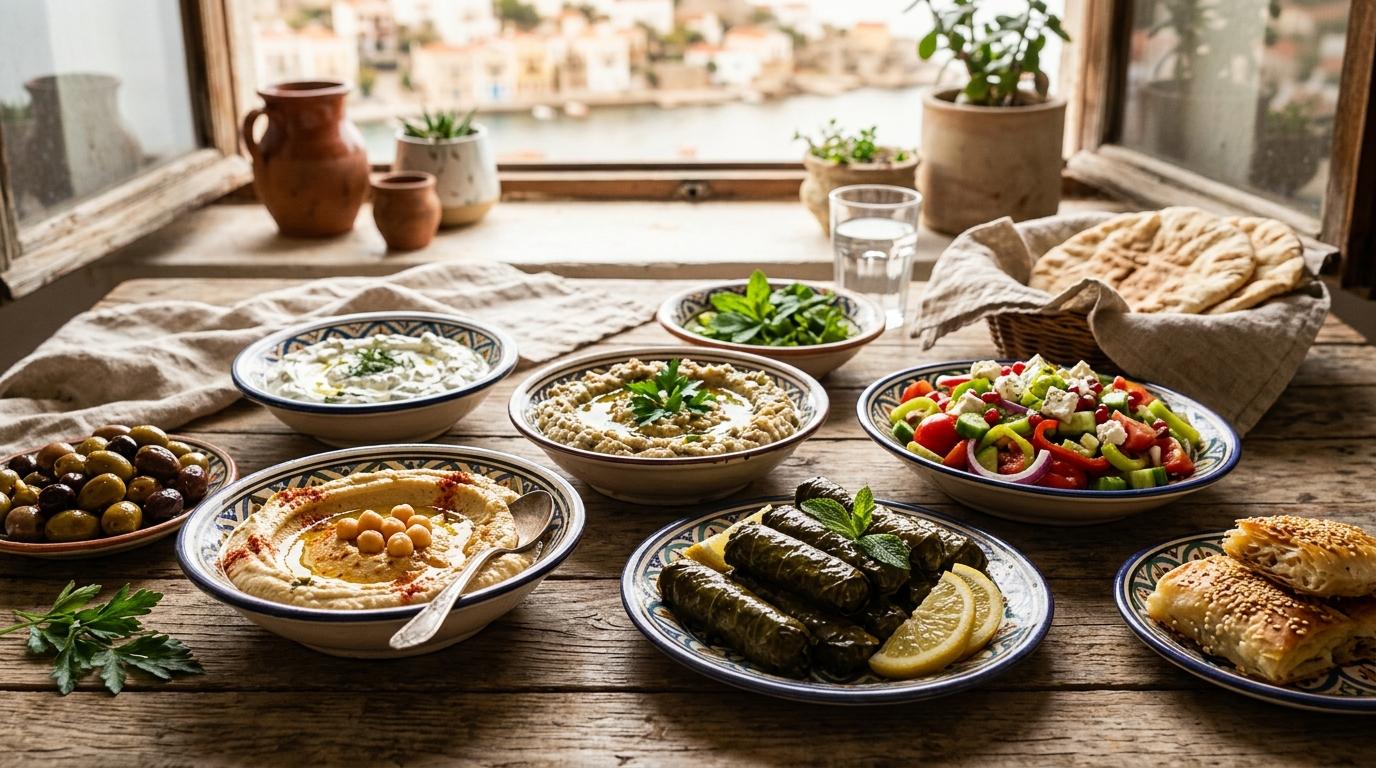
Turkish meze culture turns every meal into a celebration of conversation and connection. These small plates, served alongside rakı or tea, represent the heart of Turkish hospitality — where food becomes the backdrop for hours of storytelling and laughter. While exploring the breadth of Turkish recipes, meze stands out as perhaps the most social and varied aspect of the cuisine.
In Istanbul's traditional meyhanes, meze arrives in waves. Cold preparations first — the yogurt-based cacık, silky hummus, and herb-forward ezme. Then warm dishes follow, each one designed to complement the anise-scented rakı that flows freely through the evening.
The beauty of Turkish meze lies in its flexibility. Unlike formal courses, these dishes encourage grazing and sharing. A well-composed meze table balances temperatures, textures, and flavors while telling the story of Turkey's position at the crossroads of Europe, Asia, and the Middle East.
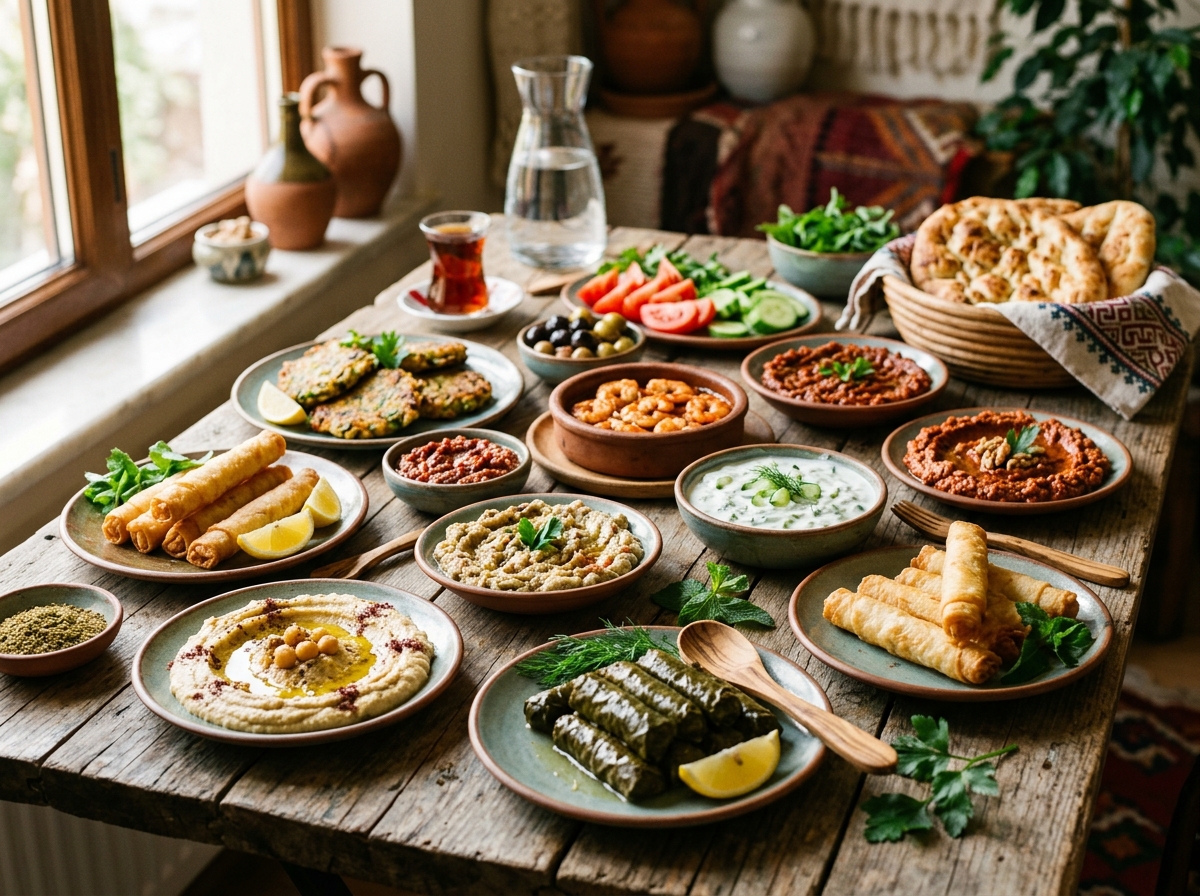
Essential Cold Meze Recipes
Cold meze forms the foundation of any Turkish appetizer spread. These dishes can be prepared hours ahead, allowing their flavors to meld and intensify.
Cacık (Turkish Cucumber Yogurt)
Cacık differs from Greek tzatziki in its lighter texture and more pronounced dill flavor. Turkish cooks use strained yogurt but thin it slightly with cold water, creating a refreshing consistency perfect for hot summer evenings.
Start with two cups of full-fat yogurt — the richness matters here. Strain it through cheesecloth for thirty minutes, then whisk in two tablespoons of ice-cold water. Grate two large cucumbers and salt them heavily, letting them drain for twenty minutes before squeezing out excess moisture.
Fold the cucumbers into the yogurt along with minced garlic, fresh dill, and a drizzle of good olive oil. The key is restraint with the garlic — one clove provides enough bite without overwhelming the delicate cucumber and dill.
Turkish-Style Hummus
Turkish hummus tends to be lighter than its Lebanese cousin, with more lemon and less tahini. The texture should be silky but not heavy, achieved through careful attention to the cooking liquid.
Soak dried chickpeas overnight, then simmer them with a bay leaf and pinch of baking soda until completely tender. Reserve the cooking liquid — it's gold for achieving the perfect consistency.
Process the warm chickpeas with tahini, lemon juice, and garlic, adding the cooking liquid gradually until the hummus reaches a spreadable but not stiff consistency. Turkish cooks often finish with a sprinkle of Aleppo pepper and a pool of fruity olive oil.
Ezme (Spicy Tomato and Herb Salad)
Ezme showcases the Turkish talent for transforming simple ingredients into complex flavors. This finely chopped salad balances sweet tomatoes with sharp onions and fiery peppers.
Use the ripest tomatoes you can find, removing the seeds and excess juice before chopping. Mix with finely minced red onion, parsley, and mint. The heat comes from either Turkish hot peppers or a combination of bell peppers and hot paprika.
Dress ezme with lemon juice, olive oil, and pomegranate molasses if available. The key is achieving a relish-like consistency where each component remains distinct while contributing to the whole.
Key Ingredients for Authentic Turkish Meze
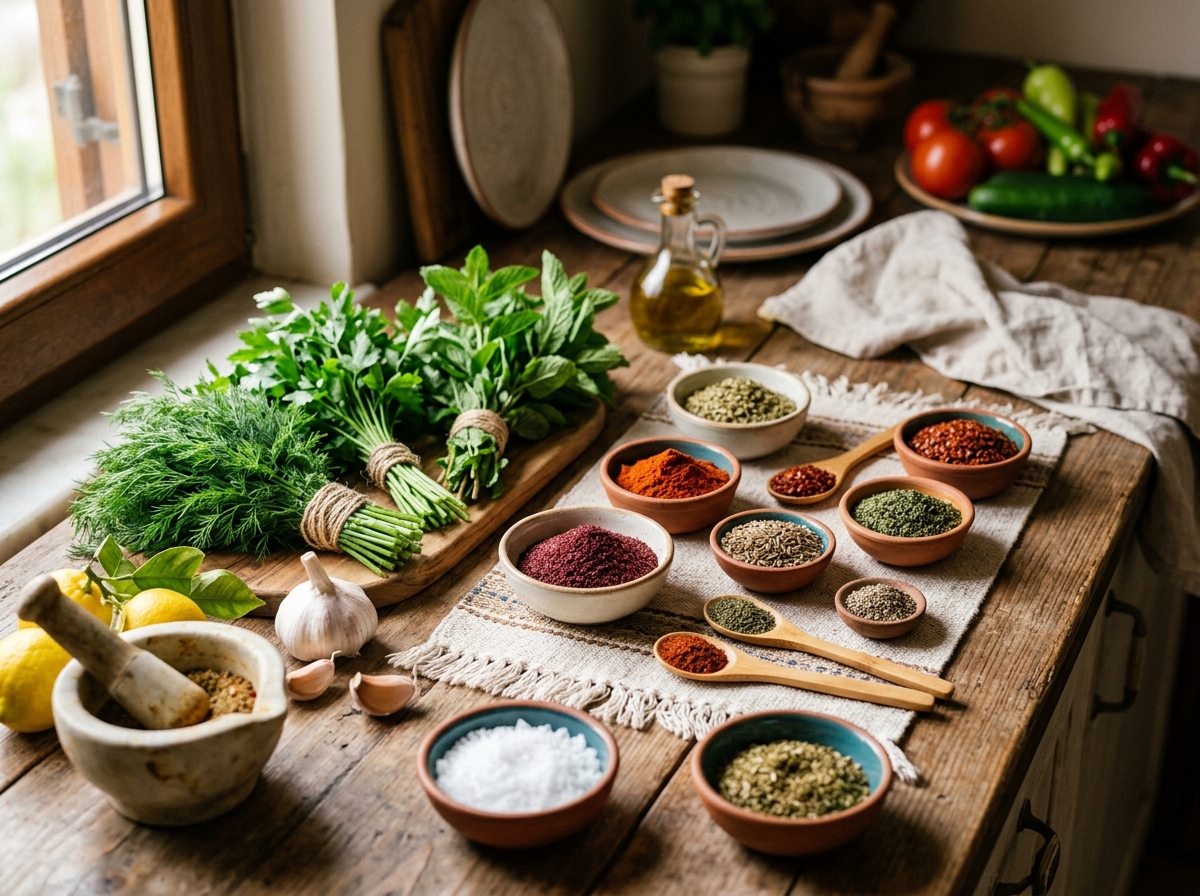
Turkish meze relies on a specific pantry of ingredients that define its character. Understanding these components allows you to create authentic flavors even when adapting recipes.
Aleppo pepper provides gentle heat with fruity undertones, irreplaceable in dishes like ezme and baba ganoush. Turkish red pepper paste (biber salçası) adds concentrated tomato and pepper flavor to numerous preparations.
Turkish olive oil tends to be more robust than Italian varieties, with grassy notes that complement the cuisine's bold flavors. Use it generously — Turkish meze celebrates fat as a carrier of flavor, not something to minimize.
Fresh herbs play starring roles. Turkish parsley has more intense flavor than flat-leaf varieties, while Turkish mint brings cooling properties to yogurt-based dishes. Dill appears frequently, especially in dishes featuring cucumber or fish.
Pomegranate molasses adds sweet-tart complexity to salads and grilled items. Its concentrated flavor transforms simple preparations into something memorable. Look for brands from Turkey or Lebanon for the most authentic taste.
Warm Meze Specialties
Warm meze dishes bridge the gap between cold appetizers and main courses. These preparations often showcase Turkish techniques for cooking vegetables and legumes.
Dolma (Stuffed Grape Leaves)
Turkish dolma varies by region, but the Istanbul style remains most recognizable internationally. The filling balances rice with herbs, pine nuts, and currents, creating sweet and savory layers.
Blanch fresh grape leaves briefly to soften them, or rinse jarred leaves to remove excess salt. The rice filling should include plenty of fresh dill, parsley, and mint, along with toasted pine nuts and currents soaked in warm water.
Roll the dolma tightly but not so tight that the rice can't expand during cooking. Arrange them seam-side down in a heavy pot, weigh them down with a plate, and simmer gently in a mixture of olive oil, lemon juice, and water.
Börek Varieties
Börek represents Turkey's mastery of pastry techniques inherited from Ottoman palace kitchens. These layered pastries can be filled with cheese, spinach, or meat, then baked or fried until golden.
Su böreği uses thin pasta-like sheets layered with cheese and baked until crispy on top and creamy within. Sigara böreği wraps cheese or herb fillings in phyllo and fries them into cigarette-shaped appetizers.
The key to successful börek lies in working with phyllo at room temperature and brushing each layer thoroughly with melted butter or olive oil. Don't rush the process — properly layered börek develops distinct, flaky layers that provide textural contrast to the creamy filling.
Kısır (Turkish Bulgur Salad)
Kısır transforms fine bulgur into a vibrant salad through careful hydration and generous herbs. Unlike tabbouleh, Turkish kısır focuses on the grain rather than the parsley.
Pour boiling water over fine bulgur and let it absorb completely. Fluff with a fork, then mix with tomato paste, olive oil, and lemon juice while still warm. Add finely chopped tomatoes, onions, parsley, and mint.
The final texture should be moist but not soggy, with each grain distinct. Adjust seasoning with more lemon juice and salt, remembering that flavors will intensify as the salad rests.
Composing the Perfect Meze Spread
A successful meze table requires thoughtful composition. Balance is everything — temperature, texture, color, and flavor all play roles in creating an appealing spread.
Start with three to five cold preparations, ensuring variety in base ingredients. Include at least one yogurt-based dish, one vegetable preparation, and one grain or legume option. Add warm items gradually, timing their arrival as guests settle in.
Texture contrast matters as much as flavor. Creamy hummus pairs beautifully with crunchy radishes and cucumber. Smooth cacık benefits from the texture of toasted pita or lavash bread.
Color creates appetite appeal. The deep red of ezme contrasts beautifully with pale green cacık and golden hummus. Arrange dishes in small bowls rather than large platters to encourage intimate sharing.
Serving and Presentation Tips
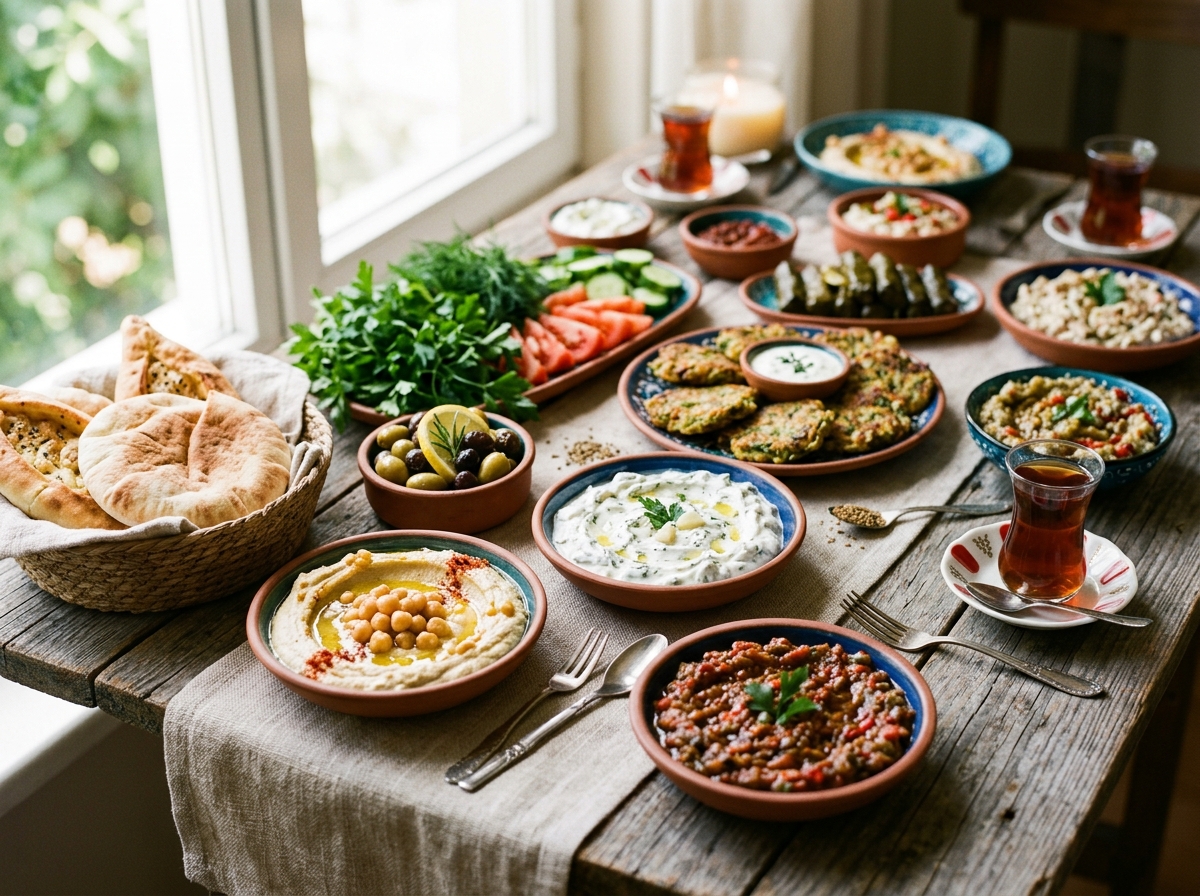
Turkish meze presentation emphasizes abundance without waste. Small portions in numerous dishes create more visual impact than large quantities of fewer items.
Serve meze at room temperature rather than cold. This allows flavors to bloom and makes eating more comfortable. Remove dishes from refrigeration thirty minutes before serving.
Provide plenty of fresh bread — Turkish pide, lavash, or good pita. The bread serves as both utensil and palate cleanser between different preparations.
Traditional accompaniments include sliced radishes, cucumber spears, and pickled vegetables. These provide textural contrast and help cleanse the palate between richer dishes.
Turkish tea or coffee traditionally follows meze, though many modern presentations include wine or beer alongside the appetizers.
Regional Variations
Turkish meze varies significantly across regions, reflecting local ingredients and cultural influences. Aegean coastal areas feature more seafood-based preparations, while southeastern regions incorporate more spice and heat.
Black Sea meze often includes anchovies and hazelnuts, reflecting the region's abundant fishing and nut cultivation. Mediterranean coastal areas blend Turkish techniques with ingredients like tahini and chickpeas common throughout the Levant.
Istanbul's meze represents a cosmopolitan blend, incorporating influences from throughout the former Ottoman Empire. This diversity makes Istanbul-style meze accessible while maintaining authentic character.
Understanding these regional differences allows you to customize your meze spread based on available ingredients and personal preferences while respecting traditional flavor profiles.
Storage and Make-Ahead Tips
Most Turkish meze improves with time, making it ideal for entertaining. Cold preparations can be made up to two days ahead, with flavors often improving overnight.
Store yogurt-based dishes covered in the refrigerator, bringing to room temperature before serving. Oil-based preparations like hummus and baba ganoush actually benefit from slight chilling, which helps them hold their shape.
Fresh herbs should be added close to serving time to maintain their bright color and flavor. Keep chopped herbs covered with damp paper towels in the refrigerator until needed.
Warm meze items like börek and dolma can be assembled ahead and baked just before serving. This allows you to enjoy your guests rather than spending the entire evening in the kitchen.
Turkish meze culture teaches us that the best meals happen when food brings people together rather than keeping the cook isolated in preparation. These recipes connect us to centuries of Turkish hospitality while creating new memories around our own tables. Whether you're exploring the full range of Turkish recipes or focusing specifically on appetizers, meze offers an accessible entry point into this rich culinary tradition.
The beauty of mastering Turkish meze lies not just in the individual recipes, but in understanding how they work together to create an experience. Each dish contributes its own character while supporting the others, creating a symphony of flavors that unfolds slowly over the course of an evening.
Sources & further reading
- A Bounty of Small Plates — Saveur
- Istanbul Meyhane Guide: Rakı, Meze & Tavern Culture — Nomado Travel
- When meze hour calls, head to a meyhanes | Turkish dining — SBS Food
- Meze Culture in Turkish Cuisine: From Traditional Flavors to Modern Touches — Chef Mezze
Related Topics
Enjoyed this article? Share it with fellow food lovers!
Import a recipe, start cooking
Paste any recipe URL and we'll turn it into a Cook Mode experience with step-by-step visuals, voice narration, and built-in timers.