

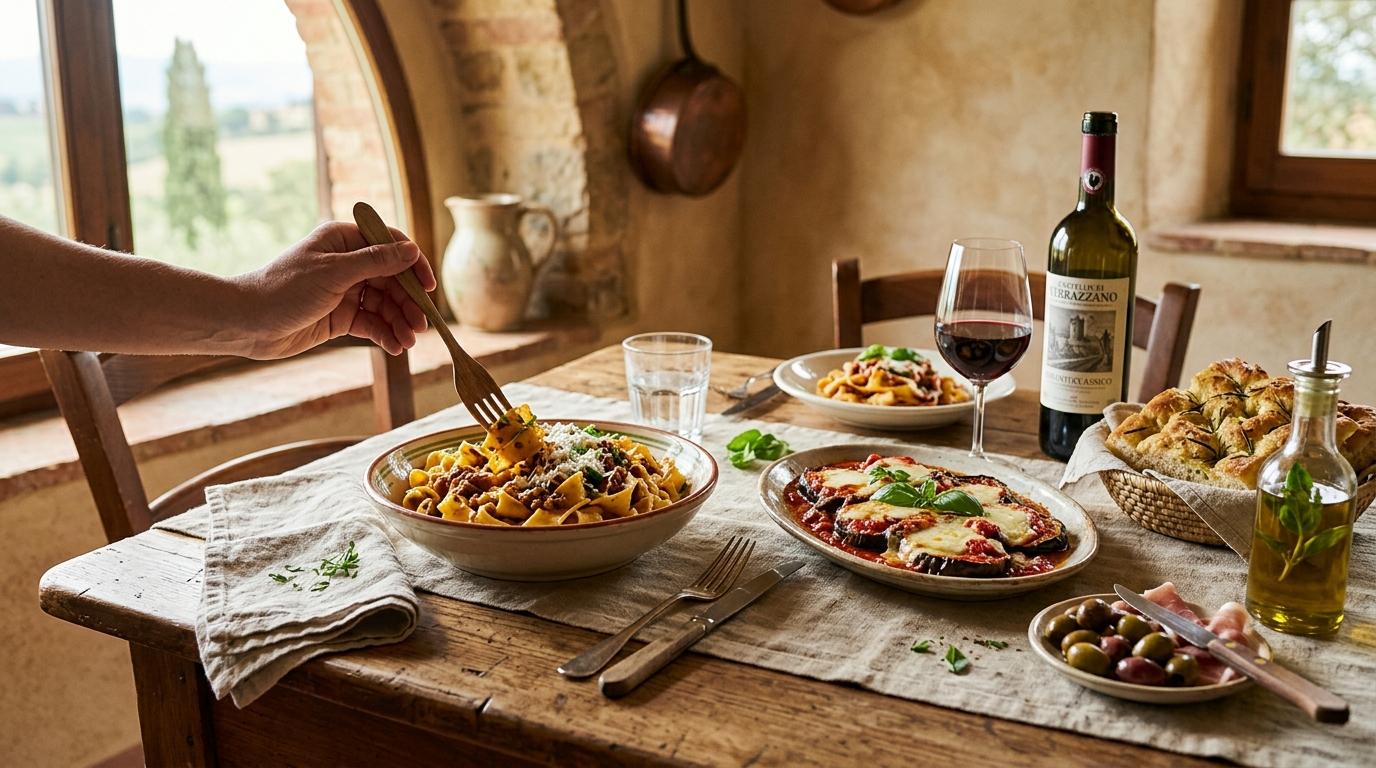
Italian cooking isn't just about throwing some garlic in olive oil and hoping for the best—though honestly, that's not a terrible place to start. Real Italian recipes carry the weight of centuries, passed down through nonne who never measured anything but somehow knew exactly when the pasta water was ready.
What makes Italian cuisine so endlessly compelling isn't complexity—it's the opposite. Italian cooks understand that when you start with exceptional ingredients and treat them with respect, magic happens. A perfectly ripe San Marzano tomato needs little more than good olive oil and fresh basil. Quality guanciale transforms simple eggs and cheese into carbonara that'll make you question every cream-laden imposter you've ever eaten.
But here's what most recipe collections miss: Italy isn't one cuisine. It's twenty regions, each with distinct ingredients, techniques, and traditions shaped by geography, history, and local agriculture. The creamy risottos of Lombardy have little in common with the chile-spiked pasta of Calabria. Understanding these differences transforms you from someone who "cooks Italian" into someone who actually understands Italian cooking.
The Foundation: Understanding Italian Cooking Techniques
Before we dive into specific recipes, let's talk technique. Italian cooking relies on a handful of fundamental methods that, once mastered, unlock countless possibilities.
Mantecatura: The Art of Pasta Finishing
This might be the most important technique you'll never hear mentioned in most Italian recipe guides. Mantecatura is the process of finishing pasta in its sauce with starchy pasta water to create a silky, cohesive dish where sauce and pasta become one.
Here's how it works: When your pasta is about two minutes shy of al dente, reserve a cup of that cloudy, starchy cooking water. Drain the pasta and immediately toss it in the pan with your sauce over medium heat. Add splashes of pasta water while tossing vigorously—the starches will bind with the fats in your sauce, creating an emulsion that coats each strand perfectly.
This technique elevates everything from simple aglio e olio to complex ragù. When you see that glossy sheen on restaurant pasta, that's mantecatura at work.
The Soffritto Base
Most Italian recipes start with soffritto—a aromatic base of finely diced onions, carrots, and celery sautéed in olive oil until soft and fragrant. This holy trinity (called the soffritto in most of Italy, but battuto in some regions) builds the flavor foundation for everything from bolognese to braised meats.
The key is patience. Let the vegetables cook low and slow until they're completely soft and starting to caramelize. This usually takes 10-15 minutes, but it's time well spent. The vegetables should practically melt into the oil, creating a sweet, aromatic base that will deepen the flavor of whatever you're cooking.
Regional Specialties: A Culinary Journey Through Italy
Italian regional cooking reflects the incredible diversity of the peninsula. Each area developed distinct flavors based on what grew locally, what could be imported, and what historical influences shaped the culture.
Northern Italy: Rich and Creamy
Northern Italian cuisine draws on the region's dairy-rich agriculture and alpine influences. Here you'll find butter alongside olive oil, cream in sauces, and rice as common as pasta.
Lombardy gave us risotto—creamy rice dishes that require patience and technique. The secret to perfect risotto isn't constant stirring (that's a myth), but rather adding warm stock gradually while stirring frequently enough to release the rice's starches. Popular preparations range from simple risotto alla milanese with saffron to mushroom-studded versions using local porcini.
Emilia-Romagna, often called Italy's food capital, produces Parmigiano-Reggiano, prosciutto di Parma, and fresh egg pasta. This is where you'll find tortellini swimming in rich broth, thick ragù Bolognese that simmers for hours, and [CLUSTER: Homemade Alfredo Sauce Recipe: Silky Italian Perfection] that relies on the finest aged Parmesan and sweet butter.
Central Italy: Rustic and Robust
Tuscany and neighboring regions excel at rustic, peasant-style cooking that transforms simple ingredients into extraordinary meals. Think thick ribollita soup made from day-old bread and vegetables, or bistecca alla Fiorentina—massive T-bone steaks grilled over oak coals.
Roman cuisine masters the art of pasta with just a few ingredients. Cacio e pepe uses only pecorino Romano, black pepper, and pasta water. Carbonara adds eggs and guanciale. Amatriciana includes tomatoes and chili. Each dish relies on perfect technique rather than lengthy ingredient lists.
The [CLUSTER: Creamy Tuscan 'Marry Me' Steak Bites Recipe Guide] exemplifies how Tuscan flavors—sun-dried tomatoes, herbs, and cream—create rich, satisfying dishes that feel both rustic and refined.
Southern Italy: Bright and Bold
Southern Italian cooking celebrates the Mediterranean trilogy: tomatoes, olive oil, and seafood. The volcanic soil around Naples produces exceptional San Marzano tomatoes, while the lengthy coastline provides abundant fresh fish and shellfish.
This is pizza's birthplace, where simple margherita—tomato, mozzarella, basil—showcases how perfect ingredients need little embellishment. Pasta dishes often feature vegetables: eggplant parmigiana, pasta alla norma with eggplant and ricotta salata, or simple spaghetti aglio e olio spiked with red pepper flakes.
Sicilian cuisine shows clear Arab influences—sweet and sour combinations, nuts in savory dishes, and abundant use of citrus. Caponata, the island's signature eggplant dish, balances sweet tomatoes with sharp vinegar and briny olives.
Essential Italian Recipes for Every Home Cook
Now let's explore the dishes that form the backbone of Italian home cooking, organized by the traditional meal structure that Italians still follow today.
Antipasti: Starting Strong
Italian meals typically begin with antipasti—small plates designed to awaken the appetite. These aren't heavy appetizers but light bites that complement what's coming.
Classic antipasti include paper-thin prosciutto draped over ripe melon, marinated vegetables like roasted peppers or artichoke hearts, and various cheeses paired with honey or mostarda. The key is variety and quality—a few exceptional ingredients arranged simply.
For something more substantial, consider [CLUSTER: Chicken Milanese Recipe: Crispy Italian Cutlets in 30 Minutes], which makes an elegant antipasti when sliced thin and served at room temperature with arugula and lemon.
Primi Piatti: Pasta Perfection
The first course traditionally features pasta, risotto, or soup. This is where Italian cooking really shines, transforming simple starches into satisfying, flavorful dishes.
Master a few fundamental pasta dishes and you'll never be stuck for dinner. [CLUSTER: Classic Spaghetti & Meatballs Recipe: Comfort Food Perfection] represents the Italian-American tradition beautifully, while dishes like [CLUSTER: Garlic Mushroom Pasta Recipe: 30-Minute Italian Comfort] showcase how quickly you can create something special with pantry staples.
For weeknight cooking, [CLUSTER: Sheet Pan Lasagna Recipe: The Game-Changing Weeknight Hack] revolutionizes one of Italy's most beloved dishes, making it accessible for busy schedules without sacrificing flavor. Traditional [CLUSTER: Perfect Homemade Lasagna: Layer Your Way to Italian Bliss] remains the gold standard for special occasions, with its carefully constructed layers of pasta, sauce, cheese, and often meat.
Don't overlook simple preparations like [CLUSTER: Easy Creamy Lemon Garlic Mushroom Pasta Recipe], which demonstrates how a few quality ingredients—good olive oil, fresh garlic, earthy mushrooms, and bright lemon—can create something memorable in under thirty minutes.
Secondi Piatti: Protein-Focused Main Courses
Italian second courses typically feature meat, poultry, or seafood, often prepared simply to let the quality of the main ingredient shine through.
Chicken dishes exemplify this approach perfectly. [CLUSTER: Perfect Chicken Piccata Recipe: Restaurant-Style at Home] showcases the classic technique of dredging cutlets in flour, pan-frying until golden, then finishing with a bright lemon-caper sauce. [CLUSTER: Classic Italian Chicken Piccata Recipe - Tender & Tangy] offers another take on this beloved preparation.
For those who prefer heartier fare, [CLUSTER: Perfect Chicken Parmesan Recipe: Crispy Pan-Fried Perfection] delivers the satisfying combination of crispy breading, melted cheese, and tangy tomato sauce that has made this dish a global favorite.
[CLUSTER: Chicken Marsala Recipe: Master This Italian-American Classic] represents the beautiful fusion that occurred when Italian immigrants adapted their traditional techniques to American ingredients, creating something new yet respectful of its origins.
For special occasions, nothing beats [CLUSTER: Slowly Braised Short Rib Ragu Recipe: Italian Comfort]. This dish requires patience—the meat needs hours of gentle braising to become fork-tender—but the results are spectacular. The rich, wine-dark sauce that develops during the slow cooking process embodies everything beautiful about Italian cooking: simple techniques applied with patience to create something transcendent.
Seasonal Cooking: The Italian Way
Italian cooking follows the seasons religiously. Spring brings tender vegetables like asparagus, artichokes, and peas. Summer means tomatoes at their peak, fresh basil, and stone fruits. Fall introduces mushrooms, root vegetables, and hearty greens. Winter calls for preserved foods, dried pasta, and slow-braised meats.
This seasonal approach isn't just about flavor—it's about connection to the land and respect for natural cycles. When you cook with the seasons, you're participating in a tradition that stretches back generations.
Spring pastas might feature fresh peas and mint, while summer calls for simple tomato sauces that let perfectly ripe tomatoes shine. Fall brings mushroom risottos and hearty ragù, while winter welcomes slow-cooked braises and preserved vegetables.
Ingredient Quality: The Italian Difference
Italian cooking succeeds or fails based on ingredient quality. When recipes call for just a few components, each one matters enormously.
Olive Oil: Liquid Gold
Extra virgin olive oil isn't just cooking fat in Italian cuisine—it's a finishing ingredient that adds flavor, richness, and complexity. Different regions produce oils with distinct characteristics. Tuscan oils tend to be peppery and robust, perfect for drizzling over grilled meats. Ligurian oils are more delicate, ideal for seafood. Southern Italian oils often have fruity, herbaceous notes.
Use good olive oil for cooking, but save your best bottle for finishing dishes. A drizzle of exceptional oil can transform a simple plate of pasta or a bowl of soup.
Tomatoes: The Foundation
San Marzano tomatoes from the volcanic soil near Naples are prized for their sweet flavor and low acidity. They're worth seeking out for special dishes, but any good-quality canned whole tomatoes will work for most recipes.
The key is avoiding pre-seasoned tomato products. Plain whole tomatoes give you control over the final flavor, allowing you to season appropriately for each specific dish.
Cheese: More Than Parmesan
While Parmigiano-Reggiano gets most of the attention, Italian cuisine uses dozens of cheeses, each with specific applications. Pecorino Romano's sharp, salty flavor pairs perfectly with black pepper in cacio e pepe. Fresh mozzarella belongs on pizza and in caprese. Gorgonzola adds creamy richness to risottos and polenta.
Buy cheese in small quantities and use it quickly. Pre-grated cheese loses flavor rapidly and often contains anti-caking agents that prevent proper melting.
Modern Italian Cooking: Innovation Within Tradition
Contemporary Italian chefs respect tradition while embracing innovation. They might use heritage grains for pasta, practice microseasoning techniques, or incorporate ingredients from other cuisines in thoughtful ways.
This evolution reflects Italian cooking's greatest strength: the ability to adapt while maintaining core principles. The best modern Italian dishes still emphasize ingredient quality, seasonal availability, and regional identity.
For home cooks, this means feeling free to make thoughtful adaptations while respecting the dish's essential character. Substitute whole wheat pasta for regular if you prefer, use local mushrooms instead of imported porcini, or add vegetables from your garden to traditional preparations.
Planning an Italian Meal
Understanding Italian meal structure helps you create authentic dining experiences at home. Traditional Italian meals progress through several courses, but you don't need to prepare everything for every meal.
For casual dinners, choose a primi piatti—pasta or risotto—and serve it with a simple salad and good bread. More formal meals might include antipasti, a primi, a secondi with vegetables, and fruit or simple dessert.
The key is balance. If your pasta course is rich and creamy, choose a lighter second course. If you're serving a heavy braise, start with something fresh and bright.
Essential Equipment for Italian Cooking
Italian cooking doesn't require specialty equipment, but a few key items make everything easier. A large, heavy-bottomed pot for pasta ensures even cooking and enough water for proper circulation. A well-seasoned cast iron or stainless steel skillet handles everything from searing meats to finishing pasta dishes.
For fresh pasta, you'll eventually want a pasta machine, but a rolling pin works fine when you're starting out. A microplane grater makes quick work of hard cheeses and citrus zest. Sharp knives and a sturdy cutting board handle all your prep work.
Most importantly, invest in good ingredients rather than gadgets. A bottle of excellent olive oil will improve your cooking more than any specialized tool.
Bringing Italy to Your Kitchen
Italian cooking isn't about perfection—it's about understanding that good food comes from good ingredients treated with respect. Start with quality basics: excellent olive oil, good canned tomatoes, real Parmigiano-Reggiano, and dried pasta from a reputable producer.
Master a few fundamental techniques: proper pasta cooking, basic soffritto, simple pan sauces. Learn to taste and adjust seasonings as you go. Most importantly, cook with joy and share your results with people you care about.
That's the real secret of Italian cooking—it's meant to bring people together. Whether you're preparing [CLUSTER: Easy Chicken Piccata Recipe: Master This Italian Classic] for a weeknight dinner or spending Sunday afternoon making homemade ragù, you're participating in a tradition that values both technique and togetherness.
Italian recipes offer endless possibilities for exploration, from simple weeknight pastas to elaborate holiday feasts. Each dish you master opens doors to new techniques, ingredients, and regional variations. The journey through Italian cuisine is one of constant discovery, where even experienced cooks continue learning new methods and discovering forgotten preparations.
Start with what appeals to you most, whether that's mastering the perfect carbonara or learning to make fresh pasta from scratch. Let your curiosity guide you through Italy's incredibly diverse culinary landscape, and remember that every Italian nonna started exactly where you are now—with enthusiasm, basic ingredients, and the desire to create something delicious.
Sources & further reading
- Italian Culinary Institute — Italian Culinary Institute (Istituto Culinario Italiano)
- The Academy cookbooks | Accademia Italiana della Cucina — Accademia Italiana della Cucina (Italian Academy of Cuisine)
- Recipes | Accademia Italiana della Cucina — Accademia Italiana della Cucina (Italian Academy of Cuisine)
- Italian cuisine, a UNESCO World Heritage asset — Italia.it (Official Italian National Tourism Board / ENIT)