

What Is Short Rib Ragu? Origins, Variations and Serving
Short rib ragu takes the Italian tradition of slow-cooked meat sauce and builds it on tender, bone-in beef. Here is where ragù comes from, how it varies, and how to turn it into a full meal.
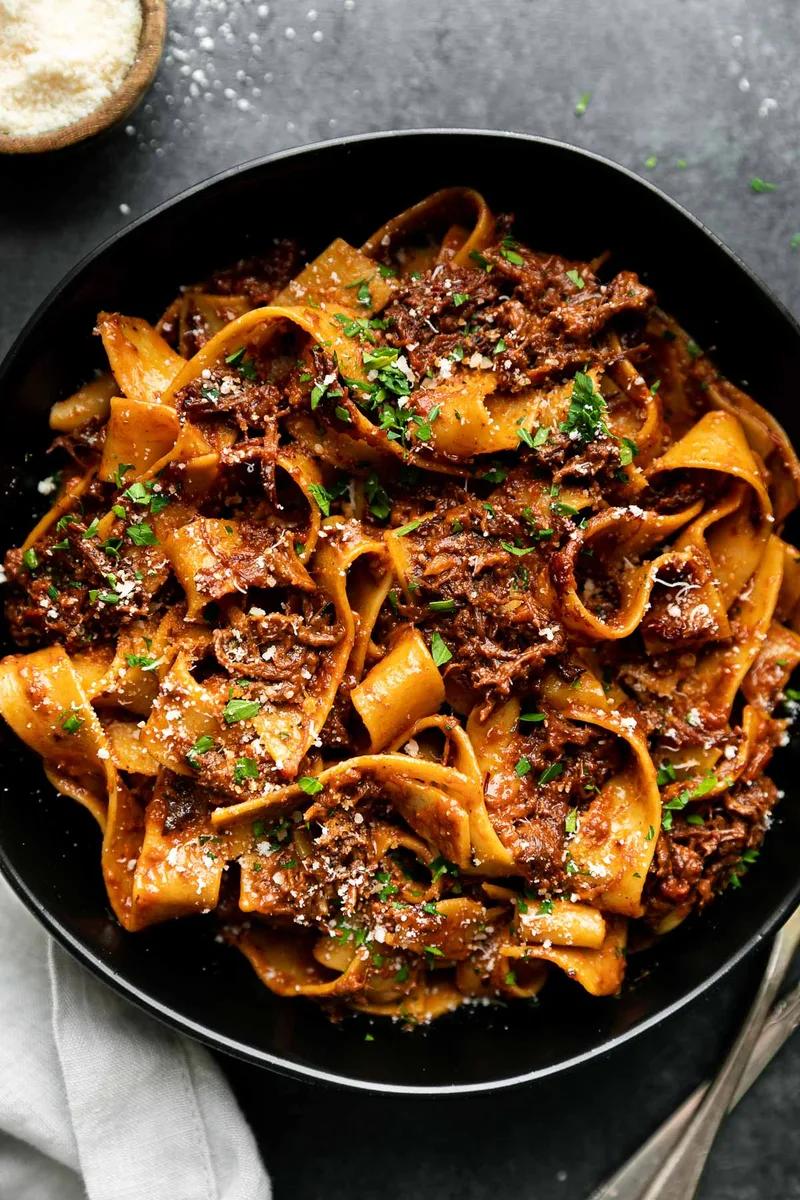
Featured Recipe
Slowly Braised Short Rib Ragu
Short rib ragu is an Italian-style pasta sauce made by braising bone-in beef short ribs until the meat gives way at the touch of a spoon, then folding it into a deep, tomato-rich sauce. It is dark and glossy, savory with a hint of sweetness from wine and vegetables, and so rich that a little of it goes a long way over a bowl of pasta.
People love it because it turns a tough, fatty cut into something plush and spoonable, and because the kitchen smells wonderful for hours. It is not a quick dinner, but it asks for patience rather than skill, and the payoff is the kind of bowl people go quiet over.
Where short rib ragu comes from
Short rib ragu as we know it has no documented origin story, and it looks like a modern riff rather than a classic with a clear birthplace. What it does have is a very old family behind it. The word ragù comes from the French ragoût, and in Italian cooking it describes a meat sauce, usually served with pasta. The Accademia Italiana della Cucina has documented several ragù recipes, and the best known is ragù alla bolognese.
The closest relatives of a braised-rib version sit in the south. Neapolitan ragù, tied to Naples in Campania, is made by braising cuts of beef and pork in tomato purée and sauce with onion, wine and basil. The meat is lifted out when it is ready while the sauce keeps cooking and thickening. Another Campanian cousin, ragù cilentano, is a tomato-centric sauce in which various meats, traditionally only small amounts of scraps, melt into the tomatoes. Milk Street adapted its short rib ragù from that dish, as taught by chef Giuseppe Croce in Bellosguardo. Short ribs fit this tradition naturally: a humble, collagen-rich cut that rewards a long, slow braise.
How it varies
The biggest dividing line is how much the tomato leads. Bolognese-style ragù is typically more meat-forward, while southern versions lean on tomato and let the meat flavor the sauce. Short rib ragu sits somewhere between, depending on the cook.
- Shredded or chunky: some cooks pull the meat off the bone and stir it through, while others leave larger pieces so the sauce eats almost like a stew.
- Two-step or one-pot: in the Neapolitan manner the meat can be served separately as a second course after the pasta, which is the traditional approach in some households.
- Wine and aromatics: red wine is common, and a base of onion, carrot and celery is the usual starting point. Some cooks add a splash of milk or a bit of pancetta, which are modern or regional touches rather than rules.
- Modern twists: serving it over polenta, mashed potatoes or gnocchi, or finishing with orange zest or fresh herbs.
When to make short rib ragu
This is a Sunday dinner dish through and through. Put it on in the afternoon, let it murmur away, and sit down to it at dusk. It is also a good weekend project for anyone who likes cooking that mostly looks after itself, and the sauce tastes even better made a day ahead, which takes the pressure off when you are feeding a crowd. Boil a big pot of pasta, set the ragu in the middle of the table and let people help themselves.
It shines from October through February in the Northern Hemisphere. Late autumn brings mushrooms, winter squash and hardy greens like kale and chicory, and winter adds radicchio, fennel and citrus to cut through the richness. A cold, rainy November evening is the ideal setting.
What to serve with short rib ragu
- Wide pasta ribbons or tubes: pappardelle, tagliatelle or paccheri (the shape pictured with Neapolitan ragù) have the surface and heft to hold a thick sauce.
- A bitter green salad: radicchio, arugula or escarole with a sharp lemon dressing resets your palate between rich bites.
- Crusty bread: essential for mopping up whatever sauce is left in the bowl.
- Roasted vegetables: broccolini, cauliflower or fennel add some texture and a little char without competing.
- Red wine: a Sangiovese-based Chianti or a Montepulciano d'Abruzzo has the acidity to stand up to the beef. Finish the bowl with plenty of grated Parmigiano.
Make it at home
The version we cook on Meez comes from Plays Well With Butter. It follows the classic path of browning the ribs, braising them slowly, and finishing the sauce until it clings to the pasta. Get the recipe for the full ingredient list and method, or cook it step by step in Cook Mode so you can keep your phone screen awake with floury hands.
Questions about short rib ragu
What is short rib ragu?
It is a pasta sauce in the Italian ragù tradition, made with slowly braised beef short ribs, tomato, wine and aromatics. The meat becomes tender enough to shred into the sauce.
How is short rib ragu different from Bolognese?
Bolognese is the best-known ragù and is usually built on a mix of ground meats. Short rib ragu uses larger bone-in cuts braised until they fall apart, which gives a chunkier, more stew-like sauce.
Is short rib ragu traditionally Italian?
Ragù is firmly Italian, and southern versions like Neapolitan and cilentano ragù use slow-braised meat in tomato. Using short ribs specifically appears to be a modern adaptation, not a documented regional classic.
What pasta goes best with short rib ragu?
Wide, sturdy shapes such as pappardelle, tagliatelle or paccheri work best because they hold up to the weight of the sauce. Polenta or gnocchi are good alternatives.
Sources
Last reviewed October 25, 2026. Written by the Meez editorial team with Meez Magic, from the sources above.
Original Recipe Source
This article is inspired by a recipe from Playswellwithbutter.
Visit the original source for their version of this recipe and more great content.
Related Topics
Enjoyed this article? Share it with fellow food lovers!
Ready to Cook This Recipe?
Experience our immersive Cook Mode with step-by-step visual guidance, voice narration, and built-in timers.