

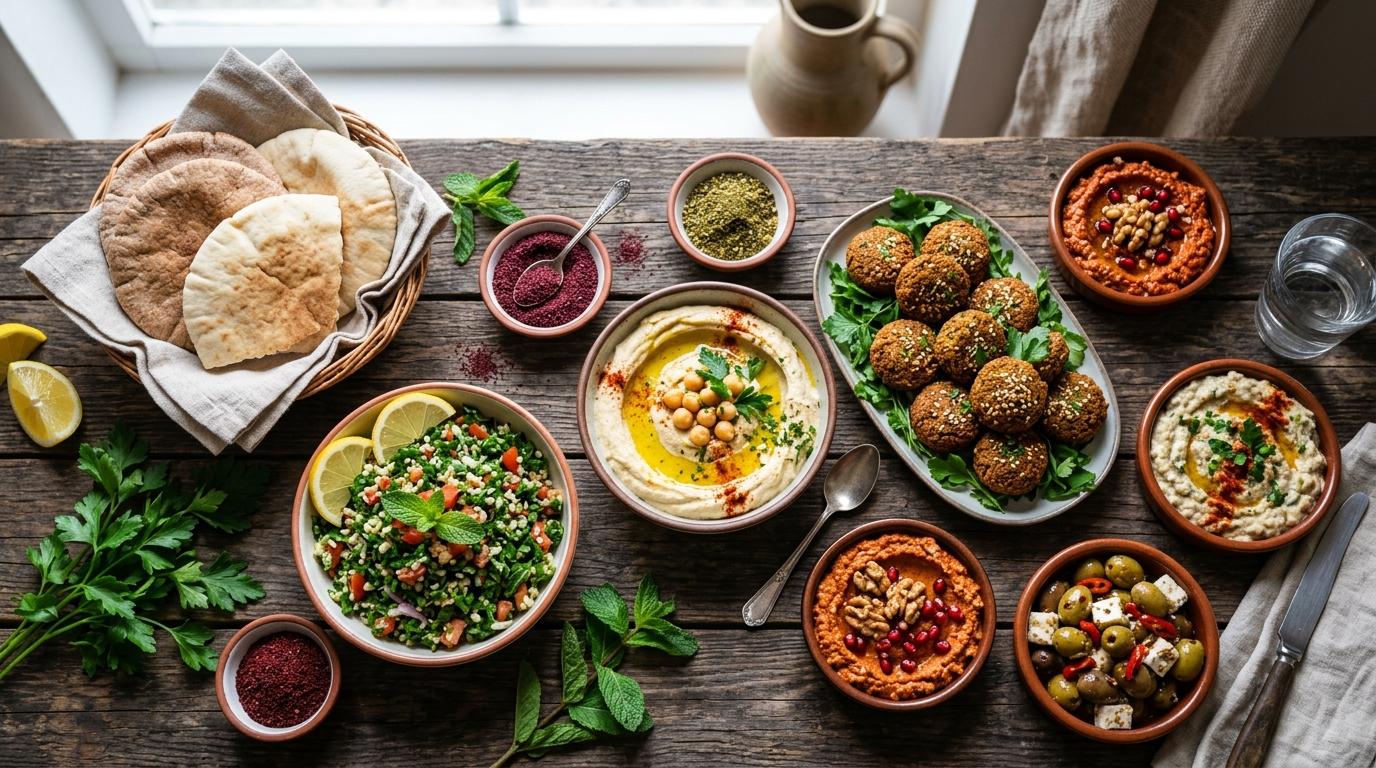
The first time I tasted proper tahini—not the chalky health-food-store version, but silky, nutty tahini from a Middle Eastern market—everything clicked. The hummus that had seemed impossibly smooth in restaurants suddenly made sense. The baba ganoush that haunted my dreams became achievable. This is the magic of Middle Eastern cooking: once you understand the building blocks, an entire world of flavor opens up.
Middle Eastern cuisine spans from the Persian Gulf to the Mediterranean, encompassing the culinary traditions of Iran, Lebanon, Syria, Turkey, Israel, Palestine, and beyond. Each region brings its own character—Persian cooking's delicate rice dishes and herb-forward stews, Lebanese mezze culture with its emphasis on sharing, Turkish techniques that bridge Europe and Asia. What unites them is a reverence for spices, an understanding of balance, and a generosity of spirit that turns every meal into a celebration.
The learning curve feels steep at first. The spice names alone can overwhelm—sumac, za'atar, baharat, advieh. But here's what cookbook authors rarely tell you: Middle Eastern cooking is actually quite forgiving. Most dishes improve with time, leftovers are often better than the original, and many recipes scale beautifully for meal prep. Once you master a few key techniques and stock your pantry with the right ingredients, you'll find yourself improvising with confidence.
Building Your Middle Eastern Pantry
Before diving into recipes, let's talk ingredients. A well-stocked Middle Eastern pantry is your secret weapon, and the good news is that most staples keep for months. Start with the Essential Middle Eastern Spices Guide—these form the flavor foundation of everything you'll cook.
Sumac gives dishes a bright, lemony tartness without the liquid. I keep it next to my salt and reach for it constantly. Za'atar, that magical Middle Eastern herb blend, transforms everything from roasted vegetables to scrambled eggs. Don't buy the dusty supermarket version if you can help it—seek out a Middle Eastern grocer where turnover is high and the blend still smells vibrant.
Tahini deserves special attention. Good tahini should pour like honey when stirred, with no layer of oil on top. Joyva and Soom are reliable grocery store brands, but if you have access to Al Wadi or Al Arz from a Middle Eastern market, grab them. Store tahini upside down so you're not fighting with separated oil every time you cook.
For rice, seek out basmati for Persian dishes and Egyptian short-grain for stuffings. The difference in texture is significant—basmati grains stay separate and fluffy, while short-grain rice holds together for dolmas and kibbeh. Bulgur wheat comes in different grinds; medium works for most applications, but fine bulgur is essential for authentic tabbouleh.
Pomegranate molasses might be the most underused ingredient in American kitchens. This thick, tangy syrup adds complexity to stews and makes an incredible glaze for roasted meats. A little goes a long way—start with a teaspoon and taste.
Mastering the Mezze Mindset
Understanding mezze is crucial to grasping Middle Eastern food culture. These aren't appetizers in the Western sense—they're a way of eating that emphasizes variety, conversation, and sharing. Classic Middle Eastern Appetizers and Mezze teaches you the fundamentals, but the real lesson is philosophical: build meals around multiple small dishes rather than one large centerpiece.
This approach makes weeknight cooking much more manageable. Instead of stressing about a perfect main course, prepare three simple things: maybe muhammara from roasted red peppers, quick pickled turnips, and warm pita. Add some olives and cheese, and you have a satisfying dinner that required minimal active cooking time.
The key to successful mezze is temperature variety and textural contrast. Serve something warm (like fried halloumi), something cool (like cucumber yogurt), something crispy (like toasted pita), and something creamy (like hummus). This creates a dynamic eating experience that keeps people engaged.
Timing becomes crucial when preparing multiple dishes. Make dips and salads first—they actually improve as they sit. Prepare any pickled elements hours or days ahead. Save warm dishes for last, and don't worry about getting everything perfect. The beauty of mezze is its casual, abundant feeling.
Regional Specialties Worth Mastering
Each Middle Eastern region offers distinct flavors and techniques that deserve attention. Persian and Iranian Recipe Collection showcases the elegant side of Middle Eastern cooking, where saffron perfumes rice dishes and fresh herbs balance rich stews. Persian cooking prizes the interplay of sweet and sour—pomegranate and walnuts in fesenjan, barberries with rice, dates in savory braises.
The technique of tahdig—creating a golden crust on the bottom of rice—might seem intimidating, but it's surprisingly forgiving. The key is patience and a heavy-bottomed pot. Start with medium heat, listen for gentle sizzling, then lower the temperature. That crispy bottom layer isn't a mistake; it's the prize.
Lebanese and Levantine Cooking Guide reveals a different philosophy entirely. Levantine cooking emphasizes freshness and brightness—think tabbouleh heavy on herbs, fattoush with its tangy sumac dressing, grilled meats seasoned simply to let quality ingredients shine. The Lebanese approach to seasoning is restrained but precise. A pinch of allspice in the meat mixture, a sprinkle of sumac on salad, lemon juice added at the very end to preserve brightness.
Turkish cuisine bridges European and Asian influences, giving us techniques like slow-cooked beans in olive oil and layered pastries that require patience but reward it generously. Turkish cooks understand fat as a flavor carrier—good olive oil isn't just an ingredient but a finishing element that ties dishes together.
Essential Techniques for Success
Certain techniques appear across all Middle Eastern cooking traditions, and mastering them transforms your results. Blooming spices in fat before adding liquid ingredients makes an enormous difference. Heat oil or butter until it shimmers, add your spices, and cook until fragrant—usually 30 seconds to a minute. You'll smell the moment when harsh, raw spice notes become warm and complex.
Salting vegetables properly eliminates the watery, bland results that plague many home cooks. When making dishes like baba ganoush or mutabal, salt your roasted eggplant and let it drain for 15 minutes. This concentrates flavors and prevents your dip from becoming a puddle.
Temperature control matters enormously, especially for [CLUSTER: Authentic Kabob Koobideh Recipe: Persian Grilled Perfection] and other grilled specialties. Many Middle Eastern grilled dishes benefit from medium heat rather than blazing high temperatures. This allows spices to bloom without burning and keeps meat juicy.
Rice cooking in Middle Eastern cuisine goes beyond the basic absorption method. For Persian-style rice, parboiling followed by steaming creates incredibly fluffy grains. Middle Eastern Rice and Grain Recipes covers these methods in detail, but the basic principle is controlling moisture carefully at each stage.
Bread making might seem daunting, but Authentic Middle Eastern Bread Recipes proves that many traditional breads are surprisingly approachable. Pita bread, for instance, requires no special equipment—just a hot oven and a baking stone or cast-iron pan. The key is understanding that the dramatic puffing happens in the first few minutes, then the bread settles into its pocket shape.
Main Dishes That Satisfy
[CLUSTER: Traditional Middle Eastern Main Dishes] encompasses everything from slow-braised lamb shanks to stuffed vegetables, but the unifying principle is building layers of flavor. Most Middle Eastern main courses benefit from initial browning, aromatics sautéed until fragrant, liquid added gradually, and long, gentle cooking.
Stews and braises like khoreshte ghormeh sabzi or maqluba reward patience. The meat becomes tender enough to cut with a fork, vegetables meld into the sauce, and spices lose any harsh edges. These dishes actually improve overnight, making them perfect for weekend cooking and weekday reheating.
Stuffed vegetables—dolmas, mahshi, kousa—represent Middle Eastern cooking at its most ingenious. The technique of hollowing out vegetables and filling them with seasoned rice or meat might seem fiddly, but it's oddly meditative once you get the rhythm. The key is seasoning the filling assertively since it will mellow as it cooks inside the vegetable.
For quicker satisfaction, Quick Middle Eastern Weeknight Meals offers strategies for getting complex flavors on the table fast. Many traditional dishes have weeknight-friendly versions that capture the essence without the time investment. Shakshuka, for instance, delivers the warm spices and satisfying textures of longer-cooked dishes in under 30 minutes.
Soups and Comfort Foods
Middle Eastern Soup and Stew Recipes reveals perhaps the most comforting side of this cuisine. Lentil soup with lemon and swiss chard, Persian ash-e reshteh with its tangle of herbs and noodles, Turkish red lentil soup bright with paprika and mint—these dishes nourish both body and spirit.
The technique for most Middle Eastern soups starts similarly: bloom aromatics and spices in fat, add liquid gradually, then simmer until flavors meld. The magic happens in the finishing touches—a drizzle of good olive oil, a sprinkle of fresh herbs, a squeeze of lemon juice that brightens the entire bowl.
Many of these soups freeze beautifully, making them excellent meal-prep candidates. Portion them in single-serving containers, and you have homemade comfort food ready for busy weeks. Just remember to taste and adjust seasoning after reheating—flavors can mellow during freezing.
Vegetarian Excellence
Middle Eastern cuisine might be the world's best for vegetarian cooking, though it rarely announces itself as such. Middle Eastern Vegetarian and Vegan Recipes showcases dishes where vegetables take center stage not as meat substitutes but as stars in their own right.
The tradition of cooking vegetables in olive oil until silky and concentrated creates incredibly satisfying dishes. Turkish-style green beans braised with tomatoes, Lebanese-style stuffed eggplant, Persian kuku (herb frittatas)—these dishes satisfy carnivores and vegetarians equally.
Legumes play a huge role in traditional Middle Eastern vegetarian cooking. Lentils, chickpeas, and fava beans appear in everything from soups to salads to main courses. The key is treating them as ingredients worthy of attention rather than cheap protein fillers. Proper seasoning, good olive oil, and fresh herbs transform humble beans into memorable meals.
For health-conscious cooks, Healthy Middle Eastern Recipes demonstrates how traditional Middle Eastern eating patterns align beautifully with modern nutritional wisdom. The emphasis on vegetables, legumes, whole grains, and good fats creates naturally balanced meals.
Sweet Endings
Middle Eastern Desserts and Sweets might intimidate at first glance—phyllo pastries, rose water, orange blossom water, and techniques that seem to require professional skills. But many traditional sweets are surprisingly achievable at home.
Rice pudding appears across the Middle Eastern world, and each version teaches you something about balancing sweetness, achieving proper texture, and using aromatics judiciously. Too much rose water overwhelms; too little disappears entirely. Start conservatively and build up.
Ma'amoul, those delicate semolina cookies filled with dates or nuts, represent Middle Eastern baking at its most refined. The technique of working semolina flour with butter until it resembles coarse meal, then adding just enough liquid to bind, creates an incredibly tender texture. Special molds aren't essential—you can shape them by hand and still achieve beautiful results.
Baklava deserves its reputation as the queen of Middle Eastern desserts, but don't let perfectionism paralyze you. Yes, paper-thin phyllo sheets and precise layering create the ideal texture, but even imperfect baklava tastes incredible. The key is generous butter between layers, proper pre-baking scoring, and hot syrup poured over hot pastry.
Modern Applications and Fusion
Understanding traditional Middle Eastern techniques opens doors for creative applications in modern cooking. Za'atar makes an excellent seasoning for roasted chicken or grilled vegetables. Tahini creates incredibly rich salad dressings and works beautifully in both sweet and savory applications.
Sumac's bright acidity enhances everything from avocado toast to grilled fish. I keep a shaker of it on my counter and use it wherever I might reach for lemon juice but want more texture and less liquid.
Middle Eastern spice blends like baharat or advieh can transform simple weeknight cooking. A teaspoon stirred into ground meat for tacos, sprinkled on roasted cauliflower, or whisked into salad dressing adds complexity without requiring special ingredients or techniques.
Practical Meal Planning
Middle Eastern cuisine excels at make-ahead cooking and batch preparation. Most dips and spreads improve with time. Rice dishes reheat beautifully and often taste better the next day. Pickled vegetables keep for weeks and add brightness to any meal.
Plan your Middle Eastern cooking around components rather than complete meals. Make a large batch of tahini sauce, pickle some turnips, cook extra rice. These building blocks let you assemble quick, satisfying meals throughout the week without starting from scratch each time.
Many traditional preservation techniques—quick pickles, herb oils, spice pastes—extend the life of ingredients and add convenience. A jar of preserved lemons or a container of zhug (spicy herb sauce) in your refrigerator means complex flavors are always within reach.
Equipment and Shopping Guide
You don't need special equipment for most Middle Eastern cooking, but a few items make the process easier and more authentic. A heavy-bottomed pot with a tight-fitting lid is essential for perfect rice. Cast iron works wonderfully and retains heat evenly.
A good spice grinder—even a clean coffee grinder—transforms whole spices into fresh, potent powders. Pre-ground spices fade quickly; whole spices keep their potency for months. Toast them lightly in a dry pan before grinding for even better flavor.
For shopping, seek out Middle Eastern markets when possible. Turnover is higher, prices are often lower, and you'll find ingredients like good tahini, fresh phyllo, and house-made pickles that make a real difference. Many items are also available online, though spices are best bought in person where you can smell them.
Don't feel pressured to buy everything at once. Build your pantry gradually, focusing on one cuisine or region at a time. Master a few Lebanese dishes before moving on to Persian specialties. This approach prevents waste and helps you develop confidence with each flavor profile.
Starting Your Journey
Begin with dishes that showcase fundamental techniques and flavors. Hummus teaches you about balancing tahini and lemon, achieving proper texture, and building layers of flavor. Tabbouleh demonstrates the importance of fresh herbs and proper bulgur preparation. Simple grilled kebabs reveal how good meat and basic seasoning create memorable meals.
Don't worry about authenticity initially—focus on understanding flavors and techniques. As your confidence grows, you can explore regional variations and more complex dishes. The goal is developing intuition about Middle Eastern flavor combinations and cooking methods.
Cook with friends when possible. Middle Eastern cuisine is inherently social, and sharing the cooking process makes complex dishes feel manageable. Plus, many recipes serve large groups, making them perfect for entertaining.
Most importantly, taste constantly and adjust fearlessly. Middle Eastern cooks season by instinct, adding acid or salt or spice until the balance feels right. Trust your palate and don't be afraid to deviate from recipes once you understand the basic principles.
The beauty of Middle Eastern cooking lies not just in its flavors but in its philosophy—food as hospitality, cooking as love, meals as opportunities to connect. Every dish tells a story of migration, adaptation, and cultural exchange. When you master these recipes, you're not just learning to cook; you're connecting with centuries of culinary wisdom and joining a tradition that values generosity, patience, and the simple pleasure of sharing good food with people you care about.