

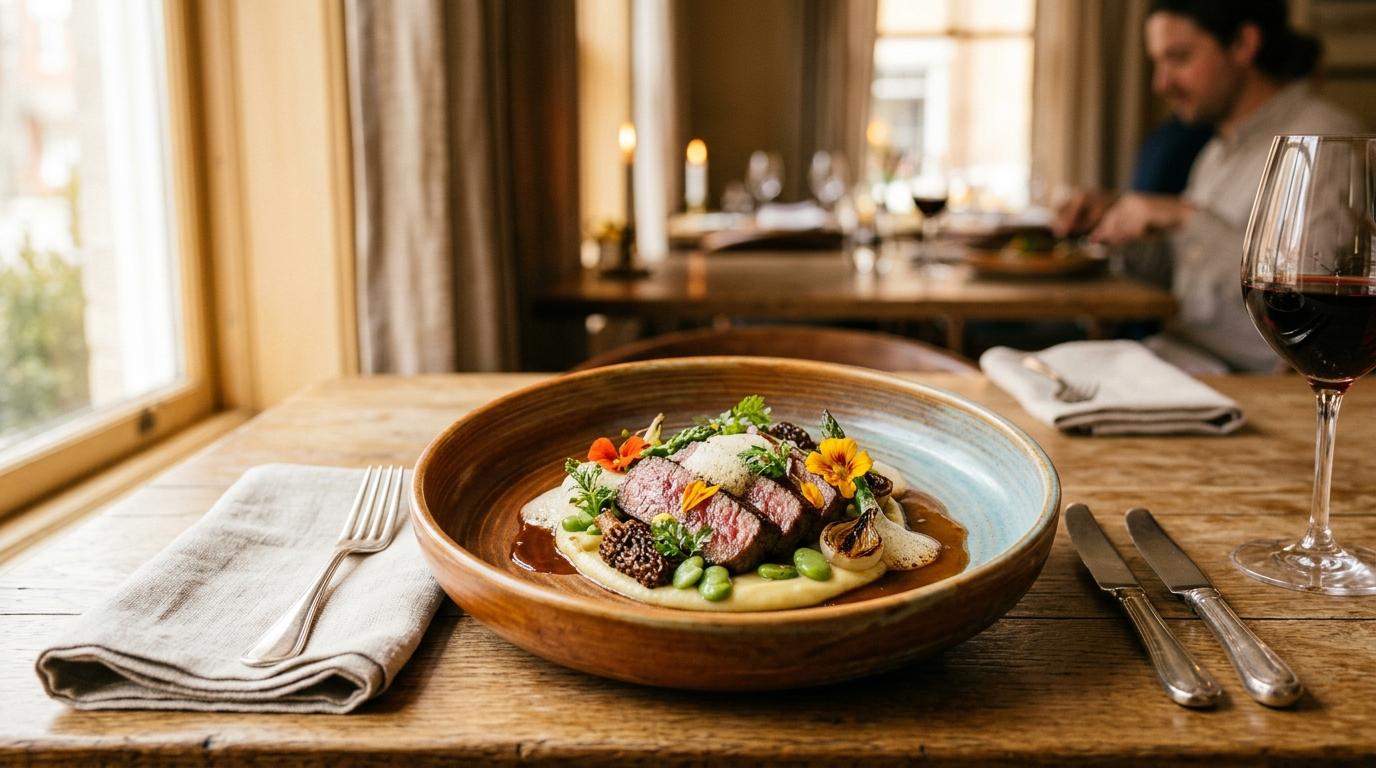
The red Michelin Guide arrived in America in 2005, first landing in New York City with all the pomp of a diplomatic mission. Two decades later, the landscape has shifted dramatically. What began as a French tire company's attempt to validate American fine dining has evolved into something more interesting: a celebration of the country's actual culinary identity.
Today's Michelin star restaurants United States tell a different story than those early reviews. Sure, you'll still find temples to French technique, but you're just as likely to encounter a Korean-American chef reimagining banchan or a Mexican restaurant earning stars for mole that takes three days to build. The Guide now covers California, New York, Chicago, Washington D.C., Boston, Philadelphia, Florida, Texas, Colorado, the American South and, since 2026, the Southwest—from established scenes in New York and San Francisco to emerging ones in Atlanta and Miami.
This isn't just about prestige—though the stars certainly carry weight. Understanding the current Michelin landscape means grasping how American dining has matured beyond European frameworks. The restaurants earning recognition today reflect our actual food culture: diverse, technique-driven, but rooted in flavors that couldn't exist anywhere else.
Understanding the Michelin Star System in America
The Michelin rating system operates on a deceptively simple scale, but the reality behind those stars reveals layers of complexity that many diners don't fully grasp. One star means "high quality cooking, worth a stop." Two stars indicate "excellent cooking, worth a detour." Three stars represent "exceptional cuisine, worth a special journey."
In practice, the distinctions blur more than the Guide admits. Some one-star restaurants serve food that rivals two-star establishments, while certain three-star temples feel more like museums than restaurants. The real insight comes from understanding what Michelin inspectors actually value: consistency, technique, and the mysterious quality they call "personality."
American Michelin restaurants have pushed these boundaries in ways the European establishments rarely attempt. A chef might earn stars for perfecting a single dish—say, the greatest pasta cacio e pepe outside of Rome—or for building an entirely new vocabulary around familiar ingredients. The flexibility has allowed American creativity to flourish within the framework.
Beyond the stars themselves, Michelin recognizes restaurants through two additional categories that have gained significant importance. The Bib Gourmand designation celebrates restaurants offering "good food at a moderate price"—in the US, a meal of a couple of courses for roughly $50 or less before tax and tip. Green Stars highlight restaurants with outstanding environmental commitment. Both categories have become increasingly relevant as diners seek value and sustainability alongside excellence.
What to Expect at a Michelin Star Restaurant varies significantly depending on the establishment's style and star level, but certain elements remain consistent across the board.
The Major Michelin Markets: Where Stars Shine Brightest
New York City remains the gravitational center of American Michelin dining, with around 70 starred establishments in the 2025 guide, spanning every conceivable cuisine and price point. Michelin Star Restaurants in New York City ranges from the $300+ tasting menu temples in Manhattan to surprisingly affordable gems in the outer boroughs. The city's density allows for restaurant hopping that's impossible elsewhere—you could theoretically eat at a different starred restaurant every night for two months.
The West Coast tells a different story. California Michelin Star Restaurants Guide reveals a scene split between San Francisco's refined technique and Los Angeles's more relaxed approach to fine dining. San Francisco's stars cluster around familiar fine-dining themes—French technique, Japanese precision, Italian tradition. Los Angeles, by contrast, has earned recognition for restaurants that feel more like elevated neighborhood joints than formal dining rooms.
Chicago occupies a unique position in the American Michelin landscape. Chicago Michelin Star Restaurants reflects the city's industrial soul and Midwestern sensibility. The starred restaurants here tend toward heartier flavors and more substantial portions than their coastal counterparts. This is where you'll find Michelin recognition for a Filipino tasting menu rooted in home-style comfort food, and some of the country's most inventive vegetable cookery.
The newer markets—Washington D.C., Atlanta, Miami, and others—have brought fresh perspectives to American Michelin dining. These cities earned their first stars without decades of European-influenced expectations weighing on local chefs. The result is often more adventurous: restaurants that blend regional American traditions with global techniques in ways that feel natural rather than forced.
The Three-Star Elite: America's Culinary Temples
Only a handful of American restaurants have achieved the Michelin Guide's highest honor, and each Best 3-Star Michelin Restaurants in America represents a different vision of what peak dining can be. These aren't just restaurants—they're complete experiences that demand your full attention and considerable financial commitment.
The French Laundry in California's Napa Valley pioneered the American interpretation of three-star dining. Thomas Keller's restaurant established the template: pristine ingredients, flawless technique, and presentation that borders on the theatrical. Every detail, from the garden-fresh vegetables to the hand-polished silverware, reinforces the sense that you've entered a world where ordinary rules don't apply.
Per Se in New York took this formula and adapted it for urban diners. The restaurant's location high above Columbus Circle provides a backdrop that complements rather than competes with the food. The tasting menu changes constantly, but the underlying philosophy remains consistent: each course should surprise while building toward a cohesive whole.
Eleven Madison Park, which has held three stars since 2012, represented something different entirely—a uniquely American approach to fine dining that celebrated local ingredients and regional traditions through a modernist lens. It kept all three stars after switching to a plant-based menu in 2021, and since October 2025 it has offered some meat and seafood again alongside a mostly plant-based menu.
These temples share certain characteristics: meals that last three to four hours, prices that run from the mid-$300s to well over $500 per person before wine, and reservation systems that require planning months in advance. They also share an intangible quality—the sense that you're experiencing something that couldn't happen anywhere else in the world.
The Practical Reality: Reservations, Costs, and Planning
The romance of Michelin dining crashes hard against practical realities. How to Get Michelin Star Restaurant Reservations has become an art form unto itself, involving everything from setting phone alarms for reservation releases to cultivating relationships with concierges at luxury hotels.
The most sought-after restaurants release reservations on a fixed schedule, often a month or more in advance, and prime slots can sell out within minutes. Others use lottery systems, waitlists, or require advance payment. Some starred restaurants don't take reservations at all, operating on a first-come, first-served basis that can mean waiting hours for a table.
Understanding Cost of Dining at Michelin Star Restaurants requires more than just looking at menu prices. A one-star dinner can run from under $100 per person at an à la carte spot to well over $200 for a tasting menu, and wine pairings can easily double that figure. Two-star tasting menus commonly cost $300 or more per person, while three-star menus generally start in the mid-$300s before wine, tax and service, and pairings can push the total far higher.
These costs extend beyond the meal itself. Many Michelin restaurants are located in expensive cities where hotel rates, transportation, and pre- or post-dinner drinks add significant expense. A weekend trip centered around a three-star restaurant can easily cost $2,000+ for a couple.
Smart diners have learned to work within these constraints. Lunch menus often offer similar food at lower prices. Bar seating provides more reservation flexibility. Special events and holiday menus sometimes offer better value than regular service. The key is understanding that Michelin dining operates more like ticketed entertainment than traditional restaurant service.
Beyond French Cuisine: America's Diverse Michelin Scene
The most significant evolution in American Michelin dining has been the recognition of non-European cuisines that actually reflect how Americans eat. Asian Michelin Star Restaurants in the US now represents one of the largest categories of starred establishments, spanning everything from sushi counters to modern Korean restaurants to elevated dim sum.
This shift reflects both changing demographics and evolving palates. Cities like San Francisco and New York, with their substantial Asian populations, were early adopters. But now you'll find Michelin-starred Asian restaurants in unexpected places—an Indian restaurant in Houston, a Filipino tasting menu in Chicago, an omakase counter in Austin.
The recognition of Mexican cuisine has been particularly significant. For decades, American fine dining largely ignored the sophisticated techniques and ancient ingredients that define serious Mexican cookery. Today's Michelin-starred Mexican restaurants showcase everything from pre-Columbian cooking methods to modern interpretations of regional specialties. These aren't "elevated" versions of familiar Tex-Mex—they're explorations of one of the world's great culinary traditions.
American regional cuisine has also found its voice within the Michelin framework. Southern restaurants have earned stars for modernized takes on traditional dishes. Midwestern establishments have gained recognition for celebrating local agricultural bounty. West Coast restaurants have been honored for their California cuisine approach to seasonal cooking.
This diversification has made American Michelin dining more interesting than its European counterparts. You can experience a broader range of flavors, techniques, and cultural perspectives within a single city's starred restaurant scene than would be possible anywhere else in the world.
The Bib Gourmand Revolution: Quality Without the Premium
Michelin Bib Gourmand Restaurants USA has become the sweet spot of American Michelin dining—restaurants where you can experience starred-level quality without the formal atmosphere or premium pricing. These establishments often represent the most innovative and accessible cooking happening in major food cities.
The Bib Gourmand category has captured something essential about American dining culture: our preference for great food in relaxed settings over stuffy formality. Many Bib Gourmand restaurants operate more like elevated neighborhood joints than traditional fine dining establishments. You might find counter seating, paper napkins, and servers in jeans alongside food that rivals more expensive starred restaurants.
These restaurants have also become incubators for culinary talent. Many chefs who later earn full stars cut their teeth at Bib Gourmand establishments, learning to deliver consistent excellence while managing costs and creating welcoming environments. The category has become a pipeline for American culinary innovation.
From a practical standpoint, Bib Gourmand restaurants offer the most accessible entry point into Michelin dining. Reservations are generally easier to secure, prices usually stay around $50 per person or less, and the atmosphere is usually more forgiving of dining novices. They're also more likely to reflect local food culture rather than international fine dining conventions.
Sustainability and Social Responsibility: The Green Star Movement
Environmental consciousness has become a significant factor in contemporary restaurant culture, and Michelin Green Star Sustainable Restaurants represents the Guide's acknowledgment of this shift. Green Star restaurants must demonstrate outstanding commitment to sustainability while maintaining the quality standards expected of Michelin recognition.
American Green Star restaurants have pioneered approaches that extend far beyond typical "farm-to-table" marketing. Some maintain on-site gardens and composting systems. Others have eliminated single-use items entirely. Many work directly with farmers and producers to support sustainable agricultural practices. The most committed establishments have redesigned their operations around zero-waste principles.
The Green Star designation reflects broader changes in how Americans think about dining. Younger diners, in particular, expect restaurants to demonstrate environmental responsibility alongside culinary excellence. The designation has become a competitive advantage for restaurants seeking to attract conscious consumers.
Some Green Star restaurants have achieved remarkable innovations. Urban farms that supply restaurant kitchens year-round. Fermentation programs that reduce food waste while creating unique flavors. Partnerships with local producers that support regional food systems. These initiatives often enhance rather than compromise the dining experience.
The movement has also influenced non-Green Star restaurants. Sustainability practices initially developed for Green Star recognition have spread throughout the industry. The result is a general elevation in environmental consciousness across American fine dining.
Regional Specialties: What Makes Each Market Unique
Every American Michelin market has developed its own character based on local ingredients, cultural influences, and dining traditions. Understanding these regional differences helps diners appreciate what makes each city's starred restaurant scene distinctive.
New York's diversity allows for unmatched variety—you can find excellent examples of virtually any global cuisine within the city's starred establishments. The density also creates unusual opportunities for collaboration and cross-pollination between restaurants. Many of the most innovative American dishes emerge from this creative collision.
San Francisco's scene remains heavily influenced by California's agricultural abundance and the city's proximity to wine country. Starred restaurants here often showcase ingredients that would be prohibitively expensive elsewhere. The emphasis on seasonality is taken more seriously than in most American cities.
Los Angeles represents a different approach entirely—starred restaurants that reflect the city's casual attitude toward formality. You might find flip-flops and blazers at the same table, and nobody considers this inappropriate. The food often reflects LA's position as a global crossroads, with fusion concepts that work because of the city's diverse population.
Chicago's starred restaurants tend toward heartier, more substantial food that acknowledges the city's winter climate and industrial heritage. Portion sizes are often larger than coastal equivalents, and flavors tend to be more assertive. The city's deep-dish pizza tradition has no Michelin presence, but its influence on local palate preferences is unmistakable.
The newer markets—Washington D.C., Atlanta, Miami—have developed their own identities without decades of established expectations. D.C.'s international diplomatic community has supported restaurants serving cuisines rarely found elsewhere. Atlanta's scene reflects both Southern traditions and the city's status as a hub for African-American culture. Miami's Latin American influences create starred restaurants that wouldn't work in other American cities.
The Future of American Michelin Dining
American Michelin dining continues evolving in directions that would have seemed impossible when the Guide first arrived. The most significant trend is the democratization of fine dining techniques—starred restaurants increasingly operate in casual environments with approachable service styles.
Technology has also changed the landscape. Online reservation systems have made booking more transparent but also more competitive. Social media has accelerated the rise and fall of restaurant reputations. Some restaurants now build their entire concept around Instagram-worthy presentations.
The pandemic accelerated changes that were already underway. Many starred restaurants discovered they could maintain quality while offering takeout, delivery, or casual dining options. Some have permanently adopted more flexible approaches to service and atmosphere.
Plant-based and alternative protein movements are gaining traction in starred restaurants. Several establishments have earned or maintained stars while shifting to predominantly or entirely plant-based menus. This represents a significant philosophical change for a guide historically centered on classical European techniques.
The expansion of Michelin coverage to new American markets seems likely to continue. Boston and Philadelphia joined in 2025, the Southwest edition (Arizona, Nevada, New Mexico and Utah) followed in 2026, and Michelin has announced a Great Lakes edition covering Cleveland, Detroit, Indianapolis, Milwaukee, Minneapolis and Pittsburgh for 2027. Cities like Portland and Seattle remain uncovered for now. Each expansion further diversifies the American Michelin landscape.
Economic pressures are also reshaping the industry. Rising costs for ingredients, labor, and rent are forcing even starred restaurants to become more efficient. Some have responded by offering multiple service styles within the same space—casual lunch, formal dinner, or bar service alongside tasting menu experiences.
Making the Most of Your Michelin Experience
Successful Michelin dining requires preparation that extends beyond making reservations. Understanding the restaurant's style, reviewing current menus, and preparing for service expectations all contribute to better experiences.
Dress codes vary significantly between starred restaurants. Some maintain strict formal requirements while others welcome casual attire. Research the specific restaurant's expectations to avoid awkward situations upon arrival. When in doubt, slightly overdressed is usually safer than underdressed.
Dietary restrictions can often be accommodated, but starred restaurants typically require advance notice. Many tasting menu restaurants can modify dishes for allergies or preferences, but last-minute requests may limit your options. Communication with the restaurant before your visit ensures better experiences for everyone involved.
Timing matters more at starred restaurants than casual establishments. Arrive punctually for reservations—late arrivals may forfeit tables at busy restaurants. Allow adequate time for multi-course meals, which can last several hours at higher-end establishments.
Wine service deserves special consideration. Sommeliers at starred restaurants are generally knowledgeable and helpful, but wine markups can be substantial. Some restaurants allow outside wine for corkage fees, which can provide better value for serious wine enthusiasts.
Photography policies vary between establishments. Some welcome food photography while others discourage or prohibit it. Ask your server about the restaurant's preferences rather than assuming Instagram-style photography is welcome.
The Value Question: When Stars Are Worth the Investment
The cost of Michelin dining raises legitimate questions about value that extend beyond simple price-to-portion calculations. Understanding when starred restaurant experiences justify their premium pricing helps diners make informed decisions about their dining investments.
Special occasions often warrant the Michelin premium. Anniversaries, celebrations, or once-in-a-lifetime travel experiences can justify costs that would seem unreasonable for routine dining. The memories created at exceptional restaurants often provide value that extends far beyond the meal itself.
Culinary education represents another form of value. Serious home cooks can learn techniques, flavor combinations, and presentation ideas from starred restaurant meals. The inspiration gained from exceptional dining experiences often influences home cooking for years afterward.
Business entertainment may also justify starred restaurant expenses. The impressive setting and memorable experience can strengthen client relationships or celebrate important deals. Many starred restaurants maintain private dining rooms specifically for business purposes.
Travel considerations matter significantly. Visiting starred restaurants while traveling can provide unique cultural insights unavailable through other experiences. Food often represents the most authentic way to understand local culture and traditions.
However, routine dining at starred restaurants rarely provides proportional value. The premium pricing structure assumes special occasion frequency rather than regular patronage. Diners seeking consistent access to excellent food might find better value at high-quality non-starred establishments.
The American Michelin landscape now offers enough variety to support different approaches to starred dining. You might visit Bib Gourmand restaurants regularly while saving three-star establishments for special occasions. The key is matching your expectations and budget to appropriate restaurant categories.
Understanding the current state of Michelin star restaurants United States requires appreciating both the system's limitations and its genuine achievements. The Guide has evolved from a foreign import into something that reflects American food culture more accurately than many domestic critics acknowledge.
Today's starred restaurants represent the full spectrum of American dining ambition—from neighborhood spots perfecting single dishes to elaborate temples of culinary art. The diversity of cuisines, price points, and service styles means there's probably a Michelin experience that matches your interests and budget.
The real value in understanding America's Michelin scene lies not in chasing stars for their own sake, but in using the Guide as a starting point for exploring the incredible depth and creativity of contemporary American dining. Whether you're planning a special celebration or simply want to understand what makes American restaurants special, the Michelin landscape offers entry points for every level of interest and investment.
Sources
- MICHELIN Guide launches Southwest edition, with list of US destinations (Michelin press release, Dec 2025)
- MICHELIN Guide Reveals 2025 Northeast Cities Selection (Michelin press release)
- List of Michelin 3-star restaurants in the United States
- The Michelin guide is coming to the American Midwest (Nation's Restaurant News, Apr 2026)
- What It Costs To Eat At Every 3-Star Michelin Restaurant In The US (Tasting Table, July 2026)
- Eleven Madison Park is bringing back the meat (Time Out New York, Aug 2025)
- Texas Michelin Guide: 2025 Michelin star restaurants (FOX 4)
Last reviewed October 20, 2026. Star counts follow the most recent guide for each region; restaurants change, so check before you book.
MICHELIN, the MICHELIN Guide, the MICHELIN Star and Bib Gourmand are trademarks of Michelin. Meez is independent and is not affiliated with or endorsed by Michelin.